On reciprocity. by Gerardo Muñoz

Surely friendship does not depend on obligations or frequency, but it does posit expectations on something like a movement of reciprocity. In fact, movement (κίνηση) and reciprocity are so intertwined that without it, there would not be any separation, only a compact bundle in unity without relations. But, what is at bottom reciprocity? If this notion merits anything thought at all, it must be removed from any conception of exchange in the manner of the quid pro quo and the the ius talionis, where at first sight reciprocity seems to reside as a form of levelling differentiated quantities. In social exchange there is levelling but surely there is no reciprocity except by the legal force enacted by the pressure of duties and obligations. Already in the nineteenth century, at outset of bourgeois society, Søren Kierkegaard with extreme lucidity denounced social levelling as a form of glittering vice: “The idolized positive principle of sociality in our time is the consuming, demoralizing principle, which in the thraldom of reflection transforms even virtues into vitia splendida. Levelling is not a single individual’s action but an activity of reflection in the hands of an abstract power” [1]. 

What is reciprocal in social exchange is no longer the incommensurable relation between beings, but the enactment of language saturated by its own completion, which is the aim of social organization. If there is no reciprocity in the age of kallopismata orphnes as the reduction of rhetorical language it is because there is no longer a missing word in the event of communication, given that, potentially, everything has been already communicated (it is obvious that today this process can only intensify with the planetary deployment of Artificial Intelligence). The only determination of reciprocity that should be of interest is the one that accounts for the lacunae in language that halts force of social levelling. To reciprocate does not mean to give each his due that defines the Western legal operation; it is rather the mutual codependency in the unforfeited event of language. 

At this point, an etymological observation might be useful. In On the Latin Language, Varro records reciproca as a condition of elasticity; that is, a present quality that allows a thing to return to the position from which it has started. Reciprocare thus entails to move to and fro, and to demand [2]. But if we adapt this observation into the sphere of language, we immediately notice that in language there is no previous position nor set origin, which means that reciprocity can only be the undisclosed and disclosed movement of language. Breathing, articulating, speaking: the animus that escapes from the mouth as a mirror of the god of words. The erosion of reciprocity in modern society, thus, goes deeper than the first appearance in fact that human beings are witnesses to a crisis of communication; more importantly, humans have ceased to sense reciprocity because they believe that there is only god where language is mute, and there is language when gods are extinct. Such is the long vigil of computing language as an idol that is neither divine nor of the essence of the human voice. To reciprocate today means to re-divinize the world through words; and through our words greet incoming worlds.

Notes 

1. Søren Kierkegaard. “The results of observing two ages”, in A Literary Review (Penguin, 2001), 76. 

2. Varro. On the Latin Language, Vol.1 (Loeb Classical Library, 1938), 335.
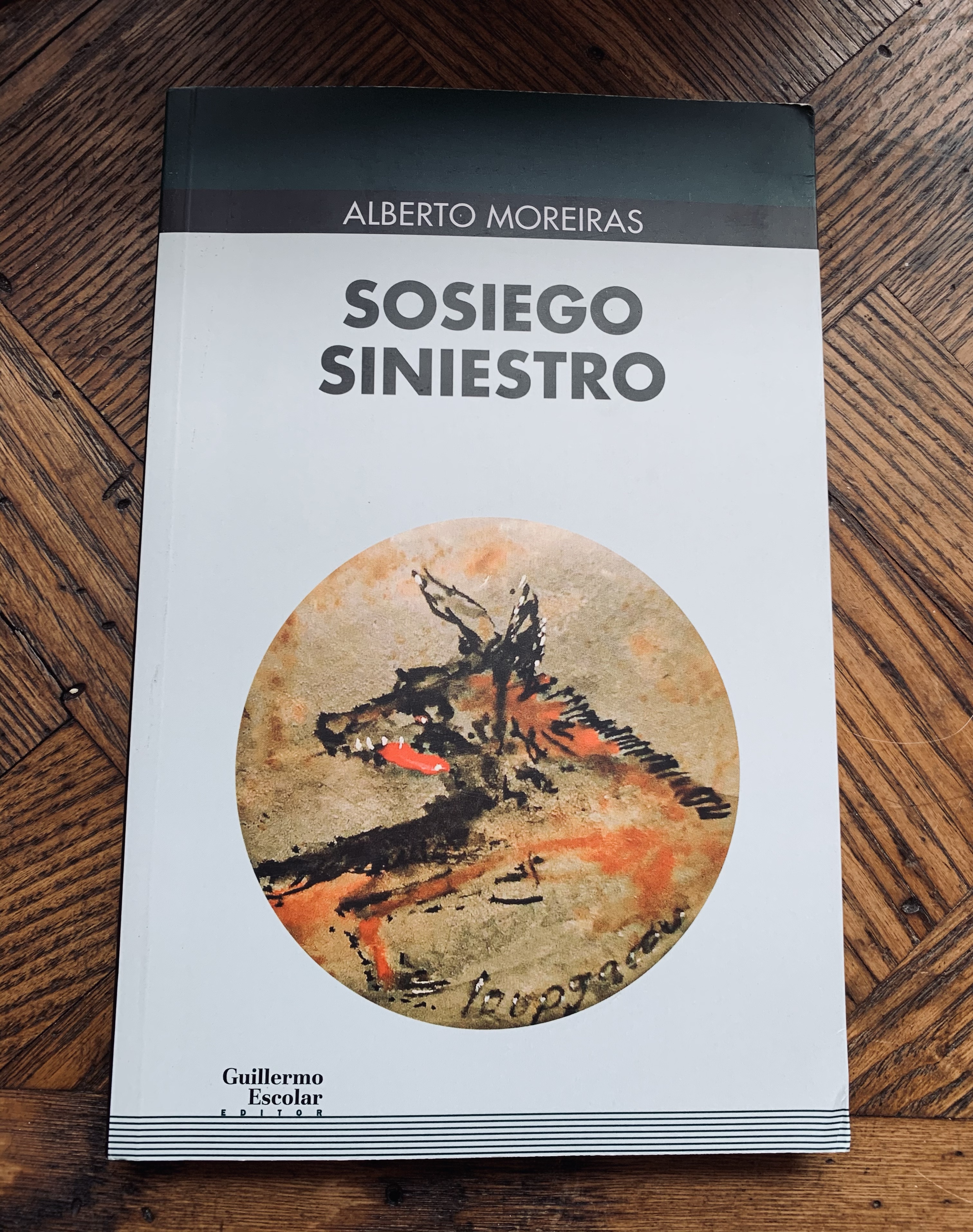
Sobre “Sosiego siniestro” de Alberto Moreiras. por Gerardo Muñoz


Querido Alberto,

Leído de corrido, tus notas sobre el sosiego cobran un necesario y sorpresivo espesor. Hablo por mi, pero creo que estamos ante lo mejor que se ha escrito sobre la detención temporal del coronavirus. Claro, cuando digo “mejor” no lo digo como cuestión de cualidades intrínsecas (que las tiene, obviamente), sino más bien porque lo que tematizas como “recuperación existencial de un exterior” es un programa que abre radicalmente otra posibilidad común de pensamiento. O sea, es una zona lo suficientemente amplia (pero también completamente nominal) como para no ser rechazada. Esquiva y sale de las tentaciones del hostis. Más allá de una nueva “universalidad”, o una nueva “reintegración de un “bien-común”, tan dependiente de la obediencia de las consciencias, el existente hace otro camino. La valentía es siempre una condición de visibilidad. Al final, ¿no hay, en cada repliegue del subjetivismo, un grave pudor de voltear sus miradas hacia la nada del abismo? O cuando se hace, todo termina en posibilidades de salvación. Por eso el “emblema” del viejo Tobías funciona tan bien, porque registra la espera del ángel de un tiempo de vida que no tiene redención ni fides futuras. Esto es, para mi, en efecto, “teología transfigurada” que deja a un lado la oscura trinidad de salvación que hoy aparece bajo el ropaje de una misma palabra: “política” (lo decía justo en la mañana – así mismo con esa palabra, “trinidad” – Andy Haldene, un oscuro economista del Bank of England). Ya no se puede hablar para nadie porque ya no es posible “hablar en nombre de algo”. O sí, solo de la existencia. Y por eso es que reitero: esta región es lo único que hoy puede reactivar un espacio de vínculo más allá de las demandas, lo substantivo (la moral), e incluso “lo absoluto”. Tiras de Kierkegaard para decir que la figura marrana “se coloca en relación absoluta con el absoluto”. Esa relación, que ya no es de orden ético, sí convoca un ethōs. Recuerdo que Kierkegaard en Temor y temblor alude directamente a la figura de la marioneta de la Comedia del arte italiana, Pulcinella, para decir que este curioso personaje solo cuenta con un “teatro personal”, donde hay algunos “amigos y pasión de justicia”. No me interesa defender a Pulcinella contra el “Caballero de la fe”, o elevar a Pulcinella contra el marrano; pero, en la medida en que la amistad atraviesa todo el sosiego, sabemos que esta extraña figura de la comedia signa el afuera constitutivo de todo pensamiento. Un pensamiento que, al menos para mi (y se me ha verificado de manera translúcida en estas semanas del confinamiento, aunque es mejor no dar detalles), tiende a inclinarse hacia las cosas elementales que amamos, o bien, hacia lo que Hölderlin llamó una vez la “vida espiritual entre amigos”, que recoge otra cosa que “responsabilidad” o “deber”. Una última cosa: me ha parecido enormemente significativo que el “amor” solo aparezca al final del ensayo. Escribes: “…una transformación del sujeto, una entrada en la interioridad del sujeto, un nuevo amor por el sujeto herido, son voces que quieren evadir el desistimiento, que no sería nada si no fuera también desistimiento del sujeto, tanto más profundo cuanto más originaria es la angustia. ”. Para mi este es el vórtice de todo el texto. Y, sin embargo, me pregunto si esa transfiguración esencial del humano en sosiego no recorre también un amor incurable por cada cosa que encontramos, que es siempre sintonía de regreso o homecoming. Es solo un pensamiento en voz alta, dispuesto a errar. Gracias una vez más por este texto.


G.M

Abril 25 de 2020. Pensilvania