Legitimacy and the administrative state. By Gerardo Muñoz.

To follow up on my previous responses (that can be read here and here) in conversation with José Luis Villacañas’ lecture on Weber and populism, I want to return one more time to the question of legitimacy. I do not want to repeat what I have already said in the other commentaries, rather this time I want to specify the nexus between the administrative state and legitimacy. That is the purpose of this commentary, anticipating a more elaborate presentation of this problem in an upcoming conference at the University of Rome.

The heart of the problem can be laid out in a straightforward manner: is the administrative state legitimate? And if so, from where does the administrative state derive its legitimacy? For a moment I’ll leave aside the fact that for a wide range of legal scholarship, bureaucratic order itself is a material source of legitimation, in part because administration purports separation of the private/public spheres, and deters corruption, thus upholding the well-being of the social. But this answer is in itself tautological and needs of descriptive substance.

Here I find Adrian Vermeule’s typology of the legitimatization of the administrative state helpful and pertinent for a number of reasons. For one, it allows me to affirm my position in this debate [1]. As Vermeule fleshes out, the question of legitimacy of the administrative state is not new, and only recently – that is, the post-Reagan period, once the Federalist Society began having effective impact in the wake of the Neo-Conservative movement – has the legitimacy of the administrative state been challenged on the basis of it being inconsistent with the separation of powers (Epstein 2008, Hamburger 2014).

I cannot go into details about the reason of this development in the space of this commentary. Let me jump right into the analysis. Vermeule notes that the way in which the legitimacy of the administrative state has been posited – from the New Dealers of the 1930s to the current Supreme Court – takes different paths to understanding the core problem of “independence”. This is of no minor importance, since independence of the legislative deference and execution of an agency statute, has everything to do with what Moreiras and Villacañas understand as the reduction of the factual condition of domination. This is also a crucial premise as to move in the direction of a posthegemonic democracy, regardless of how it is defined and developed in each case.

Vermeule insists that “independence” has a heterogeneous form of legitimation of the administrative state in three main tracks (it does not mean that there are only three, but at least these have been highly influential): 1. the one posited by James Landis in Administrative Process (1938) who sought to provide independence of the administrative agency from the executive power; 2. Louis Jaffe’s formulaic deference of a strong position of independent judicial review of agencies; 3. Kagan’s inversion of Landis, who in the early 2001, interprets “independence” of the President against interests groups, or crony interest-restricted legislators. Regardless of the different premises and relational valences of these forms of administrative law, I agree with Vermeule that they affirm a common and perhaps dual legitimization value: to establish independence and internal legal pluralism.

There is good and bad news here for Republicanism. First, the bad news: the forms of legitimization of administrative law emerge in the wake of the crisis of the traditional Madisonian division of powers. However, the crisis of the archaic formulation should not produce neither horror nor nostalgia. In any case, this is an aspect that must be discussed after Villacañas’ own philosophical defense of the division of powers in genealogy of the Western tradition in his Teología Política Imperial (Trotta, 2006). As for the good news: the hermeneutics of administrative legitimation are affirmed on the ground of the equilibrium and an internal pluralism, which is how Vermeule establishes his stance against contemporary anti-administrative libertarians. This entails that the administrative state is not the abdication of the rule of law in a drift towards tyranny or unpopular rule, but rather part of an elastic historical development in a complex field of tensions [2].

Why is this important for thinking populism today? For one, because Villacañas’ Weberian position even when placed in the “factual grid” of the administrative state, perfectly convergences with Elena Kagan’s position (the third path of legitimation). In fact, Vermeule describes Kagan’s most important and enduring contribution in a way that we could also ascribe to Villacañas:

“A constitutional vision that attempt to combined two intellectual and constitutional strands that had often been assumed to be in tension with one another, or even outright contrition. The first strand was technical administration, whose major tool is quantified cost-benefit analysis; the second was Hamiltonian political leadership by an energetic elected President, who hallmark is accountability to a broad national public” (Vermeule 18).

This is precisely what Villacañas’ response to me meant regarding the potential dismissal (in Castilian: “la patatada en el culo”) of the charismatic leader when he fails to meet the material needs of the People. In effect, this is completely consistent with Weber’s defense of presidentialism in “The Reich President” (not really the same as “charismatic leadership”), as a form of the checking the bureaucracy in line with the Hamiltonian vision of the modern state [3]. So, here is the big picture: whereas Landis favored anti-Presidentialist stance during New Deal legislation, in the case of Kagan it is the figure of the President that can advance the needs of the People in any given circumstance. It is interestingly enough that President Obama (who was a constitutionalist) followed more the track of Landis and not that of Kagan.

It is clear why Kagan needs to embrace a thin margin of presidentialism as a process of legitimation, since to do so entails reducing the ascending problem of factionalism, narrow interests, bad administration, or even more recent problems such as big financial conglomerates (Vermeule 23). Here the contending debate between populism as charismatic leadership (Villacañas), and an anarchic populism (Moreiras) on the other is also properly defined. Whereas I agree with Kagan and Villacañas that presidentialism could buffer certain corporate interests (“la casta”, in Podemos is a perfect example) and the weight of agencies, I also agree with Moreiras that then this could only mean that the “President” is no longer a political figure, but rather a mere administrator, a gestor [4]. The President becomes the perfect justification of an Enlightened monarch (in a phrase revered by Peterson in his response against Schmitt’ political theology): the King rules but does not govern. But I would add, he does function as a filter for what Vermeule calls “accountability to a broad national public”, which is synonymous with what Villacañas calls the “material interests of the People”.

I end with a question to align a few problems for further investigation: if the President is a mere filter in a complex structure that is the political fabric of the administrative state today, isn’t he already a sort of de-centralized and an-archic figure? Also: can there be, for instance, a concrete moment of demand of the People if there are only administrative agencies? Only placed in this backdrop does posthegemonic populism becomes clear: neither effective administrative law without the expansion of the democratic demand, nor effective or defective presidentialism. After all, no threat of factionalism has been tamed from a secure position of leadership without, at the same time, necessarily bending towards the expansion of its own (imperial) hegemony, which always amounts to the phantasm of a corrupted legitimacy.


Notes

  1. Adrian Vermeule. “Bureaucracy and Distrust: Landis, Jaffe, and Kagan on the Administrative State”. Forthcoming, Harvard Law Review, 2017.
  1. For Adrian Vermeule, the crisis of legitimacy is actually is greatest strength. See, “What Legitimacy Crisis?” CATO UNBOUND (May 9, 2016). https://www.- cato-unbound.org/2016/05/09/adrian-vermeule/what-legitimacy-crisis
  1. Max Weber presents in “The Reich President” (Social Research, 1987) a defense of presidentialism that is the principle to both Villacañas and Kagan: “For the great movement of democratic party life which develops alongside these popular elections will benefit parliament as well. A president elected by means of particular constellations and coalitions of parties is politically a dead man when these constellations shift. A popularly elected president as head of the executive, head of office patronage, and perhaps possessor of a delaying veto and of the authority to dissolve parliament and to call referenda, is the guarantor of true democracy, which means not feeble surrender to cliques but subjection to leaders chosen by the people them.” 132 pp.
  1. Alberto Moreiras: “Este es por lo tanto un populismo sin líderes (o sin líderes en función hegemónica), es decir, un populismo en el que la posición de líder—el notorio “significante vacío”—está ocupada por el gestor de la radicalidad democrática, y solo por él o ella en cada caso, a cualquier nivel administrativo (seguir llamando a ese “gestor de la radicalidad democrática” líder, o jefe, o caudillo, sería un capricho arbitrario).”. “La hipótesis Podemos”. https://infrapolitica.wordpress.com/2017/04/09/la-hipotesis-podemos-borrador-por-alberto-moreiras/

Pious Humor: on José Luis Villacañas’ Freud lee el Quijote. By Gerardo Muñoz.

villacanas freud leeThe almost banal simplicity of the title of José Luis Villacañas’ most recent book, Freud lee el Quijote (La Huerta Grande, 2017), could incite false expectations. This is not a book about the esoteric references of the Quijote in the father of psychoanalysis, and it is most certainly not a psychoanalytic contribution on Cervantes, the author. Although these principles are at the center of Villacañas’ meditation, they do not exhaust his argument. There are, I think, at least two other important premises that deserve to be noted at the outset: on the one hand, Freud lee el Quijote is a continuation, a sort of minimalist diagram, of Villacañas’ massive Teología Política Imperial (Trotta, 2016); while on the other, it is an exoteric ongoing polemic with Carl Schmitt, who understood Quijote as a Catholic hero of the European destiny in the wake of secularization and the crisis of the Catholic ratio. Although Villacañas does not explicitly cite Schmitt’s early essay on Quijote (preferring to polemicize with the late work Hamlet or Hecuba), Schmitt lingers as an accompanying shadow figure throughout Villacañas’ intervention [1].
It must be said that, at a time of contemporary debates around political theology and the future of Europe, Freud lee el Quijote is a salient exposition of a decisive question on the political and historical defeat. Villacañas’ book is really about an affirmation of defeat as an irreducible condition of the political. It does not come to a surprise that Villacañas is fully honest when he writes in the prologue: “… [este libro] es mi hijo menor, pero en verdad el de más larga gestión, y el más querido de todos mis libros” (Villacañas 9).

The names of Freud and Schmitt work jointly and at opposite ends and they limit the frame of Villacañas’ strong reading of the Quijote. The central idea is that Cervantes wrote neither a work of cruelty or tragedy, nor of comedy.  El Quijote for Villacañas is a work of humor. But let us step back from this assertion. Villacañas is generous and attentive to the archival sources (Freud’s letters to Silberstein, among other things), which allows him several factual connections, such as the mimesis between the Academia Española as an antecedent of the Psychoanalytic Association, or even the Coloquio de los perros as a formal precedent of the psychoanalytic session. But more importantly, these juxtaposed scenes pepper the ground for the question that Villacañas is after: how to think the heroic figure of the Quijote, and what relation does it contract with the origin of psychoanalysis?

Villacañas’ thesis is that the Quijote is an eruption beyond the comic and the tragic into the humorous. This is, he tells us at the very end, a process of moral rationalization that Freud understood only after Cervantes’ discovery of the “pious humor” (humor piadoso) (Villacañas 25). To understand the way to Freud’s reading of humor in Cervantes, Villacañas first needs to cross paths with Schmitt. He recalls that in Schmitt’s reading of European secularization, there are three potential mythical representatives. We should bare in mind that the three are intellectual representatives: that of the Catholic Quijote in Spain, the Protestant Faust in Germany, and that of the rational and doubtful Hamlet, pulled by the tragic phantasm of the Law-Father. Throughout the essay, Villacañas wants to correct Schmitt’s perhaps too hasty typology of the first heroic type. It is not that Villacañas wants to dispute Schmitt’s circumscription of Cervantes’ Quijote into the Spanish catholic tradition; the problem is that Quijote only emerges in the ruinous aftermath of the catholic imperial ratio. Quijote in La Mancha is an existential and moral figure of a defeat that confronts reality without resentment or guilt. Hence, Quijote, like the Marranos and the Spanish pícaro, affirms without reserve the time of the interregnum as a profane Post-Reform location. Spain is the land of a double fissure into modern secularization. Villacañas tells us:

“…allí donde dominó el catolicismo nacional posterior, tal proceso fue imposible, pues ese catolicismo se puso al servicio de toda tradición mundana. Entre un catolicismo que ya no podía ser universal y un Estado que nunca sería soberano, don Quijote es el héroe errante en un mundo escindido y roto, sin soberano estatal ni Iglesia universal: el mundo español. Por eso es que es mito existencial y concierne a cualquier español que reflexione sobre su destino histórico” (Villacañas 32).

Cervantes’ profane epoch is that of the newborn Leviathan, which Villacañas reminds us did not need to wait for Hobbes, since the myth was noticed by Juan de Santa María, a Felipe III’ censor, in his Tratado de república y policía cristiana. The mythic Leviathan demolishes the old principles of medieval history based on the absolute potentiality of God in the name subjective freedom protected by the new mechanicist secular state (Villacañas 34). Up to this point, this narrative is very much consistent with Schmitt’s The Leviathan in the State Theory of Thomas Hobbes. But Villacañas abandons Schmitt when contenting that Quijote cannot amount and should not be reduced to a mythical Spanish katechon. Quijote is, in fact, the very opposite of any positing of time restrainer of terrestrial time. He is, unlike Schmitt, not the last witness of the European ius, but the prima witness of the time of ruin and devastation: “Don Qujiote es un héroe católico, pero su figura emerge de entre las ruinas de Roma y del Imperio” (Villacañas 37). Villacañas seems to place Schmitt, vis-à-vis Quijote, on its head: whereas in Hamlet and Hecuba, Shakespeare’s tragedy inscribed the irruption of history within the work, in Cervantes’ Quijote irrupts the historical end of the roman imperium, and the Catholic Church as form of the gnosis. But how does the humor play out within this configuration?

Quijote represents a turning point of the triumph of the modern gnosis, which in a turn to Hans Blumenberg’s Legitimacy of the Modern Age, equips Villacañas with the possibility of fleeing the stereotype of the reformist and salvific composition of the modern subject. For Villacañas, Don Quijote “es la paranoia del impotente y del solitario, mientras el reformado se entrega a la experiencia entusiasta y sin fisuras del que es consciente de su poder y lo ve compartido por los que confiesan con él” (Villacañas 68-69). Quijote is a marrano figure away from Protestant salvific subjection, but also turning its back to the messianic kingdom of the Catholic fidelitas. The wonder and uniqueness of the Quijote is that he represents a third option that does not run through resentment or will to power, since its compensation is a pious humor in the face of the ruinous and the powerlessness (impotencia). Villacañas summarizes the point in an important moment of his book:

“Lo decisivo está en la forma de interpretar las derrotas. La autoafirmación moderna no trata de culpabilizar a un poder mágico por sus fracasos, ni a una finalidad perversa del mundo, ni a un manipulador chapucero y cruel, sino solo a una falla del principio epistemológico respecto a lo real, lo que constituye un nuevo reto a la curiosidad” (Villacañas 73).

The disheveled Quijote can only compensate the wake of the imperial absolute trauma with humor. This is a complex game, Villacañas notes, since it is done through phantasy as the possibility of exodus for what otherwise could amount to the acceleration of the death drive, the sublimation of the Ideal, and the proximity with the speculative teleology of the genius and the superhuman. This latter was the rubric by which German Romanticism read and appropriated the “Catholic” myth as fetish after the failure of the Protestant bourgeois transformation. The work of humor is the possible thanks to the work of self-affirmation in the face of tragic finitude: “Está diseñado para mostrar la finitud del héroe que un día fuimos, y que todavía somos, y ese el trabajo del humor, el que asegura a pensar de todo el triunfo del yo y su condición narcisista” (Villacañas 88). While the joke and comedy are blind to loss, Villacañas goes as far as to claim that the joke or the prank are always potentially on the side of aggression (Villacañas 92). Not so the humor, which can divide itself in a psychic equilibrium between the Ego and the Super-Ego, between the playfulness of the youngster and the theatrical seriousness of the elder. The joke, as reactive mechanism, does not recoil back to the Ideal. Humor – as in “tiene sentido de humor” – is always a singular form of humility.

This is, at heart, the latent gnosticism of Cervantes as Quijote, and Quijote as Cervantes. The function of comedy, which Giorgio Agamben has elevated in work as a phantasm of Italian culture and of his own potenza, dissolves in the Hispanic Marrano tradition in which Villacañas places Quijote as a humorous figure [2]. The work of compensation of the super-ego makes humor a substrate of the psychotic figure of disbelief, while affirming the narcissist drive of a modern fragile and gracious “I”. It makes sense that Villacañas argues at the end of his book this superego cannot be tyrannical (Villacañas 99). This could open rich and important discussions that we can only register here.

As a treacherous hidalgo, Alonso Quijano is never a psychotic leader, but a humorous madman. And humor is only an aftereffect of an epistemological rupture of the modern, of an unclear and unforgotten defeat that characterizes modern man, and that characterized, no doubt, Cervantes himself in his attempt to find a proper balance to nihilism. But, did he succeed? The book does not say openly, but it is fair to say that the impossible balance to nihilism is also symmetrical to the nihilism of the political.


Notes

  1. Schmitt in his early essay on Quijote notes some of the aspects that he will take up in the late book on Hamlet, such as the “image of the Hispanic heroism”, and the “great sense of humor of the work”. See, “Don Quijote un das Publikum” (1912). There is a Spanish translation of the essay by Isabel Moreno Salamaña (2009).
  2. For Agamben on the comic as a category of Italian thought in the wake of Dante, see “Comedia” in Categorie italiane: Studi di poetica e di letteratura (2010). Most recently, this is also the problem at the heart of his book on the Neapolitan puppetry figure Pulcinella, Pulcinella ovvero divertimento per li regazzi (2016).

Una nota a la pregunta a José Luis Villacañas. Por Gerardo Muñoz.

El intercambio con Villacañas y Moreiras ha sido iluminador, en parte, porque como decía un amigo por comunicación privada estas notas ayudan a delinear posiciones. Yo no quiero disputar ninguna parte de los argumentos, y lo que sigue es tan solo un apunte mental hecho público sobre lo que me parece que es una posición de desacuerdo y que pudiera ser tema de futuros debates. Aunque el punto del desacuerdo tampoco es tan nuevo.

Me refiero, desde luego, a lo que Villacañas llama la necesidad de legitimidad en su réplica a Moreiras. En específico, J.L.V escribe: “El republicanismo no necesita de la hegemonía, pero si necesita de la legitimidad. Y el problema es que la legitimidad no es una afirmación de archē” [1]. Pero, ¿por qué no puede la legitimidad ser jamás una afirmación arcaica? Es sabido que Weber en Economía y Sociedad habla del necesario arcano de la dominación, pero solo como trazo transitorio hacia una función moderna de los tres tipos de apelación a la legitimación racional (la tipología tripartita: racionalización, autoridad personal, y carisma) [2].

Pero lo que Villacañas entiende por legitimidad tiene sus propios tintes, y ya ha quedado muy bien esbozado en su importante ensayo “Poshegemonía de Gramsci a Weber”. Allí, J.LV. pide el abandono de la hegemonía gramsciana en nombre de una noción de legitimidad en función de una institución visible [sic], capaz de renovación en cada instancia, y garante del pacto social [3]. Y es cierto que esto no tiene nada que ver con un principio legislativo supremo o metafísico, tal y como lo comenta Schürmann en el apartado sobre la legitimidad y la legalidad en la primera parte de Broken Hegemonies.

Ahora bien, en la medida en que la legitimidad no tiene arcano, habría que preguntarse si en el momento de la expansión del estado administrativo – que pienso que es consistente con lo que Moreiras llama la ruina del orden categorial moderno de lo político, o lo que Williams llama decontainment – no hace de la legitimidad algo defectuoso. Pero defectuoso ya no como ‘equilibrio’ de movilización e instalación propiamente político, sino defectuoso en el sentido de un vacío o abismo efectivo. De ser así: ¿cómo pensar aquí la legitimidad caída hacia la pura administración?

Si se apela a la “legitimidad” se apelaría solo al concepto. Por eso la cuestión medular es si la legitimidad tiene gancho compensatorio, o es todo lo contrario. En su librito sobre Benedicto XVI, Il mistero del male (2013), Agamben ha declarado que no existe estructura de gobierno legítima hoy en la tierra. Y quizás Villacañas diría que esta conclusión se debe a su prole schmittiana que desde el registro del mito deja intactas “muchas realidades históricas operando”. Y es verdad que tiene razón.

Y con esto concluyo: lo que si es importante derivar de esto es que si ya la legitimidad no es compensatoria para un momento democratizante, lo que prosigue a la hegemonía es la poshegemonía en la medida en que, en cuanto a su segundo registro infrapolítico, abandona ya la ratio última de la política como acceso de mundo y de vida. La biopolitica ha sido el último avatar de esta posición. Si el populismo contemporáneo – la mejor posibilidad populista, digamos Bernie Sanders, digamos ciertos grupos a escala estatal batallando contra los intentos revocatorios del Civil Rights Act en el sur estadounidense, el errejonismo – tiende hacia a la apelación a la legitimidad o a la poshegemonía es ya otro asunto. Pero yo no tengo dudas que esta es la verdadera bifurcación en nuestro momento para el pensamiento.


Notas.

  1. Ver en este mismo espacio, a José Luis Villacañas. “Réplicas”. https://infrapolitica.wordpress.com/2017/04/12/replicas-por-jose-luis-villacanas/
  1. Max Weber. Economy and Society. University of California Press, 1978. P.953-54.
  1. José Luis Villacañas. “Poshegemonía: De Gramsci a Weber”, en Poshegemonía: el final de un paradigma de la filosofía política en América Latina (Biblioteca Nueva, 2015). P.165-66.

Réplicas. Por José Luis Villacañas. 

Querido Gerardo: muchas gracias por tu comentario, que nos permite mantener la conversación que mantuvimos en Princeton. Wilson es un modelo para el pensamiento de Weber sobre el líder antiautoritario, desde luego. No conozco el libro que citas, pero me parece muy relevante y voy a hacerme con él. Pues lo peculiar de Weber es ciertamente una defensa del parlamentarismo. Este solo hecho hace de Schmitt un hijo ilegítimo de Weber. El parlamentarismo es electivamente afin con lo aprincipial, desde luego. La discusion infinita es el reconocimiento de la falta de fundamentos.

En realidad, el parlamento no es una escuela de teoría, sino una aspiración a la concreción y singularización de las decisiones y por eso es la mayor institución al servicio del control del estado administrativo. Por supuesto que el parlamento es coral, y desde luego no tiene nada que ver con el líder concentrado presidencial. Sin embargo, es el lugar en el que se puede apreciar la manera en que se acredita que alguien es capaz defender intereses materiales de los dominados.

Ahora bien, por si solo no es suficiente para controlar el estado administrativo, porque sería como perseguir el ratón al gato. De lo que se trata es de que el que da las órdenes en el estado administrativo tenga que responder también a los intereses de los dominados. Desde este punto de vista, argumenté que sólo las dos dimensiones (Parlamento y Gobierno) están en condiciones de controlar la burocracia.

El primero porque analiza las decisiones de los burócratas, las hace públicas, exige preguntas y describe procesos, por mucho que tengan base legal; el segundo porque permite que el activismo legislativo o incluso el ordenamiento esté en condiciones de responder a los intereses de los dominados. Sin esta figura, sólo se controlaría a la contra; por un presidente adecuado se presiona a favor de que se atiendan positivamente los intereses de los dominados. El parlamento en todo caso puede ser decisivo para que se no violen o se lesionen.

Querido Alberto: para comprender este debate debemos marcar el sentido bastante limitado de lo que Galli llama pensamiento moderno. Lo que Galli quiere es, como Duso, eliminar como marco de conversación el planteamiento de Hobbes. Esto significa que todo pensamiento contractualista moderno es principial y desde luego nadie quiere caer en sus redes. Desde luego, el pensamiento republicano no cae en esas redes porque ciertamente no asume esa creatio ex nihilo del contrato bajo ninguna de sus maneras. Y desde luego, tienes razón: el anarquismo no es sino una manifestación más radical de la teoría del contrato, como se descubre cuando observamos las deudas que Proudhon mantiene respecto de Rousseau.

Las paradojas de este pensamiento principial llevaron a Kant a hablar del contrato como un ideal del futuro y nunca como un fundamento político. Y desde luego, no confundo el anarco-populismo con el anarquismo en tanto tradición que forma parte de la historia de las ideas.

El problema, como dijimos en conversaciones anteriores, es definir bien el asunto a-principial. Y sinceramente, este es el punto que no entiendo bien. Pues lo decisivo para mí no es reconocer que desde luego nada en política ni en filosofía política invoca un fundamento. El hecho de que Laclau intente suturar su pensamiento político con el líder como referente vacío no es solo el más sincero de los reconocimientos de esa ausencia, sino también pensamiento no completamente reconciliado con ella, por cuanto intenta por todos los medios buscarle un subrogado. Sin embargo, no es claro para mí que las rupturas con los órdenes conceptuales fundamentales, y su disolución, signifique la ruptura con los órdenes materiales, y entre ellos los psíquicos. Y creo que hay una cierta filosofía de la historia cuando la primera destrucción se confunde con la segunda.

De hecho, acerca de esto iba mi conferencia, un tema al que nadie entró porque implica una relativización de la filosofía como aparato conceptual para apresar estas realidades materiales. La filosofía de la historia, siempre de naturaleza utópica, consiste en suponer que nos libramos de la historia justo al librarnos de algunos conceptos metafísicos. Esto me separa de los juegos conceptuales de Heidegger. Una filosofía aprincipial deja todavía muchas realidades materiales históricas operando.

Mi posición es que el populismo no puede ser hegemónico porque las realidades materiales no lo permitirán mientras el centro de gravedad de la vida histórica no se condense al límite de las tragedias. Mientras esto no ocurra, lo que quiere decir la teoría de la hegemonía de forma real es que los regímenes presidencialistas exigen que la población se divida en dos para la elección y que por tanto se tendrá tanto más poder cuanto más clara sea la división y menos se llegue a la mayoría sin compromisos de pactos. Pero en los regímenes parlamentarios la hegemonía no significa nada. Y el mayor de los errores de Iglesias ha sido acuñar un pensamiento de la hegemonía en un régimen parlamentario puro, que no tiene ningún escenario propio del presidencialismo.

El republicanismo por supuesto que comparte la conciencia de la necesidad de acabar con ese pensamiento principial. Pero reconoce que eso es una condición necesaria, pero en modo alguno suficiente para avanzar hacia un estado de mínima dominación del ser humano por el ser humano. Y llama la atención acerca de la carencia de mediaciones entre el anarco-populismo y la política. Por eso no se trata de populismo sin líder. Se trata de política capaz de reducir la dominación, lo que positivamente es otra cosa completamente. Y esto nos lleva a la cuestión de nuestro viejo debate.

El republicanismo no necesita de la hegemonía, pero sí necesita de la legitimidad. Y el problema es que la legitimidad no es una afirmación de arché. Y sin embargo, tampoco queda bien abordado mediante un pensamiento exclusivamente deconstructivo del arché. Aquí las categorías del republicanismo exige algún forma de diferencia entre decisiones, algo que no veo en el anarco-populismo que defiendes. Por eso creo que a partir del republicanismo se pueden traducir mejor las categorías de la emancipación.


(*Esta réplica contesta a los textos “Presidencialismo y liderazgo. Una pregunta para José Luis Villacañas”, de Gerardo Muñoz y “El desacuerdo de José Luis Villacañas”, de Alberto Moreiras.)

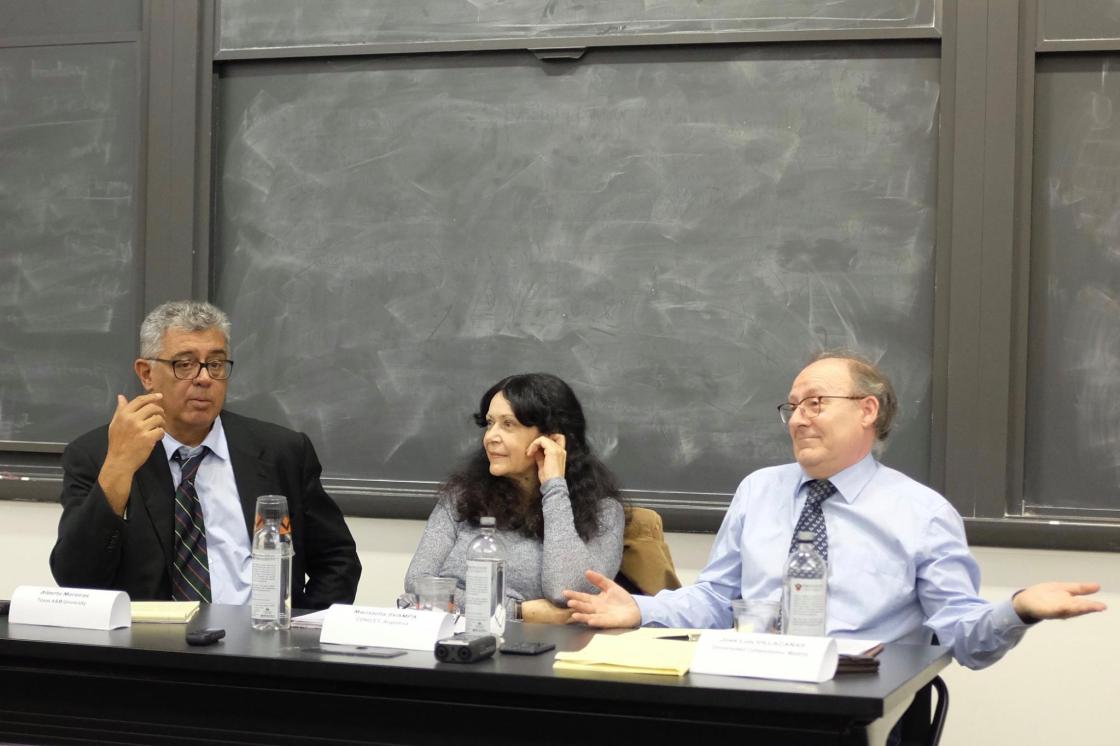
*Fotografía: Princeton University. April 7.2017.

Presidencialismo y liderazgos. Una pregunta para José Luis Villacañas. Por Gerardo Muñoz.

populismos2017foto

En los buenos talleres siempre pareciera que nos traiciona el tiempo. Y el congreso “Populismos”, que tuvo lugar el pasado viernes en Princeton, no fue una excepción. Hubo tres excelentes ponencias que darán mucho de qué hablar y pensar, aunque en este comentario solo quiero atenerme a un aspecto que quedó colgado del intercambio con el Profesor José Luis Villacañas.

José Luis leyó un magnífico texto sobre Max Weber, Ernesto Laclau, y la actualidad de la crisis constitucional de Weimar para pensar nuestro tiempo. Implícitamente estaba en juego una hermenéutica relativa a la interpretación de la crisis democrática alemana de los treinta, y aunque no fue nombrado, se podía escuchar cierto eco de Helmuth Plessner, cuya Nación tardía: sobre la seducción política del espíritu burgués (1935-1959), acaba de aparecer por el sello Biblioteca Nueva en una magnifica edición y estudio crítico del propio Villacañas. No quiero intentar hacer un resumen de la charla de José Luis, la cual puede escucharse aquí. Me sumo al gesto de Alberto, y tan solo quiero dejar por escrito un comentario para avanzar en la discusión.

En el tiempo que tuvimos de preguntas y comentarios, yo le preguntaba a José Luis cómo pensar la “actualidad” de Weber en un momento como el nuestro (al menos en EEUU, que es donde vivo), dominado por lo que los constitucionalistas norteamericanos (Posner 2008, Hamburger 2014, Vermeule 2016), han venido llamando la expansión del estado administrativo. Sobre esto y la conspicua frase de Steve Bannon, ya hemos comentado en este espacio [1]. La cuestión es relevante en la medida en que el problema del administrative state y la burocracia es central en el propio pensamiento de Weber. Pero también es fundamental si aceptamos cierta irreversibilidad del derecho de los estatutos de las agencias gubernamentales administrativas cuyo peso ya han desplazado lenta pero decisivamente el centralismo de las cortes.

Si esta es la realidad fáctica, entonces no es posible ni deseable, volver al centralismo jurídico, en la medida en que volver al centralismo jurídico no sería más que volver a re-inscribir las condiciones que en un primer momento hicieron posible la expansión del estado administrativo. Lo que hay es lo que hay, como a veces se dice desde cierto “realismo”. Esto es, un estado administrativo que solo puede ser más o menos democrático. Pero el estado administrativo no solo desplaza lo que Dworkin entendió, en el que quizás sea el más influyente libro del derecho norteamericano del siglo veinte, el ‘Imperio de la Justicia’. En la última sesión de debate con Moreiras y Svampa, Villacañas retomó el tema de Weber ahora visto desde la rama del executivo. Quiero citar a Villacañas, y luego pasar a mi pregunta:

“….por eso el carisma anti-autoritario es específicamente democrático, puesto que el carisma es delegado en la medida en que responde a los intereses de los dominados. Cuando Weber establece esa diferencia está pensando en el Presidente de los Estados Unidos que es para él es el prototipo del carisma antiautoritario que tiene que defender los intereses de los dominados si quiere ser reconocido como tal. El líder anti-autoritario es quien está en condiciones de representar intereses que no son los suyos. Pero que los mira con una objetividad que está en condiciones de producirles la pasión…”

Seguido de este comentario, Moreiras le preguntó a Villacañas si esa descripción aplicaba a todos los líderes norteamericanos, o si era una especie de “tipo ideal”, pinchando una categoría medular del pensamiento sociológico de Weber. Lo que yo quisiera anotar es que si asumimos la realidad fáctica del estado administrativo, entonces quizás el “principialismo” (¿es principial?) del líder anti-autoritario en Weber, quizás ya no tenga tanto efecto como lo pudiera haber tenido, digamos, durante Weimar o durante período de Woodrow Wilson (quien además es una figura admirable, puesto que escribió una de las mejores defensas del cuerpo legislativo que hay en la tradición política norteamericana titulada Congressional Government, de 1885). ¡Y no olvidemos que el Congreso de EEUU no aprueba una ley en el Congreso en casi una década!

Villacañas diría, y en efecto, dijo: “el líder anti-autoritario es aquel que está en condiciones de recibir una patada en el culo…en caso de no cumplir las demandas materiales de la sociedad”. Y estoy de acuerdo con este razonamiento. Y hasta ahora Trump ha sido eso. Pero el problema es que si aceptamos la condición del estado administrativo, tal vez solo un nuevo parlamentarismo se adaptaría mejor al tejido de nuestras sociedades poshegemónicas. Al fin y al cabo, el sistema norteamericano es presidencialista, y como ha visto Bruce Ackerman y antes el gran historiador Arthur J. Schlesinger, desde hace décadas está en ascenso hacia una metamorfosis imperial. Me pregunto si el anarco-populismo de Moreiras, o el énfasis en los movimientos propuestos por Svampa, serían más susceptibles a un nuevo parlamentarismo, incluso a un federalismo, que es por otro lado lo que a mí me interesa, para un futuro democrático y democratizante [2]. Pero si es así, tendría que ser necesariamente anti-presidencialista, esto es, sin líder.


Notas

  1. Gerardo Muñoz. “An explaination for deconstructing the administrative state”. https://infrapolitica.wordpress.com/2017/03/07/an-explanation-for-deconstructing-the-administrative-state-by-gerardo-munoz/
  1. Alberto Moreiras. “Republicanismo arcaico”. https://infrapolitica.wordpress.com/2017/02/14/republicanismo-arcaico-por-alberto-moreiras/

*Foto, de Pablo Dominguez-Galbraith. 7 de Abril, Princeton University.

The Paradox of the Void at the End of Hegemony: on Maristella Svampa’s Debates Latinoamericanos: Indianismo, desarrollo, dependencia, y populismo. Notes from Presentation & Workshop at the University of Pennsylvania. By Gerardo Muñoz.

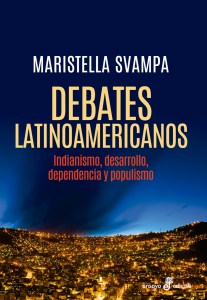
debateslat2017Maristella Svampa’s most recent book Debates Latinoamericanos: Indianismo, desarollo, dependencia, y populismo (Edhasa 2016) is truly a significant book. It is the result of more than a decade of archival research and theoretical elaboration, with deep implications in the sociological and political scholarship of the region. In a recent workshop held at the University of Pennsylvania this week, Prof. Tulia Falletti referred to Svampa after the publication of Debates Latinoamericanos and Maldesarrollo (2014) as a “new Guillermo O’Donnell” given the long-lasting impact that her systematic work will produce for so many fields of investigation both in the United States and in Latin America. Framed through four competing analytical problems – indigeneity, development, dependency theory, and the Latin American populist tradition – Debates Latinoamericanos engages and assesses the limits of the political reflection of the region in the last half a century. Furthermore, the book is beneficial for both specialists and students, since it covers a large bulk of historiographical debates in a polemical fashion. And I say polemical here not just in terms of its heterodoxy, but also in terms of a polemos relief that moves thought forward, inviting further reflection and contestation.

In the space of a brief commentary on the book, I cannot attempt the impossible, and offer an substantial summary of such a massive book. Rather, I want to take this opportunity to advance some of the questions that we juggled a few days ago when I presented this book in a workshop. I also want to have in mind Maristella Svampa’s brilliant keynote on populism and the end of the Latin American Progressive Cycle, which she delivered the day after and that was linked to relevant problems elaborated in the book [1].

Svampa writes Debates Latinoamericanos facing the ruinous space of the political in the Latin American tradition. But what and where is the origin of this catastrophe? To what extent can we offer a counter-imperial explanation for imperial domination against a marginalized locality in the world system of modern capitalism? Svampa does not say that the counter-imperial position is insufficient as a model to explain internal expropriation and continuous democratic deficit, but she runs a scan through the different four paradigms that shed light to what is, certainly, the meaty question of Latin American political reason: why has there not been democratic legitimacy in the region for the last two hundred years? I want to pause briefly in a moment that seems to provide a good starting point for conversation, and that I think should be cited at length:

“En ambos países [Argentina y Chile] el espacio ocupado por los indígenas era visto como “desierto”, “espacio vacío”, o para utilizar libremente la imagen de David Viñas, como la “contradicción de lo vacío que debe ser llenado” (1981:73). En Argentina, la metáfora del desierto creaba así una determinada idea de la nación, que tanto había obsesionado a la Generación del 37: más que una nación para el desierto, se trata a de construir un desierto que justificara la expansión de la nación. En Argentina, la expansión del capitalismo agrario y la consolidación del Estado nacional (mediante la estrategia de control territorial y afirmación de la frontera con Chile), se realizaría a través de la violencia genocida contra las poblaciones originarias en diferentes campañas militares, en la Patagonia y en el norte del país, entre 1870 y 1885. Dicha violencia tuvo un efecto demoledor sobre los diferentes pueblos indígenas.” (Svampa 43)

At first sight, it could well be that this passage is just a strict gloss of Tulio Halperin Donghi’s Un nación para el desierto argentino (1989) juxtaposed with David Viñas ’ Indios, Ejercito, y Frontera (1983). But I want to suggest that Svampa is doing something else here too. Whereas for Halperin Donghi the Dessert Campaign commanded by General Roca was the consolidation and crowning of the national state, for Svampa it marks the void at the center and origin of the political in Argentina. The extermination of the indigenous population as a form of ongoing originary accumulation, to say it with John Kranaiuskas, is what is common to the historical development in neoliberal times. But I do not think that Svampa is in agreement with David Viñas’ thesis either. According to Viñas’ narrative, the military defeat of the indigenous community is equivalent, a mere repetition, to the desaparecidos of the military dictatorship during 1976-1983. This repetition points to an originary and symmetrical violence that must be overcome by revolution. As I have studied in my work on Viñas, this critique of historicism of the Argentine state remains within the horizon of revolutionary violence as transcendental excess for liberation [2].

Svampa seems to tell us that this paradox or contradiction at the void makes us aware of a different problem, but also of an alternate reasoning beyond national consolidation and subjective militant liberation. A few pages after this moment, Svampa writes: “Cierto es que la “invisibilización no los borró por completo, sino que los transformó en una presencia no-visible latente y culturalmente constitutiva de formas hegemónicas de la nacionalidad”. Tan hegemónico ha sido el dispositivo fundamental en la representación de la Argentina como nación que muchos argentinos que se lamentaron de la brutalidad de la Campaña del Desierto, incorporaron el dispositivo invisiblizador, contribuyendo a reproducir la idea de que lo indígena ya no es parte de la nación” (Svampa 45). This is telling for a number of reasons. But I mainly want to suggest that the paradox of the void is integral to the labor of hegemony, both as an apparatus of exclusion, but also in its function as a spectral and residual transport.

Whereas both Halperin and Viñas, one from the side of Liberalism and the other from Sartrean Marxism, subscribe a hegemonic closure of history, Svampa’s paradox of the void concerns the very articulation of hegemony as what is installed as the central problem of accounting for the democratic deficit of the region as well as for the exceptional and fissure legitimacy of sovereignty. It is in this way that documents as important as Alberdi’s axiomatic principle of “gobernar es poblar”, Rodolfo Walsh’s “Carta Abierta a la Junta Militar”, or even Ernesto Laclau’s theory of the empty signifier of populist theory, are just different variations the same problem; that is, heterogeneous ways of coming to terms with the paradox of the void, but only to legislate the time of its ruin. What is Laclau’s theory of hegemony if not the assumption that there is a void, but only to the extent that we must find an equivalent filling to constrain the cavity that is constitutive of its origin? Take, for instance, what Laclau says in a moment of his posthumous The Rhetorical Foundations of Society (2014):

“”…the precise relationship between ’empty’ and ‘floating’ signifiers – two terms that have had a considerable currency in contemporary semiotic and post-structuralist literature. In the case of a floating signifier…while an empty signifier on the contrary, would ultimately be a signifier would a signified. All this leads to an inevitable conclusion: understanding the workings of the ideological within the field of collective representations is synonymous with understanding this logic of simplification of the social field that we have called ‘equivalence’.” [3]

In her talk on the end of the Latin American Progressive Cycle, Svampa mentioned three analytical models of populism. First, there is the weak version associated with Loris Zanatta’s analysis which obstinately, and in my opinion erroneously, conflates populism and theological irrationalism. This allows for outrageous comparisons, such as that of Eva Perón with Marie Le Pen, or even Juan Domingo Perón with Trump or Eastern European fascism. Secondly, there is Laclau’s model as first elaborated in his early Politics and Ideology in Marxist Theory (1977) and later in his On Populist Reason (2002), which tried to advance a coterminous elaboration of hegemony theory with the political vis-à-vis discourse theory and lacanian topologies. Third, is the sociology of populism, which Svampa inscribes herself, in particular elaborated in her book La plaza vacía: las transformaciones del peronismo (1997). This model is also shared by political scientists such as Margarita Lopez Maya, Carlos de la Torre, and in a different way with Benjamin Arditi. This third option is what Svampa offered as a model of “ambivalent populism”, which is in constant struggle with the problem of democracy. But just like the label suggests, ambivalent populism remains just that: ambivalent, which amounts to an impasse and limit. Can we move beyond it?

I read Debates Latinoamericanos as a timely opportunity to pose this problem, and think further. In response to my question about the possibility of a democratic populism without hegemonic closure and charismatic leadership, Svampa mentioned that in Latin America there has been only populisms of hegemony and nothing else. It is also clear that in Latinamericanist reflection, the narrative has been thoroughly populist, but only disguised as “cultural studies”, which was argued already late nineties by Jon Beasley-Murray. It is time to move beyond hegemony theory, in particular if it has proven catastrophic in short and long terms across the political spectrum. Populism with hegemony cannot fly very high, and there is no need to carry heavy burdens of a time long gone [3]. It is time to abandon it. If times have changed, and the composition of the national popular or integral state is no longer the main restraint of politics in the external global networks or even in the internal expansion of the administrative law, it only makes sense that we move towards a demotic populism for posthegemonic times.

This displacement will make a crucial difference between, on one hand, a posthegemonic populist experiment, and on the other a reactionary populism. Whereas right-wing charismatic leaders such as Le Pen or Petry promise a popular nationalism, they do so on the (false) premise that something other than factual globalization is still possible and better. The same could be argued in terms of the rule of law. According to Bruce Ackerman, there are moments of popular expansion of unmet social demands, and there are reactionary constitutional moments that restrain or betray these goals (take the Shelby County vs. Holder case of 2013 decided by the Roberts Court against the constitutionality of two key provisions of the Voting Rights Act of 1965) [5]. Neither delinking from the global economy nor a remote imperial past is desirable as the political fate for millions of citizens and social communities of the West. Such a demand, if called upon, could only be part of a decolonial neo-imperial fantasy. On the reserve of reaction, we could think about Errejón’s important political program “Recuparar la Ilusión”: here we have a great populist proposal that is based neither on charismatic presidentialism, nor in delinking from the Eurozone. Errejón openly sketches a program based on democratic transversality and European integration. In fact, the defeat of Errejón in the Second Congress held in Vistalegre earlier this year was a political catastrophe for those hoping for democratic revival in the European zone.

But we can also look at the so-called emergence of the Right in Latin America. Svampa correctly pointed out that Mauricio Macri’s government has not defunded the main welfare programs of the state during kirchnerismo. This is consistent with Pablo Stefanoni’s hypothesis a couple of years before the meltdown of the progressive cycle, that suggested that after a decade out of power, the Right might have learned to move around the structures of the state in tandem with global multinationals, avoiding the conditions of possibility that early in the millennium, led to the overthrow of several presidents in Argentina, and to the political rise of Hugo Chavez in Venezuela [6]. In a strange way, the Right knows better than anyone that the situation is no longer that of the 30’s or 40’s (or even the 90’s!), and that in order to foster new and stealth forms of domination, there is a need for constant adjustment. It is time for the Left to also learn from its mistakes if it wants to avoid the pendulum movement that bestows the dismantling of the social gains of the regulatory state in a time of decentralized administrations. Thus, it is not exaggerated or immodest to say that only by affirming a posthegemonic politics does a new progressive project have the capability for a democratic reinvention in Latin America, and across Europe where the future is even gloomier.


Notes

  1. Maristella Svampa. “Latin American Populisms at the End of the Progressive Cycle”. Talk given at the University of Pennsylvania, April 5, 2017. https://www.sas.upenn.edu/lals/event/lalses-seminar-2
  2. See my “Gloria y revolución en David Viñas: sobre “Sábado de Gloria en la Capital (Socialista) de América Latina”. La Habana Elegante, Mayo de 2012. http://www.habanaelegante.com/Archivo_Revolucion/Revolucion_Munoz.html . Also, John Kraniauskas, “Gobernar es repoblar: sobre la acumulación originaria neoliberal” (2003).
  3. Ernesto Laclau. “The Death and Resurrection of the Theory of Ideology”, in The Rhetorical Foundations of Society. London: Verso, 2014.
  4. The idea of hegemony as heavy weight that leads to disaster has been recently posed by Moreiras when reading Podemos in Spain, See, Alberto Moreiras. “The Populist Debate in Spain after 20-D”. https://infrapolitica.wordpress.com/2017/01/02/the-populist-debate-in-spain-after-20-d-draft-paper-for-mla-2017-by-alberto-moreiras/
  5. Bruce Ackerman. “Reactionary Constitutional Moments: Further Thoughts on The Civil Rights Revolution”. Jerusalem Review of Legal Studies (2016) 13: 47-58.
  6. Pablo Stefanoni. “La lulización de la izquierda latinoamericana”. http://www.eldiplo.org/notas-web/la-lulizacion-de-la-izquierda-latinoamericana

*This a commentary related to a two-day discussion with Maristella Svampa that took place at the University of Pennsylvania, April 4-5, 2017. The two events were organized by the Latino and Latin American Program & Political Science Dept. This is a work in progress for a forthcoming publication [DNC].

Ius imperii: on Roberto Esposito’s The Origin of the Political: Hannah Arendt or Simone Weil? By Gerardo Muñoz.

Vicenzo Binetti and Gareth Williams’ translation of Roberto Esposito’s The Origin of the Political: Hannah Arendt or Simone Weil? (Fordham U Press, 2017) fills an important gap in the Italian thinker’s philosophical trajectory, connecting the early works on the impolitical (Categorie dell’impolitico, Nove pensieri) to the latest elaborations on negative community and the impersonal (Terza persona, Due, Da Fuori). Origins is also an important meditation on the problem of thought, and Esposito admits that had he written this work today, he would have dwelled more on this question central to his own philosophical project up to Da Fouri and the turn to “Italian Thought” (pensiero vivente). Nevertheless, The Origin of the Political is a unique contribution that crowns a systematic effort in mapping the rare misencounter and esoteric exchange between two great Jewish thinkers of the twentieth century: Hannah Arendt and Simone Weil.

In a sequence of thirteen sections, Esposito dwells on the question of the origin of the political in light of western decline into nihilism, empire, and modern totalitarianism. He is not interested in writing a comparative essay, and this book could not be further from that end. Rather, Arendt and Weil are situated face to face in what Esposito calls a “reciprocal complication”, in which two bodies of work can illuminate, complement, and swerve from instances of the said and unsaid (Esposito 2). Albeit their dissimilar intellectual physiognomies and genealogical tracks, which Esposito puts to rest at times, the underlying question at stake is laid out clearly at the beginning. Mainly, the question about the arcanum or principle of the political:

“Does totalitarianism have a tradition, or is it born of destruction? How deep are its roots? Does it go back two decades, two centuries, or two millennia? And ultimately: is it internal or external to the sphere of politics and power? Is it born from lack or from excess? It is on this threshold that the two response, in quite clear-cut fashion diverge.” (Esposito 4).

Whereas for Arendt the causes and even the texture of the political is extraneous from the totalitarian experience that took place in the war theaters of the central Europe, Weil’s response solicits a frontal interrogation of the ruinous catering of the political, going back at least to the Roman Empire. But Esposito does not want to exploit differences between the Weil and Arendt too soon. In the first sections of Origins he brings them to common grounds. First, Esposito notes how important Homer’s Iliad was to both Arendt and Weil in terms of the question of “origins”. In fact, the Iliad does not only represent a ‘before of history’, a poem that cannot be reduced to the narrative of the event; it is also an artifact that allows for truth. Esposito writes: “It is precisely the defense of truth through the name of Homer that most intimately binds our authors” (Esposito 8). Whereas totalitarianism emerges once politics is only a legislative instrument for seeking ends, truth for the an-archic Homeric poem praises both accounts; that of the victor and the defeated. Thus, any an-archic (beyond or before origin or command) is always, necessarily, a history of the defeated, which remains a demand in the order of memory. This is what Arendt’s admires and defends in “Truth and Politics” regarding the Homerian telling of both Hector and Achilles. But it’s also what Weil in her pre-Christian intuitions accepts as the survival of the Greek beginning in the commencement of Christianity without mimesis. To recollect truth in history beyond arcana (origins and commanding force) is to take distance from the force of philosophy of history, and its salvific messianic reversals. This is far from the negation of history; it is the radicalization and the durability of the historical, which Esposito frames with a cue from Broch:

“How can something conceived in terms of a caesura lay the foundations for something enduring? How can one derive the fullness of Grund from the emptiness of Abgrund? How to stabilize and institute freedom when it is born literally from the “abyss of nothingness” This is the question that returns with increasing intensity in Arendt’s essay on revolution…However, revolution cannot be an inaugural caesura and constitutio libertatis simultaneously” (Esposito 17-18).

This explains, perhaps only implicitly (Esposito does not say so openly), Arendt’s convicted defense of the American Founders over the Jacobinism of the French Revolution, which has only been an achievement in history due to the enduring progressive force of living constitutionalism. Esposito does not take up the fact that, Weil also responded critically to the Jacobin rule in her influential “Note sur la suppression générale des partis politiques” (1940). Esposito does claim, however, that any historical an-archy, insofar as it remains incomplete and evolving, must not resolve itself in genesis or redemptive messianism of the “now-time” [1]. This clearing allows for a passage through the origin that brings to bear the proximity of war to politics, which for Arendt delimits the antinomy of polemos and polis, as well as the difference between power and violence elaborated in her book On Violence.

Esposito lays down three different levels of Arendt’s positing of the origin of the political: a first one predicated on the space of the polis for the action of the citizen (polis becoming a theater); a second one, in which the agon is manifested without death; and a third, a Romanization of the Greek physis into auctoritas. For Arendt, Rome becomes a sort of retroactive payment for what was lost and destroyed. It is an after Troy in order to experience “beginning as (re)commencement” (Esposito 31). Rome is the possibility of another polis after the incineration, a tropology for amnesty within the historical development of stasis or social strife. Once again, the hermeneutics of memory over forgetting is placed above a philosophy of history that absolutizes the valence of the political. But it is in this conjuncture where Weil’s thought announces itself as an interruptive force in Arendt’s ontological conversation of the polis.

Esposito immediately tells us that for Weil the “origin” of the political does not run astray due to accumulation of historical catastrophe. According to Weil, the Fall is already original in the sense of being grounded in the event of creation (Esposito 36). Here Weil’s neoplatonic Christianity carries the weight. Weil posits an understanding of contradiction in Christian Trinitarian thought, although unlike the Carl Schmitt of Roman Catholicism and Political Form (1923), she does not substantialize this split through the reciprocity of its division into decision in the name of legitimate order. Weil, as it is well known, affirms a moment of creation grounded in its own abnegation. This revolves in the concept of de-creation that Esposito defines as: “a presence that proposes itself in the modality of absence, as a yes to the other expressed by the negation of self in an act fully coincident with its own renunciation” (Esposito 39). Conceptually consistent with Eckhart’s kenosis and later in modernity with Schelling’s philosophy of revelation, decreation is the Weil’s stamp of unoriginary foundation.

At stake here is the question of impersonal life, which in different ways, Italian thinkers as diverse as Giorgio Agamben, Elettra Stimilli, Davide Tarizzo, or Roberto Esposito himself have articulated in multiple ways in a debate that has come to us under the label of biopolitics. To the extent that decreation is an an-archy of this neoplatonic theology, Weil remains a thinker of the non-subject or of the trace of the finite that is irreducible to any modality of the political [2]. At this point, Esposito exposes the problem of force. Without fully embarking on a phenomenology of the concept in Weil’s reading of the Iliad, Esposito notes that force has the character of a total encompassing sensation that strips life unto death, belonging to no one, and viciously bypassing all limits. Here Weil cuts away from Arendt’s agonistic impulse of the polis.

The maximum distance with Arendt also emerges at this point: whereas Arendt conceived the Iliad of glory and claritas, for Weil it is “a nocturnal canto of mortality, finitude, and human misery” (Esposito 52). The uncontained force, the true and central protagonist of Homer’s epic, unfolds a negative community that Esposito calls, after Jan Patočka, a community “of the front”. Although Weil’s utmost divergence from Arendt becomes effective in the question of Roman politicity, which for her amounts to a juridical idolatry and a theologico-political glorification, as well as a prelude for the modern totalitarian experiment. In a key moment of this treatment of Weil’s critique of Roman law, Esposito writes:

“But what is even more significant for Weil’s arguments, and this is in contrast to Arendt, is that Roman law – ius, whose intrinsic nexus with iubeo drags the entire semantic frame of iustitia far from the terrain of the Greek dikē – is annexed to the violent sphere of domination. While the latter alludes to the sovereign measure that subsides parts according to their just proportion, the Roman iustum always belongs to he ho stands higher in respect to others who for this very reason are judged to be inferior, or, in the literal sense of the expression, “looked down upon”. This is the principle of a “seeing” that in the roman action of war is always bound to “vanquishing”…” (Esposito 56).

For Weil, Rome was representative of imperium and ius that subordinated the transcendence of its uncontested rule above citizenship equality, such as it existed in the Greek polis through isonomia. Devoid of citizenship, the Roman ius imperii is necessarily a dependent on slavery. Esposito notes that Weil’s anti-roman sense is more consistent with Heidegger’s critique of the falsum of the Roman pax as well as with Elias Canneti’s understanding of roman perpetual war, than with the Romantic anti-roman verdict. In its decadence, Roman politics as based on fallare opens up Christian pastoral power in a long continuum that later reproduces the basis for supreme hegemony. At the same time, Rome never truly stands for war, since it negates by declining conflictivity to peace in the name of domination. That is why for Weil the greatest discovery of the Greeks was to abide by strife as the mother of all things, while realizing its destructive nature. This makes Weil, as Esposito is aware, a figure of ignition, and a “combative thinker”. There is a sense in which the imagination of warring also colors Weil’s reading of Love in Plato’s Symposium, which positively informs her deconstruction of Roman ius.

But is this enough to leave imperial legislative domination? Should one accept Love as contained in war, as a form of warring and as a sword? (Esposito 72). The question that emerges at the very end of the Origins is whether Love can be at the center of a elaboration of a third dimension of the political, traversing both Weil and Arendt’s thought, and establishing perhaps a new principle for politics. It is to this end that Esposito argues: “…justice – love and thought, the thought of love – requires that what appears to others be sacrificed to what is, even if it remains obscured, misunderstood, or despaired (and this is precisely what Weil’s hero also proposes)” (Esposito 77).

Esposito writes just a few pages before that perhaps only Antigone succeeded in facing this differend, but only at the highest possible cost of destruction. It is at this crossroads where we find the last attempt to reconnect Weil and Arendt. However, love (eros) stops short of being a legislative antinomy and premise for a politics of non-domination beyond sacrifice or the payment with one’s own life. One should recall that Arendt’s doctoral work on Saint Augustine and love sheds light on Weil’s pursuit of love in facticity of war [3]. And if love always retains a sacrificial and Christological trace, then it entails that at any moment the condition of eros could dispense towards the very falsum that it seeks to undue. Could there be a politics predicated on love as an origin, capable of obstructing imperial renewal?

This is the question that Esposito’s book elicits, but that it also leaves unanswered. While it is surprising that the question of ‘the friend’ goes without mention in The Origins of the Political – the last twist in the book is on the figure of the hero or the antihero – it begs to ask to what extent friendship, not love, becomes the “deviation of the political” into an post-hegemonic region irreducible to the negation of war? This region is not possible to subsume in the impersonal reversal of the lover, the enemy or the neighbor. Perhaps the “He” that Esposito analyzes in Kafka at the very end of the book cannot be properly placed as an amorous figure, since the friend always arrives, quite unexpectedly, at the game of life. We abide to this intimate encounter beyond ethical and the political maximization. Moreover, we care for him, even when we do not love him. It is the friend, in fact, a figure that finds itself in a hospitable region, in a city like Venice so admired by Weil, where “he can rest when he is exhausted” (Esposito 78). This is a region no longer ruled by imperial politics, nor by its exacerbated modern perpetuity.


Notes

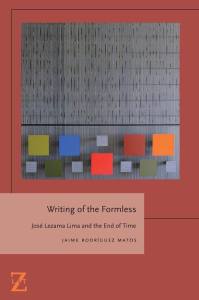
  1. The target here is messianism as represented mainly by Walter Benjamin and other representatives of salvific philosophies. Esposito notes that Hannah Arendt was critical of Walter Benjamin’s messianism in her “Gnoseological Foreword” of Benjamin’s Origin of German Tragic Drama. For a devastating critique of messianism and philosophy of history as a dual machine of political theologies, see Jaime Rodriguez Matos’ Writing of the Formless: José Lezama Lima and the End of Time (Fordham U Press, 2016).
  2. For the non-subject, see Alberto Moreiras’ contribution to the debate of the political in his Línea de sombra: el no-sujeto de lo político (Palinodia, 2006).
  3. Giorgio Agamben makes the claim that love in Heidegger, as informed by Arendt’s early work on St. Augustine, stands for facticity. See his “The Passion of Facticity”, in Potentialities: Collected Essays in Philosophy (Stanford U Press, 1999). 185-205.

An explanation for ‘deconstructing the administrative state’. By Gerardo Muñoz.

A few weeks ago at CPAC (Conservative Political Action Conference), when Steve Bannon, Donald J. Trump’s White House chief strategist, laid out the principle of “the deconstruction of the administrative state” as one of the immediate objectives of the Trump administration, there followed a storm of commentaries. For academics in the humanities, it was a perfect setting to mock ‘deconstruction’, and assert the un-political character of this so called “theoretical trend” in the academia, easily linking Derrida with Bannon’s strategic plan.

Just to cite one of many examples, French writer Alain Mabanckou twitted: “Steve Bannon, le mentor de Trump parle de “deconstruction” du povuir de Washington. Deconstrution? Srait-il un lecteur de Derrida?”. Many more followed on social media and in academic groups. These witty remarks were, of course, written under the sign of irony, which is certainly a central stimmung of our time. But irony is also one of the most serious genres to discuss a serious affair, of which I would like to briefly contemplate. Of course, my intention is not to defend Derrida, or even worse, to prove that Bannon has not read Derrida. I am sure that Bannon has not read Derrida, and even if he has heard of him, or someone told him a few things about deconstruction as a critical strategy of contemporary thought, this is irrelevant.

Bannon’s usage of deconstruction of the administrative state is correct, although in another sense. For one thing, deconstructing the administrate state is a technical term used in sociology and political science analysis as it relates to the fiscal state. In his new book Democracy against Domination (2017), Sebeel Rahman discusses the deconstructive force of computative fiscal logic over institutional structures and governmental regulatory bureaucracy [1]. In a good portion of the literature, whenever the notion of deconstruction of the administrative state is used, it refers directly to the dismantling of the fiscal regulatory apparatus (see Norris 2000). Whereas it might, at first sight, seem that Bannon is misinformed or just downright clownish, he is deeply versed in the specific discipline that he wants to target; mainly, political science of the welfare state as it has been discussed from the New Deal onwards.

One could press this point even further: the idea that Bannon wants to ‘deconstruct the administrative state’ does not merely amount to ‘more neoliberalism’ as cultural critics seem to reduce the problem. This is part of the truth, but not the whole truth. The attempt to attack the administrative state entails a serious assault on the rule of law, since as the most intelligent constitutionalists have recently noted, the administrative state is today the legal structure that has supplanted legitimacy over the deficit of presidentialism of the executive branch. Adrian Vermuele (2016) makes it clear that the administrative state is the law’s greatest triumph after the weakening of the separation of powers. This ultimately entails, that perhaps Bannon is well aware that it is not enough to destroy a democratic society from the standpoint of a sovereign executive, since it must be done from the very place where the rule of law resides, and this is where the administrative state plays a fundamental role. Bannon’s deconstructive gesture goes to the heart of the rule of law, which we have already started seeing as a check mechanism to Trump’s rampant executive unilateralism. Hence, the rumor that says that Bannon is a Leninst should be taken very seriously: Leninism seeks the destruction of the state and rule of law in order to create a dictatorship of the proletariat, which is Bannon’s civilizational response to globalization [2]. Bannon is a full-fleshed anti-institutionalist who admires not only Lenin, but also the decade of the thirties that he has called “exciting”.

At this point, it is perhaps almost unnecessary to say that Derrida’s deconstruction has little do with Bannon’s loaded attack on institutions of the welfare state. However, what is important is to note that Bannon’s articulation of deconstruction is inequivalent to Derrida, and a comparison becomes only possible if one subscribes to a transparent conceptual reservoir of the linguistic turn in order to abuse it. Thus, whenever a linguistic component is emphasized as hyperbolic of intellectual thought, the latter is suspended to favor an easy advantage in tandem with anti-politics.

Derrida emphasized that deconstruction was a condition of democracy, and that democracy could not take place without deconstruction. Democracy is really not a political concept in Derrida’s thought. It is not reducible to a tradition of “intellectual history”, and not even to the primal causation of life as predicated in the political. Such was, for Derrida, the exemplary nature of Mandela [3]. But to the extent that it solicits unconditional hospitality, it alters the alterity of the singular that is never reducible to political finality. This coming of friendship or non-enmity is another way of thinking through an infrapolitical existence. It is this demotic existence beyond the political what Bannon wants to destroy and obstruct in a move that is both fully ultra-political and non-political.

Notes

  1. K. Sebeel Rahman. Democracy against Domination. Manhattan: Oxford University Press, 2016.
  2. “Steve Bannon, Trump’s top guy, told me he was ‘A Leninst’ who wants to ‘destroy the State’. http://www.thedailybeast.com/articles/2016/08/22/steve-bannon-trump-s-top-guy-told-me-he-was-a-leninist.html
  3. Jacques Derrida. The Politics of Friendship. London: Verso, 2005. P.102-106. “Admiration of Nelson Mandela, or The Laws of Reflection”, Law & Literature, Vol.26, 2014.

Retreating from the Politics of Eternity: on Timothy Snyder’s On Tyranny: Twenty Lessons from the Twentieth Century. By Gerardo Muñoz.

snyder-on-tyrannyWe often cite James Madison’s acute observation from Federalist 10: “Enlightened statesmen will not always be at the helm”. Timothy Snyder’s On Tyranny: Twenty Lessons from the Twentieth Century (2017), is written keeping this political conviction in sight, so indispensable to the democratic aspiration of the framers more than two centuries ago. Snyder, however, is no messenger of good news. In line with those that have taken seriously the rise of presidentalism, and the expansive politization of the executive branch in recent decades, Snyder is making the case for a timely warning against a potential threat for tyranny in the wake of Donald J. Trump victory at the end of last year.

On Tyranny is informed by Snyder’s expertise and research as a historian of Eastern Europe and the Holocaust, which have resulted in landmark contributions such as Bloodlands: Europe between Hitler and Stalin (2012), and Black Earth: The Holocaust as History and Warning (2015). In both of these books, Snyder has shown quite convincingly, how the erosion of institutions and the rule of law, due to both communist and fascist planning and dismantling over the control of the eastern region, paved the way for absolute anarchy and systematic destruction that made the Holocaust a juridical and political reality. Snyder does not mean to say, by way of an easy equivalence, that Trumpism amounts to a repetition of this historical period. Rather, On Tyranny is a precise warning on two levels: on one hand, it is a plea to rethink the necessity of institutions in the times of the rise of what Arthur Schlesinger Jr. called the imperial presidency; and secondly, to learn as much as we can from History, particularly from the historical evidence that confirms that every republic has always combated and affirmed itself against a latent imperial drift. Snyder’s thesis, presumably informed from a historiographical position, also suggests a political anthropology. In other words, the battle against an empire solicits an abandonment of the voluntary servitude that only feeds the incremental force of reaction. Our present shall not be indifferent to this.

After the 2016 election what is really at stake is whether the Federalist warning against the rise of factions is enough to contain an unprecedented alignment of vertical hegemonic power. There have been scholars, such as constitutional lawyer Eric Posner in The Executive Unbounded (2013), who have said farewell to Madisonian democracy in light of the exceptional upsurge of the executive branch [1]. On Tyranny does not go this far, but it is obvious that its purpose is not to engage in the aporias and intricate developments of constitutional law in order to render feasible an argument in favor of a retreat from hegemonic politics. Non-hegemonic politics always entail breaking the spell of a given set of coordinates that have produced an impasse. Snyder provides an array of historical examples: Rosa Parks in 1955 or Winston Churchill in the darkest moment when Hitler materializes his territorial expansion. It is in these perilous moments that the retreat from hegemonic politics does not mean renouncing political action. It means, first and foremost, abandoning the hyper-political consistency that defines the eternity and enmity of the political. But I do not want to get ahead of myself while briefing Snyder’s book. Havel, Parks, Churchill, Arendt, these are names that metonymically index Snyder’s plea for a politics of vocation in a time when rhinoceros are roaming through the landscape. The reference here is, of course, Ionesco’s well-known 1959 play Rhinoceros, which Snyder introduces when discussing the submission to politics of untruth:

“Ionesco’s aim was to help us see just how bizarre propaganda actually is, but how normal it seems to those who yield to it. By using the absurd image of the rhinoceros, Ionesco was trying to shock people into noticing the strangles of what was actually happening. The Rhinoceri are roaming through our neurological savannahs….And now, as then, many people confused faith in a hugely flawed leader with the truth about the world we all share. Post-truth is pre-fascism” (Snyder 70-71).

The rhinoceros are the political converts, which are always one step too close to the work of hegemony and its delirious power. It is then entirely consistent that Snyder also makes the claim for the protection of a new sense of privacy (sic) that could contain the boundaries between oikos (private) and the polis (public) against the drift towards totalitarianism (Snyder 88). Tyrannical politics is also a politics without secrets. It does not necessarily emanate from this position that a new egotist sense of privacy will act as a modality in an existence that is now beyond risk, guarding its own skin from the wild beasts. Snyder recognizes that there is no politics without factions, as Madison would have also said. Hence, there is no real politics without a minimal corporeal investment (Snyder 83-85).

But we have moved away from the level of hegemonic thirst for domination, conceiving a relation with politics that is not exhausted in the singular existence. Or put in different terms, only in existence could a politics of lesser domination be allowed to emerge against the threat of factions. Politics should not be oriented towards the end of the administration of life, which always amounts to a biopolitics. A republicanist politics is the orgazanition of public and social life that prevents both, the intensification and nullification of life in the polis.

What becomes troublesome, as Snyder makes clear, is that the administration of politics is today justified under the name of terror. In fact, Snyder states: “Modern tyranny is terror management” (Snyder 103). This is, indeed, an actualization of the schmittian withholding of the state of exception now normalized at the heart of democratic systems. Hence, the new danger is not just juridical, although it is also that. Snyder presses on the fact that current governments and parties – from Putin’s Russia to Le Pen’s Front National to Trump’s populist rallies in Florida or North Carolina – are borrowing props and gestures from the 1930s, a decade that Steve Bannon has labeled “exciting”. It is no surprise to anyone that we are currently living in times justified by exception in the name of the “crisis”. It is this time of excitement that provides a grammar of historical teleology and inevitability, and further, of judgment. However, the passage from inevitability to something darker is what Snyder calls the politics of eternity, which is really the core of his book, and the sign under which neo-fascism abides:

“…the politics of eternity performs a masquerade of history, though a different one. It is concerned with the past, but in a self-absorbed way, freed from with any real concern with facts….Eternity politicians bring us the past as a vast misty courtyard of illegible monuments to national victimhood, all of them equally distant from the present.” (Snyder 121).

If there is no real concern with facts, it is because all politics of untruth are politics to cover the Real, or what Jaime Rodriguez Matos has recently called the formless thing [2]. And for Snyder, national populists of the far right are eternity politicians providing a form that at the end of the day is just sending signs of smoke (Snyder 122). What is being covered is the void that leads to a point of no return: mainly, that there is no “greatest moment to return to”, since it is impossible to resurrect Empire. This inevitable untruth provides illusory grounds to radical right rhetoric in Europe. Although, we must infer that this is also the moment where Trump appears in its maximum existential danger to us.

It is uncertain if the institutions of the West will withstand this immanent threat. Although it is in this conjuncture that the rule of law becomes as central as ever before, and to discard it, is perhaps one of the greatest acts of moral decrepitude. It is here where we awake from the sleepwalking of eternal politics, as we are confronted with the historical sense that gives us the phantasmatic company of those who have perished, and that have suffered more than us (Snyder 125). It is in this affirmation, we agree with Snyder, that we find a substantial push against all tyrannies.


Notes

  1. Eric Posner & Adrian Vermeule. The Executive Unbound: After the Madisonian Republic. Oxford: Oxford University Press, 2013.
  2. Jaime Rodriguez Matos. “Politics, Trace, Ethics: Disciplinary Delirium—On Trump and Consequences”. Paper Read at USC Conference, November, 2016. https://infrapolitica.wordpress.com/2016/11/14/politics-trace-ethics-disciplinary-delirium-on-trump-and-consequences/

Infrareligion in the abyss: on Jaime Rodriguez Matos’ Writing of the Formless: José Lezama Lima and the End of Time. By Gerardo Muñoz.

writing-of-the-formless_2017Jaime Rodriguez Matos’ Writing of the Formless: José Lezama Lima and the End of Time (Fordham U Press, 2016) is an ambitious and truly mesmerizing mediation on the Cuban poet José Lezama Lima in light of contemporary theoretical debates concerning the status of the political in the wake of Modernity’s decline into nihilism. Rodriguez Matos’ sophisticated intervention attempts to accomplish several objectives at once, and in this sense, the book does not pretend to be an exegetical or philological contribution to scholarly debates on the poet. Rather, in the book, Lezama is taken as a poet-thinker of the informe, whose main import into Western history of writing and thought is that of a ‘writing of the formless’ (Rodriguez Matos 171). In its totality, the whole book is a groundwork for such a claim, and it works through a series of tropologies, figures, and debates that extend from Lezama’s specific cultural Cuban context and its readers, to a set of wider debates pertinent to Left-Heideggerianism, political theology, or the event (although by no means, is the complex set of debates reducible to these three philosophical indexes).

If one were to describe the project in its most far-reaching ends, Writing of the Formless is important yet for another reason: by handling several topologies of Lezama Lima’s oeuvre, we are offered an in-depth analysis of the intricate conceptual wager in infrapolitics, or in infrapolitical-deconstruction, which as Rodriguez Matos suggests, is the provenance of Lezama Lima’s contribution as a critical task. The book is divided in two parts. In the first one, four chapters grid an explication of the problem of time, as well as that of the formless, revolution, and nihilism. In the second, Rodriguez Matos engages in an innovative reading of different zones in Lezama Lima that evidence the destruction of principial politics, and the opening towards an (infra)politics of the void. In this review, I can hardly do justice to a book that I truly consider a masterwork of contemporary thought. In my opinion, this monograph comes as close as it gets to being flawless in establishing conceptual premises and argumentative deployment. In what follows I will map some provocative elements of his exposition, in hope that it will be a starting point for a discussion with those critically engaging Latin America, the political, and the stakes of thought in our time.

The point of departure of Writing of the Formless is the temporal question (in Latin America, although it is not localized here as a site of privilege) of Modernity, which is registered as a Janus face machine: on one end, the linear time of Hegel’s philosophy of history; and on the other, the teleological time of the messianic redemption and reservoir to many salvific political theologies. Early in the book, Rodriguez Matos sets up to establish the conditions that guide the development of his task:

“But it now it seems that in fact modernity, and not any possible redemption or liberation from its political and economic deadlocks, is itself a mixed temporality that is constantly battling between a circular and a linear time – a linear time of alienation and a circulation teleological time of redemption. The two need to be taken together, even in the very (im)possibility of such a synthesis. And this would mean that modernity is no longer the other of the revolutionary interruption of empty chronological time; rather, these are two sides of a single coin” (Rodriguez Matos 33).

By way of this dual apparatus of time, it becomes clear that linear time represents the time of alienation, where the eternal return marks its radical detachment only to become the engine of the theological messianic interruption. The two temporalities that frame Modernity, according to Rodriguez Matos, are a policing force, as well as “a residual effect or the symptom of the emergence of order itself” (Rodriguez Matos 22). And it is this formal legislation that synthesizes a duality that veil, in a variety of effective techniques, the formless of any foundation. Throughout the book the formless has different dispositions, such as the “intemporal”, “time of the absence of time”, or Lezama’s own “muerte del tiempo”. These all play key strategic functions and deconstructive relays. It might be the case, at least implicitly, that Rodriguez Matos knows that the history of metaphysics to cover up the void is, at the same time, the narrative produced by its apparatuses. What is important, however, is that by allocating these two times, Rodriguez Matos is able to set up what was otherwise obstructed: mainly, the time of void, which falls right beneath all principial politics, always in retreat and outside legitimizing messianic and developmental policity of Western modernity that governs both the time of the One and that of the multiple. Lezama is the figure that mobilizes a drift away from these two modalities:

“…beyond the politization of politics, and beyond the image of time as synthetic operation, what remains is the possibility of thinking with the poet beyond the current apparatus of academic-imperial) knowledge and all of its returns” (Rodriguez 25).

One would not exaggerate much in concluding that Lezama Lima as a thinker of the informe becomes the necessary antidote and hospitable dispensary against the philological exercises of the traditional belleletrism, but also of decolonial and neocommunist designs that, although attempting at the surface to break-away with imperial semblances, end up carrying the guise of principial politics as the highest flagpole for self-legitimation.

The reading of the informe allows us to move beyond the temporal dichotomy between revolution and conservation, messianic originalism (such as that of catholic, later convert post-socialist official poet Cintio Vitier), and the multiplicity of historical time (such as that endorsed by Rafael Rojas, Cuba’s most sophisticated neo-republican intellectual historian). It must be noted, however, that many other intellectuals and thinkers are tested on this basis. The common ground shared by diverse thinkers such as Rafael Rojas, Ernesto Laclau, Cintio Vitier, Walter Benjamin, Bruno Bosteels, Alain Badiou, and those that subscribe to post-foundationalism becomes clear: mainly, the assumption that the crisis of nihilism of temporality can be amended by always providing an adjustment for the abyss. In this way, Rodriguez Matos offers a frontal critique of any claim instantiated in hegemonic phantasms: “Our task remains to think time in all its radical complexity – that is, to think time as something other than a solution” (Rodriguez Matos 44). Writing of the Formless stands up to this deliverance.

There are many important elements that come forth in this argumentation, one of them being that the covering of the formless, or the lack of foundation, is usually articulated through a master and masterable political theology. It is not just Rodriguez Matos who arrives at this conclusion, but also Bruno Bosteels by way of observing the inscription of Christianity in many of contemporary thinkers of the Left. In a passage cited by Rodriguez Matos from Marx and Freud in Latin America, we read: “All these thinkers [Badiou, Negri, Zizek], in fact, remain deeply entangled in the political theology of Christianity – unable to illustrate the militant subject except through the figure of the saint” (Rodriguez Matos 44). It is even more perplexing then, that Bosteels’ own solution to this problem ends up being just more political theology by way of Leon Rozitchner’s reading of Saint Augustine, and merely exchanging the category of the saint for that of the militant subject, even though this is already part of the history of alienation of Christianity [1]. But the reason for this might be, as Rodriguez Matos thematizes a few pages later, that any predicament for politization as supreme value today needs to ascertain some sort of militant subject of the event in order to guarantee a consensus on “contemporaneity”, and in this way avoids what the present is or what it actually stands for (Rodriguez Matos 109).

The chapters 2 (“Sovereignties, Poetic, and Otherwise) and three (“The Mixed Times of the Revolution”) attend to how the question of time was conceived within the Cuban Revolution. This framing, one must first note, already dislocates the grounds of the discussion centered on the sovereign or the caudillo, a fetish so dear to both revolutionary and liberal imaginations when confronting the ‘Latinamericanist object’. Hence, in chapter two, Rodriguez Matos advances a demolishing reading of the temporality of foquismo, although not on the grounds that one could have imagined. From a historiographical standpoint, it is common to agree on the fact that that both Guevara and Debray’s formulations have little substance in historical experience, since they are theoretical fictions that develop to master a non-repeatable event (the Cuban Revolution), which was far from being successful solely because of the foco guerrillero in the first place. But this is not Rodriguez Matos’ critique. The argument is set up to make the claim that the Revolution, in order to become flesh and conceive the unity and sameness with the people, theory must be first discarded (Rodriguez Matos 60). Rather mysteriously, in foquismo it is the people that ‘act’, while Guevara becomes its narratological supplement. This is the inversion of the Leninist principle that alleged that in order for a revolution to materialize it needs a good theory beforehand.

Guevara, in Rodriguez Matos, takes the role of the anti-Lenin. In fact, in a strange way, Che appears as a sort of naturalist-philosopher: “…what Guevara is after is the same time that was at issue in Marti: the idealism of the Revolution has to become a force of nature, sprouting in the wind without being cultivated…in all its originary ontological stability, phusis) and the people, without the transubstantiation of the idea into flesh yielding intimate unity, and without this force of nature forging revolutionary ideology…this passage would be nothing but the declaration of one individual from Argentina who has recently landed in a foreign land…” (Rodriguez Matos 60). Guevara is a hopeless romantic, who recaps the Romantic ideal of the fragmented temporality in the pedagogical poem, only that for him the impolitical people are in a “time out of joint”. This is why they must also become a New Man. The catastrophe of foquismo, is thus not merely at the level of a massive historical evidence, but an afterfact of a metaphysics that is already one step away from thinking the void, while formalizing it through a dialectical moment. Rodriguez Matos stages the central problem, just after having glossed Guevara’s revolutionary thought:

“For the metaphysics in question already relies heavily on the form in which it makes multiple small narratives. For the metaphysics in question already relieves heavily on the form in which it makes multiple temporalities appears together. That is, modernity is fundamentally and internally committed to the constant confrontation of disparate forms of time. Instead, I suggest taking a closer look at the time of lost time, the time of the void, and what might happen when it is not filled in but, rather, allowed to resonate in all its formlessness.” (Rodriguez Matos 61).

How should we understand this echo? The turn to Celan and Heidegger’s immersion in noise and the ontological difference validates immediately any vacillation in the answer, since what is at stake is ultimately to think not the “standstill of all time” of the messianic force, but our being in time understood as our most basic and intimate relation that we have with time (Rodriguez Matos 70). It is only this absent time of the formless that will be one of majesty, capable of undoing sovereign authority and its governability over the singular.

The third chapter moves against the belief that Lezama Lima can be grasped in interested disputes regarding his intellectual provenance, political ideology, or assumed Catholicism (origenismo). This is an arduous task, but Rodriguez Matos makes it look easy through a threefold operation. First, Lezama is moved beyond the antinomies of secularization and aesthetics, placed in the proper site of the religion of the formless (we will come back to this). Secondly, Rodriguez Matos confronts Lezama’s own interpretation of the Revolution as parusia or Second Coming, which coincides perfectly with Guevara’s own model of the “ways things are” that folds revolutionary Cuba into globalization due an ingrained total administrate apparatus over life (Rodriguez Matos 93).

This entails that revolutions, if we take the Cuban experience as metonymic of the phenomenon, are always already biopolitical experiences, even though Rodriguez Matos does not frame it in such terms. Third, by understanding the ‘mixed’ temporality of communism and revolutionary politics as convergent with the temporality of capitalism, we come to understand that the second is always on reserve in the backdrop of the state and its institutions (Rodriguez Matos 96-97). In sum, the superposition of revolutionary times with the time of capital is here shown, once again, to be two sides of the same dual narrative of modernity that turns away from the abyss at the heart of politics. This complicates many, if not all, of the assumptions that Cuban transitologists have disputed with very futile outcomes, in my opinion, in the last decade.

Finally, the fourth chapter “Nihilism: Politics as the Highest Value” rightly places the question of nihilism at the center. This is a return to the question of political theologies discussed above. Whereas many of the thinkers on both sides, republicanist and communist alike, take up the question of nihilism, the result, according to Rodriguez Matos, is that it is presented as a fight against those that think the problem of nihilism. Thus, the “banality of nihilism must be dismissed or critiqued” (Rodriguez Matos 104). The operation rests on the fact that the question of being must be avoided at all costs. And this is achieved in at least two main forms: discarding nihilism by proposing a “multiplicity of times” (Rojas), or by proposing a “living philology” (Vitier, Bosteels) that would be able to restitute a truth of a text of the past to give proper political ground (Rodriguez Matos 115). Now the tables are turned, and those that seek to cover the void, as if that were an option, appear as agents of a true nihilistic force.

The second part of the book titled “Writing the Formless,” provides a roaming through Lezama’s conceptualization of the void against politico-theological closure, arriving at the unthought sites of the ontological difference after Heidegger and deconstruction, and moving into infrapolitics. This is an exemplary section in the sense that Rodriguez Matos warns that he is in no position to offer a transhistorical formal theory of Lezama’s writing, and in this way he calmly avoids the universitarian-Master demand for a totalizing expertise of lezamianos. This operation is undertaken not for the sake of confrontation against Lezama specialists, but rather due to a more modest motive: it is not the point that drives Writing of the Formless. Anyone to counter argue on this level is rather to sidestep its most important contribution of this book. Finally, Rodriguez Matos lays out what is at stake, which is tailored as a question that by far exceeds Lezama Lima as a single corpus:

“Ultimately what is at issue whether there is a difference between those texts of the Western tradition that forget the question of being and those whose starting point is the challenge and the difficulty that the question poses, the challenge and the resistance involved in dealing with the ground that is and is not there in its absence. What is at stake is whether or not it is possible to imagine a writing and a thought that do not simply fall silent in order to guarantee the continuity of the narrative of legitimacy and sovereign authority in the poem or in politics – but the link between these two is also at issue here. That is, whether or not it is possible for posthegemonic infrapolitics to be something other than the trace of politics” (Rodriguez Matos 136).

What immediately follows is a series of closely knit constellations of the writing of the formless as absent time in Lezama, which I can only register here without much commentary: Lezama’s own critique of T.S. Eliot’s notion of the difficult, a critique of Garcia Marruz’s reading of the aposiopesis as rhetoric’s hegemonic property, Lezama’s understanding of Aristotelian metaphoricity; Lezama’s philosophy of an atopical One, and finally Rodriguez Matos’ own conceptual position of Lezama as an infrareligious and infrapolitical figure that pushes politico-theological legislation of principles to their very limit into a ‘nonsynthesizable reminder’ [sic] (Rodriguez Matos 154). Further, Lezama’s vitalist response to the Platonist pros hen, unlike the immanentist modern reversal, concludes in a Platonist affirmation instead of an overcoming of Platonism (Rodriguez Matos 139). Rodriguez Matos intelligently resolves this bizarre multiplicity vis-à-vis a parallel reading of Paul Claudel, who rejects aposteriori knowledge in exchange for the cognizant objectification of God before the sovereignty of the Poet. Although I am left thinking about the status of Neo-Platonism as it relates to the discussion of Christian Trinitarian thought [2].

But Rodriguez Matos goes further, and the Lezama that emerges from this destructive multi-level procedure is one that resists alleogrization, taking cue from Alberto Moreiras’ pioneering reading in Tercer Espacio (1999), as well as a privileged and secured position of a profane materialism over the question of form. And it is also in this very instance where Rodriguez Matos opens up to a complicated debate, which although unresolved, is the most striking and illuminating kernel of his book. In short: does ‘the roaming of the formless’ [sic] in Lezama offer something other than a trace of politics? I want to suggest, from my first reading of what is certainly a complex conversation, that this remains unresolved in Writing of the Formless. Let’s consider a key moment at the end of the book:

“For part of what I am calling attention to is the fact the staging of the formless in Lezama involves a thematization and an awareness of what should only be there as trace. This awareness goes beyond a more familiar claim regarding the self-deconstruction of discourses of their own accord – this is, after all, also what the trace is supposed to underscore. I would like to read this excess of awareness as a radicalization of deconstruction” (Rodriguez Matos 176).

This radicalization will entail leaving behind the moment of ecriture, which characterized the first wave of deconstruction in literary fixation and textual playfulness. Infrapolitics will be, programmatically speaking, post-deconstruction, or what Moreiras has recently called a second turn towards instituted deconstruction [3]. But the question remains: is infrapolitics then, a trace of politics? It is an unresolved question, but perhaps the most important one. Rodriguez Matos leaves us a clue at the very end of the book. When discussing the baroque – and let’s not lose sight of the fact of how late the question arrives, which is a merit and not a pitfall – Rodriguez Matos cites a letter of Lezama to Carlos Meneses: “I think that by now the baroque has begun to give off a stench” (Rodriguez Matos 181). The Baroque has come become an exchangeable token for the Boom, the last stage of identitarian transaction. But it is more than this: the baroque can no longer account for the informe at the heart of the image and rhythm.

Let’s probe this further. If the baroque is now exhausted, it is because all politics of the frame are insufficient to cope with the formless. The primacy of the critique of political economy today, for example, remains just one of its last formal avatars. But one could also respond to Rodriguez Matos’ final invitation, and say that while the aesthetic program of the baroque is demolished or turned into ashes, perhaps a trace of it remains in posthegemonic politics. To the extent that we understand the baroque as a political of self-affirmation against Imperium beyond hegemony, the baroque necessarily entails a republicanist politics [4].

In other words, while the infrareligious trace depends on the abyss, posthegemonic politics of republicanism sprouts from the baroque in early modernity against any imperial and counter-imperial conversions. Rodriguez Matos interchangeably speaks of infrapolitics and posthegemony throughout the book, therefore this nuance could be taken as a radicalization of the second term in line with the disclosure regarding the baroque. Post-deconstructive infrapolitics remains open. But if Lezama’s legacy is waged on having confronted the formless abyss of the absent time; perhaps, the author of Dador can also reemerge as a political thinker and existential representative not of Paradise, but of the secret Republic. This will entail a republicanism that, in each and every single time, does not longer participate in the eternal arcanum.


.

.

Notes

  1. This does not mean that St. Augustine cannot be read against the myth of political theology. Such is the task that José Luis Villacañas has accomplished in his Teología Political Imperial: una genealogía de la division de poderes (Trotta, 2016). In my view, Rozitchner’s La Cosa y la Cruz (1997) is a flagrant misreading of Augustinian anti-political-theology in exchange for a superficial materialist affective analysis. Although I do not have space to discuss this at length, I must note that Rodriguez Matos’ discussion of contemporary materialisms is also a timely warning about the easy exists that the so-called “materialisms” offer today as an effective transaction in contemporary thought. For his discussion of materialism see, pgs. 104-108.
  1. The question of Neo-Platonism is a fascinating story by itself, which speaks about the multiple in the One. Pierre Hadot studied its influenced in debates of early Trinitarian thought in his work of Marius Victorinus; recherches sur sa vie et ses œuvres (Paris: Etudes augustiniennes, 1971). Now, it seems that Lezama Lima himself was not foreign to Plotinus and Neoplatonism, which he linked it to the emergence of the modern poem. In fact, while reading Writing of the Formless, I revisited my copy of Lezama Lima’s unpublished notes in La Posibilidad Infinita: Archivo de José Lezama Lima, ed. Iván González Cruz (Verbum Editorial 2000). It was interesting to find that in “Oscura vencida”, a fragment from 1958, Lezama writes: “Si unimos a Guido Cavalcanti, March, Maurice Sceve, John Donne, en lo que puede ser motejados de oscuros, con distintos grados de densidad, precisamos que sus lectores, puede ser los más distinguidos cortesanos, o estudiantes que versifican cuando la hija del tabernero inaugura unos zarbillos…Con una apresurada lectura de la Metafísica de Aristóteles, sobre todo su genial concepto del tiempo que pasa a Hegel (sic) y a Heidegger; con cuatro diálogos platónicos, donde desde luego no faltara el Parménides. Con algunas añadiduras de Plotino sobre la sustancia y el uno…ya está el afanoso de la voluptuosos métrica en placentera potencialidad para saborear una canción medieval, un soneto del renacimiento florentino, o una ingenua aglomeración escolástica que se quiere sensibilizar, o una súmala de saber infantil, regida por un pulso que no se abandonó a la plácida oficiosa…” (252). This does not necessarily dodge Rodriguez Matos’ discussion of Claudel, but complicates it, since the trinity also merges at different points throughout the book. My question is whether any discussion of Trinitarian co-substantialism is still embedded in metaphysical structuration as potentia absoluta, or if Lezama’s informe is a Parthian attack against this influential model of absolute potentiality by turning it into a monstrous infrareligion. At stake here is also the issue of ‘reversibility’ that is obliquely exposed at the end of the book (Rodriguez Matos 189).
  1. See Alberto Moreiras, “Comentario a Glas, de Jacques Derrida”. https://infrapolitica.wordpress.com/2017/01/13/comentario-a-glas-de-jacques-derrida-notas-para-la-presentacion-de-la-nueva-traduccion-espanola-clamor-publicada-en-madrid-la-oficina-2016-y-hecha-por-muchos-autores-con-copyright-de-cristina/
  1. The question of the republicanist politics, Imperium, and the baroque is studied in detailed in Ángel Octavio Álvarez Solis’ La República de la Melancolía: Politica y Subjetividad en el Barroco (La Cebra, 2015).