In Chapter Ten of Paradiso, José Lezama Lima’s magnus opus, we encounter a curious dialogue between Cemí and Fronesis colored by a fortuitous reference to the Etruscan world, which speaks to the poet’s profane, and at times monstrous form of Catholicism. As it is known, even for an ecclesiastical authority like Tertulian, all Etruscan mythological and iconographical inventions had to be incorporated into the Roman civilizational state in order to wipe out the barbaric fraudsters and con artists soothsayers and liver readers out of date from the new revelation [1]. I have recently written on Lezama’s transfigurative Etruscan theology into his conception of the poetic image, therefore here I will only note how this particular transfiguration is enacted in the very existential outlook of the characters in novel. It seems to me that confirms that for Lezama the Etruscan sensibility was not to be understood solely as a resource of his complex poetics, but rather as an ethical form pertaining to the demonic in life. It is no surprise, then, that this happens in the reiteration of the encounter – the whole of Paradiso as the memorable final lines emphatically show is about recommencement of the unfolding of life – between the two friends:
“Bona lux, como saludaban los etruscos – le dijo Cemí… Ex templo, en seguida entre los romanos. Todo lo que no es en seguida es demoníaco, dice Kierkegaard. La vaciedad de la mañana se había trocado de pronto en la alegría del encuentro. – Vamos en seguida al cafecito de enfrente para hablar un poco – a Fronesis le pareció que la palabra cafecito, dicha por Cemí, bailaba en la mañana” [2].
I have not been able to find or corroborate that Etruscans, whose language is still a linguistic mystery, in fact greeted each other with something slightly similar to ‘bona lux’ as Lezama makes Cemí say. And it is still strange to think of Etruscans in relation to light and the morning phase of the day. What could it mean in this context where a minimal theory of the encounter is sketched (‘the encounter had brought happiness to the emptiness of the morning’) that Lezama explicitly identified the alleged mysterious Etruscans with a “good” light or illumination that is self-transformative? Lezama could have known the work of pioneer English archeologist George Denis, whose Cities and Cemeteries of Etruria (1848) reminds us how even in the tomb underworld of the Etruscans, there were always banquets decorated by lamp lights, erecting a threshold between the noche oscura of the infraworld of the dead, and the colorful landscape of the living image merging without reminder thanks to the bona lux of the encounter [3]. Is this it, then, a folded communion between the interiority of the dead and the exteriority world of the living? Obviously, nothing could more alien from Lezama’s intricate poetic world than a direct metaphoric restitution of the Etruscan world fixed in the autonomy of modern poetry, which will amount to a desperate attempt to deify language through a ‘spiritual drama’ as the conquering of self-absorptive verbal immediacy(it is in fact “en seguida” of the presentist time of response).
As Lezama had written in the gloss “Conocimiento de salvación” (1939): “Todos los grandes intentos poéticos contemporáneos, desde la poesía pura hasta el surrealismo, no son otra cosa que un esfuerzo desesperado por prolongar la percepción de temporalidad rapidísima, o trocar el estado sensible – ocupado según Schiller en mantener al hombre en los límites del tiempo – en ajustada percepción” [4]. But what is suspended here is the possibility that living poetically and sensibly – the dwelling of a serene life encountering in company of others, that is, in concordia – validates the attunement of life with its demon. And this was at the heart of Lezama’s perception of the Etruscan everlasting mystery: not simply what remains foreclosed in the arcanii of the infraworld, but the liberation of human potentiality through the grasping of its prophetic images: “Los etruscos ofrecían una palabra misteriosa, el potens, si es posible, a esto se añade el hoc age, házlo, es decir si es posible hazlo. El potens por la imagen hace posible la sobrenaturaleza” [5]. The potens stands in as the name for the incommensurable distance of living among things (theín). Hence, the only common good resides between things, and not in a substantive higher source.
In a thorough rejection of the supreme moral order proper to rationalist natural law, Lezama will take the enlightened pictorial sense of the Etruscans as the realm of possibilities that can organize life in the presence of what it has discovered: “un splendor formae…las imágenes como interposiciones de la distancia entre las cosas…ya no su enemistad, sino una llaneza de inmediato” [6]. The enlightened form produced by the encounter realizes a state of happiness that, thanks to the free use of language – the spoken word as the greeting voice in this case – it enacts a dance beyond sense becomes moving. This is why it is through the unknowable charitas of languagethat human beings become equals to the momentary gods of things in the world. Or at least puts them in proximity. One can believe that is the occasion for the gleaming abundance of bona lux – the mystery where something finally begins.
.
.
Notes
1. Lucy Shipley. The Etruscans (Reaktion Books, 2023), 163.
2. José Lezama Lima. Paradiso (Ediciones Cátedra, 1980), 478.
3. George Denis. The Cities and Cemeteries of Etruria (John Murray Street, 1848), 37.
4. José Lezama Lima. “Conocimiento de salvación”, in Analectra del reloj (Origenes, 1953), 251-252.
5. José Lezama Lima. “Apuntes para una conferencia sobre Paradiso”, en Paradiso (ALLCA XX, 1996), 712.
6. José Lezama Lima. “Las imágenes posibles”, in Analectra del reloj (Origenes, 1953), 179.
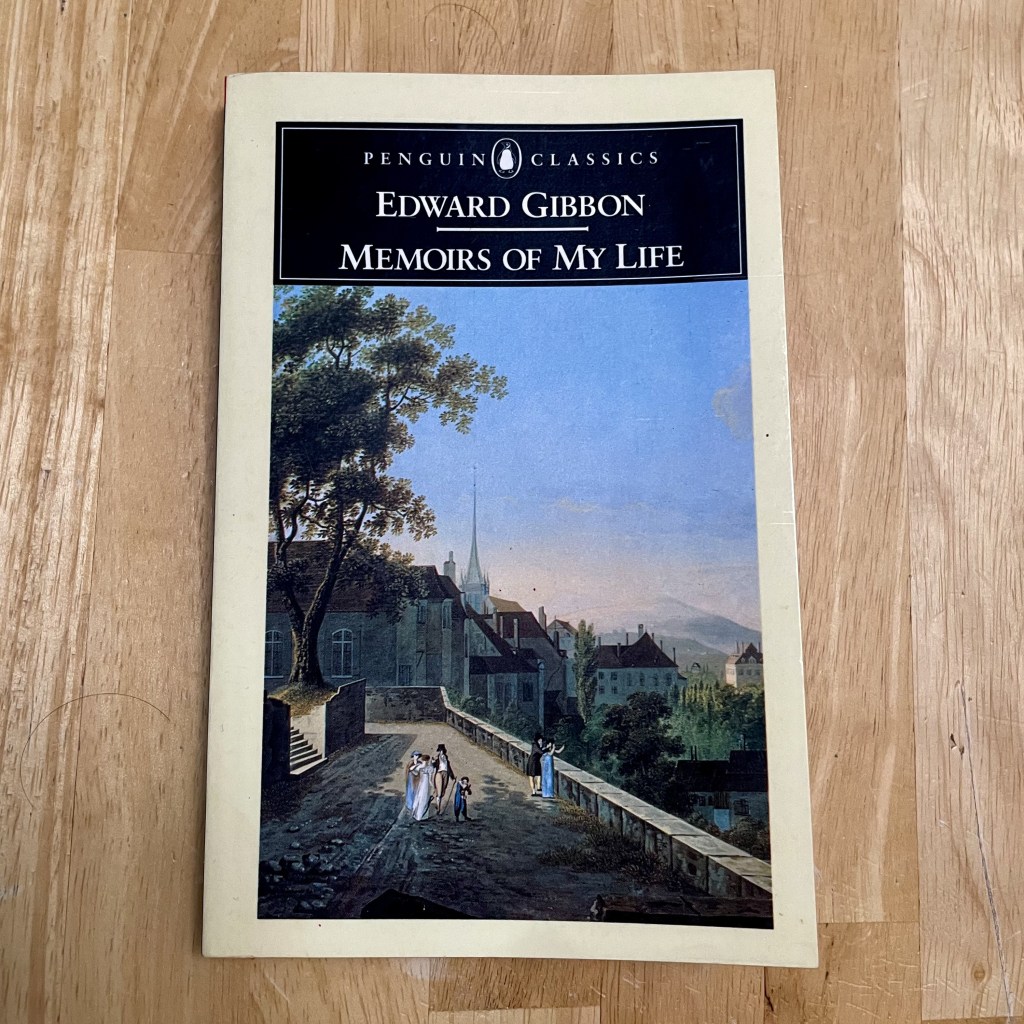
In his posthumous Memoirs from my life (1827), Edward Gibbon writes something quite striking about the modern English university in order to defend his alignment with the érudits. Now, to be an erudite was never something to be achieved at a university or academic discipline, it was something quite different in both style and form. Gibbon was quite crude when he writes:
“The schools of Oxford and Cambridge were founded in a dark age of false and barbarous science; and they are still tainted with the vice of their origin. Their primitive discipline was adapted to the education of priests and monks; and the government still remains in the hand of the clergy, an order of men whose manners are remote from the present world, and whose eyes are dazzled by the light of philosophy. The legal incorporation of these societies by the charters of popes and kings had given them a monopoly of public instruction; and the spirit of monopolists is narrow, lazy and oppressive. Their work is more costly and less productive than that of independent artists; and their new improvements so eagerly grasped by the competition of freedom are admitted with slow and sullen reluctance in those proud corporations, above the fear of a rival and below the confession of an error” [1].
It is worth noting that Gibbon’s defense of erudition – the same erudition that will make him undertake the genetic project of The Decline and Fall of the Roman Empire – is at least indirectly opposed to the reorganization of the university as infused by the ecclesiastical culture of priests and canon lawyers, which dominated the institution through the dogmas and platitudes legitimized by the currency of stable philosophical categories or doctrines. The university was always already an institution designed by the moral outsourcing of the intramural clerical rivalry among different levels of the administration and academic chairs. In a way, the future administrativeclerk will be an impoverished version of the clerical denomination (homo homini clericus now realized through leading ‘cultural benchmarks’).
It is only at this point that Gibbon’s skeptical and ironic stance against “philosophes” – the secularized figure of the ecclesiastical priest – becomes quite clear, since the rational philosopher occupies the role of the judge in the internal institutional validity, conceptual arraignment, and liturgical enactment of the self-sufficient subject of knowledge. Gibbon reacted against this specific “Enlightenment” that harbored a universitas drenched in the undercurrents of barbarism against the ‘freedom to understand’. Or more precisely: freedom to land the sublime height of personal style.
Under the sign of erudition, Gibbon understood tradition as a stylistic transmission that did not differ much from Hölderlin’s archeological suggestion in regards to antiquity; mainly, that formation only takes place when “we give ourselves our own direction determined by impure directions”; only this way truth-seeking can commence without prejudice and obscurantism [2]. In this light, the object of happiness must abandon the hubris of priestly academic knowledge in order to pursue the “love of study, a passion which derives fresh vigor from enjoyment, supplying research each day, each hour, with a perpetual source of independent and rational pleasure” [3]. It almost goes without saying that the fact that the contemporary university must justify every project, initiative, and prospect on behalf of current soteriological needs and values speaks to its organized alliance with barbarism against any possible form of personal erudition. But erudition, as something bestowed upon ourselves, will always persuade and humble men against the unreserved rhetorical force of the present.
.
.
Notes
1. Edward Gibbon. Memoirs of my life (Penguin Books, 1990), 77.
2. Friedrich Hölderlin. “The standpoint from which we should consider Antiquity”, in Essays and Letters (Penguin Books, 2009), 442.
3. Edward Gibbon. Memoirs of my life (Penguin Books, 1990), 98.
In a letter from the beginning of 1799 addressed to his mother, Hölderlin makes a sort of confession that fully illuminates (in a multum in parvo fashion) what he understood as a quiet or serene life. Or at least, it allows to grasp how he comes to envision it and towards what end. At first sight, what is striking is its bare literalness, too strange for a poet, and too mundane if it were not for its intrinsic lyricism. It is a lyricism that comes forth effortlessly, which speaks to the quality of its furtive testimony. Literalness is also described in its engagement with the world – and, more fundamentally, the sufficient condition for sense to emerge. This is the fragment in question (from Helena Cortés’ translation of the correspondence):
“No quise rechazar de plano para tener por si acaso una vía de escape, y sobre todo puesto que se ofrece a buscarme una plaza que consiste en acompañar a la universidad a un jovencito. Conocer más mundo (conocer el pueblo alemán le es tan necesario, especialmente a todo el que quiera convertirse en un escritor alemán, como conocer el suelo al jardinero) es al fin y al cabo la única compensación que me puede ofrecer una situación tan fatigosa, y lo alejado del lugar, que de todos modos muy lejos no puede estar de alguna universidad, me parece más ventajoso que perjudicial durante un par de años en los que aun no puedo contar con gozar de una vida tranquila entre los míos”. [1].
There is little doubt that the world disclosed here is well within the bourgeois interiority: there is economic calculation and anticipation. At this time Hölderlin was being offered the position of a preceptor to a university student. But there is hardly only this. There is also the affirmation of fleeing from what this world has to offer – and this means quite a lot in the early quarters of the Enlightenment. Una vía de escape – for Hölderlin the way out is not merely from economic hardship, but also the possibility to retain a certain knowledge that he dares to qualify as “of the world”: “to know the world, which is the only compensation to a fatigued situation and the remoteness of place”. Loss of fixity to place demands access to the world.
This is not your expected aesthetic education of man. The subject of the Enlightenment – its commitment to historical abstraction and the possession of aesthetic form as mediation to totality – prevails at the epistemic register at the cost of rescinding the dislocation from nature. By contrast, the knowledge implicated in knowing thy world should be like that of the soil with the gardener (pay attention to how Hölderlin inverts subject and thing: it is the ground that becomes accustomed to the gardener, and not the other way around). But at the threshold of the eighteenth century, Hölderlin’s “vía de escape” was also compensatory to the fatigue of a nascent epoch of the subject. The compensation did not entail an excess of knowledge; it was rather knowledge a way to disengage with the presupositions grounding the historical epoch.
This seems to me the operation at work in Hölderlin’s epistolary confession. Carchia was right in positing Hölderlin’s poetological aspiration of spirit and nature was entirely pre-Olympian, which requires subtracting himself from the modern parody of cultic romanticism [2]. A way out appears in cleared space when serene life is finally realized between friends; that is, among those that I make as friends (“los míos”). Poetry and making are here at their closest proximity cutting through the thicket of experience. This is what it means to know thy world. At the center of Hölderlin’s ethics there is a sense of distance – the waiting for a serene life in which language will finally gather itself unto presence. Ultimately, this is the plain literalness that the 1799 letter offers us.
.
.
Notes
1. Friedrich Hölderlin. Correspondencia completa, traducción de Helena Cortés y Arturo Leyte (Libros Hiperión, 1990), 467.
2. Gianni Carchia. “Introduzione” to Walter Otto’s Il poeta e gli antichi dèi (Guida Editori, 1991), 8.
Monica Ferrando’s short but dense book L’elezione e la sua ombra: Il cantico tradito (Neri Pozza, 2022) refines our understanding of the secularization debate in the wake of the epochal crisis of modernity and planetary domination. For Ferrando this current domination is rooted in a specific retheologization that must be grasped at face value, no abstractions allowed. The force of theological domination, which has become a proper religious imperialism, expresses itself as a true corruptio optimi pessima, which Ferrando locates in a very precise intersection: the passage from the suppression of dilectio to an instrumental manifestation of electio that will culminate in the unleashed power to dominate not only the relation with the world, but the very existence of the species. If the Ancient covenant of early Judaism was a prophetic covenant with God, the force of predestination will suppress the mysterious relationship of blessed life to render a “selective process” of theological election [1]. It is only with the rise Protestantism, and Luther’s specific hermeneutical efforts to neutralize the messianic message of Paul’s Letters to Romans that election becomes the paradigm of a new government of the soul in this world, which will ultimately find its material legitimacy with the advent of the reproductive logic of capital. Implicitly building on the thesis of economic theology, for Ferrando the advent of the machine of election materializes in the theological reform that translates the universal salvation of the prophecy into a never before seen economy of the dispensing grace through wealth retribution for human labor [2].
The reformation based on dispensation (oikonomia) differed fundamentally from the Church’s idea of change rooted in the ius reformandi. As Gerhart Ladner shows, if the “idea of reform” up until modernity presupposed periods of spiritual reform through monastic experience in relation to wordly profane time, the apparatus of dispensation of election was oriented at securing an integral government rationality combining law, economy and subjective production without reminder [3]. In this light, the operation of the dispensation paradigm is twofold: on the one hand, it promotes an anti-Judaic operation of reducing Jews to a people of this world that will ultimately will be identified with political Zionism; and, on the other, it dismisses the coming of Christ as worthless, and in the best case as merely postponed [4]. For a reformed theologian like Karl Barth – at odds with the economic evangelism that ultimately triumphed in the United States and that now it extends across the global – there was only a ‘great dispensation’ putting end to the abstraction of value and the homogeneity of the time of production [5]. But more importantly for Ferrando, the triumph of the dispensatory paradigm entails a new fundamentalism of judgement based on “election” (in the broadest sense of value equity and competition) will appear as the only immanent force capable of considering every other religion and confession exterior to itself as “merely pagan and idolatrous” [6]. It would amount to the triumph of the self-made ‘gentleman’ over the outward message of Paul.
The dominance of dispensation meant a full convergence between salvation and profane economic life that will bring exteriority into a crisis in the deepest sense. This is why for the reformist mentality, its own modern image initiates the epoch of irreversibility; that is, the pure historical progress guided by the will of election and the work of grace as an exception to universal salvation. If the modern reform has been at times understood as the new regime of social pluralism and system of indirect separations (between Church and State, civil society and religion, the public and the private, etc) for Ferrando it is on the side of the theological presupposition where its most terrifying arcanum must be found: a dispensational theology whose main unity is the recurrent intrusion, training, modification, and discipline of the forum internum, that is, the administration of the consciousness of man. Whereas the felix culpa allowed for the mystery of repentance and universal salvation; the political meditation of election through accumulation and economic benefits will legitimize the new discourse on toleration, “liberty”, and even democracy as the distribution of surplus value. In this sense, Liberalism (with Locke and other thinkers of the English and Scottish Enlightenments) was born, as later understood by Carl Schmitt, with the structural weakness of “individual freedom” and maximized autonomy that will require the expanding checks of police and governmental penalties to cope with the production of effects. Of course, every deviation or movement that could put a halt to the fiction of election will find itself on the side of illegality, or turned into a remnant of a surreptitious past that must be overcome at all costs. This implied, as Ferrando reminds us, nothing less than a novel modification of the anthropogenesis of the human species.
It is one of Ferrando’s most daring and surprising tasks to show how the machine of election does not merely occupy the economic-political sphere, but that it will eventually also imply an aesthetic imperative in Northern European culture; specifically with the rise of German romantic response to the crisis of the Enlightenment and the question of “classicism” of the classical Greece. If according to Gianni Carchia the aesthetic dimension of modernity should be read as a compensatory answer to the futility of the romantic revolution in subjectivity; Ferrando’s complementation to the thesis brilliantly shows how this attempt was meant to fail at its original ground due to the mimetic appropriation and metaphorization of the Greek historical past in the aesthetics program of Winckleman and German Idealism (with the exception of Hölderlin’s fugitive position) [7]. The mimetic “hellenization” of German romanticism and its posterior afterlives (one thinks of the Stefan George Circle, and Max Kommerell’s Der Dichter als Führer) gave birth to a notion of “culture” that hinged upon the separation of the aesthetic and the religious spheres that had to sacrifice the appearance of beauty in order to attest for the dialectics of objective and subjective forms of the “Spirit”, and thus leading to the triumph of the grotesque and the aesthetic imperative of uniformity and museification. For Ferrando the German spirit of genialismus had as a mission the overcoming Latin, Mediterranean and Mesopotamian forms of life where the distinction between beauty and life never understood itself as a “culture” or objective project of enlightened intellectuals and artists on the mission to transform the contingency of poesis into the realization of the Idea [8].
Displacing this aesthetic dimension to the present, for Ferrando the intrinsic disconnect between appearance and substance of art’s truth emerges today in the predominant social morality of today’s global bourgeoisie: hypocrisy. It is in hypocrisy where today one can see the inflationary hegemony of discourse over the true organization of life that is proper to the dominant metropolitan class of the West, and its maddening obsession with identity politics or “race” oriented discourse as a moral inquisitorial abstraction (it is in this process that the notion of election appears in the least expected of places: sky color, language use, demands for inclusivity, and hyperconscious towards an invented past). The work of hypocrisy, in fact, appears as a secularized form of the dispensation paradigm that aims to normalize and domesticate every form of life that challenges its specular regime. This is why according to Ferrando – and I do not think she is incorrect in saying so – the possibility of art (especially that of “painting”), as the undisclosed of truth will disappear from human experience, as it has no place in the moral functionalism of ‘contemporary art’ nor in the discursive struggle over global communication and opinion battles (the so-called ‘cultural wars’) [9]. The aesthetic museification of the world liquidates the possibility of art’s truth. Paradoxically, in this new scenario everyone must declare himself “an artist” of their own emptiness: the nowhere men that stroll in the works of Robert Walser or Franz Kafka – who never declared themselves to be anything – in our present are flipped on their heads becoming informers of the regime of a universal politics of recognition and moral judgement [10]. These ‘bloomesque figures’ confirms in the last epochal dispensation of the Reformist revolution that the premises of subjective freedom, economic gain, and autonomy of value have culminated in a new aesthetic imperialism that is anthropological and rooted in the triumphant religion of immanence and the sacralization of ultimate values. The endgame has been dispensed in the creation of a “new man” through the sacrifice of every exteriority in man, that is, of the invisibility outside the fiction of his personality.
The paradigm that Ferrando is describing vis-a-vis the operative force of “election” is also one of profound irony, since the mechanism of predestination and election, by betraying prophetic dilectio (love), the “free election” of the moderns entails that everything can be elected at the expense of losing dilectio: the only path towards the mystery of life. This is what the epoch of irreversibility and the arrogance of historical progress has foreclosed and it is incapable of considering. But for Ferrando life remains an ethics, which she links to Eros, whose appeal to the law of the heart is neither religious nor political, but rather an instance to the disclosure of truth. As she beautifully writes towards the end of L’ elezione e la sua ombra (2022): “Occorre osservare che qui si tocca una sorta di grado zero teologico, che scivola nel mero «biologico» solo a patto di esautorare la sapienza della madre o, detto altrimenti, la sapienza come madre, custode di una legge non scritta, di un nomos del cuore, che non necessita di alcun mandato esterno per esercitare la conoscenza che gli è propria. Si apre insomma quello spazio, costantemente e variamente negato, ma imperturbabile, di cui solo la madre, in virtú di una sapienza propria della natura umana, può custodire la legge.” [11].
The foreclosure of the acoustic relation to prophecy documents the recurrent political interest in the subordination of music to the moral captivity of the reproduction of humanity [12]. On its reverse, the law of eros, prior to the moral domain of natural law and the authoritative domain of positive law, is the protection of the indestructible region of the human soul where no political, moral, or economic dispensation can exert its force. This is confirmed today by the monstrous techno-scientific interventions and dysphoric alterations in the life of children as the last utopia in the long dispensation of the anthropomorphism of capital legitimized by rhetorical force of an unending sermo homilis [13]. In this sense, what Ferrando accomplishes in this wonderful essay is to remind us that the event of theology remains outside the dominion of priests and bureaucrats and situated in the prophetic dimension of Eros (love) that guards the inclination towards beauty and the disposition to attune oneself to the prophecy of the world’s fulfillment [14]. Hence, it is not in the community or in an integralist Christian traditional family order where the sacred dimension of humanity can be retrieved; rather, for Ferrando it is in the non-knowledge reserved by the eros of the mother who never decides nor choses before law, whose nonverbal “tacit authenticity” (“tacita autenticità del legame materno”) unconceals a true experiential depth away from the the delirious cacophony of our world.
.
.
Notes
1. Monica Ferrando’s L’ elezione e la sua ombra: Il cantico tradito (Neri Pozza, 2022), 8-9.
2. Ibid., 22.
3. Gerhart B. Ladner. The Idea of Reform: Its Impact on Christian Thought and Action in the Age of the Fathers (Harvard University Press, 1959).
4. Monica Ferrando. L’ elezione e la sua ombra: Il cantico tradito (2022), 24.
5. Karl Barth. “The Great Dispensation”, Interpretation, V.14, July 1960, 311.
6. Monica Ferrando L’ elezione e la sua ombra: Il cantico tradito (2022), 30.
7. Gianni Carchia. “Modernità anti-romantica”, in Il mito trasfigurato (Ernani Stamptore, 1984).
8. Monica Ferrando. L’ elezione e la sua ombra: Il cantico tradito (2022), 60.
9. Ibid., 91-92.
10. Ibid., 94.
11. Ibid., 106.
12. On the controversy of music as a tool to tame human’s passions, see John Finnis’ “Truth and Complexity: Notes on Music and Liberalism”, American Journal of Jurisprudence, Vol. 62, 2017, 119-124.
13. Gianni Carchia. “Eros y Logos: Peitho arcaica y retórica antigua”, in Retórica de lo sublime (Tecnos, 1990), 29.
14. Gianni Carchia. “Dialettica dell’immagine: note sull’estetica biblica e cristiana”, in Legittimazione dell’arte (Guida Editores, 1982), 21.



 Infrapolitical Reflections