The metapolitical collapse. by Gerardo Muñoz

We had a very rich and productive conversation this week with Josep Rafanell i Orra around the new and updated edition of his book En finir avec le capitalisme thérapeutique (éditions météores, 2022). But here I just want to entertain an early moment in the book that has some importance for some ongoing discussions. In the introduction that he writes for the new edition, Rafanell engages in a rare and honest exercise in self-critique. This is what he writes:

“Dans mon livre, je défendais une politique du soin. Onze ans après, je me livrerai bien volontiers à une autocritique rétrospective : la politique me semble destinée, irrémédiablement, à devenir une métapolitique, si nous entendons par là l’inévitable ré-institution d’identités qu’il faut représenter. Retour éternel de la police avec la violence de ses abstractions. Je pense que la politique, le politique (que vaut-t-elle encore aujourd’hui cette distinction?) nous condamne à nous absenter des mondes pluriels de la communauté et à neutraliser les effectuations de la différence” [1]. 

A lot could change in a matter of a decade. Indeed, a lot has changed for some of us, and it seems that for Orra it is no different. He is willing to admit it. He is no longer interested in defending a “politics of care” (or a hyperbolic politics), and not because it has become a recursive cliché in the empty chatter of governing metropolitan progressivism (I think of NYC or Colau’s Barcelona), but more fundamentally because the full affirmation of politics today can only contribute to the ever expansive calculative scheme of representational politics; a representational enframing that has become defunct and emptied out with the rise of administrative rationality evolving from the internal premises of political liberalism. It is true that the liberal democratic project from its inception was too weak to deal with indirect powers, and its long-lasting solution has been to engage in practices of optimization and value dispensation. But no amount of social representation can minimize effective domination. No one could defend this except in bad faith. The destiny of politics now transformed into metapolitical saturation can only muster social existence into predatory lines.

But there is another sense in which the metapolitical collapse could be understood. At least this is where I would like to displace Rafanell’s lucid intuition: the metapolitical destiny of politics emerges in the wake of the fault line between the metapolitical conditions of politics and political representation and mediation as such. Obviously, this is the problem that, already in the 1960s, the German jurist Ernst Böckenförde had to confront in his now famous theorem: the liberal state lives through conditions that it can no longer guarantee or promote.

In other words, the metapolitical conditions required for secularization have evolved (now fully realized through the West with different intensities and semblances) into the collapse of society-state mediations, turning to police powers to maintain the ‘one piece garment’ of social life. Theoretically, the dissociation between politics and its metapolitical conditions has led to attempts at generating sedative hegemonies that are always furiously defended – even at the expense of their failures – through rhetorical bravado. So, the decline of metapolitical condition entails the passage from the conditions of social contact to the endgame of the flexible and coercive management of indirect powers.

.

Notes 

1. Josep Rafanell i Orra. En finir avec le capitalisme thérapeutique (éditions météores, 2022), 21.

Jesus as gardener in the landscape. by Gerardo Muñoz

A reproduction of Titian’s early work “Noli Me Tangere” (~1514) cannot do justice to its majestical prudence if contemplated directly on the walls of the National Gallery. To use the terms “majestical prudence” might be a bit of a misnomer, but at least it allows to be slide into what entails the central enigma of the picture: its underemphasized contours of the biblical encounter from John 20:15, in which the resurrected Christ appears to Mary Magdalene as a gardener. A lot has been made about the Giorginesque influence on the picture, but it seems to me that the underemphasized composition speaks to the real triumph of Titian’s masterpiece. This is a triumph achieved not so much through the imports of allegory and pagan motifs, but rather as a complex web of distances untangled in the picture: the distance between Christ’s gaze with Magdalene’s upward look, but also the solitary tree inclined leftward, which compensates for the downwards light jerk movement of Christ as he takes distance to escape touching.

I have said nothing of the deep and overpainted deep blue sea in the background; or the receding landscape in the distance with a flock of sheep, high grasesses, barns, and a modest castle to the upper right side of the picture. A little man walks his dog, and we guess he is moving towards the sheep. Or perhaps not. The underemphasized and inconspicuous composition of the picture is precisely in the formulation of distances; invisible distances that allows the gathering of proximity. Only in this minimalist case can the painting be described as giorgenesque. Herbert Cook in his monograph on Giorgione captures this balance by what he calls invisible threads: “Peculiar, however, to an artist of genius is the subtlety of composition, which is held together by invisible threads, for nowhere else, perhaps, has Giorgione shown a greater mastery of line.” [1]. This is also a fair treatment of what holds up the elements in Titian’s picture.

Now, the invisible threads in “Noli me Tangere” do not merely substantiate the networks of lines; rather they also bring the picture to a point of a distant presence. This is what we are able to perceive when confronted with the painting in the walls of the National Gallery. There is another more straightforward way of stating the same: there is something “earthy” to Titian’s rendering of John 20:15, and by “earthy” we attempt to point to point at the distribution of distances between earth, sky, and landscape. This also implies how bodies move in it. It does not take much to document it: one could start by attending to Magdalene’s merciful arm raising to Christ’s cloaked body, followed by his holding of the hoe, which immediately swayes us to the tree. Magdalene’s left hand on an ointment vase reinstates the dowards movement to the ground. The earthly character is the tension elaborated by these distances – a very modern sensation that we will not get in the later pictures of resurrection in the glorious skies of redemption, as noted by Erwin Panoksky [2]. The earthly deposes the relieves of both glory and incarnation. Titian wants to give us the picture of a resurrection in a world that passes by as it retains its tranquility, which painting can only provide us through a non-emphatic incorporation of its distancing.

This could very well account for the assumption that “Noli Me Tangere” becomes a decisive “stepping stone in the evolution of modern culture…from the Byzantine theology to Pantheism and spiritual freedom” [3]. The fact that Renaissance painting was absorbent to the pagan myths is something that has been studied by the major art historians of the twentieth century, so one could also take Richter’s thesis somewhere else. Pantheism is not about the symbolic restitution of specific iconography or motifs, but it is rather the exposition of a particular experience: Jesus as gardener services the disclosure of an unmediated world granted by the perception of distances. The mistaken perception of Jesus as gardener can only be understood, even if momentarily, as undoing the work of Adam, only to be resumed and “served” (ābad) by the Savior [4]. But this might be reading too much “meaning” into the picture, which is deliberately underemphasized in its avoidance to allegorical weight.

To any modern attentive observer, it becomes impossible not to bring into the picture the early modern dispute between gardeners and architects. This opposition does not justify Titian’s “Noli Me Tangere’”, but it does serve (at least it serves me) to insist on the open relation between gardening and the disclosing of an unmediated world, which stands as a theological idiom of the picture. It is most definitely a picture of a resurrected life that is only apprehended by the possibility of immersing itself in the rhythms of the invisible that pertain the world. So, we do not have to wait for the late mysterious and dark Titian to find a full coincidence between painting and thought. “Noli me Tangere ” seems to tell us that there is thought whenever there is earthy grounding in the bifurcation between bodies and things in space.

And so, we can return to the thin blue sea on the left side of the painting, which magically brings all the earthly elements to the forefront. It is the ultimate distance, as well as the unbreachable region where all elements converge (pay attention to the vegetation and the clouds literally becoming blue) sharply on the horizon. It is also the most emphatic instance of the picture; the lacunae that guarantees the masterful structure of invisible threads that ultimately pins its intimate proximity to natural dissolution.

.

.

Notes 

1. Herbert Cook. Giorgione (George Bells & Sons, 1900), 41.

2. Erwin Panofsky. Problems in Titian: Mostly Iconographic (NYU Press, 1969), 40-41.

3. George M. Richter. “The problem of the Noli Me Tangere”, The Burlington Magazine for Connoisseurs, V.65, July 1934, 10.

4. Nicolas Wyatt. “When Adam Delved: The Meaning of Genesis III 2″, Vetus Testamentum, Vol.38, 1988, 121.

Persuasion of the surround: a reply to Andrés Gordillo. by Gerardo Muñoz

The friend Andrés Gordillo has generously sustained an ongoing conversation in light of the talk delivered in Mexico on institution and immanence (a first reaction could be read here). In a recent note he brings many elements to the table, and his versatile writing makes it difficult – alas, this is a wish come true for any reader – to locate an univocal point of entry. This is perhaps because there is none. Andrés wants to keep us at the edge, and so he enacts the set up: there is communication, and because communication is the event of language, there is still the possibility of mystery. Many things already pop up here, but this might be doing injustice to Andrés’ elaborate draft. So, for the sake of the exchange, let me open the route by running through a moment that impacted my first reading. It is this moment: “El desencuentro que aviva la amistad de ambos personajes [Narcissus and Goldmund] es el de haber decidido resguardarse en la exterioridad de sus elecciones, ahí donde son obra del amor”.

This is a condensation of what the Hesse’s novel means to him; or, rather, how it speaks to him in light of a discussion regarding the dominance of the civil principle, and the question of an experiential dimension that we defined provokingly as a minor transcendence. I am not sure I am in the position to unpack Andrés’ thesis, if it is a thesis at all. I do remember a couple of years ago an exchange with Alberto Moreiras on the logic of the encounter and the misencounter related, precisely, to the problem of the eclipse of experience. This is the problem that keeps soliciting thought; it is the problem of thought itself.

However, I am getting ahead of myself. Andrés stages a complex framing: there is friendship as absolute difference (or in virtue of a fundamental misencounter), and then there is an exteriority of their existential decisions; that is, in the manner that they are irreductible to their being in the world. I spoke of framing purposely, since I find myself these days with Pablo Picasso’s “The Blue Room” (1901) from the early period that I encountered in Washington DC. It is a rather small picture – and to the viewer, the semi-statue like nude, a female figure it seems, comes to the forefront sliding downwards. A mysterious resonance dilates between things – and indeed, the objects in the room (the sheets, the rug, the bouquet of flowers, the paintings, the half-open window) feel like things. This is an intimate surround at the threshold of catastrophe, where things could be lost at any moment. And we know that epochally they soon were.

We are in a strange setting – and if it is strange to us it is because there is a sense to which alienation and solitude here is the fundamental harmony of dwelling. This is not yet the assumption into plain and continuous historical time that will amass things into objects. The “Blue Room” (1901) inscribes esoterically the thematics of pain – it is a work in which Picasso responds to his friend Carles Casagemas’ suicide that very same year. No metaphorical or allegorical reading will do the job to put us in “The Blue Room”. In the wake of an elliptical death, pain stands in, like the nude the water basin, as the irreductible to history and the menacing social sphere. I will bounce this to another moment of Andrés’ text: “Por ahora me siento inclinado a conversar: avanzar hacia un umbral que se desploma”. This ‘crumbling threshold’ now appears to me as a sound and prudent description of what “The Blue Room” (1901) was able to achieve. An experiential awakening against the conflagration of modern historical time: soon enough – and boy was it soon – the interior space of “The Blue Room” will multiply into infinite cells of the planetary designs in which social man will be just a potential inmate. This is why Picasso in 1901 speaks still today a strange language for us – it discloses a surround, an exteriority that we have been deprived of. It is a surround that is fully folded within.


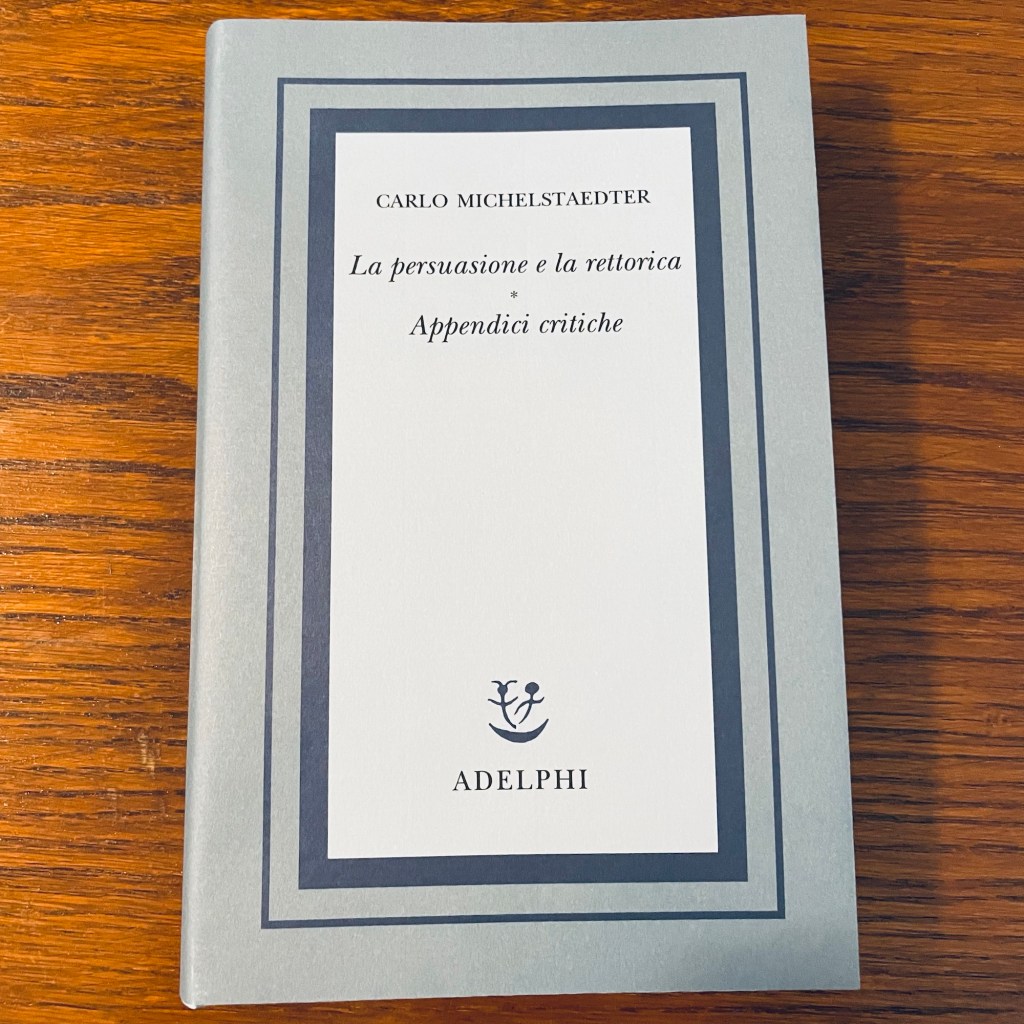
If pictorial practice is not mere representation, but also, more fundamentally, a form of thought, then we can claim that “The Blue Room” (1901) attests to the proximity of the misencounter of friendship that outlives in the experience of the surround. And here the painter had no privileged position – he is no figure of genius, no commander of historical destiny, no magician of forms. He is also a befallen figure because he is the cipher of life. But to overcome the rhetorical surplus of socialization requires techniques in the face of the irruption of pain. Nothing less solicited Carlo Michaelsteadter when criticizing the reduction of the “man of society” to the pieties in “exchange for the tiny learned task and his submission, the security of all that human ingenuity has accumulated in society, what he would not otherwise obtain except by individual superiority, the potency of persuasion”, he wrote in Persuasione e la rettorica, another masterpiece of the 1900s. Yet, persuasion requires to be vigilant at the moment where things enter the historical penumbra and its rhetorical artifice; the reign of endless confusion amidst the most transparent and disingenuous computations.

How one becomes persuaded within a tonality, and remaining to be so – this is also a surrounding mystery of “The Blue Room” at the outset of the century. We still dwell in its dissonance.

A new science of experience. by Gerardo Muñoz

This is merely a footnote to an exchange in light of the short talk “Immanence and Institution” that I delivered yesterday in Mexico City under the generous auspices of Professors Benjamin Mayer Foulkes and Andrés Gordillo (the recording should be available soon in the audio archive). In the rich discussion that followed the hypothesis regarding the triumph of the dominance of the civil concept today, Andrés Gordillo noted that a practice of “discernment” was required to confront the ongoing condition of planetary catastrophe that has only intensified in the wake of AI automation processes that orient the optimizing and unifying the totality of world-events. Alluding to his historiographical research on early modern epoch, Gordilo alluded to the mysticism of the seventeenth century’s “science of experience” (following Michel De Certau’s The Mystic Fable but not only this work) as an existential practice to retreat from the dominium of confession, but also to refuse the Protestant unification driven by the ends of predestination and grace. And unlike the early Christian mystics of the void and releasement, the proponents of a science of experience favored a discernment with God that was vested in every creation of possibilities and modalities exterior to life.

The mystical defense of a science of experiences, then, refuses the concretion of the social subject: being a subject of sin through the postlapsarian condition, but also reflecting the Protestant subject of election that will give birth to the secularization of consciousness and will. The science of experience is the exposure of the soul to the possible transformation with the exteriority as prefigured in transcendental exteriority. A transfiguration of the foundational unity of theological revelation. I find it fascinating that these mystics of the seventeenth century (some of them marranos or facing the problem of conversion) were already aware that an epoch of total dominium and absolute collapse against life requires a transformative nexus with the temporality of experience. 

When Erich Unger in 1921 contemplates the rise of a catastrophic politics in his Politics and Metaphysics, he retorts to a politics of exodus that, precisely, affirms the experiential dimension of existence and communication through what he would call the elevation of the imaginative capacities. In the face of a subsumption of politics into catastrophe, for Unger the immediate task was to elaborate the praxis of experience from the psychic imbalance of the corrosive effects of the subject. In other words, the science of experience names an interior exodus against every instance of rhetorical and mimetical fabrication that seeks to hold the plan discernment of life into a regime of administration and accumulation of plain historical time.


I agree with Gordillo that perhaps the diverse experiments of the “science of experience” could very well be understood as experiments in transitional thought against historiographical closures. The notion of experiment could be extrapolated from Saidiya Hartman’s usage, in a minimalist sense: ways of living on the other side of the rhetorical assignment of the fictitious life of the subject. But perhaps the very term “science of experience” today is a misnomer, in the same way that the proto-concept of “experiential politics” deployed by Michalis Lianos during the cycle of the Yellow Vests runs into an aporetic threshold to name the crisis of the soul’s attunement in the face of the conflagration of the world. Precisely the errancy of experience (and its non-sacrificial relation to pain) is what cannot be subsumed – and for this reason the invisible fleeting gradation – neither to a science nor to a politics.

Can holistic politics do the heavy lifting? On Michalis Lianos’ Direct Democracy: The Change Towards Holistic Politics (2022). by Gerardo Muñoz

Michalis Lianos’ Direct Democracy: The Change Towards Holistic Politics (2022) defines itself as a social manifesto to confront the transformation of the nature of political power, public institutions, and the tradition of political representation inherited from the Enlightenment and the French Revolution. This is something that Michalis Lianos – one of the most interesting sociologists of social control of his generation – had already alluded to in his writing during the cycle of revolts of the Yellow Vests in France [1]. In more than one way, Direct Democracy: The Change Towards Holistic Politics (2022) is an expansion of this intuition; although, unlike most manifestos, the book does not take up the tone of denunciation and rupture, but rather of extreme prudence to construct and adequate itself to the complexity of our contemporary societies to a new regime of power distribution and individual empowerment. The total political alienation from public deliberation and participation is, according to Lianos, what stands in the way of people’s common interests. Institutions, political parties, the formalist separation of powers, and the legislative bodies (now in the hands of administrative agencies and corporate firms) have been radically disconnected from people’s lives to the point of becoming endogamic in its practices of decision making and public governance.

No one today can doubt the univocal distrust on all things political (a sentiment dating back to the Romantic age if we are to believe Carl Schmitt) which reminds us that the most interesting social insurrections in recent times have been against the democratic neutralization of the specific metropolitan and capital organization of administrative power. In the face of this schism, Lianos proposes a move towards direct democracy that can short circuit these institutional actors and partisan interests in order to revitalize people’s empowerment. The realization of direct democracy presupposes – and this Lianos’ propositional reinvention of the unity of politics – what he terms a new ‘Holistic Politics”, which he understands as a new civic attitude and a culture between citizens in a “holistic away, as a whole” (Lianos 2022, 2). The aim is to empower and lower public and private decision making at the scale of people’s life consistent with “social trust as the key for a happy collective life” (Lianos 2022, 3). The operative notion of Holistic Politics is, then, both a model of institutional design through the problem of scale; and, at the same time, a reassessment of the epistemological grounds of social action. In other words, for Lianos Holistic Politics should not be oriented towards putting the right answers in any social project, but rather to “ask society the right questions each time” (Lianos 2022, 9). We presume that what is “right” in the “right questions” point to an existential need of the whole, since given the plasticity of Holistic Politics, it cannot appeal directly to neither social facts (since these are always changing) nor a stable legislative agenda of higher representatives (there are inexistent for direct democracy). Regardless of these specificities, Holistic Politics does impose a need that the direct democracy will demand a greatest individual and community participation on fundamental issues raised by the social assembly list of objectives as raised by anyone in the community.

Lianos defines the problem of mitigating social issues within the framework of Holistic Politics in this way: “Holistic Politics recognizes that the most basic political process is the equal right of anyone to put forward issues for discussion and decision. So it is constantly vigilant to ensure, with specific measures that wherever exercises power is required to give answers as to the issues and priorities raised but never to ask the questions or influence how they are put. Issues are raised and ranked in order by the citizens themselves” (Lianos 2022, 15). Lianos is aware that every form of established institutional behavior ends up becoming a social habit (it has what some political scientists called, at least years back, “institutional stickiness”) , and this is why rules for immersion in social interaction must change on a regular basis (Lianos 2022, 17). It is true that rules are the infrastructure to limit social actions (this is, in fact, its unlimited possibilities); although, it begs to ask to what extent the regular change of social rules do not become in itself a habit within the very logic of exchange that defines structurally the social. To put it in different terms, it is insufficient to think, as Lianos does, that capitalism is a concentration of all entities into money form; rather, it is because there is an anterior civil form of exchange that the problem of value always emerges as an indirect force against the unit of the political (Lianos 2022, 21). If one changes the lens from strict capitalist exchange to the problem of value, then it becomes clear that what first appears as an alteration of rules in social facts could, potentially, constitute itself as an aleatory imposition of values, where the “happy life” of some could amount to the valorized “hellish life” of others. Holistic Politics in the same way that it does not say anything about values, it remains silent about the problem of institutions, even though institutions are far from being part of the stagnation of representative democracy that Lianos wants to surpass.

The central question for Holistic Politics is whether it can do the heavy lifting that it promises to accomplish. Can Holistic Politics really open up a way out of the current poverty of the species in the wake of social and civilizational collapse? Lianos seems to be aware of this question if only in passing, as he writes on the subdivision on “Foreigners”: “Holistic Politics is an approach for the entire human species at its present stage of development” (Lianos 2022, 41). This ‘present stage of development’ of the human species remains largely unqualified, and Lianos takes the route of geopolitics and the necessity to overcome the classical separation of powers. But to the extent that we are taking recourse to the human species, there is a fundamental topological and territorial dimension that we are sidestepping too quickly. At bottom the human species is a creature that steps on the Earth crust, and which today have been designated in relation (whether included or excluded) to the metropolitan regime of concentrated and amalgamated reserves for production and consumption [2]. We can say that this is the last expression of civil nihilism: the capability of putting to work; or rather, of the power to put into energy certain elements in any given structure of exchange. And we are barely raising the question here that lingers from Lianos’ assumption. It suffices to say that the spatial composition of the human species today is erased from Lianos’ Holistic Politics, which is raises enormous doubts as to whether a social assembly, the rotation of social rules, and the redesigning of democratic voting can really do the heavy lifting for what is required for this “moment” of the human species. If this is so, then Lianos’s Direct Democracy has not moved past the Atlantic republicanist tradition that placed voting and participation at heart of the democratic polity (this is the heart of the Federalist, as Sanford Levison argued a few years ago). Holistic Politics in this outlook is probably the last residue of modern politics now grafted into the regime of social organization. But we would like to be as precise as possible about this affirmation.

Towards the end of the manifesto Michalis Lianos argues that Holistic Politics brings the individual and society face to face (Lianos 2022, 114). But if this is endgame of Holistic Politics it is also where we found ourselves in the gridlock of social denomination as an extensive (and intensive) regime of adaptation; of forever changing norms, of arbitrary rule making and rule erecting, and governing through contingent situation through the balancing of cost and benefit rationality of social cohesion. In this sense, the conception of the “overall point of view of the social experience” can describe the social composition, but it cannot transcend, as alteration and changing based on needs and values is already folded within it (Lianos 2022, 90). I take it that something analogous could be said of the problem of equity and proportionality in relation to adjudication and the rule of law in the paradigm of Holistic Politics, since what has triumphed in advanced societies of the West is not the fossilized conception of the separation of powers and the empire of judges and courts, but rather the expansion of equity and balancing of principles based on a cost & benefit rationalization to adjust and transform always already mutating social facts (Lianos 2022, 105).

Insofar as it is committed to the primacy of principles of equity and balancing, Holistic Politics does not breach the current framework of value distribution for specific ends of social reproduction (Lianos might say that his ends are better and stronger since he has done away with political representation, but we are also aware that there is an autonomy of value that can be operative on the borders of the political, in fact, it no longer depends on the political unit). There is an interesting discussion by Lianos on the question of failure and social expectations in Holistic Politics – to take up failure beyond the economic penalties and social mortification of the current neoliberal regime – that open up new possibilities only insofar as we move then from and against the infrastructure of the civil exchange principle for social action. Perhaps the realism that Direct Democracy (2022) appeals to has also something to tell us here, since the current collapse of the social regime is one in which failure is abundant, regularly optimized, and rendered productive through forms that accrue greater and intensive force of valorization. But can the irruption of failure in Holistic Politics be taken as a hole within the scheme of valorization? Perhaps it is in this schism where the question of the present stage of the human-species and a politics of experience can be posited against the grain of total social subsumption. The task of a different democratic imagination should depart from this void.

.

.

Notes 

1. Michalis Lianos. “La política experiencial o los chalecos amarillos como pueblo”, traducción & introducción por Gerardo Muñoz, eldiario, Noviembre 2019: https://www.eldiario.es/interferencias/politica-experiencial-chalecos-amarillos-pueblo_132_1289123.html

2. Amadeo Bordiga. The Human Species and the Earth’s Crust (Pattern Books, 2020), 30-31. 

The Gnostic residue. On Mårten Björk’s The Politics of Immortality in Rosenzweig, Barth, and Goldberg (2022). by Gerardo Muñoz.

Mårten Björk’s The Politics of Immortality in Rosenzweig, Barth, and Goldberg: Theology and Resistance Between 1914-1945 (Bloomsbury, 2022) is a major contribution to the ongoing discussion on theology, politics, and life in our present. Indeed, this book of unmatched originality will radically change the coordinates that have structured these debates in and beyond the academic disciplines involved. First conceived as a longer dissertation entitled Life outside life and defended at Gothenburg University in 2018 (which included an voluminous and illuminating chapter on the work of German theologian Erik Peterson, not included in the published monograph and scheduled for publication in the near future) studies three figures of the German interwar period that confronted the civilizational catastrophe of the twentieth century and the rise of the regime of mass production. Through different conceptual elaborations in Franz Rosenzweig, Karl Barth, and the Oskar Goldberg Group (it also includes thinkers such as Adolf Caspary and Erich Unger) a unified thesis emerges: these thinkers crafted a fundamental response to the collapse of the legitimacy of the modern epoch through a radical imagination of immortality and eternal life (Björk 2022, 3). From an angular perspective, Björk’s book measures to Hans Blumenberg’s groundbreaking defense of the legitimacy of modernity through “self-affirmation” of the human; a philosophical anthropology predicament that today has become fully integrated into the arts of planetary destruction, although its genesis is to be captured in the first decades of twentieth century through the dawn of a new catastrophic politics (the term is coined by Erich Unger in his Politics and Metaphysics). In Björk’s account, these thinkers took the stance against the stimmung of the epoch, its historical closure as well as the immanence of nature in order to take up a historical collapse that was civilizational in nature.

It would be a common place to remind the readers of this book that the figures of the research (with the exception of Rosenzweig who in some corners has been taken as the greatest Jewish philosopher since Maimonides) have been unwarranted buried in the monumental and political historiographies of the period and in the edifice of normative Continental philosophies of the twentieth century. However, Björk’s monograph is no simple restitution of dead old men, as this would be too accommodating to the field of the history of philosophy. Behind these figures there are multiple strategic displacements that connect the destruction of biopolitics to the reformulation of ethics of the dead, as well as the revision of Judaic theological sources to execute an effective retreat from the collapse of civilization of the last 5000 years of the human species. In this quadrant there is also a timely gesture on the complicated relationship between Judaism and Christianity; a relation that the book never really solves, although it runs throughout the book flagged for possible future explorations. Methodologically, it is the field of “theology” (not of science of religions a la Weber) that returns to the center as a way to explored an unthought dimension of immortality – that Björk properly renders as life outside life, against all biopolitical saturation and ecological catastrophe of the natural world. It goes without saying that there is an untimely tone that directly speaks to our present. Indeed, it is the radical theological and cosmological presuppositions (outside the formalism of religion and the apocalyptic historical saeculum of the Church) where something like a radical new existence of what it means to live can be rethought. This is Björk’s fundamental invitation.

In “Yearning for a system: Franz Rosenzweig and the great paganism of life’, Björk offers an all-encompassing outlook to the work of the Jewish scholar whose famous Star of Redemption was also accompanied by an interest in European geopolitics of the first decades of the century. In the midst of the First World War, Rosenzweig witnessed the rise of a new paganism of the state as the acceleration of the struggle for life in the West reproducing forever war (Björk 2022, 29). For Rosenzweig modernity was not an authentic or unfinished secularization, but rather the institutionalization of a pagan order of depredatory confrontation that foreclosed the world without outside: absolute immanence now meant the subjectivation of new false gods of modern civilization ordered towards survival and struggle (Björk 2022, 25). Against this backdrop, Björk reads Rosenzweig’s Star as an original theosophy of redemption of the world that exceeds the national political counters, while offering a new planetary and universal dimension of salvation beyond the state as articulated in Globus. Furthermore, Björk notes that Rosenzweig saw himself as a sort of Jewish fighter in the defense for a new planetary community with “religion as an instrument for change” (Björk 2022, 53). Even though the language had residues of imperial imagination proper to the time, it is the theological vector that distorts the political register of the ground battle for survival. Here Judaism appears as a subtraction from conventional historicity by retreating to a prehistoric past where the ‘unity of the world’ had no nomoi, states, or borders (Björk 2022, 54). It should be noted that something similar was advocated in his 1922 booklet Die Staatslose Bildung eines Judischen Volkes about the stateless wandering of the Hebrew people, by Erich Unger who thought could show a way out of the decadence of Western civilization through the revitalization of ancient Judaism. The Jew had never been a member of the polis or a slave of the state, since the Judaic Kingdoms were ruled, as Björk explains, “by an antipolitical priesthood” or a “metapolitical priesthood and not political kingdoms” (Björk 2022, 61). The sharp contrast to the modern Judaic subtext is of importance: whereas Eric Nelson shows in The Hebrew Republic (2010), how the ancient Jewish sources influenced the constitution of the modern state theories of Thomas Hobbes and John Milton; the work of Unger and Rosenzweig centuries later, in the wake of the Weimar era, seeked to radically alienate the command of Judaic prophecy from the regulatory political and geopolitical techniques of anthropological modernity. The gap between the two, for Rosenzweig, would be the hope for eternal life against the management of survival to which modern political grammar succumbed without return (Björk 2022, 66).

But theology offers the route to imagination and vocabulary of restitution, and infinite recapitulation. To grossly synthesize Björk’s thesis: life is best understood as an endless dialogue with the dead. The second chapter “Abundance and scarcity” glosses aspects of Reformed theologian Karl Barth’s thought against the materialism of scarcity of the world and the principle of abundance proper to eternal life. By tracing Barth’s critical dialogue with Feaubach’s sociology of religion of the species-being (which radically impacted the way Marx and Marxism came to understand theology), Björk’s theology puts paradisal life at the center of the mission of salvation; a heretical notion that exceeds the predestination theology of grace deployed in the organization of the modern kakedomonic public powers of modernity (Björk 2022, 88). In this sense it is insufficient to define the capitalist religion as merely a cult without dogma or atonement; it is also, perhaps more fundamentally, an axiomatic system that accentuates the two-dimensional positionality of death and life without residue. For Barth, Björk reminds us, theology is a way out from the cultish axiomatics of the countable and measurable of the visible world: “Theology….seeks to open the believer to the belief in the invisible side of the reality of the world. Theology must become an investigation of this invisible world to which further posits that the visible world is related” (Björk 2022, 103). And Barth’s lifelong interest in the theology of resurrection was precisely a way to insist on the invisible register that conflates nature, morality, and survival of the living within the objective normativity of the world.

Perhaps the most interesting aspect of Barth’s theology discussed by Björk comes by way of the opposition of ethics and morality – this is elaborated as a rejection of the predicament of natural law’s imago naturae and its dependency on rationality – where the second is discarded as merely finite life unto directive command of the natural good. On the contrary, an ethics suspended by the postlapsarian stage is guided by the principle of suum cuique (Björk 2022, 114). The suum cuique (‘to each its own’), although prima facie echoes the Thomist epikeia, it is also free standing for something more: it is a limit to the irreducibility of life in relation to God, which cannot be inscribed in a system of balancing of moral principles in the hands of a sacerdotal authority. Whereas the moral principle of equity (epikeia) organizes the government of this world through principles and moral reasons for action; the suum cuique is the limit set upon our finite life and the eternal in the scope of the saeculum. Björk connects the notion of the suum cuique to the Barthian figure of the “strange saint” who “with tears and laughter provides God and in this provocation is obedient to the election that forms death into life” (Björk 2022, 116). The suum cuique, accepting the postlapsarian condition rejects the instrumentalization of original sin in order to become a “vast eon of the cosmos itself…temporal and finite but also eternalized as that which once was” (Björk 2022, 117). In this way, the suum cuique prepares the paradisal affirmation of every unlived life, an anathema to the thomist substantiation of merely personal dignity and the exceptional mechanism of individual mediation with the economy of election and grace.

The theological exploration of modality of being – this is one of Björk’s implicit lessons in the book – never truly disappears in modernity, but rather reemerges in unexpected spheres. The politics of immortality does not pretend to exhaust this problem. But it is in the last chapter on the enigmatic figure of Oskar Goldberg where this theme is best explored as the true meaning of a life outside life at the center of the book’s conceptual development. Oskar Goldberg is one of the most enigmatic figures of the Weimar era; a magnetic personality that gathered diverse personalities from all corners of the intellectual milieu. He was looked with high suspicion by Thomas Mann, who portrayed him as a mystical undemocratic thinker in Doctor Faustus, but also dismissed by Walter Benjamin and Gershom Scholem (it only suffices to look at the correspondence collected in Scholem’s Walter Benjamin: The Story of a Friendship). A scholar with strong and sedimented knowledge in the Talmud and Ancient Judaism, Goldberg developed a highly sophisticated and speculative theology of the transcendental organism, to put it in Bruce Rosenstock’s terms, which provided an original formulation of a transcendent being based on the Torah in the wake of the new biological theories of the species (the work of Driesch, Uexküll, Spemann, among others) [1]. The biological and mystical vocabulary of Goldberg aroused immediate skepticism from the German intellectual class, but Björk convincingly shows that Golberg’s project was not an arabesque of a madman, but rather a very peculiar modal speculative system that seekd to confront the 5000 years of the civilization of fixation of the Western transition from the society of myth to the civilization of production and psychic energy imbalance (Björk 2022, 127). For Goldberg the passage from the prehistoric stage of myth to the inauguration of the religion of the state meant the sedimentation of a civilizational regimen oriented towards production, devastation, and positionality (Theophanidis recently expressed the proximity between Goldberg’s fixation and Heidegger’s Gestell, unexplored in Björk’s book). Björk is attentive to the fact that Goldberg was not just a proper name but also the constitution of a sort of ‘metapolitical university’ that gathered diverse figures, such as the economic historian and political thinker Adolf Caspary or the philosopher Erich Unger, both who developed their own critique of technological domination under the shadow of Goldberg. Thus, the critique of civilization is not to be taken as an abstract mysticism; for Björk, the concrete effects can be read in Caspary’s forgotten The Machine Utopia (1927), which criticized the utopia of machine civilization proper to both Soviet Bolshevism and Western capitalism – two social orders that shared the same the same historical horizon: reproduction and accumulation of surplus value (Björk 2022, 142).

In this framework, and against the historicist analytics of Marxism, for the Goldberg circle class antagonism and division of labor was not oriented towards emancipation, but rather towards the realization of a global total state. For the Goldberg circle to escape the civilization of the Behemoth of the industrial state required nothing short than a politics of errancy (defended by Unger in his Politics and Metaphysics of 1921) and the reversal to a modal relation with YHWH as an effective and potential dimension against the imbalance of an impoverished reality. Björk claims that for the Goldberg circle there were three possibilities of existence of coming to terms of the modern decline towards: civilizational fixation, myth, or Torah (Björk 2022, 154). And in different ways, they opted for the Torah, which implied not an identitarian reversal to a territorialized Volk but rather an infinite task of becoming immortal, given that our modes correspond to the nature of God and the world (Björk 2022, 166). The task was to depose the production of evil and suffering here and now as mobilized by the incarnation of historical progress. This infinite retreat from the materiality of the finite of the species was a way to open a new polytheism to the Ancient Hebrew metaphysics elaborated in Goldberg’s book, The Reality of the Hebrews (Die Wirklichkeit der Hebräer, 1925). In other words, to exit from the fixation of the 5000 years civilization required a passage to immortality as a way to “make us unadapted to the normal laws of evolution” and to the objective world (Björk 2022, 178).

Truth be told, immortality never disappears from modern political imagination and governmentality. Some of us still remember that one of the famous mottos of the Cuban Communist Party was: “Los hombres mueren, el Partido es Inmortal” (“Men die, but the Party is immortal”), which ultimately served to guarantee the idolatry of the state’s sacrificial principle through a continuous “lucha” (struggle) of everyday life under real-existing administrative communism. Likewise, in recent years Boris Groys has argued at length that immortality lives off in the topology of contemporary art, where archivization, spatial flexibility, and museification of the historical Vanguard stand in for the desire to become immortal [3]. This is, indeed, what Björk calls, following Blumenberg, the moralization of immortality whose political translation resulted in truly barbaric consequences that we are still suffering (Björk 2022, 186). Against all moralization and political instrumentalization of immortality, The Politics of Immortality in Rosenzweig, Barth, and Goldberg (2022) rises the theological mirror so that yet another anthropogenesis event through the “the Gnostic residue by insisting that the problem of evil could only be solved by God” (Björk 2022, 190). In other words, the problem of immortality restores the gnostic residue to its proper place beyond exceptionalism and anthropological humanism, since finitude (death) externalizes what is living, while “life” now becomes the meaning as its own otherness to the modes of God. Departing from the fourfold structure of the history of the modern error in Nietzsche’s typology, we could add a fifth: the error of conceiving the gnosis as worldly aspiration to domesticate exteriority as a forever postponed apocatastasis.

It is in the sense that Björk’s important book complements the unfinished elaboration on the gnosis undertaken by Giannia Carchia towards the end of his life: the exodus from the fiction of the subject and the person implies nothing short than the “resurrection of the human community capable of renewing the arc of history that appears so dramatically broken” [3]. Perhaps Carchia was a bit of an optimist here: the historical arch emanating from the potstlapsarian moment is now in ruins, but the gnostic residue remains once the darwinism of human-assertion has fallen flat into pieces across our planet (Björk 2022, 197). But Mårten Björk majestically teaches us that to keep insisting on life (on absolute life, on dignified life, or the monstrous “good enough life” recently proposed in a frank instance of academic nihilism) cannot but reproduce the civilization of calamities that has put the world in the road to extinction. In the current epochal implosion all these pieces are more apparent than in any other time in history. Yet, life is elsewhere, always escaping objectivity and immanence: “it is the invisibility of the wished, the desired and the dreamt. This is what human life entails. It is related to the wide world of what could have been or what should have been” (Björk 2022, 199). The modality of eternal life is also what value cannot apprehend, and for this reason what remains undialecticized, stubbornly disjointed from every unbearable fiction of the world. The Politics of Immortality (2022) is not only an exceptional book; it moves us to look to what always remains on the side of the invisible, to the unsaved in the exterior elan of every life, our lives.

.

.

Notes 

1. Bruce Rosenstock. Transfinite Life: Oskar Goldberg and the Vitalist Imagination (Indiana University Press, 2017).

2. See, Boris Groys, Política de la inmortalidad (Katz editores, 2008), and “The Immortal Bodies”, Res, Vol.53-54, 2008.

3. Gianni Carchia. “Elaborazione della fine: mito, gnosi, modernità”, in L’amore del pensiero (Quodlibet, 2000), 150.

On the community of friendship. by Gerardo Muñoz

There is no surprise that the growth of social fragmentation runs parallel to appeals to community and communitarian affirmations. For anyone today in the university (at least in the United States, but I am told that the trend is similar across parts of Europe and elsewhere) it is easy to see that all initiatives and justifications for actions (an art curatorial project, a library event, you name it) is almost always done in the name of the community. The communitarian affirmation emerges to help cure the otherwise too crude and unbearable wounds of the social bond and the community of the species (Gemeinwesen). A friend was on point recently in defining these communities of obligation, participation, and self-valorization as a minima societas; a mini society that helps to create the illusion that “Society”, somehow, is still here.

As we know, this is not far off from Edmund Burke’s famous theory of “little platoons” meant to orient humanity towards the virtues of public affections. The collapse of civil-society and state mediations realized the Burkean predicament to its integral idealization, which is why today radical Marxist, academic bureaucrats, postliberal nationalists, experts in mental health and psychiatric treatments, contemporary art curators and even special units of the police can all agree that community is the highest value that must protected and sustained. In this framework, there is no outside to the community, and every outside becomes integrated into the community as a value.

The community lodges the artificial allure to retract from catastrophe, but it does so by reproducing the catastrophic it seeks to avoid: that is, by negating the possibility of exteriority of every community sustained by the affective transmission of vanity and recognition. This is why to speak of community of friendship is a misnomer at best, which introduces a great amount of confusion between these two forms of contact. In a fabulous moment in his Il dialogo della salute, Carlo Michelstaedter goes as far as to write that: “In the communities of friendship that are born from a common vanity, every life off the death of those who are already outside the community. Everyone in its own solitude swallows with an empty stomach the sour implications of these lethal conversations. But these are the companies that please men”.

It is a remarkable passage that exposes the irredeemable position of a community of friendship, which ultimately subsumes the friend into the logistics of debt, obligation, and recognition and satisfaction. As in Mary McCarthy’s novel The Oasis (1949) about a group of disaffected antinuclear intellectuals who form a community in the mountains of New England, every community of friendship is destined to the worst catastrophe imaginable sacrificing both friendship and the world through the circulation of value.

Precisely, if friendship means anything, is that it is on the other side of valorization that permanently conflates language and directives of action. What happens in McCarthy’s The Oasis is precisely that language becomes a medium for directives and exchange, and friendship a hellish reality of ‘those who belong’ but now have nowhere to go.

The impossibility of separating community and friendship will only perpetuate the politics of catastrophe that has colored the entire course of Western political modernity. The Spanish political leader Pablo Iglesias recently captured the bad faith of our times: “Puede que la manifestación no tenga un impacto político inmediato pero del mismo que los católicos se encuentran en misa nosotros nos encontramos, nos abrazamos en las movilizaciones. Somos parte fundamental de una comunidad.”

For sure, a magnetic secularized religious liturgy lives on Iglesias’ candid heart. But we know that the partition of friendship is neither an offshoot nor a declension of a substantive community; it is what takes place on the other side of pathetic valorization.

Adespoton, the flight of freedom. An intervention on Pulcinella for the PAN Group Meeting. by Gerardo Muñoz


I want to thank Lucia Dell’Aia for putting together the PAN Group, which she describes as a natural garden composed of different voices already constituted and dispersed around the world. The group’s initial inspiration springs from Giorgio Agamben’s Pulcinella ovvero divertimento per li regazzi (Nottetempo, 2015), a beautiful and important book. Pulcinella is, prima facie, a book about a puppet (the famous Napolitan puppet that I remember first encountering years ago in an Italian pizzeria in New York Upper West Side without knowing much about him), but it is also something else. As it is already common to Agamben’s thought, these figures are depositary of arcanii of the western tradition, and Pulcinella is no exception. I want to suggest to all of you something obvious: Pulcinella stands for the arcana of blissful and happy life in the wake of a catastrophic civilization. It should be obvious that the thematics of happiness have always occupied a central place in the Italian philosopher’s work, and every book is a way to measure up to this latent sensibility proper to the mystery of anthropogenesis. In a way, then, Pulcinella rehearses an idea that has been present since the early books, although restated in new garments that have remained unsaid. In this short intervention I want to address these two dimensions, and perhaps contribute to the already rich discussion on Pulcinella in the intersection between philosophy, poetry, ethics and politics, which Lucia suggests it should be the way that we approach the field of forces of thought.

As early as in the gloss “Idea of Happiness” in Idea of Prose (1985), Agamben thematizes the problem of happiness inscribed in the relationship between character and destiny that will reappear in a central way in Pulcinella: “In every life there remains something unlived just a s in every word there remains something unexpressed…The comedy of character: at the point when death snatches from the hand of character what they tenacious hide, it but grasps a mask. At this point character disappears: in the face of the dead there is no longer any trace of what has never been lived…” [1]. Against the metaphysics of eudaimonia and the theological tribulation of happiness as a reflection of property (“in pursuit of happiness”, Thomas Jefferson will define civic life within the organization of the goods of the res publica); the idea of character is what traces the unlived in every life; and, more importantly, what neutralizes the tragic dimension of the narrative of destiny. Narration is the point of fixation and representation transcendence; it creates order and irreversibility, it hold us accountable. This is why character is a parabasis of destiny, thus its comic axis: “Character is the comic aspect of every destiny, and destiny is the tragic shadow of character. Pulcinella is beyond destiny and character, and tragedy and destiny” [2]. Pulcinella breaks aways from the prison of the metaphysics of destiny and character posited as “substance” for action. This is why, radicalizing the relation to death in the gloss on happiness, Agamben will introduce the theatrical figure of the parabasis to define the desertion from the conditions of fixation and historical time [3]. In other words, there is happiness when there is a possibility of parabasis in the face of catastrophe. And catastrophe is nothing but the integral adaptive operation between character and destiny that regulates legal fictions, political mediations, and ultimately the opposition between life and death. If Søren Kierkegaard understood Pulcinella as a figure of privation in opposition to the knight of faith; for Agamben, on the contrary, Pulcinella does not depend on fides or the persona, but rather on a comic intensification that allows “life itself” to move beyond the theological conditions dispensed by sin, guilty, or fear of death – all guarantees of the economy of salvation [4]. Pulcinella heresy is to move within and beyond the world, as Agamben writes in a remarkable orphic moment of the book:

“Che Pulcinella abbia una speciale relazione con la morte, è evidente dal suo costume spettrale: come l’homo sacer, egli appartiene agli dei interi, ma appartiene loro così esageratamente, da saltare tutt’intero al di là della morte. Ciò è provato dal fatto che ucciderlo è inutile, se lo fucilano o impiccano, immancabilmente risorge. E come è al di là o al di qua della morte, cosí è in qualche modo al di qua o al di là della vita, almeno nel senso in cui questa non può essere separata dalla morte. Decisivo è, in ogni caso, che una figura infera e mortuaria abbia a che fare essenzialmente col riso.” [5].

The comic dimension in Pulcinella’s expressive character, then, has little to do with an anthropological laughter automatism that would reveal the species proximity to animality (but also its outermost distance and alienation). More specifically, Pulcinella’s character is a lazzo or medial relation that exceeds life and death fixation. At the same time, Pulcinella (like Hölderlin, Pinocchio, to recall the other figures in Agamben’s most recent books) irradiates a new type of existence; in fact, an existence against all reductions of subjectivity and personalism, which could very well defined by the pícaro motto “vivir desviviéndose” [6]. If we grant this, we are in a better position to grasp that death is not finality to “a life”, but rather a limit of caducity of experience that those in possession of character can breach in order to affirm the releasement of happiness. In a fundamental way, life is always unto death, so it is through his character that one could accomplish resurrection and become eternal. It is obvious that Pulcinella’s character has important consequences for a novel characterization of freedom; a freedom beyond the attributes of the person (be the ‘harm principle’ or the ‘non-intervention’) and the modern legitimation through the rise of interests as a way to suppress the passions. One could say that the politico-civil conception of freedom always stood on the firm ground of the fiction of the person, which Pulcinella destitutes by emphasizing the unlived reminder: the soul. And it is the soul that renders – this is not explicit in Giorgio Agamben’s book, and could perhaps be a theme of discussion – a new principle of differentiation within the logic of immanence of nature. Towards the end of the book, Agamben appeals to Plato’s Myth of Er, which speaks to the penumbra or zone of indetermination between life and death, character and destiny; while preparing the ground for a different conception of freedom. A freedom defined through a very important term: “adéspoton” or virtue – which he designs as without masters and beyond adaptation, and it has been taken as one of the earliest affirmations of the notion of freedom as a separate intellect (a rendition elaborated by Plotinus’s Enneads VIII) – but this, I think, could be fully assessed in another ocassion. This is what Agamben writes:

“Nel racconto di Er il Panfilio alla fine della Repubblica, Platone ha rappresentato le anime che, giungendo dal cielo o dal mondo sotterraneo “in un luogo demonico” davanti al fuso che sta sulle ginocchia di Ananke, scelgono la vita in cui dovranno reincarnarsi. Un araldo le mette in fila e, dopo aver preso in mano le sorti e i paradigmi di vita, proclama che sta per cominciare per esse un nuovo ciclo di vita mortale: “Non sarà un demone a scegliere, ma voi sceglierete il vostro demone. Chi è stato sorteggiato per primo, scelga la forma di vita [bios] a cui sarà unito per necessità. La virtù invece è libera [adespoton, “senza padrone”, “inassegnabile”] e ciascuno ne avrà in misura maggiore o minore a seconda che la’- miola disprezzi. La colpa è di chi sceglie, dio è innocente” (617e).” [7]

The adéspoton is a strange and sui generis virtue, since it does not appeal to a moral conception of the good. Of course, this allows for something very subtle: retreating from the tribune of morality, the adéspoton belongs to the access of a life in happiness. I think this complicates the picture of Agamben’s insistence through his work on “beatitude” – and in large measure, Spinoza’s conatus essendi – since adéspoton is not a form of absolute immanence, but rather of a soul that is always inadequate in relation to the assigned preservation of its nature (perseverantia in suo esse). In other words, the adéspoton is the intensity that allows for a relation between interiority and exteriority through an acoustic attunement with the world. The adéspoton refuses the conditions of possibility for “freedom”; since it conceives freedom as emanating from the non-objective conditions of the contact with the outside.

At this point I will reach a preliminary conclusion in my intervention picking up on this last problem: the outside. Of course, to speak of the outside – the “transmigration of souls” as in Plato’s quintessential myth – already announces an imaginary of flight. And it is no coincidence that Pulcinella is a sort of half-bird creature: a chicken that cannot flight, but nonetheless experiences the outside thanks to its adéspoton. Agamben reminds us of the etymological proximity of Pulcinella with “pullecino” or chicken like creature like the Donald Duck [8]. It is also no coincidence that Agamben closes the book recalling how Giandomenico during his last years of life was fascinated with all kinds of birds that he painted in the Palazzo Caragiani in an effort to radically dissolve the human form [9]. I think that birdly nature of Pulcinella is to be taken seriously, given that in the mythical register of the Hebrew bible, the large bird, the Ziz, is the third mythic creature along with the Leviathan and the Behemoth, the creates of the sea and the land that have marked the world historical opposition of appropriation. And it is more strange that, in The Open, Agamben mentions the Ziz without thematizing its potentiality for the flight from the nomos of the earth that today expresses itself as a civilizational conflagration. The Ziz, very much like Pulcinella, prefers “not to” to participate in the geopolitical confrontation between land and sea undertaking a flight of its own from life towards freedom.

The arcana of Pulcinella resonates with the Ziz mythic figure, but it is not dependent on myth or allegorical substitution. The parabasis is the exposition of every life here and now. Although the figure of the bird disappeared from Agamben’s mature work, one should not dismiss his first publication, the poetic short-story “Decadenza” (1964), which he wrote while a law student at Sapienza, and which tells the story of a depressed community of birds with eggs that do not hatch and species that have lost the contact with the external world [10]. I think it’s fair to say that Agamben’s Pulcinella finds the ‘exit’ to the oblique and impoverished world of “Decadenza” through Pulcinella’s adéspoton: a new capability is imagined to flee from the catastrophe of the world, against nihilism and the global conflagration (think of the fetichistic avatar of political destruction), but rather to dwell in the non-event of happiness in the mystery of every life. If as Agamben writes, metaphysics is always the production of a dead-end – always arousing a feeling of “being-stuck”, always in need of “catching up” at the expense of suppressing our ethical freedom – one could very well see how Pulcinella’s flight of freedom is the path against metaphysics par excellence [11]. As Agamben writes at the closing of Pulcinella: “Il segreto di Pulcinella è che, nella commedia della vita, non vi è un segreto, ma solo, in ogni istante, una via d’uscita” [12]. One can imagine him being a truly unforgettable anti-Sisyphus.

.

.

Notes 

1. Giorgio Agamben. Idea della prosa (Quodlibet, 2002), 93.

2. Giorgio Agamben. Pulcinella ovvero divertimento per li regazzi (Nottetempo, 2015), 4

3. Ibild., 35

4. Søren Kierkegaard. Fear and Trembling (Penguin Classics, 1985), 79.

5. Giorgio Agamben. Pulcinella ovvero divertimento per li regazzi (Nottetempo, 2015), 65.

6. Gerardo Muñoz. “La existencia pícara. Sobre Pinocchio: Le avventure di un burattino (2021) de Giorgio Agamben“, Infrapolitical Reflections, 2022: https://infrapoliticalreflections.org/2022/01/03/la-existencia-picara-sobre-pinocchio-le-avventure-di-un-burattino-2021-de-giorgio-agamben-por-gerardo-munoz/ 

7. Giorgio Agamben. Pulcinella ovvero divertimento per li regazzi (Nottetempo, 2015), 105.

8. Ibid., 47.

9. Ibid., 122-123.

10. Giorgio Agamben. “Decadenza” (Futuro, 1964). I thank Philippe Theophanidis for bringing to my attention this early text. 

11. Giorgio Agamben. Filosofia prima filosofia ultima: Il sapere dell’Occidente fra metafisica e scienze (Einaudi editore, 2023), 103.

12. Giorgio Agamben. Pulcinella ovvero divertimento per li regazzi (Nottetempo, 2015), 130.

The closure of the eon of the state. On Lo cóncavo y lo convexo: escritos filosóficos-político (2022) by Jorge E. Dotti. by Gerardo Muñoz.

The posthumous volume Lo cóncavo y lo convexo: escritos filosóficos-político (Guillermo Escolar, 2022) of essays by the late political theorist Jorge E. Dotti is a very much needed contribution that opens up a conversation about a theoretical corpus that witnessed the collapse of the modern state and the crisis of its political categories in times of postliberal forms of global domination. Although an astute observer of the key moments in modern Argentine political history (from Peronism to the dictatorship, from the return to democracy to the failure of the democratic socialist party experiment), Dotti’s intellectual stamina remained on the margins of political adventurism, while openly rejecting the organic intellectual political advisor to heads of state. As editor Damian Rosanovich writes in his introduction, Dotti refused to subordinate his political thinking to immedaite ideological projects; a rather unique position to undertake in a national context like the Argentine, historically inclined towards philosophia militants of the national popular type [1]. Complementary to this inclination, Dotti’s political thinking also had little to say (at least in a direct manner) to the Latin-Americanist disputes about state modernization, regionalism as supranational identity, or cultural formation hegemonies that dominated twentieth century discussions in the region.

Dotti’s theoretical ambitions had a more prudential wager: a confrontation against all kinds of abstract universalities, as well as its partner in crime, locational exceptionalism always ready to infuse doctrinal flavor unto nominal situations and practical problems. A modernist political thinker at heart, Dotti was also a keen observer of the the modern state genealogical crisis, which he read in a tripartite scheme that included the classics of modern political thought (Hobbes, Rousseau, Hegel, Kant), modern philosophy of positive law (infomed by his research years in the Italian context), and finally the work of Carl Schmitt on sovereignty, divisionism, the exception, and the difficulty of “revolution” as the esoteric form of political crises. As an heir to this modern tradition, for Dotti modernity is best defined not as predicated on contingency or anthropological reserves, but rather about a certain ethos, historical in nature and spatially grounded (in this way his vision was close to that of JGA Pocock and the Cambridge School, although less emphatic to the centrality of concepts), which claimed that the political thinking of the classics had to their disadvantage the idealization of every practical situational problems encountered in concrete determinations [2]. In this way, Modernity was best defined as a struggle against abstraction and the taming of indirect powers over the configuration of social stability and endurance.

The classics of political thought, while claiming the intrinsic political nature of man and the primacy of organic totality over every principle of differentiation, imposed a nomalist metaphysics that turned its back to discrete and discontinuous situations. For Dotti at the heart of modern politics – very much in line with Hobbes’s critique of Aristotelian critique of the virtuous politics – is rooted in a practice that is attentive to practical reasons for action and the normative foundation of a social order. Hence, the modern ethos was able to favor the primacy of authority (auctoritas non veritas facit legem) as a minimalist non-substantive framework of public law. In other words, prior to doctrinal and categorical arrangement of modern political theories (social contract, constituent power, or individual conscience), authority helped dissolve the anarchy over words and actions proper to the European civil wars. Needless to say, legal positivism had to walk along modern subjectivity (“Quiero, luego existo…”) inadvertently promoting, while neutralizing, the latency of civil war from its inception. As Dotti claims in an essay on Melville too long to be included in this volume: “Quien contrata se concede el derecho de desencadenar la guerra civil” [3]. The concrete situation of the modern ethos, in this sense, is never enough for containment; and its positive arrangements, being insufficient, will ultimately depend on direct police powers. The story of political modernity is that of legality trumpeting legitimacy for optimal reasons of political control. The insufficiency of the modern political order entails that politics and nihilism walked every step of the way too near each other.

This outlook towards political modernity renounces all nostalgia as it is a genealogical critique. This position speaks to Dotti’s systematic dialogue with Carl Schmitt’s juristic thinking regarding the polemic over secularization of the state and its political categories. Like very few political thinkers of modernity, Dotti accepts Schmitt’s lessons without prejudices and against the political black legends (Schmitt as the poisonous enemy of legal positivism, political liberalism, archaic Catholic, or ally of Nazism) that have been incapable to comprehend the German jurist lessons. If according to Raymond Aaron Schmitt was far from thinking like a Nazi, Dotti take this promises to more refined elaborations: the combination of decisionism and institutional rule of law coagulate an compossitum whose main aim is to regulate the internal functions of validity of the every political order [4]. The force of political theology, then, is neither doctrinal nor axiological, but rather attentive to situational stress of instances as to deter the indirect powers and the logistics of immanence [5]. Dotti understands Schmitt’s political theology as a decision that is only possible within a normative system in order to guarantee the authority of the state. The minimalist conception of political-theology stands as the antithesis of immanent factional ends, which, ultimately, reality will venge in the worst possible ways [6]. Adjacent to the modernist ethos against indirect powers, Dotti’s stages the copernican discovery’ of Schmittian thought: the autonomy of the political as the only category capable of defending the sovereignty of the state in an energetic manner without stepping into either a hyperpolitical or an apolitical vectors common to messianic and subjectivist positions. If for Schmitt there were few things more modern than the battle against the political, for Dotti the consecration of global postmodern time opened a crisis of the political and the expansion of the field of immanence which freely drives “por la autopista preferential de la corriente antipolítica” in which all politics is exception and all exceptions are treated as antagonism for the political [7]. The epochal dispensation of total immanence of power means a liquidation of the regulatory conception of the political as well as the formal recognition of enmity within the modern state now vested into the global fabric of Empire.

Dotti’s scene of writing is that of the closure of the eon of the liberal secular state from its very conditions that made possible the development of its genesis. It is in this specific sense that Dotti’s prognosis is similar to that of Ernst W. Böckenförde’s famous theorem: the liberal secular state survives by conditions that it can no longer guarantee [8]. For both Böckenförde and Dotti the epigonal process of secularization meant the end of state authority and the exhaustion of the separation of state legitimacy and the internal legal rules for social action. Dotti, however, introduces a minimal although fundamental nuance to Böckenförde’s theorem: the liberal state collapses not at the apex of the compilation of secularization, but rather at its very origins in the notion of revolution. This is a lesson extracted from Political Theology II: the ius reformandi of the ecclastical powers soon became an unlimited ius revolutionis of subjective domination during the nineteenth century. [9]. It is to this transformation that political theology effectively looks to respond to. In fact Dotti suggests that the category of revolution is the strongest force to be secularized, which entails that what paved the way for the modern liberal state becomes an open ended indirect force against all mediations of legitimate rule. As Dotti writes in his late essay “Incursus teológico político”: “Estado y revolución son inseparables en su complementación y en su simultánea oposición inconciliable. Esta relación es el cogollo mismo de la legitimación de todo orden político moderno: está en el origen y la muerte de la era de la estatalidad.” [10] The immanent force of revolution has no single figure: it is the movement against state sovereignty, the emergence of the total state in the twentieth century, as well the legal interpretation of statutes as idealistic forms (as in the jurisprudence of Robert Alexy) that intensifies a permanent state of exception whose real end is now a power for “definition, differentiation, regulation” as the tripartite form of political struggle. In this framework, the revolutionary spirit against formal mediation and authority can only take the form of an uninterrupted holy war against its enemies without end [11].

To the extent that revolution does not disappear but becomes unmatched immanent power, it becomes possible to understand Dotti’s central theorem in its proper light: “the problem with the revolution is not how to make it, but rather how to bring it to a close” [12]. There are at least two things we can say regarding the theorem: first, political modernity was fundamentally understood as the making of the revolution without any attention to formal mediation and the autonomy of the political; secondly, even the exponents of political liberalism during the second half of the twentieth century did not think of a revolution as closure, but rather they continued to foment an aperture based on a necessary retheologizaiton. It is in this way that John Rawls’ social state depends on a specific conception of original sin for equity; while Ronald Dworkin’s defense of principles and moral interpretative constitutionalism reintroduces a secularized form of the old iusnaturalist model. The socialization of the modern state at the historical instance of its eclipse had to pay the price of abandoning its commitments to both Pelagianism and positive law on behalf of a permanent exceptionality now dressed as the balancing of social equity. It is an irony that the two strongest attempts at the secularization of the concept of the revolution provided, in turn, a restitution of theological hidden subtleties that are ultimately optimal for the transformation of the rule of law into an instrument of world legal revolution. And, it is no coincidence that the closure of the eon of the state meant the end of exclusive legal positivism, while socializing the state police powers as compensatory for the collapse of the modern transcendental authority. The alleged neo-liberal state now subsists as an all encompassing administrative rule that mimics the practice of the confessional state. This could explain why today some jurists continue to understand the practical function of the administrative state as the concrete instance to constitute an uninterrupted iustitium. Dotti’s comprehensive and panoramic view of the modern tradition and its conceptual fulmination leaves open a task for future political thought: how would the closure of revolution might look like? This is no optimist question, as the only honest answer must depart from the farewell of the modern state, while also rejecting the substantive, doctrinal, and militant reallocations of power that steer, but never bring to an end, the violence of a planetary unity devoid of separation or enmity.

.

.

Notes 

1. Jorge Dotti. Lo cóncavo y lo convexo: los escritos filosoficos-polilicos (Guillermo Escolar, 2022)

2. Ibid., 133.

3. Ibid., 28.

4. Ibid., 174.

5. Ibid., 176.

6. Ibid., 26. 

7. Ibid., 79. 

8. Ernst W. Böckenförde. “The Rise of the State as a Process of Secularization”, en Religion, Law, and Democracy: Selected Writings (Oxford U Press, 2022). 167.

9. Carl Schmitt. Political Theology II (Polity, 2008  ), 101. 

10. Ibid., 434.

11. Ibid., 424.

12. Ibid., 421.