I remember that around 2007 there was a graffiti in Venice that read: “Non c’è nessun Virgilio a guidarci nell’inferno”, which can be rendered as “There is no Virgil that can guide us in this hell”. Many street graffitis come and go, and are easy to forget, but not this one. What does it mean that we live in an epoch without the company of the Roman poet Virgil? The suggestion prima facie is quite clear: if our voyage in the present entails a concrete hell (the subjection into economic domination and nihilism), it is an evermore so repulsive voyage as we lack the presence of the poet who can bear witness to the passing of an epoch and the possibility of the coming of a new earth.
But why Virgil? As Erich Auerbach already noted, for Dante the historical Virgil is both the poet and the historical witness, given that the Roman poet’s exemplary descent into hell was the preparation of a “terrene Jerusalem (earthy Jerusalem), the universal peace that came to pass during the Roman Empire, proposed and glorified in light of its future mission…Virgil led the way as a poet because of his description of the realm of the dead; he was thus a guide through the afterlife because he knew the way. But it was not only as a poet that was destined to lead. He was destined because he was a Roman and a human being” [1]. It would follow that an age dominated by the realization of absolute indifferentiation – this is the frame of nihilism after all – highly repressive of any proximity with the dead, can have no use of any Virgil even if one would offer to open a path to leave hell behind. The artist will not be understood or recognized as either human or poet, but rather taken as fully inhuman and incomprehensible. And this perhaps speaks to the tonality of terror and blindness that defines the undifferentiated suspended posthistorical time.
That there are no Virgils to cast a forward light outside the epocal hellish condition entails that we are left with an absolute politicization over life and death that takes the form of a novel technical imperium. We know that in Antiquity, political unhappiness and disarray was a common state of affairs (and also exile from civil life); life was conditioned, although not totally subsumed, by cycles of domination and insubordination during volatile civil stasis. But still in that historical epoch, a poet like Virgil, as both human and poet, was able to turn away from the “harsh and evil world, and sets out for Arcadia where he allows no hope, not even any desire to do something about the suffering world, to lighten his sorrow and despair” in the communion of friendship and concordia to retreat from static political absorption [2]. When we say that our predicament is that of a a world without Virgil, this should not be understood as a reiteration of Max Kommerell’s paradigmatic Jugend ohne Goethe (“a youth without Goethe”); but rather, more fundamentally, as the impossibility for the human species to imagine a sense of redemption in world that reduces itself to exchange and strife. In other words, the absence of the memory of Virgil speaks directly to the ever-increasing incapacity of existence to dwell beyond the imperatives of a calamitous attenuation of destruction and oblivion. We should keep in mind that Dante’s memory of Virgil was a symbol for the poetizing myths of a new life; and, in turn, Virgil’s own Arcadian nomos was the confabulation of reality and myth expressed in a language that measured itself against the orderability of imperial force. The triumph of total politicity, which is to say the coupling of the political into effective dispensation of technology, mutes not only the voice of the poets, as much the contact of speech and the passing of the world into nothingness.
In The Death of Virgil, Hermann Broch describes this very passage through the mystical death and cosmic transcendence of the Roman poet himself, who now enters “a primal darkness which had held itself hidden behind the furthermost starry orb and now, independent of the arching path of lights, indeed, without putting out a single one of them it filled the dome of existence with impenetrable darkness: the essential world-darkness burst forth, that uncreated darkness which is infinitely more than the mere loss of light or absence of light…” [3]. For Broch, the passing of the world in the wake of the death of the poet does not coincide with the silence constitutive of speech, but with the severability of a language transformed as fully transparent and unmediated, in Broch’s words “all understanding, consummating, might and commanding; the world of pledge, the pure word, becoming so overpowering that nothing could withstand it” [4].
Extrapolated to our times, the liquidation of language takes form of absolute theatricality of the word, ascending to rhetorical and computational transparency. And in this unnerving cacophony, where everything is communicated, is realized in the historical project of cybernetics and automatized languages. The ethical texture of speech becomes unattainable for both humans, as poetizing beings, as they become incapable of inhabiting the dislocated abyss between myth and reality, now pivoted to a linguistic closure that commands them into the high noon of despair. An endless despair that has relentlessly lost with the inception of the divine.
.
.
Notes
1. Erich Auerbach. “Figura” (1938), in Selected Essays: Time, History, and Literature (Princeton University Press, 2014), 108
2. Bruno Snell. The Discovery of the Mind (Dover Publications, 1982), 293.
3. Hermann Broch. The Death of Virgil (Vintage, 1972), 471.
In several places of his Lectures of Aesthetics, Hegel refers to Dutch painting as a way to thematize the concept of completion that fulfills being in the world. For a moment his commentary brings to bear a state of the mundane while avoiding the vulgarity of the overachieving surface that would define the general tendency of modern painting. True, Hegel’s indictment of Dutch painting does not negate the modern sensibility either, insofar as the portraits of the Flemish tradition fail to disrupt that is always held incredibly visible in the frame of pictorial representation. The artistic triumph of Dutch painting depends on a specific oscillation between the inner and outer experience of the subject visible range of depiction. This is not an exclusive one-directional movement towards the immanence of life; which Carlo Levi will denounce as the estrangement from the world, but rather a synthesis that gracefully falls on the sensuous activity of painting just at the moment that appearance dispenses in the world.
Thus, the emergence of Dutch painting was only possible in a specific form of life that was resolutely experiential in nature and spiritual rich. As Hegel writes in a first moment in the Lectures: “the Dutch in their taverns, at weddings and dances, at feasting and drinking, everything goes on merrily and jovieall, even if matters come to quarrels and blows; wives and girls join in and a feeling of freedom and gaiety animates one and all…this spiritual cheerfulness in a justified pleasure, constitutes the higher soul of pictures of this kind” [1]. And this spiritual freedom, sublated from the necessities and constraints of external things in the world, validates a concept of the ‘ideal of life’ that is transcendent only to its sense of living. Hegel notes that Protestantism facilitated the Dutch a materiality for this sense of worldly transcendence, of communitarian deificatio, allowing them to have, in his words, “some footing in the prose of life” [2]. So, Dutch painting is predominantly concerned with depth; and this depth is not concerned with the absorption of the spectator, but quite literally, almost in a physical way, enmeshed in the inner tonality of everyday figures. This is their inner being made visibly manifest. The manifested and gathered presence of this inner and outer movement of the infinite is precisely what retains the imperturbable trace of the divine beyond time; indeed; an eternal Sunday of life, as Hegel says in another important moment:
“This painting has developed unsurpassably, on the one hand, through and through living characterization in the greatest truth of which art is capable…For this reason we have before us no vulgar feelings and passions but peasant life and the down-to-earth life. lower classes which is cheerful, roguish, and comic. In this very heedless boisterousness there lies the ideal feature: it is the Sunday of life which equalizes everything and removes all evil; people who are so whole-heartedly cheerful cannot be altogether evil and base”. [3]
It is well known that in the art historical discipline, the moment of Dutch painting has been understood within the framework of the scientific and optical revolution of that century; a new “faith in the eyes”, to follow Francis Bacon’s terms, capable of generating a concrete and rational knowledge of the “common world” of a new, more geometrico, regime of light [4]. But nothing could be further from how Hegel’s synthesis approached the sensibility of Dutch painting; mainly, as fundamentally a site of the overcoming of evil because it was not alien to the comic downfall of human experience. In Dutch painting, Hegel reminds us, it is not that evil or wrongdoing is removed from the factical life; rather, it means that the comic is a nested experience that can grasp and transfigure the miseries or the disasters beyond taxative transactions of the social world and preparing the conditions for a kallipolis.
Although it is not clear who are the Dutch painters that Hegel had in mind when writing about a painting that enters into the “Sunday of life”, certainly the pictures of Pieter de Hooch – “A Dutch Courtyard” (1660) comes to mind – where distant and miniscule figures smile at each other in the open encounter of a place. The erasure of evil from painting is achieved not from stating the dogma through which the world could transcend and reverse the fall from nature, that is something like a new “faith in the visible”; it is more the event that accounts for the surrounding as it becomes oblivious to the very artifice of depiction. In this sense, the imperturbable state of Dutch painting is achieved as a life that dwells in the folds of the world as it retreats from the force of anticipation. And, if according to Chrysippus, evil is nothing but losing the capacity of affection or mediation of our inner sensibility; what the Dutch pictorial order brings to bear is that the ‘good’, rather than being a substantive function of the will and contingency, it can only be accessed in a form of life that is indistinct from the inconspicuous and breathable space through which it dwells.
And what is the sensibility of the comic if not what remains ungraspable in each and every in a painterly expression in a world in consonance, a place without remainder? In other words, if there is a painting that has abdicated from evil, it is because its has attuned the soul to an exteriority that is no longer dependent on the weight of the sign. It is still the business of the mute things (Poussin) in order of the beautiful. This is the state the state of grace that Schelling thought the plastic arts could bestow human sensuous experience after the irredeemable apotheosis of nature: “In painting a lovely being that is neither sensuous nor spiritual, but rather ungraspable, diffuses itself over the figure and nestle into all the figures and to each oscillation of the extremities. This being, which as we said, is ungraspable yet perceptible to everyone, is what the Greek language calls kháris and we call grace (Anmut) [5]. And the movement of grace in painting is what initiates the transfiguration of death – the muted voices of the dead – into a divine whose sole task is the disclosure of presence.
.
.
Notes
1. G.W. F. Hegel. Aesthetics. Volume I (Oxford University Press, 1975), 169-170.
2. Ibid., 597-98.
3. G.W. F. Hegel. Aesthetics. Volume II (Oxford University Press, 1975), 886-887.
4. Svetlana Alpers. The Art of Describing: Dutch Art in the Seventeenth Century (University of Chicago Press, 1983), 91.
5. F.W. J. Schelling. “On the relationship of the plastic arts to Nature” (1807), Kabiri : The Official Journal of the North American Schelling Society, 2021, Vol. 3, 146.
There is an untimely moment in Saint Teresa de Jesús’ Oraciones where she speaks metaphorically about her soul as a form of a flourishing garden. It is a description that also advises of a potential risk of the devastation of the garden; as if more than a locus amoenus, what is at stake is a sort of ethical activity that must be retained and nourished in prolonged periods of unexpected danger. We read in the Oraciones: “Y considerar el ser mi alma un huerto, y al Señor que se paseaba en él. Suplicábale aumentase el olor de las florecitas de virtudes, que comenzaban, á lo que parecía, á querer salir, y que fuese para su gloria, y las sustentase, pues yo no quería nada para mí, y cortase las que quisiese, que ya sabía habían de salir mejores. Digo cortar, porque vienen tiempos en el alma que no hay memoria de este huerto; todo parece está seco, y que no ha de haber agua para sustentar, ni parece hubo jamás en el alma cosa de virtud” [1]. The topic of the garden and gardening, as we know, was central to the culture of medieval monasteries, as anyone knows who has seen these places all over the Mediterranean world, and that today many of them have been turned into high-end hotels for global tourism.
The monastic garden was both a site but also a nonsite, a sort of chorā that, as the Saint Pacomio (286-346) would write, it was the place where one could be closest to God, and where existence could experiment its true grace and happiness [2]. And what are the company of the gods of place if not the very nameless fleeting instance of our free relation with the world? This is the index of the ethical nourishment that has been entirely lost.
There is little doubt that Teresa was also conscious of the theology of gardening that her predecessors wrote, such as Walafrido Strabo’s Hortulus (840), which was undoubtedly the most important treatise on horticulture of the monastic tradition during the middle ages laying down the principles for a flourishing seasonal harvest. Like the abbess Hildegard von Bingen centuries before her, for Teresa a comprehensive understanding of “sickness” was not just a question of biological maladies of life, but more fundamentally an existential problem that must be cultivated like a gardener keeps a parcel of land flourishing like a transfigured memory of Arcadia. A space of shade and a surrounding for breathing.
Santa Teresa extends the metaphor when she tells us that there are dark times where the garden is drying up; and, in fact, the soul itself could entirely forget that there was a garden. It is all too simple to say that this dried soulless wasteland is a mirror image of our epoch, where it becomes obvious that in the name of “ecological” administered apocalyptic time, we are entirely uprooted from any possibility of nourishing our garden. In fact, what just a few years ago seemed like exceptional and arbitrary measures of confinement, social distancing and artificialization of the human community, it is now clear that it amounts to not just the absorption of the world as such (this was already the project of formal capital), but rather the destruction of the ethical dimension of the non-world that binds us, at a distance with what remains outside of it.
Even Carmille Pisarro’s “Two Young Peasant Women” (1891), at the shadow of nascent industrialization, now seems to us as dumbstruck by a deep sense of acedia (disconnected and mute) foreshadowing the forthcoming vanishing of their life-world. After all, the aim of the machinist is to make the world soulless, said Landauer in Skepsis und mystik (1903). We have lost all space but we must conquer the chorā, which allows us to cultivate, once again, the soul against all expectancy of programmed obsolescence. Teresa’s huerto del alma persuades us in the stray direction that some, in reality, have never left.
.
.
Notes
1. Santa Teresa de Jesús. Obras de Santa Teresa de Jesús, Tomo I (Libreria Religiosa, 1887), 12.
2. Peter Seewald & Regula Freuler. Los jardines de los monjes (Editorial Elba, 2019), 99.
One is always struck by the pictorial intensity of Massacio’s “Expulsion from the Garden of Eden” fresco (1425) at Santa Maria del Carmine Chapel. It has something to do with the unbounded expressivity swirled by an acoustic of lamentation that springs from both faces at once. The nakedness in movement only comes second. If it is right to call it ‘modern’ is precisely because of its polarity between movement and paralysis, light and shadow, the formation of the lines delineating the bodies and the free-style strokes that carry Massacio’s picture to a strict and unsurpassed balance. It is a picture of the gathering of lamentation and pain, which confirms Ernesto de Martino’s intuition that in the ritual of mourning weeping and crying is also accompanied by an act of self-defacement, such as covering the face or bring the face as close as possible to the lower body position. Adam’s pain is reinforced by the hand that covers and pulls the face downwards, almost making it disappear. In a way, his walkout of Paradise is already the stroll of a nobody.
There is perhaps an intimate relationship between defacement and pain. In his short gloss on this work, Robert Longhi notes that the source of strength of Massacio’s work is given by the intensity of light that bathes the bodies of Adam and Eve in its purest naked form [1]. This total exposition is the cause of sin that, as a great historian of religion has brought to our attention, presupposes the entire carnalization of both body and soul after being thrown into the soteriological world of the living [2]. From now on, human life vested in pain means paying the price of the destruction of the soul for the protected and preventive set up in the world.
The sinful life – a life that will have to be chosen but punished justly – entails the consummation of pain as the central tonality of post-felix culpa existence. In other words, it is not that life is shameful because it has been dispossessed (or because it recognizes itself possessed); it is dispossessed because it can no longer look at the world outside the blinding light of programmed obsolescence towards death without transcendence. And the liquidation of transcendence means that human beings become faceless entities in a world that will forever become unfathomable.
In our days – a present marked by absolute secularization of ancient religious somatic religiosity and magical traces – the phenomenon of defacement and the faceless far from disappearing is all over the world around us. The ritualistic mask which provided transcendence to the living presence of the divine gods has now become a symbol of social shame self-imposed by arbitrary and ever-increasing moral mandates. In a sense, we have not yet left the path initiated in Massacio’s Adam and Eve fresco, and who knows if we’ll ever exit it in the ongoing destruction of the human species. We do know, however, that any meaningful change of the current state of things can only take place starting at the divine surface of the face, as Carlo Levi so eloquently understood it in the postwar years:
“Only a genuine revolution succeeds in changing the way people look, their facial expressions, the light in their eyes, the charm of their smiles. Christianity appeared with new faces, or taught a new way of looking at them. If we go through the streets and compare the faces we see with our memory of them, we won’t recognize persons any more. It is something that anticipates reality, as if prophetically, the universal change that for almost two centuries now has been shaping new faces throughout the whole world”. [3]
Notes 1. Roberto Longhi. Breve pero auténtica historia de la pintura italiana (Machado Libros, 2023), 114. 2. Paula Fredriksen. Sin: The Early History of an Idea (Princeton University Press, 2012), 116. 3. Carlo Levi. La doppia notte dei tigli (Einaudi, 1959), 109.
There is something vessel-like in communication, and the need to keep it alive and to give it consistency and texture; to prolong it in both time and space. If it is true that ‘empty chatter’ is the erasure of the possibility of making in language, then communication is not just a practice of translation and legibility, but of passing of an experience, however impossible and tenuous that could be. This passing on through communication is embodied in the old figure of the portatori d’acqua or the aguador that famously appears in early modern Spain. The aguador is a figure of stagnation that sustains life, even if he is (or precisely due to this very fact) an iconic fact of social indigence.
One can easily recall Diego Velázquez’s “El aguador de Sevilla” (1618) with his ragged clothes and noble stance in the somber bodegón picture. V. S. Pritchett was up to something when he claimed that to ‘know a people’ is to know its poor. And that poverty is, first and foremost, a poverty in temper and restraint. What does it mean to communicate in the temper of poverty? This seems to me the question at the heart of Velázquez’s exemplary aguador. What is cherished in the aguador’s concrete labor (carrying and bringing water) is a transcendental relation that retains the need of life.
In a sense, there is no surprise as to why the aguador has disappeared in the due course of long and agonic historical development. If the essence of civilization is appropriation and growth, accumulation and production, then it is to see how the impoverished water carrier is meant to disappear. Already in the Lazarillo de Tormes (1554), Lázaro’s inverse transfigural condition into a social subject takes place by abandoning his short-lived condition of aguador, which is hyperbolic of the organization of the social stagnation. It is clear that Lázaro’s picaresque attitude of outsourcing the nascent commercial society of good and services – embedded in the production of criminality and banditry – is a way to overcome the original indigence of the aguador, whose sanctity must be amended through the mimetic process of autonomous secularization and the rise of the metropolis.
Thus, the eclipse of the figure of the water carrier coincides historically with the fall of the contact of languages and experiences between human beings. This might be why in the civilizational peak of the metropolitan organization of the world, the poverty of experience refracted by the force of alienated objectivity becomes a problem for sewage engineers in the goal of the reproduction of life. Vargas Vilas’ provocative definition of the “social” as a machine of the production of excrement should be understood as an scatological image of what it means to live in a world without aguadores.
And this why everytime that a water pitch is brought to a table an oblique and momentary happiness overtake us beyond the biological need of human thirst. To this end, Isabel Quintanilla’s Duralex water glass painting (1969) encapsulates something so divine and unfathomable; as if, in the suspension of words or stories, the resurrection of the water carrier is brought back to the sharp appearance of things.
In an early review of Elio Vittorini’s Uomini e no (1945), Renato Poggioli noted that one of the important merits of the novel was that in spite of the authort’s political commitment, the narrative was “neither partisan nor ideological. I dare to say it is not political; the author even apologizes for this at the end of the volume” [1]. Poggioli, of course, is referring to Vittorini’s Postscript where he states, favoring a thin notion of the autonomy of art, that the end of art is to “seek in art the trace progress of humanity is altogether different from fighting for it upon the political and social terrain” [2]. This is enough evidence to bring to bear Vittorini’s humanist project grounded in a faith in the “progress of the human species” that he wrestled with throughout his life, and that he never really abandoned according to Franco Fortini [3]. Of course, Vittorini’s ‘progressivism’ is not bounded to ironclad guidelines of political economy and the science of a materialist history, rather his position is the attempt to flee from it, to undertake a different path in which humanity and inhumanity could enter into an improper and inconspicuous relationship towards presence.
Here we can part ways with Poggioli’s suggestion that Uomini e no (1945) is not “sufficiently political” because the characters do not dare to make political slogans or identify themselves with a concrete political party line (the Communist Party that Vittorini himself identified with in spite of having written a non-political novel) during the underground resistance during the years of fascist domination in Milan during the interwar years. If Uomini e no (1945) drifts aways from engaging in a formal political identification to mobilize the narrative persuasion it is because for Vittorini there is an original struggle for “life” that necessarily precedes subjection and political action: it is the struggle of human species to confront the difficulty of its own inhuman threshold, which becomes necessary to account for in any materialist conception. The whole tension of the novel hinges on the unnerving formal composition of the narrative with the asphyxiating dread and angst of the character that embodies the existential the practice of an incarnated struggle beyond survival.
However, what is beyond survival? What comes after the desert of a world that soon enough – in the words of Theodor Adorno at the height of the mid century – will turn human life into “mere functions within a monstrous social machine in which “life does not longer lives”…in which what grows is the scope of socialization and its functions. What I want to say is that liberty has become a mere pretext to enhance the ways of domination” [4]. If politics is the religion of modernity (political theology suturing the void with authority), the accumulation of liberty can only be understood as the moment of expansion and reproduction of effective domination. In a way, the metropolitan scenario in Uomini e no (1945) foreshadows the evolving historical epoch of this ‘monstrous socialization’ as a civil war or stasis, in which the mere survival of political struggle is proportional to the dispensation of death of humanity as the last dialectical movement of humanity against itself; that is, towards the concrete extinction of the human. For Vittorini the swerving black sun of fascism and political militancy (in its idealized version invested in the paradigm of sacrificial structure of history) can only amount to the realization of epochal nihilism and the fertilization of the expansive desert in the novel at the expense of sacrificing the erotic mediation with the world, which entails the liquidation of the sensibility external to human: “Love, in those deserts, is at its most squalid; it is not that life is absent from but the life it has is not alive. You are thirsty and have a chance to drink; there is water. You are hungry, you have a chance to eat; there’s bread. There is a spring and alms around, just the one you are looking for. But it is only a mirage, it is not the thing itself” [5]. The fundamental question posed by Vittorini is never truly resolved by Uomini e no (1945): crossing the desert to achieve something like an erotic distance with the thing itself as ultimately the confirmation of one’s irreductible destiny. No doubt, there are moments where this emerges in strange ways, at the limit of narration and as a linguistic declaration. This is scripted through the exchange with the old lady Selva on happiness: “We work in order that men be happy. Isn’t that what we are working for?…Men need to be happy. Would there be any point to our clandestine newspapers? To our conspiracies?” [6].
Is happiness a subterfuge to return to the world, or is happiness, authentic non-compensatory happiness, the stimmung of life as it retreats from the delegated representations of civil society? The suspended dialectical closure at the level of form in Uomini e no (1945) provides a preliminary resolution to the question of happiness amidst wreckage; a collapse that speaks to Vittorini’s impossibility to bring into synthesis political action and existential authenticity. The narrative texture of Uomini e no (1945) is a preparatory exploration – showing the false exists in the meantime – towards the possible liberation of man’s passions, even against the premises of a reconciled ‘Humanity’ capable of leaving behind the antinomies of humanism and antihumanism at the service of the ‘communist way’. And we know that for Vittorini the commitment to ‘Communism’ was inscribed not in the idea or the organizational tactics but in the notion of the “way” (una via), capable of opening possibilities to counter the coercive efficacy of the administrative social apparatuses that turn historical progress into a totalizing desert [7]. How to do so – is there any legible index to the “via comunista”? As a novel Uomini e no is preparatory towards this retreat from the confusion of the inhumanity of the human on the one hand, and the total humanization of the world to deface the possibility of happiness and experience with the world itself.
In this sense, Fortini is right in describing the lyricism of the novel as attuned to a funeral oration or song (“canto funebre”), which is also a prolonged farewell to the ideals of Vittorini himself as a moral humanist; that is, as someone committed to the ideals and abstraction of redemptive self-sacrificial christology and the self-serving autonomous action of the pardon as man’s last hope to absorb the inhuman kernel into the vita nova of a redeemed universal Humanity. And in fact, these are two “endings”’ of Uomini e no (1945): the self-immolation and sacrifice of the protagonist N2 waiting to confront the Nazi official Cane Nero, and the final sequence of the worker that refuses to murder a German soldier because he looked “sad” even when standing on occupied soil, even when he occupies the role of the protectorate of the nomos of the earth [8]. These are the novel two preparatory distinct actions in the dense fog of the interregnum: the Christological path of sacrifice of N2 – the sacrifice to end all sacrifices, which according to René Girard’s defines the advent of the Christian sacrificial practice- seeks a last action of resistance holding on to “humanity’s internal weakness”, which carries the elevation of secularized mythic discharge of subjective martyrdom [9]. On the other, the milanese worker offers redemption as a form of secret forgiveness (without a justification and without a why) to the occupier, and in this way integrate the inhuman into the human species as the solution to the repeated rumination over the movement of struggle and resistance: “Why, without being in any way forced to do so, had they entered this duel to the death, and why did they continue to wage it?” [10].
In his early reading of Uomini e no (1945) Franco Fortini offered a thesis that I am tempted to call the domestication of the wolf argument; an inversion of Hobbesian anthropology and the Christian felix culpa in which struggle’s optimism will ultimately transfigure the internal wolf unto the human’s heart [11]. But we know that the homo homini lupi depends on a thick notion of anthropology, of the human’s unfathomable deficiency in relation to ‘object reality’ so that any domestication of the wolf within humanity is also an anthropological quest; perhaps the last “route” of negating humanism through substantive acts (sacrificial sacrifice and forgiveness) in the attempt to reconcile the wolf with man. But this is the very enterprise of civilizational techniques of adaptation proper to the tooling of political anthropology – that is, the domestication of the savage wolf entails its conversion to the passive dog. Could there be a way out to the final verdict of dialectical form beyond struggle, and the reconciliation of humanity with its negation? Perhaps this is only registered as the unthought in Vittorini’s Uomini e no (1945); an experience that prepares a return to the world through the conatus essendi, or the preservation of each thing’s being as their are. This is registered in only instances of the novel in the backdrop of a landscape; indeed, outside the subject of self-reflection, and beyond the premises of radical evil proper to moral platitudes. And the moment reads like this in chapter CXXX: “The long dusty road, the drowsiness, the hay, the stitches where the cicadas were: everything that was, and that, along with everyone who is lost, still wants to be. And the sky filled with kites? The sky that was filled with kites” [12]. The perseverance of the conatus essendi puts to rest what the delegated forms that politics and morality have to offer as temporal substitutes for dragging the historical promise of humanism within epochal nihilism.
In this suspended imagery of an arid landscape, Vittorini descends to the preservation of things as they open to their manifestation of another sense of freedom – no longer tied to the paradigm of historical liberation nor to the assumption of synthetic anthropological determinations to sooth pain – comes upwards, always silently, through the order of description outside the human. And is not in this description what Gianni Carchia would call “the non-human…a gesture of farewell to the idealist movement; a farewell to the exaltation of the human up to the highpoint of its explosion. The refusal to substitute the dead god for a human that in the depredatory scope of totality crosses every limit, every transcendence, and infinity” [13]? This transposition of this proximity with this “other-than-humanity” ( what Humanity can no longer hold on to) is the secret to Vittorini’s infrapolitical impasse in Uomini e no (1945) that holds the key to his insistence on a notion of “freedom” against the subject incapable of overcoming itself in the face of the abstraction (morality) or ideological reassurance (militancy) [14]. One could assume that the worker’s last line in Uomini e no (1945) – which also coincides with Vittorini’s mimetic repetition in his “Postscript” – in the form of a promise (‘I’ll learn better’) registers the final attempt to grasp what remains on the exterior fog of humanity: a notion of freedom that, in seeking ‘a way out’, insists in the possibilities of establishing contact with the world. Thus, the program of historical liberation can only be achieved against historical and civilizational fixation; traversing the polarity of humanity and inhumanity, and thus deposing the sublimated sentiment of pain that social domination can administer as an unending process of degenerated and moribound humanity as mere continuation of the fictive life.
.
.
Notes
1. Renato Poggioli. “Review of Uomini e no by Elio Vittorini”, Books Abroad, Vol.20, N.4, 1946, 393.
2. Elio Vittorini. Men and not men (The Malboro Press, 1985), 199.
4. Theodor Adorno & Max Horkheimer. “El mundo administrado o la crisis del individuo”, Pensamiento al margen: revista digital de ideas políticas, N.19, 2023, 200.
5. Elio Vittorini. Men and not men (The Malboro Press, 1985), 34.
6. Ibid., 13.
7. Elio Vittorini. “El comunismo como vía”, in Diario en público (Gadir Editorial, 2008), 279.
8. Elio Vittorini. Men and not men (The Malboro Press, 1985), 50.
9. René Girard. Sacrifice (Michigan State University Press, 2011), 65.
10. Ibid., 196.
11. Franco Fortini. “Che cosa può l’uomo: Uomini e no” (1945), in Saggi italiani (1987), 253.
12. Elio Vittorini. Men and not men (The Malboro Press, 1985),190.
In Chapter Ten of Paradiso, José Lezama Lima’s magnus opus, we encounter a curious dialogue between Cemí and Fronesis colored by a fortuitous reference to the Etruscan world, which speaks to the poet’s profane, and at times monstrous form of Catholicism. As it is known, even for an ecclesiastical authority like Tertulian, all Etruscan mythological and iconographical inventions had to be incorporated into the Roman civilizational state in order to wipe out the barbaric fraudsters and con artists soothsayers and liver readers out of date from the new revelation [1]. I have recently written on Lezama’s transfigurative Etruscan theology into his conception of the poetic image, therefore here I will only note how this particular transfiguration is enacted in the very existential outlook of the characters in novel. It seems to me that confirms that for Lezama the Etruscan sensibility was not to be understood solely as a resource of his complex poetics, but rather as an ethical form pertaining to the demonic in life. It is no surprise, then, that this happens in the reiteration of the encounter – the whole of Paradiso as the memorable final lines emphatically show is about recommencement of the unfolding of life – between the two friends:
“Bona lux, como saludaban los etruscos – le dijo Cemí… Ex templo, en seguida entre los romanos. Todo lo que no es en seguida es demoníaco, dice Kierkegaard. La vaciedad de la mañana se había trocado de pronto en la alegría del encuentro. – Vamos en seguida al cafecito de enfrente para hablar un poco – a Fronesis le pareció que la palabra cafecito, dicha por Cemí, bailaba en la mañana” [2].
I have not been able to find or corroborate that Etruscans, whose language is still a linguistic mystery, in fact greeted each other with something slightly similar to ‘bona lux’ as Lezama makes Cemí say. And it is still strange to think of Etruscans in relation to light and the morning phase of the day. What could it mean in this context where a minimal theory of the encounter is sketched (‘the encounter had brought happiness to the emptiness of the morning’) that Lezama explicitly identified the alleged mysterious Etruscans with a “good” light or illumination that is self-transformative? Lezama could have known the work of pioneer English archeologist George Denis, whose Cities and Cemeteries of Etruria (1848) reminds us how even in the tomb underworld of the Etruscans, there were always banquets decorated by lamp lights, erecting a threshold between the noche oscura of the infraworld of the dead, and the colorful landscape of the living image merging without reminder thanks to the bona lux of the encounter [3]. Is this it, then, a folded communion between the interiority of the dead and the exteriority world of the living? Obviously, nothing could more alien from Lezama’s intricate poetic world than a direct metaphoric restitution of the Etruscan world fixed in the autonomy of modern poetry, which will amount to a desperate attempt to deify language through a ‘spiritual drama’ as the conquering of self-absorptive verbal immediacy(it is in fact “en seguida” of the presentist time of response).
As Lezama had written in the gloss “Conocimiento de salvación” (1939): “Todos los grandes intentos poéticos contemporáneos, desde la poesía pura hasta el surrealismo, no son otra cosa que un esfuerzo desesperado por prolongar la percepción de temporalidad rapidísima, o trocar el estado sensible – ocupado según Schiller en mantener al hombre en los límites del tiempo – en ajustada percepción” [4]. But what is suspended here is the possibility that living poetically and sensibly – the dwelling of a serene life encountering in company of others, that is, in concordia – validates the attunement of life with its demon. And this was at the heart of Lezama’s perception of the Etruscan everlasting mystery: not simply what remains foreclosed in the arcanii of the infraworld, but the liberation of human potentiality through the grasping of its prophetic images: “Los etruscos ofrecían una palabra misteriosa, el potens, si es posible, a esto se añade el hoc age, házlo, es decir si es posible hazlo. El potens por la imagen hace posible la sobrenaturaleza” [5]. The potens stands in as the name for the incommensurable distance of living among things (theín). Hence, the only common good resides between things, and not in a substantive higher source.
In a thorough rejection of the supreme moral order proper to rationalist natural law, Lezama will take the enlightened pictorial sense of the Etruscans as the realm of possibilities that can organize life in the presence of what it has discovered: “un splendor formae…las imágenes como interposiciones de la distancia entre las cosas…ya no su enemistad, sino una llaneza de inmediato” [6]. The enlightened form produced by the encounter realizes a state of happiness that, thanks to the free use of language – the spoken word as the greeting voice in this case – it enacts a dance beyond sense becomes moving. This is why it is through the unknowable charitas of languagethat human beings become equals to the momentary gods of things in the world. Or at least puts them in proximity. One can believe that is the occasion for the gleaming abundance of bona lux – the mystery where something finally begins.
.
.
Notes
1. Lucy Shipley. The Etruscans (Reaktion Books, 2023), 163.
2. José Lezama Lima. Paradiso (Ediciones Cátedra, 1980), 478.
3. George Denis. The Cities and Cemeteries of Etruria (John Murray Street, 1848), 37.
4. José Lezama Lima. “Conocimiento de salvación”, in Analectra del reloj (Origenes, 1953), 251-252.
5. José Lezama Lima. “Apuntes para una conferencia sobre Paradiso”, en Paradiso (ALLCA XX, 1996), 712.
6. José Lezama Lima. “Las imágenes posibles”, in Analectra del reloj (Origenes, 1953), 179.
For anyone familiar with the delicate thought of Monica Ferrando, the short book just published, Arcadia Sacra (Il Molino, 2024), makes it impossible not to read it in light of her the two previous works, the ambitious Il regno errante (Neri Pozza, 2018) that reconstructs the political paradigm of the nomos of Arcadia, and L’elezione e la sua ombra: Il cantico tradito (2022), which brought to light the corrupted meaning of a theopoetic understanding of “election” and its appropriation by an effective economic theology apparatus that governs over the destiny of the modern edifice. Arcadia Sacra continues Ferrando’s highly original reconstruction of the unforgettable myth of Arcadia within the obscure setting of secular modernization in which painting itself has come into crisis to the point of utter obsolescence. We might be the first epoch in the history of humanity (or even prehistoric, since painting goes back to the non-original origin of the caves, as Ferrando has argued) in which painting itself is lacking and almost non-existent [1]. And although Ferrando does not allude to the present directly, it goes without saying that by choosing as her focal point Titian’s early picture “The Flight into Egypt” (1508), the vision deployed in the essay can only speak to us as urgently, where the thematics confronted by the Renaissance of Venetian painting returns to our present in a fractured flash: imperial conflagration, unlimited deployment of force, usurpation of territory and multiplication of legal checkpoints, and the accelerated disconnection between architecture and nature, color the ongoing devastation of the vantage point of the landscape now eclipsed by the radiant artificial confinements of the contemporary metropolitan designs.
Already during his postwar years in the United States, Theodor Adorno observed how the unbounded sadness of the American landscape has nothing to do with an inhuman romantic sublime; it was rather that the landscape feels as if it bears no traces of the human hand [2]. If Americanism configures the long lasting night of planetary nihilism; this is so, not only due to capitalist subsumption and production of human life, but fundamentally because of the inherent obliviousness of the landscape that forecloses dwelling in the world. But the myth of Arcadia, as Ferrando will insists, is no utopia nor crafted rhetoric (the bucolic genre as an aesthetic compensation to the normative grid of the social bond); it is also the question about the earthly ground of existence, and the necessary attunement with the things that have been domesticated into order of the metaphysics of idolatry and objectivity (Ferrando 28). In this sense, Arcadia does not name another world to come; it is a world that has been registered many times, reappearing whenever the hand reaches out in proximity as if caressing the landscape’s skin.
The mytho-poetical deployment of Arcadia returns amidst a world in conflagration, and for Ferrando this has fundamental political implications insofar as it shows a way out from the grammar at the service of force and political dominion of commanders and soldiers – which is always already exercised as legitimate to coerce and to become a tool for the regulation of abstract mediations – into the voice of poets, painters, and shepherds (Ferrando 51). Arcadia reveals that the human species is a ductile animal that can sense by the ability to touch and use. This is why Arcadia stands as a third space outside the political dichotomy of empire and republicanism, between the struggle of usurpation and conquest, and the techno-political administration of common goods of social distribution and institutional delegation. The abstract humanism of the Renaissance, as Heidegger once claimed alluding to Machiavelli’s political thought, is also the commencement of a specific political technology rooted in certainty and justification that can only conceive representation as the ground for the production of an “effective truth” [3]. The virtuous homini militari of the Italian city states anticipate the neutralization of force as legitimate rule that will prepare the stage of modern political realism based on fear and normative rule of law. The final efficacy of force is to transform the sense of the world into a mere object, as Weil clearly understood it in her essay on Homer’s Iliad. One of the key insights of Ferrando’s Arcadia Sacra (2024) is that it shows that, parallel to the revolution in political technologies taking place in Renaissance Humanism, the image of Arcadia was being rediscovered in treatises and paintings in order to remain faithful to a different attunement of the nomoi, in which the philosophy of history of sacrifice, endless civil wars, and destruction of the Earth do not constitute true destiny (Ferrando 14). In an exoteric way – and it is so, because the craft of the painter is, precisely, depiction and figuration of the nakedness of what appears before our vision- painters like Titian, Veronese, and Bellini, became witnesses to the acquiescence of the nomos mousikos, which far from soliciting the conceptual density of a theory of Justice; it registered the preeminent condition of poetizing nature of living in the vanishing world. Indeed, it was in the musical nomos where the soul could establish the communication between exteriority and interiority within the gleaming order of things.
If Heidegger in The Origin of the Work of Art suggests that the erection of work occupies the open space of this clearing; Ferrando will thematize how Boccaccio’s understanding of the Earth as radiantly divine was drawing upon the tradition of Arcadia will emerge as the pictorial space of the artists to disclose the vibrant sense of a necessary freedom (Ferrando 43). This means that living among the gods is not reducible to panentheism, if understood as oppositional to monotheism; rather, it was the opening to the event that gathered forms of life, creations, affections, and territories. In other words, there will always be gods whenever the world is not enclosed into the homogenous surface of a unified planetarity. And is not painting the quasi-originary activity of human anthropogenesis (the event of being in the world as such) the sensible evidence that negates any conceptual and political translation directed towards action and justification? After all, painting is, among other things, the business of depicting mute things, as Nicolas Poussin famously claimed.
But muteness must be qualified and expanded, since Arcadia is no asylum or final refuge of man. Titian’s “The Flight into Egypt” depicts a rite of passage, but also opens to a set of rhythmic connected activities that lead to the landscape. Thus, as Monica Ferrando reminds us, building from her previous Il regno errante, Arcadia is also the material experimentation of acoustic energy; music, or the the nomos mousikos, no longer guided by the command of political service, directed by attunement of the lyre and the syrinx, will speak the unwritten language of the human soul. Painting and music convergence at the nonsite of permanent formlessness. And it is rhythmic music allowing improvisation and experimentation that reimagines a different conception of the polis; a transfiguration of political life, in which the principle of civility in all of its complexity (citizenship, objective transference and negation, civilizational fortitude) will no longer articulate the principal axis of the human commonwealth. Neither a source of higher natural law nor a mere expansion of positive norms, the nomos of Arcadia for Ferrando entails: “inalterabile a unire intimamente musica e legge, entrambe ágrapha, non scritte, se non nel cuore. L’interdipendenza tra modi della musica e nomoi della città, che sarebbe vano interpretare secondo un rapporto causale, trova nella stessa parola nomos un compendio inesauribile, ribadito nella Politeia: «Non si introducono mai cambiamenti nei modi della musica senza che se ne introducano nei più importanti nomoi della polis” (Ferrando 54). The separation of law from music – as Ferrando will say for poetry and philosophy in later pages – will ultimately lead to the moral struggle towards the rise of the fictitious (and whoever can impose it through their effective hegemony) against the emergence of the “love of thought” (l’amore del pensiero) (Ferrando 57). In this sense, the moralization of justice and its conversion into a specific historical grammar (lex scripta in the juridical apparatus) will ground the order of the polis in which the human will be absolutely sacred so that the sacred nearness between existence and the world – the atopia where the promise of happiness can take place – will vanish forever. As Carlo Levi saw clearly during the postwar years, the rise of the political administration of fear will coincide with the decline of painting as the source of being in liberty within the senses [4]. And, in our days, the historical termination of secularization can only be felt like an unending glacial interregnum (it is no surprise that Disney’s epochal blockbuster is precisely a defense of alienation of a cold being in a Frozen castle) in which the prehistoric reminiscence of the garden can only appear as an afterthought or mere representation, always out of reach, and viciously grazed by wild beasts before our own eyes.
But seeing is already an exercise in prefiguration of a world that returns where painting stands as the medium for a mediation between the formlessness and the soul. This is why, above all, pictorial space is a privileged surface from which to flee our condition of unworldly inmates of our times. In a certain way, painting does not just bring to bear truth against the regime of calamitous fictions; it is also bears witness, as Ferrando states towards a high moment of Arcadia Sacra (2024), to the rediscovery of a new mental space that revives the attunement to a state of the world no longer reduced to the depredatory practices of civilizational extraction and consented servitude (Ferrando 77). The tradition of painting is not just a collection of forms and artistic conventions, but the ongoing concert that facilitates our movement (and being moved) towards happiness.
This is the promise of the itinerant Mary’s passive and inclined face in Titian’s early masterpiece. It does not come to surprise that for Ferrando, the mother dwells among the gods of peace, in contrast to the figures of the commander or the inquisitorial or priestly judge that monitor an endless narrative of intra-species civil war (Ferrando 63). It should not go without saying that at the same time that some contemporary scholars in the face of a historical crisis of legitimation attempt to revive the aura of the homini militari, the precepts of the ragion di stato and the technical virtues of the charismatic Prince; it has been the work of Monica Ferrando, in fully in display in Arcadia Sacra (2024), that invites us to turn to the counters of eros of painting that, almost stubbornly, transmit to us the infinite possibilities of life among the green blades of grass in Pan’s spiritual land (Ferrando 82) [5]. The sacredness of Arcadia resides in this unbounded exteriority that thanks to the mystery of the mother, is always commencing; and, having achieved happiness, it wants to know nothing about bring the world to conclusion. Beneath the arcana imperii (Rome) and the bylaws of the polis (Athens), the landscape of Arcadia remains a harmonious passage of our cohabitation.
5. I am thinking here of the works of several American historians of political thought and legal scholars in recent years that have mobilized efforts to restore a “neoclassical”, Renaissance centered political tradition, as a response to the crisis of modern liberalism. The most prominent list includes, although it is not limited to James Hankins’ Virtue Politics: Soulcraft and Statecraft in Renaissance Italy (Harvard U Press, 2020), Harvey Mansfield’s Machiavelli’s Effectual Truth (Cambridge U Press, 2023), and Adrian Vermuele’s endorsement of Renaissance imperial categories such as Ragion di stato, Lex Regia and the tradition of the Mirror of Princes, see his “Sacramental Liberalism and Region di Stato” (2019) and “The Many and the Few: On the American Lex Regia” (2023). The pastiche of this neoclassical investment made possible by rhetorical and hermeneutical deployments of instrumentalized myth, it is something that I have taken note of in “¿Revival de la tradición legal clásica?” (2022). Drawing a parallel to this classical absorption in American political thought, one could say that this is a reiteration of what Monica Ferrando herself has analyzed in her chapter on German Romantic Neoclassicism and the Winckelmann aesthetic project in her L’elezione e la sua ombra. Il cantico tradito (Neri Pozza, 2022), except now that it lacks aesthetic meditations (there is no Dichter als Führer), thus culminating in the direct exercise of applied executive force.
It is not until the last third part of Marguerite Duras’ The Little Horses of Tarquinia (1953) when the reader encounters a mention to the Etruscan relic alluded by Jacques, one of the characters in the circle of friends that vacation in Italy, who passes the days drinking ‘bitter camparis’ and complaining about the nauseating and scorching presence of the summer heat. And if it were not for the title of the novel the reader could easily dismiss it as a contingent regional reference: “I looked at the map last night…After leaving Rome, I could stop at Tarquinia to see Ludi’s little Etruscan horses. After all the time he has been bending our ears about them” [1]. The ‘little horses’ are brought out a few pages before the end of the novel where Ludi, their Italian friend, goes back and forth whether to go and show them the horses figurines or not. It goes without saying that it would be an enormous distaste to press on the Etruscan reference for any deeper meaning, or to claim that Duras deployed the ancient piece as a tongue in cheek symbol for the bunch of friends roaming around the beach shores. It clarifies very little or too much as an generic reading hypothesis.
In any case, what is relevant is that their trip to encounter the horses of Tarquinia never takes place stressing the real lacuna of the narrative, which is not so much paying a visit to an ancient civilization, as much as underlying a possibility, an afterthought, a pulsating desire towards its displacement; or, in a way, the outside of life that part of the real texture of existence. A reminder that life (a happier life?) is always somewhere else, and definitely away from the excruciating heat of an Italian summer in which no compensatory activity (drinking campari, chatter among friends, having food, meeting new faces) can wrestle the desire for exodus. In The Little Horses of Tarquinia (1953) very little happens in terms of the organization of the narrative, and that is precisely because the domain of the possible might have been Duras’ central commitment when writing the novel: nothing will happen, not even the fleeting thought of paying the visit to the tombs of the Etruscans. Thus, the heavy weight of a narrative without events opens the incandescent proximity between life and nihilism in a strangely accommodating setting. It is summer after all, which means tranquil life of boredom, repetition, serene gazing, and the monotonous. Children catching lizards or sleeping through the night, and very little else.
According to Laure Adler, Duras’ sea novels (The Sea Wall, Gibraltar, Little Horses) wanted to persist “in search of an adventure. But afterwards everything comes together to form a whole” [2]. This holds true only at a very rudimentary and superficial level, but it does not hold to any serious scrutiny. The Little Horses of Tarquinia (1953) is a novel in which the writing of adventure takes a very specific form: life detached from the event of the adventure. This is the reason why the adventure is not only missing from the sequence of contingent incidents, but rather it is alien to the character; as if the radical separation from character and destiny would be transplanted into a self-reflective consciousness arrested in time and space. The adventure at the closure of modern sensibility and its dialectical valence around a “worldview” is precisely that there is a coming to presence of the fact of this poverty of adventure has become its uttermost inexistence: “For a long time I had bright colored dreams of imaginary cities, where I could do what I liked, and look for adventure. But the dreams were not enough, and no I’ve turned a little mean” [3].
The end of the texture of adventure between world and existence marks the commencement of the self-autonomous subject that can narrativize the concrete order of his dreams precisely because he is convinced that they will never be accomplished in this world. After all, as Lukács claims in his Soul and Form, the adventure is no epic for epic’s sake, but a “communion of feeling, of experience, an infinitely powerful experience of the world’s many colored richness expressed in a varied series of endless adventures” [4]. In the adventure one freely becomes who one will be. Hence, the adventure named the freedom of sensible experience between language and world, coming to near convergence only so that its final separation could set to start the inconspicuous ethos of life. In this sense, the longing for adventure in Duras’ The Little Horses of Tarquinia could be said to allegorize the chattering of experience, whose tiny pieces are ultimately picked up by the synthetic apprehension of the dialogue of chatter among friends. The empty chatter takes place once the path of language as transformative of a life becomes separated from the course of the human species. The extreme comedy of the rhetorical dialogue is that it functions as a cure for the abyss of its own separation from life.
Hence, the “dia-logos” ends up suturing that dregs of the fictitious waste required to translate the language of meaning (logos) into practical action at the expense of a life that begins to move, inadvertently, across a groundless world [5]. This is why the central character in The Little Horses of Tarquinia (1953) calls the boundless dialogue that they are engaged in as “a confusion of voices…from open windows, and was dissipated in the sunshine” [6]. It is not that there is never continuity between what is being said; rather, it is that dialogue is always a re-statement of either the case, the command or the subjective piety that in the suppression of real pain proper to a alienated life can only engage in the melodramatic gossip over the accessories of life. In other words, dialogic communication can only speak in the name of quotidian vulgarity. Language becomes, as Duras writes in one of the most memorable lines of the novel: “an endless chain of reciprocal waiting” [7]. It does not take much to apprehend at this point the signifier rotation in every dialogue. Waiting, but towards what? The waiting is eternal and illusionary, since the capture into the sedentary surplus of “dialogue” has already taken you to the final destination where everything is sufficient; what remains is the generalized effect of unhappy consciousness from the irrevocable sense of abstraction.
The expressivity of the dialogues of the French bourgeoisie of The Little Horses of Tarquinia (1953) was already the indication that their wordlessness differs a whole lot from the musical infraworld of the Etruscans horses and tombs. Yes, something very precious was lost once civilization becomes entangled with the infinite realization of a schizophrenic subject that is the effect of endless chattering and utterly silence. In other words, the character of The Little Horses of Tarquinia (1953) talk quite a lot – they never stop talking – but they are not towards a path of language in search for a missing word that marks every true adventure. And this is the adventure where thought and language bind with one another in search for the unfathomable exteriority that is always unknown. And we know that for Duras the encounter with exteriority is the imprint of intelligence, the coefficient of real and enduring thinking. As one of the characters says at one point: “Possibly it may be that there is nothing that cuts one off from the unknown so much as friendship” [8]. I take it that for Duras the Party form (and even the obligations of fictive intellectual communities and all forms of political dilettantism) was very much her preoccupation here: the militancy of friendship could very well stage the last character in the play of historical nihilism. At the expense of avoiding being “nobody” anyone could assume the faceless “friend”, as soon enough cybernetics will end up promoting in their contactless subjective networks. The agonizing sun of a vacation (exclusive in its temporality) is already foreshadowing artificial radiation and nuclear reserve as the sole container of life on earth. In this scenario visiting Tarquinia is an escape of sorts – downwards to the night but also to a vita nova – although, ultimately, it does not take place. And Duras seems to tells us: true experience falls catastrophically on the other side of writing, on the unlived.
Against the therapeutic community of friendship, one can juxtapose the unpredictability of encounter in which no friend will be crushed by the rhetorical compression of the dia-logos and its discomfort. In friendship I can embrace and release without obligations. And if friendship exists it is through a negative community that is never one with allocated leisure time; and; like love, it does not solicit holidays: “you have to live with it fully, boredom and all, there is no holiday from it” [9]. In such scenario “we would not want to change the world”, but perhaps begin inhabiting it away from the sun of exposure and recognition that clears a menacing landscape without horizon. And if according to Kurt Badt, the sky is the organ of sentiment, then one must come to the conclusion that the characters of The Little Horses of Tarquinia (1953), as pathetic as they are, are congenital witnesses of this truth; even if they could only carry it for a moment in order to instantly betray it [10].
.
.
Notes
1. Marguerite Duras. The Little Horses of Tarquinia (Riverrun Press Inc, 1985), 54.
2. Laure Adler. Marguerite Duras: A Life (University of Illinois Press, 1987), 187.
3. Marguerite Duras. The Little Horses of Tarquinia, 139.
4. Georgy Lukács, “Richness, Chaos, and Form”, in Soul and Form (Columbia University Press, 2010), 167.
5. Vincenzo Vitiello. “Sobre el lugar del lenguaje”, in La palabra hendida (Ediciones del Serbal, 1990), 164.
6. Marguerite Duras. The Little Horses of Tarquinia, 149.
7. Ibid., 87.
8. Ibid., 84.
9. Ibid., 213.
10. Kurt Badt. John Constable’s Clouds (Routledge & Kagan Paul, 1950), 101.
Towards the end of his life, poet José Lezama Lima will mysteriously begin to sign the letters to his friends and family as “the Trocadero Etruscan”, a “member of the Etruscan religiosity”, and even the “man who lives in the Etruscan village” [1]. Why call himself an “Etruscan” in this particular moment of his life, and what could it possibly mean? The question about the meaning of the Etruscan authorial mask has been so thoroughly ignored by the literary critics that commentators at their best have noted that “being Etruscan” merely stands for his “cosmopolitanism” and “well-learned Europeanism”. Of course, this explains little to nothing. A sophisticated poet such as Lezama Lima, who ruminate over every single word he would write, could not have ignored that the Etruscans, unlike the civilized Romans and the Latin authorities, was a remnant to the very civilizational enterprise; a prehistoric people poor in written culture, achieved expressivity by the whole outlook of their form of life. And as in the case of Hölderlin’s adoption of different nom de plume (Scardanelli, Killalusimeno, Scaliger Rosa, etc), Lezama’s becoming Etruscan points to something so fundamental that if underscored we would fail to grasp the endgame of his vital poetic experience. The transfiguration of the name does not merely stand as a metaphor; rather it points to a distant figure that will finally dissolve him so that his immortal voice could continue to live on.
Indeed, the self-identification as an Etruscan for Lezama became a subterfuge to flee a political reality – his political reality, entirely structured by the revolutionary gigantic productivism and subjectivism – through a poetic refraction that would free an ethos from the overpowering of alienated autonomous space of the linguistic reproduction of social life. If at first glance it seems like a paradox that Lezama will adopt the Etruscan figure for his antisocial ethos – a civilization lacking written records or high literary achievements, a religious community known for its necropolis – this strangeness will ultimately prove that behind the Etruscan name there was no poetic exclusivity of the poet’s genius, but rather, as he claims in “A partir de la poesía”, the possibility for a divinization of reality to retreat from the historical epoch. In fact, Etruscan culture for Lezama was not a mere archeological ornament, but one of the “imaginary eras” of the West; that is, a stage of condensed and unnumbered imaginative possibilities resistant to griping subsumption and totalization of values. The Etruscan was the mythic remnant through the pantheistic divinization between language and the world. As Lezama writes glossing, in passing, Vico:
“Vico cree que las palabras sagradas, las sacerdotales, eran las que se transmitían entre los etruscos. Pero para nosotros el pueblo etrusco era esencialmente teocrático. Fue el más evidente caso de un pueblo surge en el misterio de las primeras inauguraciones del dios, el monarca, el sacerdote, y el pueblo unidos en forma indiferenciada … .les prestaba a cada una de sus experiencias o de sus gestos, la participación en un mundo sagrado. […] Pues en aquel pueblo, el nombre y la reminiscencia, animista de cada palabra, cobran un relieve de un solo perfil” [2].
The divinization of the Etruscans stubbornly insisted on the wonder of things. The human participation in divinity is no longer about founding a new theocracy or a “theocratic politics” in the hands of a ‘mystic accountant’ that would finally put the nation back in track (into the res publica), as Lezama would solicit out of desperation in the 1950s diaries [3]. On the contrary, for Etruscan people the fundamental tonality was the divine music of experience. Of course, we know that D.H. Lawrence captured this when claiming in his Etruscan Places (1932) that “the Etruscans are not a theory or a thesis. If they are anything, they are an experience. An experience that is always spoilt” [4]. And this experience (like every true experience) needs to be necessarily spoiled, which ultimately means that it cannot be mimetically rendered, arbitrarily modified, or subsumed into the order of idealization. But all of this is merely redundant, since the Etruscan inscription is what accounts for the limit to civilization, becoming the impossibility of the destruction of myth in the arrival of modern aesthetic autonomy. Thus, for Lezama the Etruscan way had something of a persistent cure against the ongoing civilizational disenchantment, even if it does not cease to appear in the modern attitude. In fact, Lezama writes that: “Rimbaud is the best reader of the Etruscan liver” (“hígrado etrusco”) to describe the dislocated position of the poet in the modern world of technology [5]. In the Etruscan cosmology, the liver was a symbolon of the vision of the cosmos registering the divisions of the spheres in the sky through the divine naming of the gods; it is the figure by which the poet guards the desecularizing remnant of the prehistoric inception of myth [6]. But this does not mean that Lezama will look at himself in the mirror of Rimbaud’s symbolist alchemy.
Rimbaud as an Etruscan is the poet who descends into hell because his lyricism can bear the pain in the disruption of language after the archaic peitho. Does the possibility mean a travel back in historical time? Not the least, as Lezama knew how to let go of storytelling and historical necessity. This is why Etruscans stand for an image or a sort of handwoven picture (the hand will make a comeback, as we will see) to gain vision. And this is one case on point: the Etruscan stands paradigmatically to the “sufficient enchantment” (“la cantidad hechizada”) , which discloses a higher knowledge of the soul (psychê) in the taking place of poetic errancy: “Sabemos que muchas veces el alma, al escaparse de su morada, tripulaba un caballo inquieto, afanoso de penetrar en las regiones solares” [7]. To wrestle against the historical reduction of autonomy of the modern age means to find this enchanted sufficiency necessarily for myth remnant to elevate itself against the aesthetic mediation that, in the words of Gianni Carchia, had become a consoling surrogate of the emptied historical time [8]. An entirely other conception of freedom is firmly implicated the Etruscan way: the gathering of the enchanted poetic dwelling to dissolve a reality that had become too thick in the business of brute force purporting to call ‘what’s out there’. The Etruscan reintroduces a divine nominalism of pure exteriority.
However, the Etruscan way does not commute with things of the world; rather, his soul unbinds the empirical limit of death to overcome death, and learn to live as if it were already dead. The trespassing of death through the poetic enchantment – which Lezama will also call an ‘potens etrusca’, or the Etruscan potentiality- will multiply the invisible possibilities against the rhetorical closure of reality legitimation. By accepting the thick of the dead as an illuminated presence, the Etruscans draw out the most important consequence: learning to live among the dead as the ultimate form of a dignified life. This is why D.H. Lawrence reminds us that the underworld of the Etruscans – their refusal of reality, the embrace of their dead, the augurium – was after all “a gay place…For the life on earth was so good, the life below could but be a continuation of it. This profound belief in life, acceptance of life, seems characteristic of the Etruscans. It is still vivid in the painted tombs. They are by no means downtrodden menials, let later Romans say what they will” [9].
If civilization is a construction that takes place at the crust of the Earth as some have claimed; the way of the Etruscan is a downward declination away from the architectural reduction of world sensing [10]. For Lezama the Etruscan dreams of a civilization submerged in the depths that only an acoustic totality that bear witness to its sensorial gradation: “Esas civilizaciones errantes por debajo del mar, sumergidas por el manteo de las arenas o por las extensivas exigencias…reaparecen, a veces, en los sueños de los campesinos” [11]. Hence, the fundamental dignity of poetry resides in the mythical homecoming that guards the possibility for what remains inexistent: “this is why the poet lives in the Etruscan world of the birth of fire” [12]. And although the Etruscan stands as one of the worlds in possession of an imaginary epoch (the other two for Lezama being the Catholic world and the feudal feudal Carolingian Empire), it is only in the Etruscan where the resurrection had taken the transubstantiation in the name itself; even if the price was its own liquidation as a historical people that refused to be incorporated into the doxa of postmythical order [13].
The fiery force of the mythic peitho outlives and predates the political epoch of the nomos of fixation organized as “One People, One State, One Language” [14]. As Lezama explains in “La dignidad de la poesía”: “…el odio en la polis contra el daimon socrático, hizo que la nueva doxa no logra sustituir a cabalidad el período mítico….Si por lo mitos, los dioses se irritable con la felicidad de los de los mortales, pero al menos, se interesaban por sus destinos; en la nueva doxa, la poesis se extinguía – el daimon individual reemplazando al destino individual liberado de la polis” [15]. The primacy of myth as orientation to happiness should make clear that for Lezama the poetics of naming follows the overflow of its permanent modalization [16]. The Etruscan way marks the path for the irrevocable retreat from the space of the polis where civilization will be erected on the grounds of deliating ethos and daimon, polis and poesis, and ultimately life and death as a rubric of a new science of separation. The fact that the civilization of social reproduction has been erected on the basis of the destruction of the chthonic underworld speaks to the systematic erasure from the dead as a vital extension of life [17]. The poetic natality of the Etruscans will only be cultivated, as Aby Warburg suggests, from the assumption of deep superstition in the face of the placement of political autonomy, which allows for the persistence of the image as inseparable from the needs and uses of the living [18]. And only persistence could prepare the final triumph over death.
[19]
Towards the later phase of his work, the poet seems to never want to abandon the Etruscan inframundo. Lezama returns to the Etruscan scene towards the end and unfinished novel, Oppiano Licario (1977), in which the central character Fronesis describes at length the mutation of reality following the footsteps at a distance of Ynaca Licario slowly merging into the Tarquinia necropolis painted wall, which is accompanied by a visual reproduction of the Etruscan tomb:
“El sacerdote, en el lateral izquierdo, hace gestos de ensalmo en torno a una espiga de triga. Un pájaro que se acerca queda detenido sin poder posarse en el ámbito hechizado de la hoja. En el lateral derecho, el sacerdote repite idéntico rito, pero ahora de la raíz colorida hace saltar la liebre que cavaba en las profundidades. El aire cubría como unas redes de secreta protección en torno de la mutabilidad de las hojas y de la inmovil jactancia de los troncos. Una indetenible pero resguardada evaporación alcanza aquella llanura con los muertos …La conversación subterránea era el símbolo del vencimiento de la muerte. [20]
The ongoing conversation (the shared word koina ta philōn) in a mysterious divine language had triumphed over death because it had overcome death and the sight of death. It is no longer the transposition of a historical sublime that must protect experience from the fixity of the human corpse, since the soul can escape the limit of form. In passing through and embracing death, the Etruscan validated their passions for mirrors and the palm, which according to Lezama is the true keep of the appearance of the uttermost revealing of the face in its own irreducible ethos. The possibility (potens etrusca) of defeating death while in life finds in the Etruscan appearance Lezama’s most intimate poetic arcana: the persistence of the anima renounces symbolic legibility as too innocuous and ornamental; where the flags of victories now resembled an accumulation of well settled defeats nurtured in the name of the muteness over “life”.
The Etruscan distance mysterium validated myth as the affirmation of the cosmos as based on the potentiality of contemplative imagination [21]. Lezama will call this distance the “eros de la lejanía” (Eros of distance) in the experience of the inframundo that will break through by affirming the possibilities of divine naming as a correlative causation in the world [22]. As Lezama tells his sister in a letter from 1966, he had already assumed to have crossed the bridge between the dead and the living: “Para mi ya ha sucedido todo lo que podía tocarme….Pues creo ya haber alcanzado en mi vida esa unidad entre los vivientes y los que esperan la voz de la resurrección que es la supresa contemplación” [23]. Or yet again: “El que está muerto en la muerte, vive, pero el que está muerto en la vida, es la única forma para mi conocida de la vida en su turbión, en su escala musical, en su fuego cortado” [24]. To scale up life to the higher music is the final trope of happiness as already dead. The Etruscan dirita vía of descension – “a weight going down” of stepping into the Earth, as Ruskin would have it – achieves the arrest of the divine contact between the voice and the dead [25]. It is for us to raise this mirror before our impoverished and fictive unswerving reality.
.
.
Notes
1. José Lezama Lima. Cartas a Eloísa y otra correspondencia (1939-1976) (Verbum, 1998), 230.
2. José Lezama Lima. “A partir de la poesía”, in Obras Completas, Tomo II (Aguilar, 1977), 831.
3. José Lezama Lima. Diario (Verbum, 2014), 87.
4. D. H. Lawrence. Etruscan Places (The Viking Press, 1957), 90.
5. José Lezama Lima. “La pintura y la poesía en Cuba”, in Obras Completas, Tomo II (Aguilar, 1977), 968
6. Gustav Herbig. “Etruscan Religion”, in Encyclopedia of Religion and Ethics, Volume V (Dravidians-Fichte, 1912), 533.
7. José Lezama Lima. “Introducción a los vasos órficos”, Obras Completas, Tomo II (Aguilar, 1977), 861.
8. Gianni Carchia. Orfismo e tragedia (Quodlibet, 2019), 81.
9. D.H. Lawrence. Etruscan Places (The Viking Press, 1957), 31.
10. Amadeo Bordiga. “Specie umana e crosta terrestre”, in Drammi gialli e sinistre della moderna decadenza sociale (Iskra, 1978).
11. José Lezama Lima. “Estatuas y sueños”, in Obras Completas, Tomo II (Aguilar, 1977), 449.
12. José Lezama Lima. “La dignidad de la poesía”, in Obras Completas, Tomo II (Aguilar, 1977), 774.
13. Ibid., 776.
14. Erich Unger. Die staatslose Bildung eines jüdischen Volkes (Verlag David, 1922).
15. José Lezama Lima. “La dignidad de la poesía”, in Obras Completas, Tomo II (Aguilar, 1977), 777.
18. Aby Warburg. The Renewal of Pagan Antiquity (Getty, 1999), 189.
19. Image included in Chapter VII of Oppiano Licario (Cátedra, 1989), 375.
20. José Lezama Lima. Oppiano Licario (Cátadra, 1989), 374.
21. Aby Warburg’s treatment of the symbolic mediation between myth and distance appears at the center of his essay on Pueblo Indians. See, Aby Warburg, El ritual de la serpiente (Sexto Piso, 2022), 66. And also, Franz Boll, Vita Contemplativa (Heidelberg, 1920), who connects contemplari to the augur’s spatiality of the templum.
22. José Lezama Lima. Cartas a Eloísa y otra correspondencia (1939-1976) (Verbum, 1998), 411.
23. Ibid., 109.
24. Ibid., 266.
25. John Ruskin. The Letters of John Ruskin (George Allen, 1909), 133.

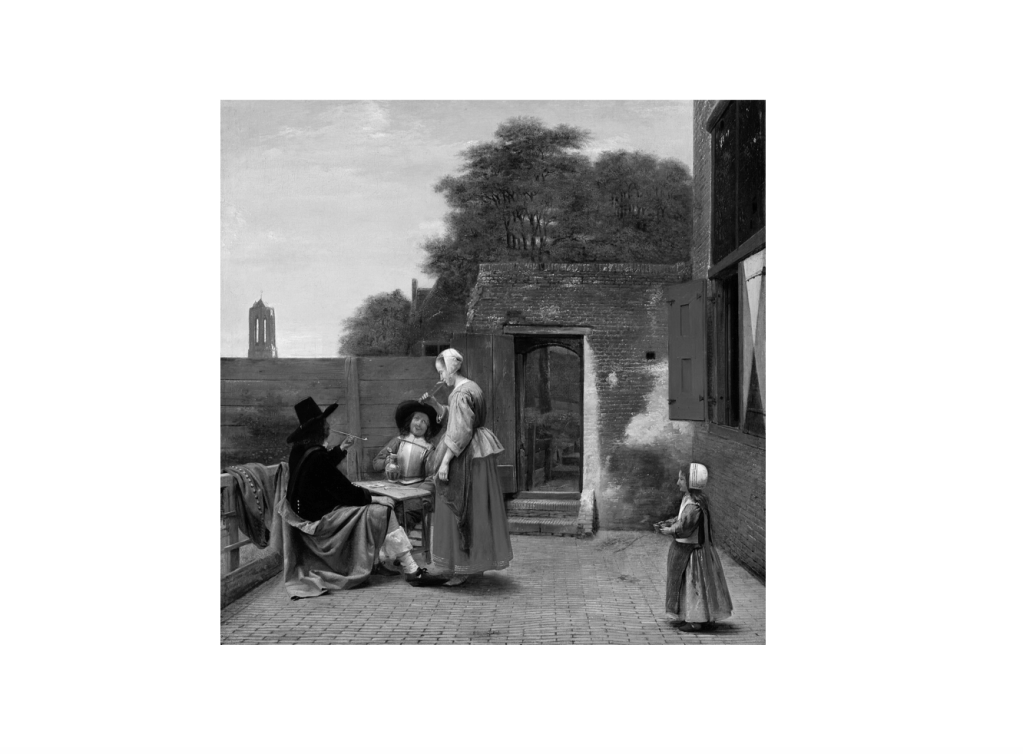


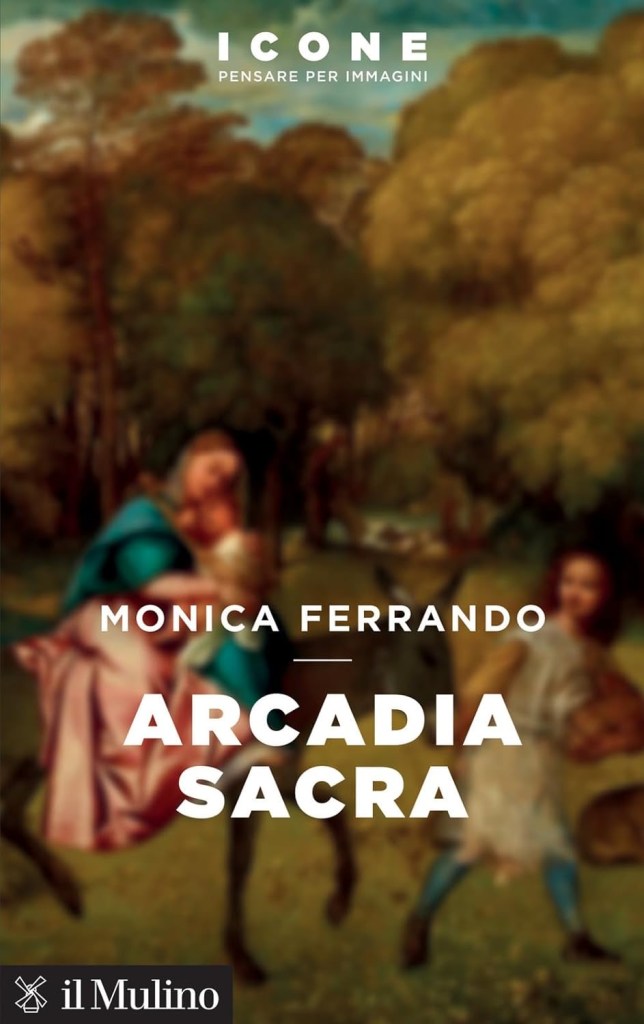


 Infrapolitical Reflections