There is a panel in the Museo del Prado titled “Agony in the Garden”, attributed to the French painter Colart de Laon (1377) whose religious work barely survives (this panel is, in fact, one piece from an original triptych). The scene portrays the well known stay of Jesus in the Garden of Gethsamane on the Mount of Olives, where solitude and abandonment prepares the interval for the moment of transfiguration. If anything, Gethsamane is an experience of inwardness outside itself, which the painter has marvelously captured in the figure of Jesus raising his hands in supplication to the starry skies and god. Or so we think. The crisp blue tone of the sky immediately reminds the view of the vault of the Villa Farnesina that Fritz Saxl has interpreted as the transmission of a previous pagan astrological faith in the pictorial composition. The intense blue tone coupled with the emphatic stars arrest our imagination, but also that of the humane and worldly Christ.
What kind of experience is to look up into the firmament from man’s place on Earth and the cosmos? And what are we to make of the inability of the civilized human being to look into the blue depth not as a mirror of Nature, but of the non-totalizable and irreducible experience of solitude? It must be said that in a post-mythical world, the increasing loss of the opening of the sky goes hand in hand with the boundless loss of the Earth. And this is why we are tempted to read Colart de Laon’s picture as a gesture that renders legible the passage of the same movement: the Jesus that raises his hands outwards to the sky; and, simultaneously, the dozing Jesus that inhabits the contemplative state at the center bottom of the picture. To live in the world is defined neither by the experience of the time of arrival of the sky nor by the inward experience of the soul, but by the ability of transiting from one state to the other. And only there the worldly divine can be disclosed beyond the sclerosis of form.
This might also explain why Søren Kierkegaard following the German hymnist Gerhard Tersteegen could write in a gloss of his diaries that Jesus arises from the love feat into the path of Gethsemane: “It is always this way: Gethsemane lies closest to the highest bliss” [1]. The highest place is not the moment of absolute transcendence through faith; it is the secret that for Tersteegen expresses a kenotic hymn that empties life in the direction of poverty and death. In other words, the “highest bliss” is the experience of expropriation of every life; making life and death become indistinguishable in the vacillating night. A night beyond time and without god.
Perhaps not just the “religious experience”, but allexperience has as its central paradigm, the highest bliss in the face of death in which language can only account for it in its muteness and reverence. This is not an experience of vital teleology of humanity, but of a furtive relation. “Hacía sobre ella la experiencia”, as a Chilean writer once put it in the imperfect tense. But this can only mean to do an experience on the dissolution of oneself.
.
Notes
1. Søren Kierkegaard. Journals and Notebooks V.7 (Princeton University Press, 2014), 368.
If the modern age is characterized by the triumphant claim to legitimacy thanks to some major forgetting, then there is much to learn from Chaim Bialik’s 1917 enduring essay on Jewish Law, Halakhah e Aggadah: Sulla Legge ebraica (Quodlibet, 2025), which has just been republished in a very timely fashion in Italian. Bialik in 1917 means being in good company of many other names: Franz Kafka and Gustav Landauer, Walter Benjamin and Martin Buber, Ahad Ha’am and Carlo Michelstaedter, and many other names that surely have been eroded by the dust of historical time. This very erosion is at the center of Bialik’s essay that in the thunderstorm of the First Great War, the imperial consolidation of political Zionism, and the disintegration of the Austro-Hungarian Empire where many Jewish marranos dwelled, decides to take a step back from the modern acceleration and ask about the two poles of Ancient Judaic Law: the Haggadah and Halakhah. Immediately taking distance from the modern scheme of positive law and natural law, norms and principles, Bialik reminds us that Haggadah and Halakhah are two faces of the divine dispensation of Judaic law, in which temporal continuity and the statute, the heart and the shelter appear to communicate each and every time through the life of a people (5).
As someone writing in the waning of Halakhah due to modern secularism, Bialik’s essay is first and foremost invested in preserving the Halakhah as a living tradition, “an art of concrete life” that allows for the form of life of human beings in the world (7). It is from Bialik’s essay where Walter Benjamin in the 1934 Kafka essay would later incorporate the notion that Judaic law as void of content, open to the pure means of its own transmissibility. But perhaps in Benjamin’s materialist rendition Bialik’s central notion of the Hallakah is also blurred, since for the Jewish theologian what is central is the spiritual formation of the soul, a sort of subterranean facticity that is passed throughout the ages, just like that Chrisitan masons built major Medieval cathedrals across the centuries (11) (the metaphor is indeed his). The Halakhah insofar as it inspires the soul is an endless formation, although it is also “the imagination of becoming a living soul, with a body and a sense of beauty” (13). The Halakhah is a region of de-autonomized sublime that Bialik compares to a crossgenerational Shabbat in which a people are observant to a way of living in its own becoming (14). In other words, the Halakhah is not a moral principle for personal virtue as arete as in the ancient metaphysical ethics; it is the absorption of the life of the community into the “voice of the heart” that can regenerate forms of sensible wisdom (16). It is wisdom without a master or priest that teaches the law, since it is not a knowledge that must be interrupted through mental capacities. According to Bialik’s theory, once the Jewish people are thrown into a temporality of dilation, what appears to shine in a powerful light is the cultivation of a life against the abuse and corruption of historical obsolescence. As Bialik writes in one of the most striking passages of his essay:
“Che questi «vasi di vita» siano rimasti da parte per qualche tempo non significa che siano inutili. È una grande legge: ogni forma di vita durante la sua creazione, finché dura questo periodo, rappresenta a sua volta un contenuto nello spirito del suo creatore. Appena la sua creazione è compiuta, essa si separa, si confonde con le altre, e ormai priva di essenza propria decade a strumento: chiunque vi trova quel che vi mette ogni volta che la usa. Essa deve tutto all’uomo e allo spirito dell’uomo a cui tocca in sorte come un bene abbandonato. Se egli vi mette oro, troverà oro; se polvere, polvere. Se non sa cosa mettervi, può anche lasciare che questo strumento arrugginisca. Ma quell’uomo non deve dire: lo strumento è inservibile, da buttare; deve dire invece: io sono povero!” (19).
This means that for Bialik the theological conception of “creation” does not stand for a mythical origin unconcealed by some authority; rather, it is a “vase of life” that allows life to be attuned to the the spirit of the creator, and for the creator to be rendered unfinished because the texture of the form of life is always to be written. At bottom, this modal structure of theological interdependency is at the heart of Bialik’s underappreciated theory of the letter and spirit of law that still resonates in our days. It is not that there is unwritten tradition and then it becomes a written norm to adjudicate the force of law (as in the current American jurisprudential debates about the “History and Tradition” test); on the contrary, Bialik’s legal contribution, well beyond the confines of Ancient Judaic Law, is that there is an abyss in the soul in every enigmatic life because the legal force cannot yet (and cannot for a long time) adjudicate a resolute execution of judgment (23). Counterintuitively, we can thus say that to really “live in the Law” cannot be expressively taken to be to defend court orders and police powers, but rather to allow life to live concretely as enigmatic life that is deprived of temporary ad hoc fictions suited to social domination. That is to say, to live according to the law means coherently with the Hakkhalah entails to an awareness that the law remains fully unknown, in this way incapable of becoming a part of social and penal organization that in our days it has thoroughly transformed the legal systems of the West (37).
This is why Bialik also includes a strong warning towards the end of Halakkah e Aggadah: the rise of substantive qualifications of Judaic culture (Jewish art, education, work, nationalism, theology) bending towards identitarian abstractions amount to what he called “ethereal love” (38). This ethereal love not only dissolves into the solution of modern humanism, but betrays the enigmatic form of Jewish life in the time of dilated waiting. A time of dilation (Aufschub) that does not mean that there is nothing to do – consummated boredom and alienated experience – it is rather the opening to a whole field of possibilities and relations, of worlds and the attunement of the imagination in its exposure. This non-closure of the theological experience provided by the fine attunement of the heart cannot be properly called political; which is why Bialik understood the land of Palestine as a vitam nomoi and not one of nationalist settlement validated by the institutional authority of the modern state.
As Andrea Cavalletti records in his illuminating Postface Bialik telling Hannah Arendt: “La mia convinzione politica, se ve n’è una, è anarchica” (64). Like in Oskar Goldberg’s theology, what is at stake in Bialik is an anarchic Hebraism that allows the presence of God in the world to deter the emergence of poisonous deifications (the individual and the state). Far away instrumentally infused pseudo-messianic overtones of an “elected People” for historical assertion and depredation, Bialik understood that only in the free relation between Halakhah and Haggadah, could the gordian knot of life and law be considered if we are to avoid the slippage into the seductions of the ethereal forces.
Anyone somewhat familiar with the writing of Josep Rafanell i Orra knows that we are in the company of a wanderer and itinerant in an infinite pursuit of what the experiences of worlds might offer [1]. A mad endeavor for a groundless epoch oriented towards planetary reduction and confinement, so obsessed with infrastructure and security, most recently through the reiteration of the politico-theological program of national sovereignty, one more desperate reaction to unrestrained planetary decline. We can say with Hölderlin that we are vagabonds in a destitute time, a poet who figures prominently at the entrance of Josep’s Traité. In our posthistorical epoch we are confronted with the thicket over the dominion of life, which means that the question of exteriority becomes pressing as existence enacts a path beyond the endless rubble of representation bestowed upon the human species in every point of the globe.
The book that the Spanish reader now holds in his hands thanks to Luciole Ediciones will immediately let in a dimming light of a singular style or maniera that dislocates the modernist assumptions of political thought into what one could what I am willing to name an analytics of sensible hybridizations between languages and thought. This analytic of the sensible refuses immediately Social normativity as well as the melancholic hangovers of the modern revolutionary tradition (always caught up between constituent and constituted power, representation and humanism, growth and production). This is why Josep will redefine communism as the nonprogramatic event that irrupts through hybridization of surrounds and regions capable of overcoming the ontotheological adequation of subject and object that has led an entire civilization astray (33). The project of the critique of metaphysics finds in Josep’s Traité a powerful schematic cartography that raises questions precisely in those spaces where the rationality of the science of political economy has never dared to enter.
If the critical projects of High Modernity were fundamentally temporal (including that of Messianism and its overemphasized trance towards absolute immanentization), Josep’s writing also has the virtue of displacing the focus to the spatial formation and the thinking of the creation of spaces understood as dwelling, once populated by the gods of the events and which modern ontotheology obliterated through integrated objectivation and technological positionality. We know that the greatest nearness of the last god eventuates only when the event is elevated into refusal, especially when it manages to become too near [2]. As a shorthand, this drift towards objectification in the liquidation of modern politics is domination of the Social totality; ultimately, it is through the plasticity of the social bond that the reproduction of biopolitical life is temporalized, legally ordered, and rhetorically subsumused into an apparatus of predatory accumulation. It is the Social (not the State, or this or that concept of the modern grammar of political thought, or even fascism) that we must refuse. The collapse of the modern secular state and its moral guarantees, is the beginning of an autonomized social bond that now coincides with the total administration of world forms. The hegemony of the Social reduction is what allows Josep to claim that the opposition is no longer between Society and the State; but rather between community as a process and praxis against the static formation of the Social. Thinking today drifts from social domination to communities of encounters, heteronomic relations, communication, and interdependence in a web that characterizes the exotic movement of the imaginative possibilities of exteriority for manifold worlds.
The notion of community in Josep’s thinking is neither about ecstatic groups or “little platoons” of identitarian belonging (as once famously defined by Edmund Burke); nor referring to filiation and propriety reductions that can subsist quite nicely under the heatwaves of the ongoing conflagrations of Empire. For Josep communities insofar as they are exposed to their excess (ubermass) are processes of external contact between souls as rites of passages. The community is formless, and in this sense it ceases to be a problem of Chistological stereology in order to become one in the order of ethics and language (50). In this sense, very much like the late Mario Tronti looking at the collapse of the modern revolutionary experiment; for Josep the ruinous fragmentation of the worlds has a silver lining: that all human, and non-human, souls are dwelling on the outside world calling for worldiness, and thus potentially sharing a sense of intimacy that re-enchants the appearance and knowability of the world through the invisible attunement to the outside (un nuovo modo di essere fuori e contro) [3].
Beyond the subject and the narcissism of the Ego, the light of a “spark of the soul”, in the words of Meister Eckhart’s memorable sermon, a new animism returns not because there is a transcendental revelation to be asserted, but because the encounter between souls brings forth the concatenation of worlds that are entangled with other worlds (68). If Jünger described the epoch of planetary machination as “soul murder” (seleenmord) it was because there was no longer any contact with the unfathomable opacity between the soul and any possible worlds [4]. Josep with an elegant mannerist style enhances this intuition: “We are no longer exiles on Earth, as the romantic moment freighted by the loss of world. We ended up forcing the Earth into exile after so many deadly abstractions (108). The modern age has not ceased accumulating abstractions against the human species until becoming a whirlwind of soul murdering that has extended into the current ecocide of the worlds.
It does not come as a surprise that throughout Petit traité de cosmoanarchisme (2023) Josep appears more than skeptical about political critique (and to say skeptical might be an understanding). There is a clear imperative that is mobilized in the book and that it should not be taken for granted: political critique should evolve into the negation and abandonment of politics, which also includes the always anachronistic anarchist politics. We know that ever since the Greek polis the autonomy of politics partition and distribution was waged against the incommensurable topos of the chora, the ungovernable and infrapolitical hinterland of the new substantive community of rights and obligations posited by the logistics of representation [5]. As we know, this is what forced Heraclitus to resolutely remain playing knucklebones in the temple of Artemis: “What are you gaping at, you scoundrels? Or is it not better to do this than to work with you on behalf of the polis?” [6]. The knucklebones of the ancient anecdote of the presocratic philosopher is symbolic to what Josep demands of existence: the liberation of environments and surrounds for multiplicities of experiences. The experience of gaming always starts in the middle, expressing the ineffable ethics of how I become what I am already on my way of becoming (142). The maximization of politics into the very thicket of life (this is biopolitical administration) have increasingly defaced the experiential practice of existence that now extends over the course of the historical dispensation of civilization. This is the vortex of the struggle against the realist validations in the interregnum.
Against and beyond the force of abstraction and the prison of individuality, Josep situates the stakes: “It is there, where the fierce struggle we can lead today: to find the intimacy of our soul in the welcome of other souls to hear their silences and their voices. To participate in the animation of the world is to perceive the outside. And gently find the inside of the outside” (145). And between the process of the community and the soul there is no longer struggle or enmity, but only solvent philia; the influx of creation that, insofar was enmeshed in solitude, allows pain to speak in the time of transition, in the skirmishes between worlds. Ultimately, the experience of the itinerant is not that of learning to live in places; rather, it is the one that intensively yearns the presence of encounters. This remains the only ethopoetic imperative [7]. As Carlo Diano observed in an erudite study on the notion of the chora, the attunement of the soul with the world is not a conceptual entelechy; it runs materially through the sensorium of this body as it traverses the world towards its renewal [8]. To grasp this chiasmic region that dispenses the harmony of the soul as it flees the prison gates of an objective world, is the enduring letter and spirit that Petit traité grants to the ongoing task of thought.
.
.
Notes
1. Gerardo Muñoz. “Escuchar las llamadas del mundo: diálogo con Josep Rafanell i Orra”, Disenso: Revista de Pensamiento Político, N.3, July 2020, 134-158.
2. Martin Heidegger. Contributions to Philosophy (Indiana University Press, 2012), 329.
3. Mario Tronti writes in “Disperate speranze” (2019): “È necessario trovare un nuovo modo di essere fuori e contro. Io posso farlo nel solo modo in cui so farlo: tirando l’arco al punto che permette di cogliere il bersaglio più raggiungibile. Realistica visione.”. CRS, October 2019: https://centroriformastato.it/disperate-speranze/
4. Ernst Jünger. The Forest Passage (Telos Press, 2003), 93.
5. Julien Coupat. “Dialogo con i morti”, in Gianni Carchia’s Orfismo e tragedia (Quodlibet, 2019).
6. Martin Heidegger. Heraclitus: The Inception of Occidental Thinking and Logic (Bloomsbury, 2018).
7. Josep Rafanell i Orra. Fragmenter le monde (Divergences, 2020), 70.
8. Carlo Diano. “Il problema della materia in Platone: la chora del Timeo”, Giornale Critico della Filosofia Italiana, V.1, 1970, 335.
Endless war and infinite strife is always preceded by the erosion and the putrid decomposition of language. Such is the thesis of Adan Kovacsics’ idiosyncratic and historically situated Guerra y lenguaje (Acantilado, 2025), which sets a specific date for the moment of such linguistic rot into consciousness in European modernity: Hugo von Hofmannsthal’s “Lord Chandos Letter” of 1902 in which civilizational decline signaled the total detachment of expression, making language flourish in the form of opinions resembling rotten mushrooms. For Hofmannsthal this event was neither accidental nor a temporary malady, but a tonality of existence that soon enough broadened like a “spreading rust” (Kovacsics 11). Just a few years later in his posthumous Persuasion and Rhetoric, Michelstaedter will describe this rusting of language as the triumph of “darkening ornaments” (kallopismata orphnes) of the epoch, liberating the destiny of language as a mere transactional exchange between “technical terms” mastered by everyone regardless of their idioms (it surprises the reader that the thinker of Gorizia is absent from Kovacsics’ Austro-Hungarian constellation on the crisis of language).
The decline of an empire shimmering with languages and dialects across its territory began to suffer the malady of miscommunication that resulted in making language uninhabitable, throbbing in its empty chatter. Thus, the attempt to initiate an exodus from language began to appear everywhere according to Kovacsics: Fritz Mauthner drafts an encyclopedic treatise on the venereal misapprehension of language, Gustav Landauver battles in the trenches of linguistic scepticism and the mystical tradition in the name of revolution, while others like Hugo Ball attempts to flee from language altogether through the liberation of sounds and words, from the Dada avant-garde to his later Byzantine Christian asceticism. For his part, Karl Kraus in The last days of Mankind prefers to expose the surface of language as it becomes a regime regulated by opinion for bureaucratic administration over facts of reality. The nihilism that colors politics at the turn of the century is accompanied by the instrumentalization of language as the primordial technical apparatus that allows the flows of information through the acceleration of the autonomization of the linguistic mediation; as consequence, language began to arouse constant disbelief and doubt over the very essence of the sayable (Kovacsics 31). This throws light on contemporary debates about “misinformation” that, precisely because they are caught up on the epistemological determination proper to the linguistic crisis, it comes short to putting into perspective the range and depth of language over the problem of appearance now deprived of the expressive mediation between the speaking animal and phenomena, reducing experience to rhetorical commonalities or inter-social allocation of commands.
Kovacsics’s Guerra y Lenguaje (2025) brings to bear – without totally exhausting the crushing weight of its archive and set of problems for thought – the immense significance of the first decade of the twentieth century at outset of the waning of the Austrian-Hungarian Empire, which has always been understood historically as the condition for the last configuration of European nationalism and its war-economies, but rarely in light of its functionalization of language. If read against the backdrop of Simone Weil’s “Are we heading for the proletarian revolution?” (1933) intervention about the “functional” dimension of the state form in the first decades of the twentieth century, Kovacsic’s essay ultimately helps us to define the concrete nature of functionality as the index of mobilization of ‘worlding’ through the commanding force of language. To deliver this point home, Kovacsics tells how language itself severed enunciation from action:
“La transformación que se produjo y que la ha alejado, como si un tablón se hubiese desprendido del muelle y se hubiera adentrado en el mar, no se debe a que otras gentes se impusieron en su día en Grecia, sino a un cambio radical en el uso concreto de la palabra. Es en la Gran Guerra cuando esa corriente inicial de la utilización del lenguaje como herramienta se consolida de manera definitiva. Es entonces cuando la palabra pasa a ser plenamente funcional y su papel se reduce a aportar argumentos para la acción o incluso a “parirla” mediante el tópico. Hemos visto hasta qué punto el silencio de Karl Kraus al comienzo de la contienda se debía a la percepción de este vínculo entre palabra y acción, al que no quería ni podía sumarse de ningún modo” (Kovacsics 76-77).
Language does not disappear as much as it transforms itself into two vectors of social enforcement towards communication: functionality and rhetorical enthymemes. In this way, language is able to colonize reality and stabilize for the concrete order, or what Walter Benjamin called during those years the “bourgeois conception of language” hindering on causality and objectivity accelerating the collapse of its vocation to naming the exteriority of the world (Kovacsics 81). The totalization of this new rhetorical social structure becomes the main stage for the production of justification and competing regimes of fiction. But this implies no general theory or systematization of a linguistic science, but rather how language coincides with life in the form of an ethics. This is at the heart of the different attempts to retract language in the eclipse of empire and the new interstate fragmentation – which also entails grammatical and functional unifigies of national language – as a problem that concerns the limits of ethics. Ethics here cannot coincide with the general condition of ‘knowability’ that makes morality possible; rather, the problem of ethics can only reveal in turn the senseless of wanting to go beyond the facts of the world and allows us to dwell in one without completion. The withdrawal from the language of propaganda and objectivity demanded an ethics of the sayable beyond the commodification and intentionality of words promoted by “war” and “ware” (commodity) that the West had continued to endure; a total communication of ends that decades later evolved into cybernetics as the warping of world into informational encoded relation.
Kovacsics reminds us that there is a story here of extreme violence and creative destruction, only comparable to nuclear fusion and the flaying of a human being, only that this time, unlike the myth of Marsyas, without ever reaching transcendence of redemption through the proximity of language to myth (Kovacsics 129). Underneath there is the body of language, stripped of its capacity for truth and reduced to functions of survival and needs oriented towards the homogeneity of the future. Towards the end of Guerra y lenguaje (2025), and glossing Hobbes’ notion of political authority that legitimated the modern interstate system to neutralize truth contents and the stasis over words, one cannot help but think that the date 1902 as a. arcana was an effective culmination rather than genesis of the modern, which means that the foul scent of the twentieth century was destined for decomposition since it had already stripped bared one of the most beautiful lacunae of the human species: being in language and the event of appearance became integrated into the worldly utopia of the machine.
As captured in Marcel Duchamp’s “The Bride Stripped Bare”, the obsolescence of language over time evolved into a candid instrument of social functions of proportional exchange, coordinated fortuitous relations, and increasing moral indictment that purported parodies of contested realities. Thus, the sickness is always unto language – a basic assumption that reveals the need for infrapolitical analysis before there is any political practice and categorial reinvention. The overexposure of language as an avatar of metaphoric communication for ends and needs of humankind brought itself bare and all encompassing in its appropriative force, but only at the expense of darkening and losing the world forever.
What does it take to destroy a world? It would seem that the question itself is too metaphoric and impertinent; perhaps also hyperbolic and presumptuous against the flight of the infinite embodied in worldling. But this is the question that we should direct ourselves to according to Mauricio Amar’s short and highly accessible book El Paradigma Palestina: Sionismo, Colonización, Resistencias (DobleaEditores, 2024), which is written in the wake of the ongoing war of annihilation in Gaza in order lay bare the paradigmatic abyss of social death in which humanity finds itself at the peak of its civilizational dominance. Amar does not use the term “paradigm” lightly, and nor is he interested, as recasted recently by none other than Steven Bannon citing Thomas Kuhn’s work about scientific revolutions, in posting a central conflict towards transformation; rather, one must situate this strategic conceptual deployment in light of the Chilean philosopher’s own work on imagination and use, which provides an irreducible and sensible texture to every emergence of a paradigm [1]. This means that if Palestine is, indeed, the paradigm of our epoch is precisely because it has no-space in the world – it is what can be infinitely be destroyed, as Maurce Blanchot famously said commenting Antelme’s work – and what illuminates the core and extension of the “integrated” planetary humanity oriented towards the administrative governmentality of contemporary Western democracies, and its corollary geopolitics of the total artificial spaces, as Bruno Maçaes has recently called it. Reading Amar one senses that under the name “Palestine” he is registering a limit to the Humanist force, where an existential claim reveals the maelstrom of an epoch that has resorted to a grotesque parody of the ancient homeric standards of domination and submission. It is the outlook that Simone Weil described as the paradigm of transforming the world into nonliving things.
If understood as a paradigm, Palestine reminds us that the homeric energy towards the aristocracy of equality through force and death among the human race never truly ceased, but only changed forms and cloaks throughout the ages. The post-mythic West seemed to have constructed itself through the repeated revolutions that accommodate justifications for usurpation and containment, self-deification and legibility of the territory at the service of a fictive ethnos. The belated nationalism of modern Zionism has had the paradoxical quality of being both a project of territorial usurpation after its illegalization in International Law (The Kellogg-Briand Pact of 1928); while, at the same time, a politico-theological configuration that, as Monica Ferrando has shown in L’elezione e la sua ombra: Il cantico tradito (2022), clings upon the manipulation of the theological election of “a People” in order to deploy the coterminous binding between community and territory justified through divine narration. The interdependence of the spiritual goal of Zion is only possible through the construction of a settler state, at the same time that the occupying state’s only legitimacy based on ‘one God, one People’ relies on the restitution of an instrumentalized form of the theological election. This is why for Amar the Zionist state building project is a the paradigm of a specific type of colonial governance whose end is not just to capture errant people into social subjects, but more fundamentally a translatio imperii that folds the Earth into a territorial nomoi of distinct multilevel functions: checkpoints, walls, vigilante control of movements, constructions and erasure of surfaces, administration of critical infrastructures, development of extractive resources, and finally the hunting down of humans that necessarily blurs the line between civil population and battlefield combatants. When Amar reminds us of Israel’s predominance in planetary security and warfare technology, one can immediately recall Emile Benveniste’s suggestion that “measurement” (med*-) and the proportional addition to produce objectivity, entails an efficacy of permanent dominance and governability whose main enterprise is the management of populations through the regime of accumulation. As Andreas Malm reminds us of the current cartography of Palestine: “The genocide is unfolding at a time when the state of Israel is more deeply integrated in the primitive accumulation of fossil capital than ever…This is the political economy of normalization: a sacralization of busines as usual that destroys first Palestine and then the earth” [2]. The ongoing devastation of Gaza is a window into the project as a whole: the necessary destruction of the worlds and the total artificiality of the life-worlds, always at the service of maintaining the needs of anthropological symbolizations.
For Amar this points to an epochal scenario of a people without world; and, following the lead of Sari Hanafi, he will claim that the paradigmatic mirroring of Palestine is also an spatial-cide, in which the living are deprived of a sense of inhabiting and roaming that brings to bear that the nakba is not something that has taken place in history once and for all, it is a catastrophic event that has not ceased from repeat itself, and whose ultimate intention is to suture the world and existence, the soul and the spirituality of the open atmosphere that is needed to sustain life. Reading Amar between the lines – who towards the end of the book finds distant interlocutors in Darwish’s poetry, the philosophy of Gilles Deleuze, as well as in the glosses of Walter Benjamin on history and the prose of Edward Said – one learns that the true arcana of Palestinian resistance is also a secret promise for our apocalyptic times: to hold on to the world, so that we can all passionately land on the Earth and freely breath in its surroundings. The nexus of the Palestinian question and the intrusion of Gaia, although underdeveloped in Amar’s analysis, obliquely runs through a text that is also very much about the central question of ethics that never abandons thought: how to name what escapes without taking the world as such into an object to be possessed, destroyed, and remade anew as a hostile secular imago dei. The vindictive hyper-consciousness of the contemporary unmediated arcana imperii now reveals, as Amar says towards the end of he book, a mirror through which we can observe our own increasing domestication, in which the metropolis is just the luminescent and self-protected hub, but whole ultimate darkening shadow is the Gaza’s pile of rubbles resembling an open air necropolis (Amar 108-109). Through different arrangements of organized destruction, both the metropolis and the necropolis converge in their preeminent ‘struggle against space’ and its form of life for the sake of familiar pieties of enslaved survival of unworldly anomie (Amar 116).
Does this mean that we are all “Palestinians”? Mauricio Amar’s El Paradigma Palestina (2024) rejects the all too well expected craft of solidarity and subjective identifications that can only work on the payroll of the gravediggers of the current civilizational project. On the contrary, if Palestine is our paradigm, and it remains so, it is because it can only refuse measurement and recognition in order to dwell in the only possible exteriority as embodied to Darwish’s poetry that Amar quotes towards to the end book: “Do not trust the poem / absent child / it is the throbbing of the abyss” (Amar 140). From the abyss we nourish the soul as the return to land on Earth prepares itself in order to no longer conquer a territory, an ancient tradition, or a “People” (ethnos), but to dwell on the nearness of a place that is an excess to every location or community of belonging (this is the false exit of the kibbutzim). We do not have political grammar to articulate what this integral freedom could mean, except that it is an exotic relation in Victor Segalen’s sense: a creation of a world alien from the compatible and petty one that currently drains us into its ongoing desperate destruction and passive enslavement [3]. Finally, like all authentic paradigms, it is worth noting that Paradigma Palestina (2024) teaches and preaches nothing; it only invites us into the swirling sensation that crosses over the imagination and the singing voice, from the world of the last remaining lives to the isles of the dead martyrs, and back.
.
.
Notes
1. Mauricio Amar. Ética de la imaginación: averroísmo, uso y orden de las cosas (Malamadre, 2018).
2. Andreas Malm. The Destruction of Palestine is the destruction of the Earth (Verso, 2025), 53.
3. Victor Segalen. Essay on Exoticism (Duke University Press, 2002), 24.
In the the long conversation Dopo il cinema: le domande di una regista (Edizioni e/o, 2023) conducted by Goffredo Fofi, the contemporary Italian filmmaker Alice Rohrwacher offers a series of reflections about the possibilities of artistic creation in the abysmal time of integrated spectacle that has fully brought to bear the erosion of the human capacity for attention and outward experience. Can cinema and film do anything in the wake of such humiliating and crushing reality? At first glance the late modernist critique of the value-driven image seems insufficient and merely rhetorical as the valence of dialectics has been dissolved in the pressure of real subsumption. In a certain sense, Dopo il cinema: le domande di una regista (2023) is a reflection written after the ambivalent commitment of cinema to awaken the spectator from the slumber of the absorption in order regime of standardization where the utopia of self-design realizes the objective abstraction in the acceleration of optimized and contained expressiveness. At no moment does Rohrwacher affirm that we are, indeed, “after cinema”, but throughout the dialogue the tone is that of immediacy in an epoch that seems to be saturated by looping, real-time, and the intensification of life-exposure spectacle. If film is reduced to telling stories, then it falls into vulgarity, while contributing to the gigantic sedative layout that veils the annihilation of social reproduction. In the last decade, Alice Rohrwacher has done a series of important and highly original films (Le meraviglie, Lazzaro felice, or La chimera) that signal a way out from the numbness of sight, relocating the moving image to the mythic dialogue with the invisible, the mysterious, and the old craft of the fable narrative. Rohrwacher’s cinema is only magical to the extent that it subtract itself from the historical overindulgence that the autonomous historical man had to endure in its separation from nature.
Filmmaking is no privilege site of creation, but if Ruíz was right, there are plenty of chamanic energies circumventing the cinematic experience. This is a prehistoric residue that, in her own style, Rohrwacher wants to hold on to. In Dopo il cinema (2023), she admits that any attempt to organize a new “political” cinema is out of question, as it was always grounded in the idealism of ‘consciousness’, which is now realized in the self-narcissistic exposition of the free-floating subject of market equivalence. Political cinema could only be arrogant and superfluous pedagogy at the mercy of the furious chatter of “cultural wars”. Is there a higher poverty? And yet this is what appears as ‘necessary ideological critique’ in some circles. In this sense, cinema is not the leading instrument for the work of imagination and Rohrwacher insistence on ‘creation’ drives the point home. Citing Elsa Morante (and perhaps implicitly Cristina Campo) Rohwacher defends the creation as an ongoing effort of a common intelligence to grasp the invisible and allow the eruption of joy in the life of characters. Similar to Robert Bresson who wanted the characters of his films to have an outlook as if they were castaways from the time of the first Adam in the earthly paradise; for Rohrwacher the thicket of creativity for our times is rooted in a contemplative gaze through which the external elements of the world can hone the one and true destiny of the irreducibility of the human species [1]. Rohrwacher’s assertion that she wants creation to establish proximity with the outside – devoid of attachment to religion, political parties, or moral principles – presupposes a sound critique of all forms of idolatry that have modeled aesthetic production at the service of abstract historical needs (Rohrwacher 33).
As a creator Alice Rohrwacher’s own point departure is thoroughly subtractive. This means leaving behind the subject of consciousness (the internal and self-sufficient producer of images, which today appears with the empty label of content creator), while opening the cinematic possibilities to the luminosity of a collective imagination in which the contemplation touches, albeit for a moment, the thought of the world (‘pensieri del mundo’) (Rohwacher 36). Obviously, this is no longer an artifice of cinema in its industrial and technological capacities; rather, it is the impersonal general intellect that refuses the integral planning that forecloses the wayward route of imagination, discovery, happiness, and the uncharted land in which the characters and spectators are taken by the seduction of the possibility of events (Rohrwacher 39). Whenever film, like a fairy tale, touches the truth of a not-yet administered world (an inapprehensible excess that resembles prophecy), then visual pedagogy ceases to be a task of cinema; rather, the process of film is one of “ex-ducere, cioè portare fuori, educare” (Rohrwacher 52). And as Cristina Campo understood well, the fairy tale (analogous to cinema for Rohrwacher) has at the center of its making the “raw material of existence…this material is the mystery of character…which maintains its traits to the end, and only be transformed by repeating the same errors, suffering the same defeats. The nature of this mystery is sometimes suggested with enchanting ambiguity” [2]. It is this ambiguity what expresses the caesura between existence and world – their strange noncoincidence – that has colored the experiential texture of Rohrwacher’s poetical cinema.
The central characters of Rohrwahcer’s films (Lazzaro felice, La chimera) are symbolic personifications of forms of life that are neither alive nor dead; neither mythic nor mundane; neither fictional nor historical determined (each of her films are also landscapes of specific territorial Italian communes); there are both things at once, and they maintain their musical tonality in their own symbolic protuberance, precisely because they cannot be divided and forced into the civilizational narrative at the expense of the exhaustion of the mystery of form (Rohrwacher 63). In fact, Rohrwacher, so attuned to Joseph Roth’s indictment of the Hollywood’s hollow gestalt announced in the The Antichrist (1933), reminds us that the word “devil” (diaballo) implies cut and division; whereas, the symbol, cultivates and renews the mysterious enchanted dimension of the world in which no reified image (any image that could be potentially any other) can hold the human species as hostage in the cacophonous prison of senselessness. And is not this radical evil – an assumed and distributed morality of the active consumer, who always works “for his own interest” – the most basic unit of the transmission of the image-spectacle from which one has to flee from? The mythic or fairy-tale-like leveling in Rohrwacher is no metaphoric transport; it becomes the cinematic potential to see the world with a clear third eye.
No easy task of course. Deposing the fictitious machine entails exerting a movement of exodus towards the outside, which Rohrwacher assuredly calls the invisible as that which restitutes the soul of things. The symbol is a passage against the seduction of the pleasure principle of self-enjoyment and parodic personal heroisms. And this is perhaps the most powerful and original testament of Rohrwacher aesthetic sensibility in Dopo il cinema (2023): “Ma nel memento in qui quella cose emanano – direi irradiano – un’anima, subito ne abbiamo più cura, e la cura come abbiamo detto è un atto eversivo. Un’azione poetica” (Rohrwacher 64). And poetry remains not only the dwelling place of human beings; but, fundamentally, the lacuna in a world that refuses to come to completion. Perhaps ‘cinema’ – or, rather, ‘cinema after cinema’ – in Rohrwacher’s view only emerges as a gnostic symbol that prepares the birth of a new earth, as if planting a seed for seasonal germination (Rohrwacher 64). In each character, image, symbol, and gesture, Rohrwacher’s filmmaking plunders into the position of redemption against the cruel reduction of the objective madhouse: restituting the soul in things dignifies the inheritance of terrestrial human species as if it is always coming into presence for the very first time. The eros of cinema becoming an enduring task — and is not ultimately what we feel in each of Rohrwacher’s films? The joyous spirit of the saltimbanca: in and outside the world’s reality, the symbol lives and outlives the fixation of this world.
.
.
Notes
1. Robert Bresson. Bresson on Bresson: Interviews 1943-1983 (nyrb, 2013), 277.
2. Cristina Campo. “On Fairy Tales”, in The Unforgivable (nyrb, 2024), 33.
Towards the end of his life, poet José Lezama Lima will mysteriously begin to sign the letters to his friends and family as “the Trocadero Etruscan”, a “member of the Etruscan religiosity”, and even the “man who lives in the Etruscan village” [1]. Why call himself an “Etruscan” in this particular moment of his life, and what could it possibly mean? The question about the meaning of the Etruscan authorial mask has been so thoroughly ignored by the literary critics that commentators at their best have noted that “being Etruscan” merely stands for his “cosmopolitanism” and “well-learned Europeanism”. Of course, this explains little to nothing. A sophisticated poet such as Lezama Lima, who ruminate over every single word he would write, could not have ignored that the Etruscans, unlike the civilized Romans and the Latin authorities, was a remnant to the very civilizational enterprise; a prehistoric people poor in written culture, achieved expressivity by the whole outlook of their form of life. And as in the case of Hölderlin’s adoption of different nom de plume (Scardanelli, Killalusimeno, Scaliger Rosa, etc), Lezama’s becoming Etruscan points to something so fundamental that if underscored we would fail to grasp the endgame of his vital poetic experience. The transfiguration of the name does not merely stand as a metaphor; rather it points to a distant figure that will finally dissolve him so that his immortal voice could continue to live on.
Indeed, the self-identification as an Etruscan for Lezama became a subterfuge to flee a political reality – his political reality, entirely structured by the revolutionary gigantic productivism and subjectivism – through a poetic refraction that would free an ethos from the overpowering of alienated autonomous space of the linguistic reproduction of social life. If at first glance it seems like a paradox that Lezama will adopt the Etruscan figure for his antisocial ethos – a civilization lacking written records or high literary achievements, a religious community known for its necropolis – this strangeness will ultimately prove that behind the Etruscan name there was no poetic exclusivity of the poet’s genius, but rather, as he claims in “A partir de la poesía”, the possibility for a divinization of reality to retreat from the historical epoch. In fact, Etruscan culture for Lezama was not a mere archeological ornament, but one of the “imaginary eras” of the West; that is, a stage of condensed and unnumbered imaginative possibilities resistant to griping subsumption and totalization of values. The Etruscan was the mythic remnant through the pantheistic divinization between language and the world. As Lezama writes glossing, in passing, Vico:
“Vico cree que las palabras sagradas, las sacerdotales, eran las que se transmitían entre los etruscos. Pero para nosotros el pueblo etrusco era esencialmente teocrático. Fue el más evidente caso de un pueblo surge en el misterio de las primeras inauguraciones del dios, el monarca, el sacerdote, y el pueblo unidos en forma indiferenciada … .les prestaba a cada una de sus experiencias o de sus gestos, la participación en un mundo sagrado. […] Pues en aquel pueblo, el nombre y la reminiscencia, animista de cada palabra, cobran un relieve de un solo perfil” [2].
The divinization of the Etruscans stubbornly insisted on the wonder of things. The human participation in divinity is no longer about founding a new theocracy or a “theocratic politics” in the hands of a ‘mystic accountant’ that would finally put the nation back in track (into the res publica), as Lezama would solicit out of desperation in the 1950s diaries [3]. On the contrary, for Etruscan people the fundamental tonality was the divine music of experience. Of course, we know that D.H. Lawrence captured this when claiming in his Etruscan Places (1932) that “the Etruscans are not a theory or a thesis. If they are anything, they are an experience. An experience that is always spoilt” [4]. And this experience (like every true experience) needs to be necessarily spoiled, which ultimately means that it cannot be mimetically rendered, arbitrarily modified, or subsumed into the order of idealization. But all of this is merely redundant, since the Etruscan inscription is what accounts for the limit to civilization, becoming the impossibility of the destruction of myth in the arrival of modern aesthetic autonomy. Thus, for Lezama the Etruscan way had something of a persistent cure against the ongoing civilizational disenchantment, even if it does not cease to appear in the modern attitude. In fact, Lezama writes that: “Rimbaud is the best reader of the Etruscan liver” (“hígrado etrusco”) to describe the dislocated position of the poet in the modern world of technology [5]. In the Etruscan cosmology, the liver was a symbolon of the vision of the cosmos registering the divisions of the spheres in the sky through the divine naming of the gods; it is the figure by which the poet guards the desecularizing remnant of the prehistoric inception of myth [6]. But this does not mean that Lezama will look at himself in the mirror of Rimbaud’s symbolist alchemy.
Rimbaud as an Etruscan is the poet who descends into hell because his lyricism can bear the pain in the disruption of language after the archaic peitho. Does the possibility mean a travel back in historical time? Not the least, as Lezama knew how to let go of storytelling and historical necessity. This is why Etruscans stand for an image or a sort of handwoven picture (the hand will make a comeback, as we will see) to gain vision. And this is one case on point: the Etruscan stands paradigmatically to the “sufficient enchantment” (“la cantidad hechizada”) , which discloses a higher knowledge of the soul (psychê) in the taking place of poetic errancy: “Sabemos que muchas veces el alma, al escaparse de su morada, tripulaba un caballo inquieto, afanoso de penetrar en las regiones solares” [7]. To wrestle against the historical reduction of autonomy of the modern age means to find this enchanted sufficiency necessarily for myth remnant to elevate itself against the aesthetic mediation that, in the words of Gianni Carchia, had become a consoling surrogate of the emptied historical time [8]. An entirely other conception of freedom is firmly implicated the Etruscan way: the gathering of the enchanted poetic dwelling to dissolve a reality that had become too thick in the business of brute force purporting to call ‘what’s out there’. The Etruscan reintroduces a divine nominalism of pure exteriority.
However, the Etruscan way does not commute with things of the world; rather, his soul unbinds the empirical limit of death to overcome death, and learn to live as if it were already dead. The trespassing of death through the poetic enchantment – which Lezama will also call an ‘potens etrusca’, or the Etruscan potentiality- will multiply the invisible possibilities against the rhetorical closure of reality legitimation. By accepting the thick of the dead as an illuminated presence, the Etruscans draw out the most important consequence: learning to live among the dead as the ultimate form of a dignified life. This is why D.H. Lawrence reminds us that the underworld of the Etruscans – their refusal of reality, the embrace of their dead, the augurium – was after all “a gay place…For the life on earth was so good, the life below could but be a continuation of it. This profound belief in life, acceptance of life, seems characteristic of the Etruscans. It is still vivid in the painted tombs. They are by no means downtrodden menials, let later Romans say what they will” [9].
If civilization is a construction that takes place at the crust of the Earth as some have claimed; the way of the Etruscan is a downward declination away from the architectural reduction of world sensing [10]. For Lezama the Etruscan dreams of a civilization submerged in the depths that only an acoustic totality that bear witness to its sensorial gradation: “Esas civilizaciones errantes por debajo del mar, sumergidas por el manteo de las arenas o por las extensivas exigencias…reaparecen, a veces, en los sueños de los campesinos” [11]. Hence, the fundamental dignity of poetry resides in the mythical homecoming that guards the possibility for what remains inexistent: “this is why the poet lives in the Etruscan world of the birth of fire” [12]. And although the Etruscan stands as one of the worlds in possession of an imaginary epoch (the other two for Lezama being the Catholic world and the feudal feudal Carolingian Empire), it is only in the Etruscan where the resurrection had taken the transubstantiation in the name itself; even if the price was its own liquidation as a historical people that refused to be incorporated into the doxa of postmythical order [13].
The fiery force of the mythic peitho outlives and predates the political epoch of the nomos of fixation organized as “One People, One State, One Language” [14]. As Lezama explains in “La dignidad de la poesía”: “…el odio en la polis contra el daimon socrático, hizo que la nueva doxa no logra sustituir a cabalidad el período mítico….Si por lo mitos, los dioses se irritable con la felicidad de los de los mortales, pero al menos, se interesaban por sus destinos; en la nueva doxa, la poesis se extinguía – el daimon individual reemplazando al destino individual liberado de la polis” [15]. The primacy of myth as orientation to happiness should make clear that for Lezama the poetics of naming follows the overflow of its permanent modalization [16]. The Etruscan way marks the path for the irrevocable retreat from the space of the polis where civilization will be erected on the grounds of deliating ethos and daimon, polis and poesis, and ultimately life and death as a rubric of a new science of separation. The fact that the civilization of social reproduction has been erected on the basis of the destruction of the chthonic underworld speaks to the systematic erasure from the dead as a vital extension of life [17]. The poetic natality of the Etruscans will only be cultivated, as Aby Warburg suggests, from the assumption of deep superstition in the face of the placement of political autonomy, which allows for the persistence of the image as inseparable from the needs and uses of the living [18]. And only persistence could prepare the final triumph over death.
[19]
Towards the later phase of his work, the poet seems to never want to abandon the Etruscan inframundo. Lezama returns to the Etruscan scene towards the end and unfinished novel, Oppiano Licario (1977), in which the central character Fronesis describes at length the mutation of reality following the footsteps at a distance of Ynaca Licario slowly merging into the Tarquinia necropolis painted wall, which is accompanied by a visual reproduction of the Etruscan tomb:
“El sacerdote, en el lateral izquierdo, hace gestos de ensalmo en torno a una espiga de triga. Un pájaro que se acerca queda detenido sin poder posarse en el ámbito hechizado de la hoja. En el lateral derecho, el sacerdote repite idéntico rito, pero ahora de la raíz colorida hace saltar la liebre que cavaba en las profundidades. El aire cubría como unas redes de secreta protección en torno de la mutabilidad de las hojas y de la inmovil jactancia de los troncos. Una indetenible pero resguardada evaporación alcanza aquella llanura con los muertos …La conversación subterránea era el símbolo del vencimiento de la muerte. [20]
The ongoing conversation (the shared word koina ta philōn) in a mysterious divine language had triumphed over death because it had overcome death and the sight of death. It is no longer the transposition of a historical sublime that must protect experience from the fixity of the human corpse, since the soul can escape the limit of form. In passing through and embracing death, the Etruscan validated their passions for mirrors and the palm, which according to Lezama is the true keep of the appearance of the uttermost revealing of the face in its own irreducible ethos. The possibility (potens etrusca) of defeating death while in life finds in the Etruscan appearance Lezama’s most intimate poetic arcana: the persistence of the anima renounces symbolic legibility as too innocuous and ornamental; where the flags of victories now resembled an accumulation of well settled defeats nurtured in the name of the muteness over “life”.
The Etruscan distance mysterium validated myth as the affirmation of the cosmos as based on the potentiality of contemplative imagination [21]. Lezama will call this distance the “eros de la lejanía” (Eros of distance) in the experience of the inframundo that will break through by affirming the possibilities of divine naming as a correlative causation in the world [22]. As Lezama tells his sister in a letter from 1966, he had already assumed to have crossed the bridge between the dead and the living: “Para mi ya ha sucedido todo lo que podía tocarme….Pues creo ya haber alcanzado en mi vida esa unidad entre los vivientes y los que esperan la voz de la resurrección que es la supresa contemplación” [23]. Or yet again: “El que está muerto en la muerte, vive, pero el que está muerto en la vida, es la única forma para mi conocida de la vida en su turbión, en su escala musical, en su fuego cortado” [24]. To scale up life to the higher music is the final trope of happiness as already dead. The Etruscan dirita vía of descension – “a weight going down” of stepping into the Earth, as Ruskin would have it – achieves the arrest of the divine contact between the voice and the dead [25]. It is for us to raise this mirror before our impoverished and fictive unswerving reality.
.
.
Notes
1. José Lezama Lima. Cartas a Eloísa y otra correspondencia (1939-1976) (Verbum, 1998), 230.
2. José Lezama Lima. “A partir de la poesía”, in Obras Completas, Tomo II (Aguilar, 1977), 831.
3. José Lezama Lima. Diario (Verbum, 2014), 87.
4. D. H. Lawrence. Etruscan Places (The Viking Press, 1957), 90.
5. José Lezama Lima. “La pintura y la poesía en Cuba”, in Obras Completas, Tomo II (Aguilar, 1977), 968
6. Gustav Herbig. “Etruscan Religion”, in Encyclopedia of Religion and Ethics, Volume V (Dravidians-Fichte, 1912), 533.
7. José Lezama Lima. “Introducción a los vasos órficos”, Obras Completas, Tomo II (Aguilar, 1977), 861.
8. Gianni Carchia. Orfismo e tragedia (Quodlibet, 2019), 81.
9. D.H. Lawrence. Etruscan Places (The Viking Press, 1957), 31.
10. Amadeo Bordiga. “Specie umana e crosta terrestre”, in Drammi gialli e sinistre della moderna decadenza sociale (Iskra, 1978).
11. José Lezama Lima. “Estatuas y sueños”, in Obras Completas, Tomo II (Aguilar, 1977), 449.
12. José Lezama Lima. “La dignidad de la poesía”, in Obras Completas, Tomo II (Aguilar, 1977), 774.
13. Ibid., 776.
14. Erich Unger. Die staatslose Bildung eines jüdischen Volkes (Verlag David, 1922).
15. José Lezama Lima. “La dignidad de la poesía”, in Obras Completas, Tomo II (Aguilar, 1977), 777.
18. Aby Warburg. The Renewal of Pagan Antiquity (Getty, 1999), 189.
19. Image included in Chapter VII of Oppiano Licario (Cátedra, 1989), 375.
20. José Lezama Lima. Oppiano Licario (Cátadra, 1989), 374.
21. Aby Warburg’s treatment of the symbolic mediation between myth and distance appears at the center of his essay on Pueblo Indians. See, Aby Warburg, El ritual de la serpiente (Sexto Piso, 2022), 66. And also, Franz Boll, Vita Contemplativa (Heidelberg, 1920), who connects contemplari to the augur’s spatiality of the templum.
22. José Lezama Lima. Cartas a Eloísa y otra correspondencia (1939-1976) (Verbum, 1998), 411.
23. Ibid., 109.
24. Ibid., 266.
25. John Ruskin. The Letters of John Ruskin (George Allen, 1909), 133.
The origin of Eliseo Diego’s mythical poetic collection En la Calzada de Jesús del Monte (1949) is so well known and recorded that it has been completely forgotten even by its most copious commentators. In his short memoralist essay “Un día ceremonial”, written decades after the publication of the poem, José Lezama Lima wrote the following: “En uno de sus ceremoniales litúrgicos, en un día de nuestro santo, nos reunimos en la iglesia de Bauta. En esa ocasión Eliseo Diego leyó su “Primer discurso” de En la Calzada de Jesús del Monte. Era un precioso y sorprendente regalo, suficientemente para llenar la tarde con aquella palabra que nace para uno de los más opulentamente sobrios destinos poéticos que hemos tenido…Cuando se publicó En la calzada de Jesús del Monte, el júbilo que me produjo fue esencialmente poético. En unos versos de circunstancia amistosa he intentado decir la alegría que me produce ese libro que traía esclarecimientos para nuestro paisaje y su acercamiento” [1]. At the center in this confession is not only the centrality of a poetic liturgical practice that vested the friendship of the origenistas poets, but more fundamentally the efficacy of the poetic word that Lezama describes as a “júbilo poético” or poetic happiness. It is a strange remark (like almost everything written by Lezama), since En la calzada de Jesús del Monte has been largely read as the litany of a domestic space (a “gran casa de todos”) consumed by dread experienced at the turn of the mid-century failed and stagnated republic.
The intuition raised by Lezama, although not elaborated, still haunts us: in what sense is En la calzada de Jesus del Monte about poetic happiness and what could stand for? We can go astray if we claim that happiness is a particular substantive and representational content of the poetic word. Indeed, there is really no event of happiness in En la calzada de Jesus del Monte except for the taking place of the poetic word fully estranged and foreign from its own place of annunciation. This seems to confirm Diego’s poetic vortex who writes in the dedicación of the book: “A poem is nothing more than a few words told one afternoon to a group of friends” [2]. However, this only deepens the mystery, since whoever tries to find concrete friends in En la calzada de Jesús del Monte (1949) will find none. Solitude abounds and expands throughout spaces. Lezama attempted to elevate the secret of friendship from thought to the liturgical enactment in search for transcendent meaning. Indeed, the emphasis on the mystery of liturgy is emphatic and compressed in Lezama’s programmatic memory about the almost ecclesiastical origins of the poem. I would like to suggest another path for the mysterious and inapparent force of the poem, which is no longer situated at the liturgical aesthetic experience, but rather in the mystery of a felicitous life at the threshold of history. If anything is disclosed throughout the pages of En la calzada de Jesús del Monte this is, precisely, that things appear to dwell in their place, even if no one is around and no community could stand for its reverence. Indeed, the poetic event dwells in an existential solitude before a changing world now fallen into pure disenchantment.
The happiness that falls from the poem, then, is not merely about the execution of the word or the unity of form, but it consists of something previous, altogether different: a mysterious shadow of the enchanted myth. In En la calzada de Jesús del Monte (1949) we are exposed to a poetic language that gathers in a desecularized dimension that suspends what Gianni Carchia identified as the postmythical form of mystery that seems to anticipate the semblance of historical order [3]. But Diego’s En la calzada de Jesús del Monte transfigures mystery to the point of disclosing the limit where life and redemption from the material world take place; namely, in the Sunday of life. But, unlike for Carchia, this poetic transfiguration takes place within the grammar of Christian theology and not the Greek classical past. Here Diego’s poetic mysterium differs fundamentally from the liturgical mystery, which presupposes a “fundamental sacrifice” that allows the temporal sequence of the end of time as the motor for universal religious redemption [4]. By contrast, Diego’s idea of a poetic mystery (which is also the mystery of the poem, which he never ceased to reflect upon through his life) is spatially dispersed, redeeming eternal life from the visibility of worldly phenomena. As Diego writes in an essay defining his conception of the theological mystery: “Primero les haré una confesión…no veo por la sala ningún hábito de Santo Domingo. Uno no debe jugar con los Misterios Mayores, y ninguno es mayor que el Misterio de los Tres que son Uno. Pero, ¿acaso no hizo Él a las ballenas y a los colibríes? ¿Acaso él no sonríe con la infinitud de sus peces y sus insectos? No creo que me tome a mal esta broma que hago como un niño pequeño que pretende jugar con su padre” [5].
By separating the “mayor mystery” of the Trinity from the minor mysteries of imaginative creations of the world (fables, poetry, child’s play), Diego was able to displace the grandiose stage of the liturgical mystery emphasizing the role that humor plays in the affective realization of the kingdom. In other words, it is most definitely the case that the mystery and the poetic musicality compose the parabolic nature of a transfigured kingdom that accompanies the inner existence of each and every human being [6]. Furthermore, this is why the Calzada is a defined in “Primer Discurso” as a pantheistic kingdom: “mi reino, en esta isla pequeña rodeada de Dios por todas partes / en ti ciego mis descanso” [7]. The happiness of the poetic effect in En la calzada de Jesús del Monte is the consummation of an eternal life that, by withdrawing itself from the representation of historical time, can outlive both dread and death. However, in its call for “eternity”, it is language itself that becomes a mode within a series of uncountable events: “sigo pensando, aquí, mi amigo, sucediéndome. / Luego de la primera muerte, señores, las imágenes … .Porque soy reciente, de ayer mismo” [8]. The “sigo sucediéndome”, a modal attempt at transforming life through event diffuses life and death like “Abel y Cain reunidos en Adán, como la muerte” [9]. The transfiguration of liturgical mystery does not evoke a christological arcana, but the overcoming of the civilizational myth of fratricide only to find “unity” in the eternal paradise evoked through Adam. As Diego will also write in an essay about the work of British novelist Jean Rhys: “…el sentido de orar para convertirse en símbolo del misterio de vivir: nuestro jardín era grande y hermoso como aquel jardín de la Biblia – el árbol de la vida crecía allí, nos dice, en medio del terror de una violencia que no entiende” [10]. The reemergence of the myth of an enchanted Edenic garden through the poem?
The fact that Diego chose to write En la calzada de Jesús del Monte as a series of poems and not a novel speaks to his resistance to metaphorize the Garden of Eden outside of the world, overly compensated through a figural postmythical semblance that could have only been taken as a form of parody. On the contrary, En la calzada de Jesús del Monte evokes the original paradise as a recurring and parabolic Sunday of life. A life of nothingness: “si la nada / es también el dormir, pesadamente / la caída sin voz entre la sombra… el Paraíso / realizado en la tierra, como un nombre!” [11]. What cuts through between the forms of the world is the poetic parabola that put us in nearness to the limit of the mystery and the unspeakable. This is what poet Fina García Marruz beautifully captured in one of the most outstanding essays on En la calzada de Jesus del Monte where the weight of the question is meshed with the eros of the poem’s parabola: “Todo arte es, o debería ser, arte de amor, qué es arte de re respeto, la estrategia de una amorosa retirada. Donde el yo se manifiesta en exceso, invade los otros límites, incendia el mundo, pero el verdadero sol del centro, como en Heráclito, no rebasa sus medidas” [12].
García Marruz will even allude to a “magical distance” to elucidate Diego’s poetic measureless opening to proximity: “para el dulce tamaño de la vida que miden estas distancias” [13]. The distances modulate situated existence against the reduction of ordered historical time: “El sitio donde gustamos las costumbres / aquí no pasa nada, no es más que la vida” [14]. As an authentic habitante Diego’s parabola solves the problem of the eclipse of historical time (the ruins of the first morning of historical development) through a descension to spatial detachment where the rest of Sunday is achieved amidst the dust of the world (“como el polvo del mundo”). And from the vantage point of every concrete experience and every limit, life emerges from the dead before a ruinous world marked by the failed Republic. This was a Republic that could not be named (“Yo no sé decirlo: la República”) in a paradoxical display of expository nominalism. As Diego writes in “El sitio en el que tan bien se está”: “en la penumbra como deshabitado sueño” [15]. At the height of 1949, En la calzada de Jesús del Monte was the most rigorous attempt to retreat from this penumbra of historical political life and its daydreaming.
This is the open secret of the actual city street, La Calzada de Jesús del Monte (Havana), during the first decades of the twentieth century, which according to historian Emilio Roig de Lauschering was the only route of communication between the hinterland and the new urban community: “La Calzada de Jesús del Monte que después se llamó después Calzada de Jesús del Monte por haber construido una ermita en la pequeña eminencia donde se encuentra la iglesia parroquial de Jesús del Monte…[…] Pero la Calzada de Jesús del Monte fue desde remotos tiempos hasta no hace mucho la vía principal de entrada y salida entre la población y el campo” [16]. In the late 1940s, la Calzada de Jesús del Monte was already a ‘deshabitado sueño’ as symbolized by dust, debris, oblivion, and death announced by the abstract time of modernization. En la calzada de Jesús del Monte, however, does not cross the path nor seeks a communication between the limits, but rather it opts to dwells on it.
This might be, indeed, Diego’s most important and subtle difference with Lezama’s defense of a liturgical surplus (even ex ecclesia cult of friendship, Freundschaftsdichtung, as a surrogate for national salvation) as if he had found a refuge in the mysterious parish of the Calzada Jesus del Monte or Bauta [17]. Diego’s transfiguration of history placed him at Sabbath in possession of “poderosas versiones de su vida” (“strong modes of his own life”) [18]. But the Sabbath is not a mere memory of a defeated religious community, but as Hermann Cohen argued, a spatial and institutional habit of a people coinciding with the cycles of a bright moonlight [19]. This is why imagination in En la calzada de Jesus del Monte is not enough, and the poet laments: “de tanto imaginarla mi corazón iba callando”. The eternal life of Sundays finds a retreat in the sabbatical experience against the historical time of normality and its revolutionary cycles that demystifies the thingly destruction in which civilization had declined at the end of times. Diego’s La Calzada de Jesús del Monte enshrined the only access to the transfiguration of the mystery: a sabbatical rest disambiguated from the monotone idleness posed by postmythical romanticism [20]. It was in the threshold of parabolic dwelling where En la Calzada de Jesús del Monte remained faithful neither to religious idolatry nor to a free-standing mysterium, but only to the feast of a sabbatical life “como un asno, en perpetuo domingo” (like a donkey, in a perpetual sunday) [21]. The donkey is the transfiguration that must carry this weight. And withdrawing from Juan Vives’ known fable about the peasant who sacrificed a donkey when realizing that he was drinking the moon reflected on a bucket of water, En la calzada de Jesus del Monte stubbornly trumpets not the entry to a “poetic enlightenment”, but the dwelling into the eternal Sunday where poetry is not a resource of radiant sacrifice of beauty, but the prophecy for both silence and sound [22].
.
.
Notes
1. José Lezama Lima. “Un día ceremonial”, in Imagen y Posibilidad (Editorial Letras Cubanas, 1992), 48-50.
2. Eliseo Diego. En la Calzada de Jesús del Monte (Editorial Pre-Textos, 2020), 103.
3. Gianni Carchia. Dall’Apparenza al Mistero, in Immagine e verità: Studi sulla tradizione classica, Edizioni di Storia e Letteratura, Roma, 2003.
4. Odo Casel. Misterio del culto en el cristianismo (Cuadernos Phase, 2006), 82.
5. Eliseo Diego. “Viaje al centro de la tierra”, in Flechas en vuelo: ensayos selectos (Editorial Verbum, 2014), 162.
6. Giorgio Agamben. “Parabola e Regno”, in Il fuoco e il racconto (nottetempo, 2014), 25-37.
7. Eliseo Diego, En la Calzada de Jesús del Monte (Editorial Pre-Textos, 2020).
8. Ibid., 115.
9. Ibid., 117.
10. Eliseo Diego. “Una Iglesia no muy británica: Jean Rhys y su ancho mar”, in Flechas en vuelo: ensayos selectos (Editorial Verbum, 2014), 124.
11. E. Diego, 119.
12. Fina García Marruz. “Ese breve domingo de la forma”, in Hablar de la poesía (Editorial Letras Cubanas, 1986), 398.
13. E. Diego, 131.
14. Ibid., 177.
15. Ibid., 184.
16. Emilio Roig de Leuchsenring. La Habana: Apuntes Históricos (Editora del Consejo Nacional de Cultura, 1963), 111.
17. Wolfdietrich Rasch. Freundschaftskult und Freundschaftsdichtung im Deutschen Schrifttum des 18. Jahrhunderts (Halle-Saale, 1936).
18. Ibid., 157.
19. Hermann Cohen. “The Sabbath in its Cultural-Historical Significance”, The Reform Advocate, February 10, 1917, 5-6.
20. José Lezama Lima claims in “Pascal y la poesía”: “En la tradición de Pitágoras, que creía que sólo el símbolo daba el signo y que la escritura, tesis incomprehensible para el contemporáneo romanticismo antisignario, nace de un misterio, no de la horticultura de la pereza”, in Algunos tratados en La Habana (Anagrama, 1971), 166.
21. E. Diego, 147.
22. The fable is told by Hans Blumenberg: “The Spanish humanist Juan Luis Vives recorded the fable of a peasant who killed a donkey because it swallowed the moon while drinking from a bucket, and because the world could sooner do without a donkey than without heaven’s lamp”, in “Glosses on Three Fables” (1984), History, Metaphors, Fables: A Hans Blumenberg Reader (Cornell University Press, 2020), 604.
I want to thank Lucia Dell’Aia for putting together the PAN Group, which she describes as a natural garden composed of different voices already constituted and dispersed around the world. The group’s initial inspiration springs from Giorgio Agamben’s Pulcinella ovvero divertimento per li regazzi (Nottetempo, 2015), a beautiful and important book. Pulcinella is, prima facie, a book about a puppet (the famous Napolitan puppet that I remember first encountering years ago in an Italian pizzeria in New York Upper West Side without knowing much about him), but it is also something else. As it is already common to Agamben’s thought, these figures are depositary of arcanii of the western tradition, and Pulcinella is no exception. I want to suggest to all of you something obvious: Pulcinella stands for the arcana of blissful and happy life in the wake of a catastrophic civilization. It should be obvious that the thematics of happiness have always occupied a central place in the Italian philosopher’s work, and every book is a way to measure up to this latent sensibility proper to the mystery of anthropogenesis. In a way, then, Pulcinella rehearses an idea that has been present since the early books, although restated in new garments that have remained unsaid. In this short intervention I want to address these two dimensions, and perhaps contribute to the already rich discussion on Pulcinella in the intersection between philosophy, poetry, ethics and politics, which Lucia suggests it should be the way that we approach the field of forces of thought.
As early as in the gloss “Idea of Happiness” in Idea of Prose (1985), Agamben thematizes the problem of happiness inscribed in the relationship between character and destiny that will reappear in a central way in Pulcinella: “In every life there remains something unlived just a s in every word there remains something unexpressed…The comedy of character: at the point when death snatches from the hand of character what they tenacious hide, it but grasps a mask. At this point character disappears: in the face of the dead there is no longer any trace of what has never been lived…” [1]. Against the metaphysics of eudaimonia and the theological tribulation of happiness as a reflection of property (“in pursuit of happiness”, Thomas Jefferson will define civic life within the organization of the goods of the res publica); the idea of character is what traces the unlived in every life; and, more importantly, what neutralizes the tragic dimension of the narrative of destiny. Narration is the point of fixation and representation transcendence; it creates order and irreversibility, it hold us accountable. This is why character is a parabasis of destiny, thus its comic axis: “Character is the comic aspect of every destiny, and destiny is the tragic shadow of character. Pulcinella is beyond destiny and character, and tragedy and destiny” [2]. Pulcinella breaks aways from the prison of the metaphysics of destiny and character posited as “substance” for action. This is why, radicalizing the relation to death in the gloss on happiness, Agamben will introduce the theatrical figure of the parabasis to define the desertion from the conditions of fixation and historical time [3]. In other words, there is happiness when there is a possibility of parabasis in the face of catastrophe. And catastrophe is nothing but the integral adaptive operation between character and destiny that regulates legal fictions, political mediations, and ultimately the opposition between life and death. If Søren Kierkegaard understood Pulcinella as a figure of privation in opposition to the knight of faith; for Agamben, on the contrary, Pulcinella does not depend on fides or the persona, but rather on a comic intensification that allows “life itself” to move beyond the theological conditions dispensed by sin, guilty, or fear of death – all guarantees of the economy of salvation [4]. Pulcinella heresy is to move within and beyond the world, as Agamben writes in a remarkable orphic moment of the book:
“Che Pulcinella abbia una speciale relazione con la morte, è evidente dal suo costume spettrale: come l’homo sacer, egli appartiene agli dei interi, ma appartiene loro così esageratamente, da saltare tutt’intero al di là della morte. Ciò è provato dal fatto che ucciderlo è inutile, se lo fucilano o impiccano, immancabilmente risorge. E come è al di là o al di qua della morte, cosí è in qualche modo al di qua o al di là della vita, almeno nel senso in cui questa non può essere separata dalla morte. Decisivo è, in ogni caso, che una figura infera e mortuaria abbia a che fare essenzialmente col riso.” [5].
The comic dimension in Pulcinella’s expressive character, then, has little to do with an anthropological laughter automatism that would reveal the species proximity to animality (but also its outermost distance and alienation). More specifically, Pulcinella’s character is a lazzo or medial relation that exceeds life and death fixation. At the same time, Pulcinella (like Hölderlin, Pinocchio, to recall the other figures in Agamben’s most recent books) irradiates a new type of existence; in fact, an existence against all reductions of subjectivity and personalism, which could very well defined by the pícaro motto “vivir desviviéndose” [6]. If we grant this, we are in a better position to grasp that death is not finality to “a life”, but rather a limit of caducity of experience that those in possession of character can breach in order to affirm the releasement of happiness. In a fundamental way, life is always unto death, so it is through his character that one could accomplish resurrection and become eternal. It is obvious that Pulcinella’s character has important consequences for a novel characterization of freedom; a freedom beyond the attributes of the person (be the ‘harm principle’ or the ‘non-intervention’) and the modern legitimation through the rise of interests as a way to suppress the passions. One could say that the politico-civil conception of freedom always stood on the firm ground of the fiction of the person, which Pulcinella destitutes by emphasizing the unlived reminder: the soul. And it is the soul that renders – this is not explicit in Giorgio Agamben’s book, and could perhaps be a theme of discussion – a new principle of differentiation within the logic of immanence of nature. Towards the end of the book, Agamben appeals to Plato’s Myth of Er, which speaks to the penumbra or zone of indetermination between life and death, character and destiny; while preparing the ground for a different conception of freedom. A freedom defined through a very important term: “adéspoton” or virtue – which he designs as without masters and beyond adaptation, and it has been taken as one of the earliest affirmations of the notion of freedom as a separate intellect (a rendition elaborated by Plotinus’s Enneads VIII) – but this, I think, could be fully assessed in another ocassion. This is what Agamben writes:
“Nel racconto di Er il Panfilio alla fine della Repubblica, Platone ha rappresentato le anime che, giungendo dal cielo o dal mondo sotterraneo “in un luogo demonico” davanti al fuso che sta sulle ginocchia di Ananke, scelgono la vita in cui dovranno reincarnarsi. Un araldo le mette in fila e, dopo aver preso in mano le sorti e i paradigmi di vita, proclama che sta per cominciare per esse un nuovo ciclo di vita mortale: “Non sarà un demone a scegliere, ma voi sceglierete il vostro demone. Chi è stato sorteggiato per primo, scelga la forma di vita [bios] a cui sarà unito per necessità. La virtù invece è libera [adespoton, “senza padrone”, “inassegnabile”] e ciascuno ne avrà in misura maggiore o minore a seconda che la’- miola disprezzi. La colpa è di chi sceglie, dio è innocente” (617e).” [7]
The adéspoton is a strange and sui generis virtue, since it does not appeal to a moral conception of the good. Of course, this allows for something very subtle: retreating from the tribune of morality, the adéspoton belongs to the access of a life in happiness. I think this complicates the picture of Agamben’s insistence through his work on “beatitude” – and in large measure, Spinoza’s conatus essendi – since adéspoton is not a form of absolute immanence, but rather of a soul that is always inadequate in relation to the assigned preservation of its nature (perseverantia in suo esse). In other words, the adéspoton is the intensity that allows for a relation between interiority and exteriority through an acoustic attunement with the world. The adéspoton refuses the conditions of possibility for “freedom”; since it conceives freedom as emanating from the non-objective conditions of the contact with the outside.
At this point I will reach a preliminary conclusion in my intervention picking up on this last problem: the outside. Of course, to speak of the outside – the “transmigration of souls” as in Plato’s quintessential myth – already announces an imaginary of flight. And it is no coincidence that Pulcinella is a sort of half-bird creature: a chicken that cannot flight, but nonetheless experiences the outside thanks to its adéspoton. Agamben reminds us of the etymological proximity of Pulcinella with “pullecino” or chicken like creature like the Donald Duck [8]. It is also no coincidence that Agamben closes the book recalling how Giandomenico during his last years of life was fascinated with all kinds of birds that he painted in the Palazzo Caragiani in an effort to radically dissolve the human form [9]. I think that birdly nature of Pulcinella is to be taken seriously, given that in the mythical register of the Hebrew bible, the large bird, the Ziz, is the third mythic creature along with the Leviathan and the Behemoth, the creates of the sea and the land that have marked the world historical opposition of appropriation. And it is more strange that, in The Open, Agamben mentions the Ziz without thematizing its potentiality for the flight from the nomos of the earth that today expresses itself as a civilizational conflagration. The Ziz, very much like Pulcinella, prefers “not to” to participate in the geopolitical confrontation between land and sea undertaking a flight of its own from life towards freedom.
The arcana of Pulcinella resonates with the Ziz mythic figure, but it is not dependent on myth or allegorical substitution. The parabasis is the exposition of every life here and now. Although the figure of the bird disappeared from Agamben’s mature work, one should not dismiss his first publication, the poetic short-story “Decadenza” (1964), which he wrote while a law student at Sapienza, and which tells the story of a depressed community of birds with eggs that do not hatch and species that have lost the contact with the external world [10]. I think it’s fair to say that Agamben’s Pulcinella finds the ‘exit’ to the oblique and impoverished world of “Decadenza” through Pulcinella’s adéspoton: a new capability is imagined to flee from the catastrophe of the world, against nihilism and the global conflagration (think of the fetichistic avatar of political destruction), but rather to dwell in the non-event of happiness in the mystery of every life. If as Agamben writes, metaphysics is always the production of a dead-end – always arousing a feeling of “being-stuck”, always in need of “catching up” at the expense of suppressing our ethical freedom – one could very well see how Pulcinella’s flight of freedom is the path against metaphysics par excellence [11]. As Agamben writes at the closing of Pulcinella: “Il segreto di Pulcinella è che, nella commedia della vita, non vi è un segreto, ma solo, in ogni istante, una via d’uscita” [12]. One can imagine him being a truly unforgettable anti-Sisyphus.
.
.
Notes
1. Giorgio Agamben. Idea della prosa (Quodlibet, 2002), 93.
2. Giorgio Agamben. Pulcinella ovvero divertimento per li regazzi (Nottetempo, 2015), 4
3. Ibild., 35
4. Søren Kierkegaard. Fear and Trembling (Penguin Classics, 1985), 79.
5. Giorgio Agamben. Pulcinella ovvero divertimento per li regazzi (Nottetempo, 2015), 65.
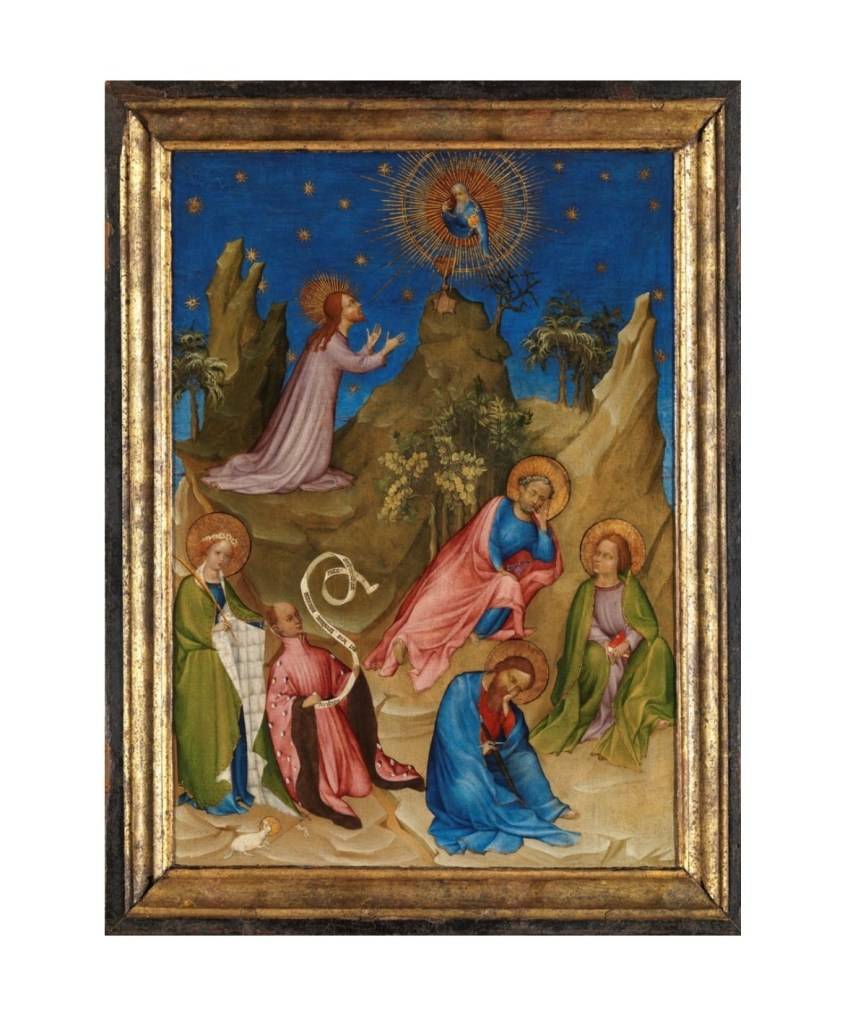

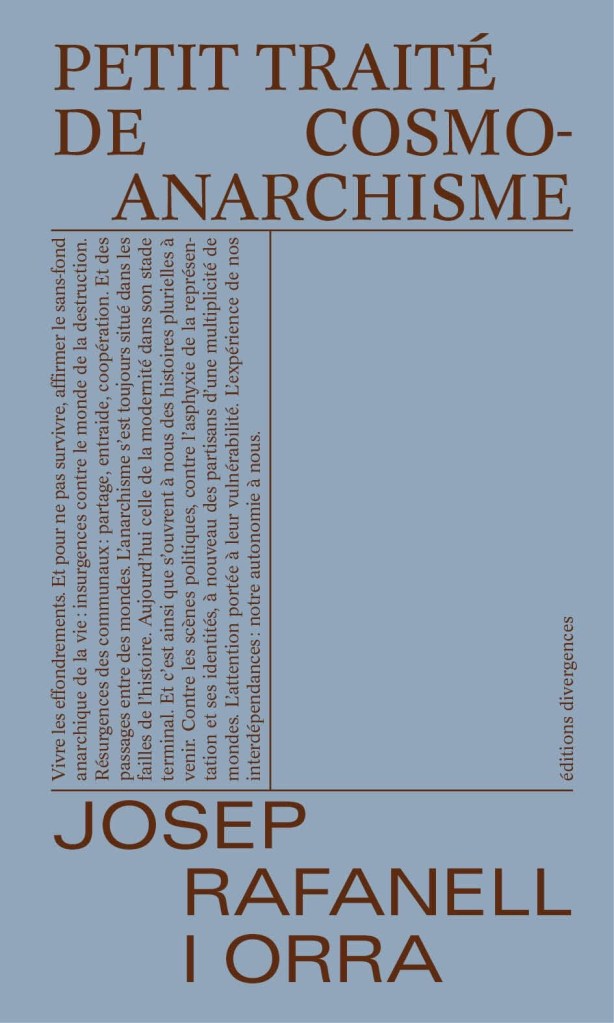


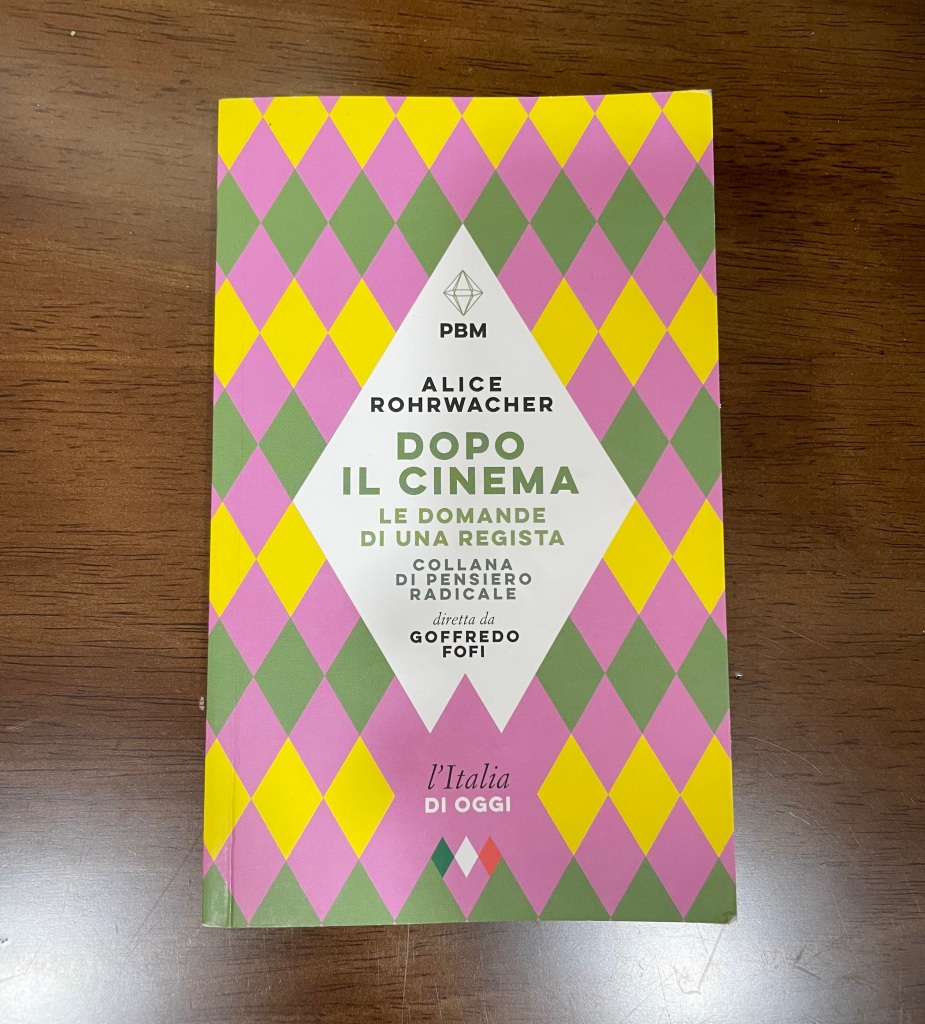


 Infrapolitical Reflections