I remember that around 2007 there was a graffiti in Venice that read: “Non c’è nessun Virgilio a guidarci nell’inferno”, which can be rendered as “There is no Virgil that can guide us in this hell”. Many street graffitis come and go, and are easy to forget, but not this one. What does it mean that we live in an epoch without the company of the Roman poet Virgil? The suggestion prima facie is quite clear: if our voyage in the present entails a concrete hell (the subjection into economic domination and nihilism), it is an evermore so repulsive voyage as we lack the presence of the poet who can bear witness to the passing of an epoch and the possibility of the coming of a new earth.
But why Virgil? As Erich Auerbach already noted, for Dante the historical Virgil is both the poet and the historical witness, given that the Roman poet’s exemplary descent into hell was the preparation of a “terrene Jerusalem (earthy Jerusalem), the universal peace that came to pass during the Roman Empire, proposed and glorified in light of its future mission…Virgil led the way as a poet because of his description of the realm of the dead; he was thus a guide through the afterlife because he knew the way. But it was not only as a poet that was destined to lead. He was destined because he was a Roman and a human being” [1]. It would follow that an age dominated by the realization of absolute indifferentiation – this is the frame of nihilism after all – highly repressive of any proximity with the dead, can have no use of any Virgil even if one would offer to open a path to leave hell behind. The artist will not be understood or recognized as either human or poet, but rather taken as fully inhuman and incomprehensible. And this perhaps speaks to the tonality of terror and blindness that defines the undifferentiated suspended posthistorical time.
That there are no Virgils to cast a forward light outside the epocal hellish condition entails that we are left with an absolute politicization over life and death that takes the form of a novel technical imperium. We know that in Antiquity, political unhappiness and disarray was a common state of affairs (and also exile from civil life); life was conditioned, although not totally subsumed, by cycles of domination and insubordination during volatile civil stasis. But still in that historical epoch, a poet like Virgil, as both human and poet, was able to turn away from the “harsh and evil world, and sets out for Arcadia where he allows no hope, not even any desire to do something about the suffering world, to lighten his sorrow and despair” in the communion of friendship and concordia to retreat from static political absorption [2]. When we say that our predicament is that of a a world without Virgil, this should not be understood as a reiteration of Max Kommerell’s paradigmatic Jugend ohne Goethe (“a youth without Goethe”); but rather, more fundamentally, as the impossibility for the human species to imagine a sense of redemption in world that reduces itself to exchange and strife. In other words, the absence of the memory of Virgil speaks directly to the ever-increasing incapacity of existence to dwell beyond the imperatives of a calamitous attenuation of destruction and oblivion. We should keep in mind that Dante’s memory of Virgil was a symbol for the poetizing myths of a new life; and, in turn, Virgil’s own Arcadian nomos was the confabulation of reality and myth expressed in a language that measured itself against the orderability of imperial force. The triumph of total politicity, which is to say the coupling of the political into effective dispensation of technology, mutes not only the voice of the poets, as much the contact of speech and the passing of the world into nothingness.
In The Death of Virgil, Hermann Broch describes this very passage through the mystical death and cosmic transcendence of the Roman poet himself, who now enters “a primal darkness which had held itself hidden behind the furthermost starry orb and now, independent of the arching path of lights, indeed, without putting out a single one of them it filled the dome of existence with impenetrable darkness: the essential world-darkness burst forth, that uncreated darkness which is infinitely more than the mere loss of light or absence of light…” [3]. For Broch, the passing of the world in the wake of the death of the poet does not coincide with the silence constitutive of speech, but with the severability of a language transformed as fully transparent and unmediated, in Broch’s words “all understanding, consummating, might and commanding; the world of pledge, the pure word, becoming so overpowering that nothing could withstand it” [4].
Extrapolated to our times, the liquidation of language takes form of absolute theatricality of the word, ascending to rhetorical and computational transparency. And in this unnerving cacophony, where everything is communicated, is realized in the historical project of cybernetics and automatized languages. The ethical texture of speech becomes unattainable for both humans, as poetizing beings, as they become incapable of inhabiting the dislocated abyss between myth and reality, now pivoted to a linguistic closure that commands them into the high noon of despair. An endless despair that has relentlessly lost with the inception of the divine.
.
.
Notes
1. Erich Auerbach. “Figura” (1938), in Selected Essays: Time, History, and Literature (Princeton University Press, 2014), 108
2. Bruno Snell. The Discovery of the Mind (Dover Publications, 1982), 293.
3. Hermann Broch. The Death of Virgil (Vintage, 1972), 471.
Anyone somewhat familiar with the writing of Josep Rafanell i Orra knows that we are in the company of a wanderer and itinerant in an infinite pursuit of what the experiences of worlds might offer [1]. A mad endeavor for a groundless epoch oriented towards planetary reduction and confinement, so obsessed with infrastructure and security, most recently through the reiteration of the politico-theological program of national sovereignty, one more desperate reaction to unrestrained planetary decline. We can say with Hölderlin that we are vagabonds in a destitute time, a poet who figures prominently at the entrance of Josep’s Traité. In our posthistorical epoch we are confronted with the thicket over the dominion of life, which means that the question of exteriority becomes pressing as existence enacts a path beyond the endless rubble of representation bestowed upon the human species in every point of the globe.
The book that the Spanish reader now holds in his hands thanks to Luciole Ediciones will immediately let in a dimming light of a singular style or maniera that dislocates the modernist assumptions of political thought into what one could what I am willing to name an analytics of sensible hybridizations between languages and thought. This analytic of the sensible refuses immediately Social normativity as well as the melancholic hangovers of the modern revolutionary tradition (always caught up between constituent and constituted power, representation and humanism, growth and production). This is why Josep will redefine communism as the nonprogramatic event that irrupts through hybridization of surrounds and regions capable of overcoming the ontotheological adequation of subject and object that has led an entire civilization astray (33). The project of the critique of metaphysics finds in Josep’s Traité a powerful schematic cartography that raises questions precisely in those spaces where the rationality of the science of political economy has never dared to enter.
If the critical projects of High Modernity were fundamentally temporal (including that of Messianism and its overemphasized trance towards absolute immanentization), Josep’s writing also has the virtue of displacing the focus to the spatial formation and the thinking of the creation of spaces understood as dwelling, once populated by the gods of the events and which modern ontotheology obliterated through integrated objectivation and technological positionality. We know that the greatest nearness of the last god eventuates only when the event is elevated into refusal, especially when it manages to become too near [2]. As a shorthand, this drift towards objectification in the liquidation of modern politics is domination of the Social totality; ultimately, it is through the plasticity of the social bond that the reproduction of biopolitical life is temporalized, legally ordered, and rhetorically subsumused into an apparatus of predatory accumulation. It is the Social (not the State, or this or that concept of the modern grammar of political thought, or even fascism) that we must refuse. The collapse of the modern secular state and its moral guarantees, is the beginning of an autonomized social bond that now coincides with the total administration of world forms. The hegemony of the Social reduction is what allows Josep to claim that the opposition is no longer between Society and the State; but rather between community as a process and praxis against the static formation of the Social. Thinking today drifts from social domination to communities of encounters, heteronomic relations, communication, and interdependence in a web that characterizes the exotic movement of the imaginative possibilities of exteriority for manifold worlds.
The notion of community in Josep’s thinking is neither about ecstatic groups or “little platoons” of identitarian belonging (as once famously defined by Edmund Burke); nor referring to filiation and propriety reductions that can subsist quite nicely under the heatwaves of the ongoing conflagrations of Empire. For Josep communities insofar as they are exposed to their excess (ubermass) are processes of external contact between souls as rites of passages. The community is formless, and in this sense it ceases to be a problem of Chistological stereology in order to become one in the order of ethics and language (50). In this sense, very much like the late Mario Tronti looking at the collapse of the modern revolutionary experiment; for Josep the ruinous fragmentation of the worlds has a silver lining: that all human, and non-human, souls are dwelling on the outside world calling for worldiness, and thus potentially sharing a sense of intimacy that re-enchants the appearance and knowability of the world through the invisible attunement to the outside (un nuovo modo di essere fuori e contro) [3].
Beyond the subject and the narcissism of the Ego, the light of a “spark of the soul”, in the words of Meister Eckhart’s memorable sermon, a new animism returns not because there is a transcendental revelation to be asserted, but because the encounter between souls brings forth the concatenation of worlds that are entangled with other worlds (68). If Jünger described the epoch of planetary machination as “soul murder” (seleenmord) it was because there was no longer any contact with the unfathomable opacity between the soul and any possible worlds [4]. Josep with an elegant mannerist style enhances this intuition: “We are no longer exiles on Earth, as the romantic moment freighted by the loss of world. We ended up forcing the Earth into exile after so many deadly abstractions (108). The modern age has not ceased accumulating abstractions against the human species until becoming a whirlwind of soul murdering that has extended into the current ecocide of the worlds.
It does not come as a surprise that throughout Petit traité de cosmoanarchisme (2023) Josep appears more than skeptical about political critique (and to say skeptical might be an understanding). There is a clear imperative that is mobilized in the book and that it should not be taken for granted: political critique should evolve into the negation and abandonment of politics, which also includes the always anachronistic anarchist politics. We know that ever since the Greek polis the autonomy of politics partition and distribution was waged against the incommensurable topos of the chora, the ungovernable and infrapolitical hinterland of the new substantive community of rights and obligations posited by the logistics of representation [5]. As we know, this is what forced Heraclitus to resolutely remain playing knucklebones in the temple of Artemis: “What are you gaping at, you scoundrels? Or is it not better to do this than to work with you on behalf of the polis?” [6]. The knucklebones of the ancient anecdote of the presocratic philosopher is symbolic to what Josep demands of existence: the liberation of environments and surrounds for multiplicities of experiences. The experience of gaming always starts in the middle, expressing the ineffable ethics of how I become what I am already on my way of becoming (142). The maximization of politics into the very thicket of life (this is biopolitical administration) have increasingly defaced the experiential practice of existence that now extends over the course of the historical dispensation of civilization. This is the vortex of the struggle against the realist validations in the interregnum.
Against and beyond the force of abstraction and the prison of individuality, Josep situates the stakes: “It is there, where the fierce struggle we can lead today: to find the intimacy of our soul in the welcome of other souls to hear their silences and their voices. To participate in the animation of the world is to perceive the outside. And gently find the inside of the outside” (145). And between the process of the community and the soul there is no longer struggle or enmity, but only solvent philia; the influx of creation that, insofar was enmeshed in solitude, allows pain to speak in the time of transition, in the skirmishes between worlds. Ultimately, the experience of the itinerant is not that of learning to live in places; rather, it is the one that intensively yearns the presence of encounters. This remains the only ethopoetic imperative [7]. As Carlo Diano observed in an erudite study on the notion of the chora, the attunement of the soul with the world is not a conceptual entelechy; it runs materially through the sensorium of this body as it traverses the world towards its renewal [8]. To grasp this chiasmic region that dispenses the harmony of the soul as it flees the prison gates of an objective world, is the enduring letter and spirit that Petit traité grants to the ongoing task of thought.
.
.
Notes
1. Gerardo Muñoz. “Escuchar las llamadas del mundo: diálogo con Josep Rafanell i Orra”, Disenso: Revista de Pensamiento Político, N.3, July 2020, 134-158.
2. Martin Heidegger. Contributions to Philosophy (Indiana University Press, 2012), 329.
3. Mario Tronti writes in “Disperate speranze” (2019): “È necessario trovare un nuovo modo di essere fuori e contro. Io posso farlo nel solo modo in cui so farlo: tirando l’arco al punto che permette di cogliere il bersaglio più raggiungibile. Realistica visione.”. CRS, October 2019: https://centroriformastato.it/disperate-speranze/
4. Ernst Jünger. The Forest Passage (Telos Press, 2003), 93.
5. Julien Coupat. “Dialogo con i morti”, in Gianni Carchia’s Orfismo e tragedia (Quodlibet, 2019).
6. Martin Heidegger. Heraclitus: The Inception of Occidental Thinking and Logic (Bloomsbury, 2018).
7. Josep Rafanell i Orra. Fragmenter le monde (Divergences, 2020), 70.
8. Carlo Diano. “Il problema della materia in Platone: la chora del Timeo”, Giornale Critico della Filosofia Italiana, V.1, 1970, 335.
A recent roundtable entitled “American Constitutional Collapse”, organized at Red May, and now archived here, with Aziz Rana, Camila Vergara, and Michael Hardt should confront us with the limit of political form today. All the interventions were able to shed light on distinct angles of the current collapse of the American constitutional order, which has only intensified since the beginning of the new current administration, although its sedimentation, as it is well known, has deep historical legal-political itineraries. However, here I just want to register the question that I posed to the panel, which is one not alien to some of the chapters of La fisura posthegemónica (2025), and that concerns the exhaustion of constituent power. There are many ways of posing this question, but in the tradition of American republicanism, the most clearcut of the problem is to take seriously the end of historical social majorities as vehicles for enacting a ‘constitutional moment’ of democratic reformation.
Some of us remember that towards the end of the third volume of We The People: The Civil Rights Revolution (2014), Bruce Ackerman claims that in our epoch we might very well be entering into the dusk of social movements. Ackerman’s book is from 2014, that is, a couple of years before the landmark victory of Donald J. Trump’s first electoral victory of 2016, and written in the wake of the decision of Shelby County v. Holder (2013), which abolished substantive parts of the Voting Rights Act of 1965. The sequence of the last decade has only validated Ackerman’s intuition about the effective collapse of movements as the driving force of American iusreformandi within the constitutional order (in other countries is no different, take Chile for instance, which we discussed two years ago at Red May, and that is also the story of the the ills of transformative constitutionalism).
However, to anyone that has paid any attention to the political turmoil in the United States in the last decade, it is completely clear that the paralysis of the constitutional system is far from being a state rigidity or stability, but rather it has shown itself to measure every social pressure through an equal force of legal force, testing the durability, probing the reach, and outsourcing the validity of implicit norms and guardrails within the tripartite structure of powers through an enacted process that some American legal theorists have called “liquidation”; that is, the adjudication of fixing and enforcing textural legal provisions in historical time. This means that what animates the internal process of American law is no longer that axiological conditions of political republicanism – representation and minimalist judicial review, separation of powers and state authority, congressional representation and autonomy of the legislation – but rather a stasis, that is both paralysis with respect to the the formal aspiration of classical social representation; and, at the same time, total legal mobilization, in which social majorities are oriented under the nexus of the administrative presidency that can take (it has taken) priority over institutional mediation and process – if anything should be learned in the last decade is precisely the effects of Moore v. Harper (2023) on the doctrine of the independent state legislature (in spite of its ruling at the Supreme Court); and, most recently, the legal showdown regarding process (or lack thereof) and the suspension of habeas corpus for migrants residents and illegal aliens, which according to an American Federal Judge, could prefigure as a potential invasion.
We have good reasons to assume that mobilization and social movements from below can no longer stand as the source of constitutional change. They must be taken at face value in order to avoid rhetorical platitudes: mainly, that any movement today is a vector in the ongoing stasis and decomposition, that ultimately animates (even if against its own intentions, as the progressives seems to ignore) the verisimilitude of state form in the age of stagnation. But this is not very different from the inchoate promises of the new right-wing populism that projects new historical heights of economic growth in epochal decline (and now the progressive programmatic calls for technocratic abundance coextensive to the administrative state).
It is perhaps in demobilization and a de-socialization derives where other horizons might soon emerge. If the modern epochality was defined by the energetic transfer of total social movements, our epoch of collapse will be shaped by that of non-movements outside political hegemony. There is no doubt that it brings paralysis and distress to the political thinker looking for historical reiterations. But then again, the anxiety for mimesis before a breakthrough is always dreadfully sharp.
The European Union elections this spring restate what otherwise is already felt almost everywhere; mainly, that the destiny of politics has ceased to mean anything historically, and that political representation stands as a compensatory preamble and veneer to planetary conflagration, in which Europe has become a minoritarian and bystander actor. This also means that the histrionic reaction to this reality can only bring out its counters more sharply: both pro-nationalist sovereignty political platforms, and abstract administrative pro-union coalitions are junior partners of the current geopolitical planetary regime, and they merely differ in mild policy nuances, social spending allocations, and rhetorical probing that can also be as flexible as needed (such is the case of Italy’s Giorgia Miloni who one morning can be in a Vox Party Congress in Madrid, and later in the afternoon receive orders from Ursula von der Leyen and the White House).
The passage of destiny politics to the gigantism of geopolitics entails not just the erasure of the modern boundaries of enmity recognition, but also the introduction of an administrative plasticity that responds to ad hoc organizational and infrastructural planning, as symptomatic of the collapse of the subject of history into the dominance of the objective. The final stage of the “disenchantment of the world” that characterizes bureaucratic legibility finally appears as the reign of objectivity and the objective. And the concrescence of objecthood as the last avatar of the colonization of forms of life allows us to see how the compensatory constructions of ‘community’ – both the “European Union” and the multiple sovereign communities as reactions to it – repeatedly oscillate between communities of fictive identitarian belonging, and formal political communities devoid of constituent authority. Regardless of their contrasting designs and contrasts, both defenders of national sovereignty and the supra-national EU share the same allure of communitarian integralism: a community for the living, that is, for those integrated into the social apparatus of a well lighted and funded administered world. Respectively, we can see that the debate that took place in the late 1980s about negative community in Europe among philosophers (Jean Luc-Nancy, Maurice Blanchot, Giorgio Agamben) has not lost any of its poignant relevance, as the compensatory communitarian options multiply and spread without ever retreating from the summoned shadow of politica arcana. In a certain sense, the confabulation of communities of belonging and communities of faith are dispensable painkillers to the effective disintegration of the immanence of the social bond. This explains why “people” can only assent to them.
Both community form and political empire are united by a legislative political principle that today remains chattered in the final stage of intrahistorical collapse. There is no communitarian option today that does not end up living negatively on the hinterlands of the nexus of Empire; an exception to the nomic organization of the globe incapable of taking into account the inmates of community form. What is at stake is access to the world; an excess beyond communitarian identification and the administration of the waning politics of Empire.
One can, I think, read Josep Borrell’s words in a speech given at the European Diplomatic Academy in 2020 in this direction, where he calls Europe a well cultivated garden [1]. Obviously if we read it in a political key, Borrell’s address maintains the perennial framework of civilization and barbarism, and in his head the role of the ‘gardener’ is only a metaphoric deployment to exalt the morality of the squalid and humiliated European diplomats on the global stage. However, we know that there is much more to the earthly garden, which retreats already at the moment it is enunciated, since it is a mythic-poetic trope that colors the sensibility of concordia rather than elevating itself as a sociological category of political orientation.
As Italian historian Flavio Cuniberto notes in his beautiful book Viaggio in Italia (2020), for a poet like Dante the meridional Mediterranean region was the garden of empire (“che’l giardin de lo imperio sia diserto”) which attunes itself to the measureless relation between earth, landscape, and life. Is not this what is preparatory – that is, what must be posited in sensibility and in imagination through style – before any reduction of life into community and political mediation? Have not we felt this dissolving transport before a landscape in the outskirts of Tuscany or Orvieto? And is not this what political ecology (Green New Deals) are after in their effort to foreclose the world? The garden unworks empirical objecthood through its very refusal to be integral to devastation, usurpation and destruction of loci. This is why for Henry Miller the only “ideal community” would have the garden as its evanescent topoi, a “god filled place” even for those that have no gods:
“Even if it lasts for only a few moments, the privilege of looking at the world as a spectacle of unending life and not a repository of persons, creatures and objects to be impressed in our service, is something never to be forgotten. The ideal community, in a sense, would be loose fluid aggregation of an individual whole elected to be alone and detached to be at one with themselves and all that lives and breathes. It would be a God-filled community, even if none of its members believe in (a) God. It would be a paradise, even though the word had long disappeared from our vocabulary” [2].
Looking at the world as a spectacle – of course, this brings to mind Petrarch’s specular heights at Mount Ventoux, in which the possibility of seeing, for once, has the upper hand against the mastering the worldly phenomena at our “service” and proportionality. There is no utopia without this attempt to grasp the spectacle in its taking place, infinitely exceeding the rationality that vests reality into amorphous abstraction. Perhaps the garden is a figure of this necessity of irreducible outlook, which in Marvell’s language touches the ungraspable as it is inwardly felt: “Annihilating all that’s made / To a green thought in a green shade” [3]. The promise of a new life takes resource in the abode of that green shade.
In an early review of Elio Vittorini’s Uomini e no (1945), Renato Poggioli noted that one of the important merits of the novel was that in spite of the authort’s political commitment, the narrative was “neither partisan nor ideological. I dare to say it is not political; the author even apologizes for this at the end of the volume” [1]. Poggioli, of course, is referring to Vittorini’s Postscript where he states, favoring a thin notion of the autonomy of art, that the end of art is to “seek in art the trace progress of humanity is altogether different from fighting for it upon the political and social terrain” [2]. This is enough evidence to bring to bear Vittorini’s humanist project grounded in a faith in the “progress of the human species” that he wrestled with throughout his life, and that he never really abandoned according to Franco Fortini [3]. Of course, Vittorini’s ‘progressivism’ is not bounded to ironclad guidelines of political economy and the science of a materialist history, rather his position is the attempt to flee from it, to undertake a different path in which humanity and inhumanity could enter into an improper and inconspicuous relationship towards presence.
Here we can part ways with Poggioli’s suggestion that Uomini e no (1945) is not “sufficiently political” because the characters do not dare to make political slogans or identify themselves with a concrete political party line (the Communist Party that Vittorini himself identified with in spite of having written a non-political novel) during the underground resistance during the years of fascist domination in Milan during the interwar years. If Uomini e no (1945) drifts aways from engaging in a formal political identification to mobilize the narrative persuasion it is because for Vittorini there is an original struggle for “life” that necessarily precedes subjection and political action: it is the struggle of human species to confront the difficulty of its own inhuman threshold, which becomes necessary to account for in any materialist conception. The whole tension of the novel hinges on the unnerving formal composition of the narrative with the asphyxiating dread and angst of the character that embodies the existential the practice of an incarnated struggle beyond survival.
However, what is beyond survival? What comes after the desert of a world that soon enough – in the words of Theodor Adorno at the height of the mid century – will turn human life into “mere functions within a monstrous social machine in which “life does not longer lives”…in which what grows is the scope of socialization and its functions. What I want to say is that liberty has become a mere pretext to enhance the ways of domination” [4]. If politics is the religion of modernity (political theology suturing the void with authority), the accumulation of liberty can only be understood as the moment of expansion and reproduction of effective domination. In a way, the metropolitan scenario in Uomini e no (1945) foreshadows the evolving historical epoch of this ‘monstrous socialization’ as a civil war or stasis, in which the mere survival of political struggle is proportional to the dispensation of death of humanity as the last dialectical movement of humanity against itself; that is, towards the concrete extinction of the human. For Vittorini the swerving black sun of fascism and political militancy (in its idealized version invested in the paradigm of sacrificial structure of history) can only amount to the realization of epochal nihilism and the fertilization of the expansive desert in the novel at the expense of sacrificing the erotic mediation with the world, which entails the liquidation of the sensibility external to human: “Love, in those deserts, is at its most squalid; it is not that life is absent from but the life it has is not alive. You are thirsty and have a chance to drink; there is water. You are hungry, you have a chance to eat; there’s bread. There is a spring and alms around, just the one you are looking for. But it is only a mirage, it is not the thing itself” [5]. The fundamental question posed by Vittorini is never truly resolved by Uomini e no (1945): crossing the desert to achieve something like an erotic distance with the thing itself as ultimately the confirmation of one’s irreductible destiny. No doubt, there are moments where this emerges in strange ways, at the limit of narration and as a linguistic declaration. This is scripted through the exchange with the old lady Selva on happiness: “We work in order that men be happy. Isn’t that what we are working for?…Men need to be happy. Would there be any point to our clandestine newspapers? To our conspiracies?” [6].
Is happiness a subterfuge to return to the world, or is happiness, authentic non-compensatory happiness, the stimmung of life as it retreats from the delegated representations of civil society? The suspended dialectical closure at the level of form in Uomini e no (1945) provides a preliminary resolution to the question of happiness amidst wreckage; a collapse that speaks to Vittorini’s impossibility to bring into synthesis political action and existential authenticity. The narrative texture of Uomini e no (1945) is a preparatory exploration – showing the false exists in the meantime – towards the possible liberation of man’s passions, even against the premises of a reconciled ‘Humanity’ capable of leaving behind the antinomies of humanism and antihumanism at the service of the ‘communist way’. And we know that for Vittorini the commitment to ‘Communism’ was inscribed not in the idea or the organizational tactics but in the notion of the “way” (una via), capable of opening possibilities to counter the coercive efficacy of the administrative social apparatuses that turn historical progress into a totalizing desert [7]. How to do so – is there any legible index to the “via comunista”? As a novel Uomini e no is preparatory towards this retreat from the confusion of the inhumanity of the human on the one hand, and the total humanization of the world to deface the possibility of happiness and experience with the world itself.
In this sense, Fortini is right in describing the lyricism of the novel as attuned to a funeral oration or song (“canto funebre”), which is also a prolonged farewell to the ideals of Vittorini himself as a moral humanist; that is, as someone committed to the ideals and abstraction of redemptive self-sacrificial christology and the self-serving autonomous action of the pardon as man’s last hope to absorb the inhuman kernel into the vita nova of a redeemed universal Humanity. And in fact, these are two “endings”’ of Uomini e no (1945): the self-immolation and sacrifice of the protagonist N2 waiting to confront the Nazi official Cane Nero, and the final sequence of the worker that refuses to murder a German soldier because he looked “sad” even when standing on occupied soil, even when he occupies the role of the protectorate of the nomos of the earth [8]. These are the novel two preparatory distinct actions in the dense fog of the interregnum: the Christological path of sacrifice of N2 – the sacrifice to end all sacrifices, which according to René Girard’s defines the advent of the Christian sacrificial practice- seeks a last action of resistance holding on to “humanity’s internal weakness”, which carries the elevation of secularized mythic discharge of subjective martyrdom [9]. On the other, the milanese worker offers redemption as a form of secret forgiveness (without a justification and without a why) to the occupier, and in this way integrate the inhuman into the human species as the solution to the repeated rumination over the movement of struggle and resistance: “Why, without being in any way forced to do so, had they entered this duel to the death, and why did they continue to wage it?” [10].
In his early reading of Uomini e no (1945) Franco Fortini offered a thesis that I am tempted to call the domestication of the wolf argument; an inversion of Hobbesian anthropology and the Christian felix culpa in which struggle’s optimism will ultimately transfigure the internal wolf unto the human’s heart [11]. But we know that the homo homini lupi depends on a thick notion of anthropology, of the human’s unfathomable deficiency in relation to ‘object reality’ so that any domestication of the wolf within humanity is also an anthropological quest; perhaps the last “route” of negating humanism through substantive acts (sacrificial sacrifice and forgiveness) in the attempt to reconcile the wolf with man. But this is the very enterprise of civilizational techniques of adaptation proper to the tooling of political anthropology – that is, the domestication of the savage wolf entails its conversion to the passive dog. Could there be a way out to the final verdict of dialectical form beyond struggle, and the reconciliation of humanity with its negation? Perhaps this is only registered as the unthought in Vittorini’s Uomini e no (1945); an experience that prepares a return to the world through the conatus essendi, or the preservation of each thing’s being as their are. This is registered in only instances of the novel in the backdrop of a landscape; indeed, outside the subject of self-reflection, and beyond the premises of radical evil proper to moral platitudes. And the moment reads like this in chapter CXXX: “The long dusty road, the drowsiness, the hay, the stitches where the cicadas were: everything that was, and that, along with everyone who is lost, still wants to be. And the sky filled with kites? The sky that was filled with kites” [12]. The perseverance of the conatus essendi puts to rest what the delegated forms that politics and morality have to offer as temporal substitutes for dragging the historical promise of humanism within epochal nihilism.
In this suspended imagery of an arid landscape, Vittorini descends to the preservation of things as they open to their manifestation of another sense of freedom – no longer tied to the paradigm of historical liberation nor to the assumption of synthetic anthropological determinations to sooth pain – comes upwards, always silently, through the order of description outside the human. And is not in this description what Gianni Carchia would call “the non-human…a gesture of farewell to the idealist movement; a farewell to the exaltation of the human up to the highpoint of its explosion. The refusal to substitute the dead god for a human that in the depredatory scope of totality crosses every limit, every transcendence, and infinity” [13]? This transposition of this proximity with this “other-than-humanity” ( what Humanity can no longer hold on to) is the secret to Vittorini’s infrapolitical impasse in Uomini e no (1945) that holds the key to his insistence on a notion of “freedom” against the subject incapable of overcoming itself in the face of the abstraction (morality) or ideological reassurance (militancy) [14]. One could assume that the worker’s last line in Uomini e no (1945) – which also coincides with Vittorini’s mimetic repetition in his “Postscript” – in the form of a promise (‘I’ll learn better’) registers the final attempt to grasp what remains on the exterior fog of humanity: a notion of freedom that, in seeking ‘a way out’, insists in the possibilities of establishing contact with the world. Thus, the program of historical liberation can only be achieved against historical and civilizational fixation; traversing the polarity of humanity and inhumanity, and thus deposing the sublimated sentiment of pain that social domination can administer as an unending process of degenerated and moribound humanity as mere continuation of the fictive life.
.
.
Notes
1. Renato Poggioli. “Review of Uomini e no by Elio Vittorini”, Books Abroad, Vol.20, N.4, 1946, 393.
2. Elio Vittorini. Men and not men (The Malboro Press, 1985), 199.
4. Theodor Adorno & Max Horkheimer. “El mundo administrado o la crisis del individuo”, Pensamiento al margen: revista digital de ideas políticas, N.19, 2023, 200.
5. Elio Vittorini. Men and not men (The Malboro Press, 1985), 34.
6. Ibid., 13.
7. Elio Vittorini. “El comunismo como vía”, in Diario en público (Gadir Editorial, 2008), 279.
8. Elio Vittorini. Men and not men (The Malboro Press, 1985), 50.
9. René Girard. Sacrifice (Michigan State University Press, 2011), 65.
10. Ibid., 196.
11. Franco Fortini. “Che cosa può l’uomo: Uomini e no” (1945), in Saggi italiani (1987), 253.
12. Elio Vittorini. Men and not men (The Malboro Press, 1985),190.
The crisis of the liberal legislative state is almost as old as the very project of the modern liberal state itself. And if we are to believe Carl Schmitt, the rise of the supreme values of the French revolution and ‘human rights’ (with its corollary of universal recognition within its normative system) also meant walking the fine line from the political theology of generative reform to the nihilism of ius revolutionis commanded by new discharges of individual will, political and technical movements, and immanent forces bringing the collapse of the separation between state and civil society. We are still living under its protracted shadow, albeit with a different intensity and intent. In his new book Los derechos en broma: la moralización de la política en las democracias liberales (Deusto, 2023), Pablo De Lora co-shares this point of departure, while daring to suggest a new sequence after the collapse of modern political form and legal order: we are currently living under a particular epochal transformation that is anti-legalist (sic) in nature – precisely because of its surplus of legal motorization – that erects a “nursery state” for the totality of the political community’s reasons and justification for action (De Lora 23).
Although De Lora case studies shown are almost entirely derived from the Spanish and Latin American contemporary social contexts, I do think that his sharp diagnosis could be extended to the epoch itself without blurring the important nuances. This is an epoch of a reigning “emphatic constitutionalism” (Laporta) or the total Constitution (Loughlin), at the same time that it no longer takes too much effort to imagine a political community devoid of a legislative body, as one eminent constitutional scholar has said repeatedly [1]. We are already here. In other words, whether by excess or deficit, the overall purpose of moral driven legislation announces the internal transformation of modern politics as we know it, extending itself to a civilizational regression from the ideals and norms of the Enlightenment rooted in the fiction of the citizen, the binding of the social contract, and the invention of the principle of sovereign authority.
De Lora does not quite says it in this way, but I think I am not diverting too much of his cartography when extracting some of the central consequences of these internal moral substitutions that are palpable everywhere across the West: ecological legislation that increases social conductivity and expansion of natural destruction; ‘feminist’ anti-sexual aggression that leads to lowering of sentences for convicted sexual predators; the inflationary instrumental use of “Human Rights” for persons and things, but only defined narrowly by those that, under the thick haze of institutional hegemony, can deprive their political adversaries and enemies of the most basic legal guarantees of due process transforming them into non-persons. These ‘moral substitutions’ is part of the “ironic” and “futile” consequence of the sacralization of morality whose end is the management of the “social model” at all costs. According to Pablo De Lora, within the limits of confronting a social dilemma such as disability, the specificity of the “case” is turned on its head; what matters is the overall structural design of the social order and its infinite adaptive changes (De Lora 71-72).
This mutation generates all sorts of unintended consequences when the rhetoric of “social benefit” takes the lead. As De Lora writes: “No hay apoyo anticipado a la discapacidad mental sin reconocimiento de que el discapacitado mental no puede ejercer su autonomía en el futuro. Dicho de otro modo, la institución de las voluntades anticipada de la lógica desideratum de modelo “médico” de la discapacidad mental que se rehuye en beneficio del modelo social” (De Lora 85). And in spite of normative incoherence within an institutional system, the deflection to the “social model” requires ever-expanding commands, rules, principles, and hyper-amendments to guide the adverse proliferation of reasons for action within the social state (in the United States this is soften by the police powers of inter-agency statutes of the administrative state through cost&benefit balancing of discretionary principles under the supervision of the executive branch). This transformation entails the collapse of the internal mediation between the validity of norms and its foundation in social facts as in the classical construction. Thus, the expansion of value-driven legislation that also requires of specific adjudicative constitutional theories, such as legal interpretation and the theory of balancing of principles advocated by Robert Alexy, the sponsors of social neo-constitutionalism, but also the embedded dialogic ideological positions of constitutional scholars such as Roberto Gargarella (or in the United States context, the work of Mark Tushnet and the so-called anti-originalist ‘living constitutionalists’).
All things considered, the fundamental problem for De Lora is that this specific transformation enacts what he calls a “Estado parvulario” or ‘nursery state’ that he defines as: “El que denominado “Estado parvulario” da pábulo a que el poder público, en sus diversos instancias y encarnaciones, escamotee las realidades y consecuencias que conllevan algunas discapacidad per oa que lo haga de manera internamente inconsistente: tratando a los menores como adultos, pero sólo simbólicamente, y, en cambio, de manera efectiva, a todos los ciudada como menores, congénitamente desvalidos, incapaces de encarar la realidad” (De Lora 87). In the framework of the nursery state within its specific moral legislative apparatus, children become adults and the mature civil society regresses to an infantile stage. And like in a nursery setting, the democratic virtues pave the way for new dramatic effects where the function of rhetorical annunciation – so central for the any credentials of moral hegemony – forecloses the void between morality and politics in the wake of the unification that the social model requires to begin with (De Lora 89).
This slippery slope can only lead straight to a sacralization of the political system that runs co-extensively with the infinite expansion of social rights; which, in turn, leads to an ever increasing conflict over the assumptions regarding its social facts (De Lora 151). In this narrow form, De Lora is audacious when citing Martin Loughlin’s recent indictment from his Against Constitutionalism (2022): “En la era de la Constitución total, el gobierno bajo el imperio de la ley ya no significa el gobierno sujeto a reglas formales independientemente pulgadas. Significa gobierno de acuerdo con principios abstractos de legalidad que adquieren significado sólo cuando son insuflados con valores…” (De Lora 188). And we know perhaps too well that values cannot be reasoned, but only weighted; values are commanded and taxed on the permanent devalorization of other values. This is why the rise of the value fabric of constitutionalism coincides with the ‘weighting’ proportionality of principles of law’s ideal social efficacy, to paraphrase Robert Alexy’s influential position as claim for “anti positivist legal justice” [2]. The nursery social state cannot be corrected merely from the position of the legislator; it can also be tracked as a triumph of moral jurisprudential theories of law that seek to overcome (and provide answers) to the overall crisis of institutional authority that characterized the so-called ordered liberty of the moderns.
Is there anything to be done beyond a description? It is quite clear that Pablo De Lora’s ambition is not so much the proposition of a new political or legal philosophy as much as the sketch of the current epochal predicament in its current practice. This is already enough to welcome a robust analytical discussion of our predicament in Los derechos en broma (2023). However, there is a cobweb of affinities in De Lora’s own position towards the end of the book that, even if not fully developed, must be registered as a mode of conclusion. First, there is an affinity with John Hart Ely’s deferential conception of judicial power that aims at overseeing the procedural mechanism for the democratic deliberation and legislation over a hot-button issues. In this vein, De Lora shares Akhil Amar’s position regarding the overturning of Roe in the Dobbs’ decision; a conception that fully embodies judicial deference to diverse legislative majorities [3]. Secondly, De Lora favors a judicial minimalism associated with the doctrinal theory sponsored by James Bradley Thayer over the practice of judicial review of the Court (De Lora 233). And last, but not least, De Lora sees transformative potential in John Rawls’ assertion in his late Political Liberalism (1993) that the use of public reason is a comprehensive doctrine to deal with our fundamental disagreements and contentions over shared political values (De Lora 241).
I am not sure how deep or for how long does De Lora wants to go with Rawls; however, it is important to remember – and specially given the treatment of the ‘social model’ in the morality presented in Los derechos en broma (2023) – that insofar as social paternalism is concerned, Rawls’ late liberal political philosophy at the heart of the crisis of the secular liberal state amounts to a political conception that, as Eric Nelson has brilliantly shown, abandons the commitment of individual non-cooperation or refusal to cooperate with unjust moral legislative burdens, and thus making everyone stuck in the same ship [4]. This ship is the management and balancing of the totalization of the values being trafficked in the Social as ‘egalitarian’, although they are fully endowed as a seterological scheme of “election” (and who is elected) balanced by secondary compensations.
On a larger canvas, if the current political structure is defined as a nursery state of social rights, then this means that appealing to ideal positions of justified reasons, “diaphanous” deliberation, and well crafted citizen arguments belong to the age of maturity of the Enlightenment, but not to the stage of social infantile disorder. And demanding political qualifications to the contemporary citizen today is not only naif, but at odds with what what institutional thinking requires. In other words, the concrete transformation of the post-liberal state is one of permanent optimization of conflict, which is why John Gray has lucidly defined the (contemporary) ‘new Leviathans’ are “engineers of the soul” with broad and sweeping capacities to govern over every inch of the social space [5]. In the wake of these institutional mutations, the call endorse a “moral critique” might be taken as a post-enlightened lullaby that among the blasting and striding cries of infants of the nursery will most likely just pass unheard.
Mårten Björk’s The Politics of Immortality in Rosenzweig, Barth, and Goldberg: Theology and Resistance Between 1914-1945 (Bloomsbury, 2022) is a major contribution to the ongoing discussion on theology, politics, and life in our present. Indeed, this book of unmatched originality will radically change the coordinates that have structured these debates in and beyond the academic disciplines involved. First conceived as a longer dissertation entitled Life outside life and defended at Gothenburg University in 2018 (which included an voluminous and illuminating chapter on the work of German theologian Erik Peterson, not included in the published monograph and scheduled for publication in the near future) studies three figures of the German interwar period that confronted the civilizational catastrophe of the twentieth century and the rise of the regime of mass production. Through different conceptual elaborations in Franz Rosenzweig, Karl Barth, and the Oskar Goldberg Group (it also includes thinkers such as Adolf Caspary and Erich Unger) a unified thesis emerges: these thinkers crafted a fundamental response to the collapse of the legitimacy of the modern epoch through a radical imagination of immortality and eternal life (Björk 2022, 3). From an angular perspective, Björk’s book measures to Hans Blumenberg’s groundbreaking defense of the legitimacy of modernity through “self-affirmation” of the human; a philosophical anthropology predicament that today has become fully integrated into the arts of planetary destruction, although its genesis is to be captured in the first decades of twentieth century through the dawn of a new catastrophic politics (the term is coined by Erich Unger in his Politics and Metaphysics). In Björk’s account, these thinkers took the stance against the stimmung of the epoch, its historical closure as well as the immanence of nature in order to take up a historical collapse that was civilizational in nature.
It would be a common place to remind the readers of this book that the figures of the research (with the exception of Rosenzweig who in some corners has been taken as the greatest Jewish philosopher since Maimonides) have been unwarranted buried in the monumental and political historiographies of the period and in the edifice of normative Continental philosophies of the twentieth century. However, Björk’s monograph is no simple restitution of dead old men, as this would be too accommodating to the field of the history of philosophy. Behind these figures there are multiple strategic displacements that connect the destruction of biopolitics to the reformulation of ethics of the dead, as well as the revision of Judaic theological sources to execute an effective retreat from the collapse of civilization of the last 5000 years of the human species. In this quadrant there is also a timely gesture on the complicated relationship between Judaism and Christianity; a relation that the book never really solves, although it runs throughout the book flagged for possible future explorations. Methodologically, it is the field of “theology” (not of science of religions a la Weber) that returns to the center as a way to explored an unthought dimension of immortality – that Björk properly renders as life outside life, against all biopolitical saturation and ecological catastrophe of the natural world. It goes without saying that there is an untimely tone that directly speaks to our present. Indeed, it is the radical theological and cosmological presuppositions (outside the formalism of religion and the apocalyptic historical saeculum of the Church) where something like a radical new existence of what it means to live can be rethought. This is Björk’s fundamental invitation.
In “Yearning for a system: Franz Rosenzweig and the great paganism of life’, Björk offers an all-encompassing outlook to the work of the Jewish scholar whose famous Star of Redemption was also accompanied by an interest in European geopolitics of the first decades of the century. In the midst of the First World War, Rosenzweig witnessed the rise of a new paganism of the state as the acceleration of the struggle for life in the West reproducing forever war (Björk 2022, 29). For Rosenzweig modernity was not an authentic or unfinished secularization, but rather the institutionalization of a pagan order of depredatory confrontation that foreclosed the world without outside: absolute immanence now meant the subjectivation of new false gods of modern civilization ordered towards survival and struggle (Björk 2022, 25). Against this backdrop, Björk reads Rosenzweig’s Star as an original theosophy of redemption of the world that exceeds the national political counters, while offering a new planetary and universal dimension of salvation beyond the state as articulated in Globus. Furthermore, Björk notes that Rosenzweig saw himself as a sort of Jewish fighter in the defense for a new planetary community with “religion as an instrument for change” (Björk 2022, 53). Even though the language had residues of imperial imagination proper to the time, it is the theological vector that distorts the political register of the ground battle for survival. Here Judaism appears as a subtraction from conventional historicity by retreating to a prehistoric past where the ‘unity of the world’ had no nomoi, states, or borders (Björk 2022, 54). It should be noted that something similar was advocated in his 1922 booklet Die Staatslose Bildung eines Judischen Volkes about the stateless wandering of the Hebrew people, by Erich Unger who thought could show a way out of the decadence of Western civilization through the revitalization of ancient Judaism. The Jew had never been a member of the polis or a slave of the state, since the Judaic Kingdoms were ruled, as Björk explains, “by an antipolitical priesthood” or a “metapolitical priesthood and not political kingdoms” (Björk 2022, 61). The sharp contrast to the modern Judaic subtext is of importance: whereas Eric Nelson shows in The Hebrew Republic (2010), how the ancient Jewish sources influenced the constitution of the modern state theories of Thomas Hobbes and John Milton; the work of Unger and Rosenzweig centuries later, in the wake of the Weimar era, seeked to radically alienate the command of Judaic prophecy from the regulatory political and geopolitical techniques of anthropological modernity. The gap between the two, for Rosenzweig, would be the hope for eternal life against the management of survival to which modern political grammar succumbed without return (Björk 2022, 66).
But theology offers the route to imagination and vocabulary of restitution, and infinite recapitulation. To grossly synthesize Björk’s thesis: life is best understood as an endless dialogue with the dead. The second chapter “Abundance and scarcity” glosses aspects of Reformed theologian Karl Barth’s thought against the materialism of scarcity of the world and the principle of abundance proper to eternal life. By tracing Barth’s critical dialogue with Feaubach’s sociology of religion of the species-being (which radically impacted the way Marx and Marxism came to understand theology), Björk’s theology puts paradisal life at the center of the mission of salvation; a heretical notion that exceeds the predestination theology of grace deployed in the organization of the modern kakedomonic public powers of modernity (Björk 2022, 88). In this sense it is insufficient to define the capitalist religion as merely a cult without dogma or atonement; it is also, perhaps more fundamentally, an axiomatic system that accentuates the two-dimensional positionality of death and life without residue. For Barth, Björk reminds us, theology is a way out from the cultish axiomatics of the countable and measurable of the visible world: “Theology….seeks to open the believer to the belief in the invisible side of the reality of the world. Theology must become an investigation of this invisible world to which further posits that the visible world is related” (Björk 2022, 103). And Barth’s lifelong interest in the theology of resurrection was precisely a way to insist on the invisible register that conflates nature, morality, and survival of the living within the objective normativity of the world.
Perhaps the most interesting aspect of Barth’s theology discussed by Björk comes by way of the opposition of ethics and morality – this is elaborated as a rejection of the predicament of natural law’s imago naturae and its dependency on rationality – where the second is discarded as merely finite life unto directive command of the natural good. On the contrary, an ethics suspended by the postlapsarian stage is guided by the principle of suum cuique (Björk 2022, 114). The suum cuique (‘to each its own’), although prima facie echoes the Thomist epikeia, it is also free standing for something more: it is a limit to the irreducibility of life in relation to God, which cannot be inscribed in a system of balancing of moral principles in the hands of a sacerdotal authority. Whereas the moral principle of equity (epikeia) organizes the government of this world through principles and moral reasons for action; the suum cuique is the limit set upon our finite life and the eternal in the scope of the saeculum. Björk connects the notion of the suum cuique to the Barthian figure of the “strange saint” who “with tears and laughter provides God and in this provocation is obedient to the election that forms death into life” (Björk 2022, 116). The suum cuique, accepting the postlapsarian condition rejects the instrumentalization of original sin in order to become a “vast eon of the cosmos itself…temporal and finite but also eternalized as that which once was” (Björk 2022, 117). In this way, the suum cuique prepares the paradisal affirmation of every unlived life, an anathema to the thomist substantiation of merely personal dignity and the exceptional mechanism of individual mediation with the economy of election and grace.
The theological exploration of modality of being – this is one of Björk’s implicit lessons in the book – never truly disappears in modernity, but rather reemerges in unexpected spheres. The politics of immortality does not pretend to exhaust this problem. But it is in the last chapter on the enigmatic figure of Oskar Goldberg where this theme is best explored as the true meaning of a life outside life at the center of the book’s conceptual development. Oskar Goldberg is one of the most enigmatic figures of the Weimar era; a magnetic personality that gathered diverse personalities from all corners of the intellectual milieu. He was looked with high suspicion by Thomas Mann, who portrayed him as a mystical undemocratic thinker in Doctor Faustus, but also dismissed by Walter Benjamin and Gershom Scholem (it only suffices to look at the correspondence collected in Scholem’s Walter Benjamin: The Story of a Friendship). A scholar with strong and sedimented knowledge in the Talmud and Ancient Judaism, Goldberg developed a highly sophisticated and speculative theology of the transcendental organism, to put it in Bruce Rosenstock’s terms, which provided an original formulation of a transcendent being based on the Torah in the wake of the new biological theories of the species (the work of Driesch, Uexküll, Spemann, among others) [1]. The biological and mystical vocabulary of Goldberg aroused immediate skepticism from the German intellectual class, but Björk convincingly shows that Golberg’s project was not an arabesque of a madman, but rather a very peculiar modal speculative system that seekd to confront the 5000 years of the civilization of fixation of the Western transition from the society of myth to the civilization of production and psychic energy imbalance (Björk 2022, 127). For Goldberg the passage from the prehistoric stage of myth to the inauguration of the religion of the state meant the sedimentation of a civilizational regimen oriented towards production, devastation, and positionality (Theophanidis recently expressed the proximity between Goldberg’s fixation and Heidegger’s Gestell, unexplored in Björk’s book). Björk is attentive to the fact that Goldberg was not just a proper name but also the constitution of a sort of ‘metapolitical university’ that gathered diverse figures, such as the economic historian and political thinker Adolf Caspary or the philosopher Erich Unger, both who developed their own critique of technological domination under the shadow of Goldberg. Thus, the critique of civilization is not to be taken as an abstract mysticism; for Björk, the concrete effects can be read in Caspary’s forgotten The Machine Utopia (1927), which criticized the utopia of machine civilization proper to both Soviet Bolshevism and Western capitalism – two social orders that shared the same the same historical horizon: reproduction and accumulation of surplus value (Björk 2022, 142).
In this framework, and against the historicist analytics of Marxism, for the Goldberg circle class antagonism and division of labor was not oriented towards emancipation, but rather towards the realization of a global total state. For the Goldberg circle to escape the civilization of the Behemoth of the industrial state required nothing short than a politics of errancy (defended by Unger in his Politics and Metaphysics of 1921) and the reversal to a modal relation with YHWH as an effective and potential dimension against the imbalance of an impoverished reality. Björk claims that for the Goldberg circle there were three possibilities of existence of coming to terms of the modern decline towards: civilizational fixation, myth, or Torah (Björk 2022, 154). And in different ways, they opted for the Torah, which implied not an identitarian reversal to a territorialized Volk but rather an infinite task of becoming immortal, given that our modes correspond to the nature of God and the world (Björk 2022, 166). The task was to depose the production of evil and suffering here and now as mobilized by the incarnation of historical progress. This infinite retreat from the materiality of the finite of the species was a way to open a new polytheism to the Ancient Hebrew metaphysics elaborated in Goldberg’s book, The Reality of the Hebrews (Die Wirklichkeit der Hebräer, 1925). In other words, to exit from the fixation of the 5000 years civilization required a passage to immortality as a way to “make us unadapted to the normal laws of evolution” and to the objective world (Björk 2022, 178).
Truth be told, immortality never disappears from modern political imagination and governmentality. Some of us still remember that one of the famous mottos of the Cuban Communist Party was: “Los hombres mueren, el Partido es Inmortal” (“Men die, but the Party is immortal”), which ultimately served to guarantee the idolatry of the state’s sacrificial principle through a continuous “lucha” (struggle) of everyday life under real-existing administrative communism. Likewise, in recent years Boris Groys has argued at length that immortality lives off in the topology of contemporary art, where archivization, spatial flexibility, and museification of the historical Vanguard stand in for the desire to become immortal [3]. This is, indeed, what Björk calls, following Blumenberg, the moralization of immortality whose political translation resulted in truly barbaric consequences that we are still suffering (Björk 2022, 186). Against all moralization and political instrumentalization of immortality, The Politics of Immortality in Rosenzweig, Barth, and Goldberg (2022) rises the theological mirror so that yet another anthropogenesis event through the “the Gnostic residue by insisting that the problem of evil could only be solved by God” (Björk 2022, 190). In other words, the problem of immortality restores the gnostic residue to its proper place beyond exceptionalism and anthropological humanism, since finitude (death) externalizes what is living, while “life” now becomes the meaning as its own otherness to the modes of God. Departing from the fourfold structure of the history of the modern error in Nietzsche’s typology, we could add a fifth: the error of conceiving the gnosis as worldly aspiration to domesticate exteriority as a forever postponed apocatastasis.
It is in the sense that Björk’s important book complements the unfinished elaboration on the gnosis undertaken by Giannia Carchia towards the end of his life: the exodus from the fiction of the subject and the person implies nothing short than the “resurrection of the human community capable of renewing the arc of history that appears so dramatically broken” [3]. Perhaps Carchia was a bit of an optimist here: the historical arch emanating from the potstlapsarian moment is now in ruins, but the gnostic residue remains once the darwinism of human-assertion has fallen flat into pieces across our planet (Björk 2022, 197). But Mårten Björk majestically teaches us that to keep insisting on life (on absolute life, on dignified life, or the monstrous “good enough life” recently proposed in a frank instance of academic nihilism) cannot but reproduce the civilization of calamities that has put the world in the road to extinction. In the current epochal implosion all these pieces are more apparent than in any other time in history. Yet, life is elsewhere, always escaping objectivity and immanence: “it is the invisibility of the wished, the desired and the dreamt. This is what human life entails. It is related to the wide world of what could have been or what should have been” (Björk 2022, 199). The modality of eternal life is also what value cannot apprehend, and for this reason what remains undialecticized, stubbornly disjointed from every unbearable fiction of the world. The Politics of Immortality (2022) is not only an exceptional book; it moves us to look to what always remains on the side of the invisible, to the unsaved in the exterior elan of every life, our lives.
.
.
Notes
1. Bruce Rosenstock. Transfinite Life: Oskar Goldberg and the Vitalist Imagination (Indiana University Press, 2017).
2. See, Boris Groys, Política de la inmortalidad (Katz editores, 2008), and “The Immortal Bodies”, Res, Vol.53-54, 2008.
3. Gianni Carchia. “Elaborazione della fine: mito, gnosi, modernità”, in L’amore del pensiero (Quodlibet, 2000), 150.
Jean Franco, pioneer of Latin American Cultural Studies and witness to its Cold War gigantomachy, passed away a couple of weeks in December at age 98. She remained lively and curious even at the very end of her scholarly life, and for some of us that saw her in action she embodied the memory of the century. The photograph above is of Jean’s visit to Arcadio Díaz Quiñones graduate seminar in the fall of 2015 where she discussed some of the main arguments of her last book Cruel Modernity (Duke U Press, 2014), a cartography showing the definite closure of the Latin American insomnia for political modernity in light of its most oblique mutations: narcoviolence, the emergence of a dualist state structure, and new global economic forces that putted an end to the vigil of the revolutionary enterprise. I write “definite” purposely, since Jean’s own The Decline and Fall of the Lettered City (Harvard U Press, 2002) already hinted at a certain exhaustion (to borrow the strategic term of Alberto Moreiras also writing during these years), most definitely a thorough disillusion, in the sense deployed by Claudio Magris, of cultural substitution for the belated state-making modernization. The function of “culture” (and its hegemonic state apparatus) was always insufficient, dragging behind, or simply put, unintentionally laboring for the cunning of a project forever postponed in the sweatshop of the newest ideologue, or for the hidden interests of the “local” marketplace of moral academicism. All of this has come crashing down rather quickly even if the demand for culturalist janitorial or housekeeping services are still in demand to sustain the illusion sans reve et sans merci.
What always impressed me about Franco’s scholarship was her intellectual honesty to record, even if through an adjacent detours and academic finesse, the destitution of all the main categories of the Latin American modern wardrobe: developmentalism, state-civil society relations, the intellectual, cultural hegemony, revolutionary violence, the “rights revolution”, and the intra-national spatiality (rural/metropolitan divide). From now on it is hard to say that there is a “task of the critic”, if we are to understand the critic in the Kantian aspiration of sponsoring modern values and perceptiveness to an enthusiastic disposition (definitely optimistic towards action) to transforming the present. As a witness to the twilight of the Latin American modern epoch, Franco univocally resisted the inflationary, value-driven, demand for politicity and ‘more politics’. This is why her attitude remained at the threshold of any given effective political panaceas or half-baked illusions.
Does her biographical experience say anything to this particular inclination? It is difficult to say, although as a witness of the century Jean had lived through the coup in Guatemala in 1954, visited the Cuban Revolution during its most “intense years” of the sugar cane milestone (La Zafra de los Diez Millones), and followed with attentiveness the rise and transformation of the Southern Cone dictatorships in the 1980s coupled with the irreversible social transformation of neoliberalism in the 1990s signaling the effective end to regional integration in the face of planetary unity. All of this to say that I find it hard – at least leaving aside the many nuances – to see in Jean’s scholarly witness an enthusiasm for the Latin American Pink Tide, the communal state, or abstract regional historicizing that could finally bring about the moral universe of the national-popular state (as if said moral realization would be anything worthwhile, which we some of us seriously doubt). If Jon Beasley-Murray once said that John Beverley was the “Latin American unconscious”, I guess it is fair to claim that Jean Franco was an authentic Latin americanist realist; that is, someone that was up to task to see in the face of the tragic, the cruel, and the heinous as the proper elements of the interregnum. Or to better qualify this: she was a worldly realist, leaving aside utopias and its abstractions. At the end end of the day, Leninists are also realists, or at least claim to be so. What places Jean’s earthly realism apart from the Leninist realism is the subtraction from the seduction of Idealization, which even in the name of the “idea” (“the idea of communism”, say) or “immanent higher causes” must bear and render effective the logic of sacrifice at whatever cost, even the real sense of freedom if demanded by the party, the leader, or the community. This is why at the closure of Latin American modernizing enterprise communitarian arrangements, posthistorical subjects / identities, or grand-spaces that mimic the constitution of Earth are foul dishes for a final banquet. It is always convenient to refuse them.
Going back to my conversations with Franco at Princeton, and some exchanges a few months later in a cafe near Columbia University, for her there was remaining only the anomic geography of Santa Teresa in Bolaño’s 2666, a novel that charts the current ongoing planetary civil war in the wake of the crisis of modern principles of political authority. I can recall one remark from Jean during these exchanges: “¿Y quién pudiera mirar hacia otra parte?” This is the general contour of her witnessing: how not to look somewhere else? In other words, how not to look here and now, into the abyss that is no longer regional or national, Latin American or cultural specific, but rather proper to our own civilization? A civilization is, after all, nothing but the organization of a civis, which has now abdicated to both the metropolitan dominium, as well as the campo santo of sacrificed life at the hand of techno-administrative operators (the new praetorian guard) of a well lighted and fully integrated Earth.
There is no alternative modernity, decolonial state, or hegemonic culture that will not serve to the compensatory and sadistic interests of the cruel policing of death and value, as the only masters in town. We are in Santa Teresa as a species of energy extraction. Can reflection be courageous enough to look through and against them? This is the lasting and eternal question that Franco left for those who are willing to see. It does not take much, although it amounts to everything: mirar / to gaze – in an opening where human form is lacking and categories are wretched – is the the most contemplative of all human actions. Whatever we make of it, this practice now becomes the daring task of the coming scholar.
Neoliberalismo como teología política (NED Ediciones, 2020), de José Luis Villacañas, es el resultado de un esfuerzo de pensamiento histórico por sistematizar la ontología del presente. No está mal recordar que este ensayo no es una intervención puntual sobre el momento político y el mundo de la vida, sino que es otro ‘building block’ en el horizonte conceptual que Villacañas ha venido desplegando en libros como Res Publica (1999), Los latidos de la poli (2012), Teología Política Imperial (2016), o los más recientes volúmenes sobre modernidad y reforma. A nadie se le escapa que estamos ante un esfuerzo mayor en lengua castellana que busca la reinvención de nuevas formas de regeneración de estilos capaces de impulsar una ius reformandi para las sociedades occidentales. Neoliberalismo como teología política (NED Ediciones, 2020), nos ofrece una condensación, o bien, una especie de “aleph” de un cruce particular: una fenomenología de las formas históricas junto a la reflexion en torno a la normatividad propia del principio de realidad. En este apunte no deseo desglosar todos los movimientos del libro, sino más bien detenerme en tres momentos constitutivos del argumento central. Como aviso diré que los dos primeros problemas serán meramente descriptivo, mientras que en el tercero intentaré avanzar un suplemento que conecta con un problema del libro (la cuestión institucional), si bien no es tematizado directamente (la cuestión del derecho).
Legitimidad. Los comienzos o beginnings son entradas a la época. Y no es menor que Villacañas opte por poner el dedo en la crisis de legitimidad que Jürgen Habermas ya entreveía en 1973. Esta crisis de legitimidad suponía un desequilibrio de los valores y de la autoridad entre gobernados y el sistema político en la fase de la subsunción real del capital. El mundo post-1968, anómico y atravesado por nuevas formas de partisanismo territorial, anunciaba no sólo el fin de la era del eón del estado como forma de contención soberana, sino más importante aun, un proyecto de reconfiguración del psiquismo que ponía en jaque a las formas y mediaciones entre estado y sociedad civil. Habermas detectó el problema, pero no vio una salida. Villacañas nos recuerda que el autor de Crisis de legitimación insistió en un suplemento de socialización compensatorio arraigado en la comunicación, la deliberación, y la razón; aunque, al hacerlo, obviaba que el nuevo capitalismo ilimitado operaba con pulsiones, energías, y “evidencias prereflexivas propias” (29). Habermas no alcanzó a ver, dado sus presupuestos de la sistematización total, algo que Hans Blumenberg sí podía recoger: la emergencia de la composición “técnica” previa a la socialización que, posteriormente, se presentaría como el campo fértil de la biopolítica. La nueva racionalidad biopolítica, ante la crisis civilizatoria de la legitimidad, ponía en marcha un nuevo “ordo” que operaba mediante la energía de libertad y goce. En este sentido, el neoliberalismo era un sobrevenido gubernamental tras la abdicación de la autoridad política moderna. El nuevo ‘discurso del capital’ suponía el ascenso de un nuevo amo que garantizaba libertad infinita a cambio de una subjetiva que coincidía con el rendimiento del Homo Economicus (fue también por estos años que el filósofo bordigista Jacques Camatte elaboró, dentro y contra el marxismo, la controvertida tesis de la antropormofización del capital) (72). Si la “Libertad” es el arcano de la nueva organización neoliberal como respuesta a la crisis de legitimidad, quedaría todavía por discutir hasta qué punto su realización histórica efectiva es consistente con los propios principios del liberalismo clásico (minimización del gobierno, y maximización de los intereses) que, como ha mostrado Eric Nelson, puede pensarse como un complexio oppositorum que reúne una doctrina palegiana (liberalismo clásico) con un ideal redistributivo (la teoría del estado social de Rawls) [1]. No es improbable que los subrogados de la nueva metástasis neoliberal fueran, más que un proceso de abdicación, la consecuencia directa de una teodicea propia del liberalismo. Tampoco hay que elevar el problema a la historia conceptual y sus estratificaciones. La concreción libidinal puede ser verificada en estos meses de confinamiento, puesto que el psiquismo ha logrado mantenerse dentro de los límites del medio del goce que no se reconoce en la pulsión de muerte. Esto muestra la absoluta debilidad de una ‘economía del actuar’ en el presente; al menos en los Estados Unidos donde las revueltas han sido, mayormente, episodios contenidos en la metrópoli. De ahí que el arcano de la ratio neoliberal no se limite a la policía, sino que su textura es la de un nuevo amo que unifica goce y voluntad. Esto ahora se ha intensificado con el dominio cibernético de Silicon Valley (Eric Schmidt).
Teología política. Desde luego, hablar de arcano supone desplazar la mirada a la teología política. Una teología política que es siempre imperial en un sentido muy preciso: busca impugnar la cesura de la división de poderes mediante una reunificación de los tiempos del gobierno pastoral (85). La operación de Villacañas aquí es importante justamente por su inversión: el monoteísmo integral que Carl Schmitt veía en el complexio oppositorum de la Iglesia imperial (Eusebio), entonces fue realizable mediante el principio ilimitado de la razón neoliberal (91). Ciertamente, no podemos decir que Schmitt ignoraba esta deriva. Al final y al cabo, fue él también quien, en “Estado fuerte y economía sana” (1932), notó que, solo aislando la esfera económica del estado, podría activarse el orden concreto, y de esta manera salir de la crisis de legitimidad del poder constituyente. Pero Villacañas nos explica de que la astucia del neoliberalismo hoy va más allá, pues no se trata de un proceso “que no es económico” (92). Villacañas escribe en un momento importante del libro: “En el fondo, solo podemos comprender el neoliberalismo como la previsión de incorporar al viejo enemigo, la aspiración de superar ese resto liberal que impedía de facto, la gubernamental total, aunque ara ello la obediencia no se tuviera que entregar tal Estado” (92). ¿Dónde yace ahora la autoridad de obediencia? En la aspiración teológica-política de un gobierno fundado en el principio de omnes et singulatim. ¿Y no es esta la aspiración de toda hegemonía en tanto que traducción del imperium sobre la vida? Villacañas también pareciera admitirlo: “[el neoliberalismo] encarna la pretensión hegemónica de construir un régimen de verdad y de naturaleza que, como tal, puede presentar como portador de valor de universalidad” (96). Una Humanidad total y sin fisuras y carente de enemigos, como también supo elucidar el último Schmitt. Sobre este punto me gustaría avanzar la discusión con Villacañas. Una páginas después, y glosando al Foucault de los cursos sobre biopolítica, Villacañas recuerda que “donde hay verdad, el poder no está allí, y por lo tanto no hay hegemonía” (103). El dilema de este razonamiento es que, al menos en política, la hegemonía siempre se presenta justamente como una administración de un vacío cuya justificación de corte moral contribuye al proceso de neutralización o de objetivación de la aleturgia. Dada la crítica de Villacañas a la tecnificación de la política como “débil capacidad de producir verdad de las cadenas equivalencias” (en efecto, es la forma del dinero), tal vez podríamos decir que la formalización institucional capaz de producir reversibilidad y flexibilidad jamás puede tomarse como ‘hegemónica’. Esta operación de procedimientos de verdad en el diseño institucional “define ámbitos en los que es posible la variabilidad” (108). Yo mismo, en otras ocasiones, he asociado esta postura con una concepción de un tipo de constitucionalismo cuya optimización del conflicto es posible gracias a su diseño como “una pieza suelta” [2].
Un principio hegemónico fuerte – cerrado en la autoridad política de antemano en nombre de la ‘totalidad’ o en un formalismo integral – provocaría un asalto a la condición de deificatio, puesto que la matriz de ‘pueblo orgánico’ (o de administración de la contingencia) subordinaría “la experiencia sentida y vivida de aumento de potencia propia” en una catexis de líder-movimiento (150) [3]. En otras palabras, la deificatio, central en el pensamiento republicano institucional de Villacañas, no tiene vida en la articulación de la hegemonía política contemporánea. Esto Villacañas lo ve con lucidez me parece: “…entre neoliberalismo y populismo hay una relación que debe ser investigación con atención y cuidado” (198). Esta es la tensión que queda diagramada en su Populismo (2016) [4]. Y lo importante aquí no es la diferenciación ideológica, sino formal: todo populismo hegemónico es un atentado contra la potencia de la deificatio necesaria para la producción de un orden concreto dotado de legitimidad y abierto al conflicto. Si la ratio neoliberal es el terror interiorizado; pudiéramos decir que la hegemonía lo encubre en su mecanismo de persuasión política [5].
La abdicación del derecho concreto. Discutir el neoliberalismo desde los problemas de déficit de legitimidad, el ascenso de una teología política imperial, o la liturgia de una nueva encarnación subjetiva, remiten al problema del ordenamiento concreto. En este último punto quisiera acercarme a una zona que Villacañas no trata en su libro, pero que creo que complementa su discusión. O tal vez la complica. No paso por alto que la cuestión del orden jurídico ha sido objeto de reflexión de Villacañas; en particular, en su programática lectura de Carl Schmitt como último representante de ius publicum europeum después de la guerra [6]. Y las últimas páginas de Neoliberalismo como teología política (2020) también remiten directamente a este problema. Por ejemplo, Villacañas escribe el problema fundamental hoy es “como imaginar una constitución nueva que de lugar al conflicto su camino hacia la propia construcción” (233). Y desde luego, el problema de la “crisis epocal” también tiene su concreción en el derecho, porque coincide con la lenta erosión del positivismo hacia nuevas tendencias como el constitucionalismo, el interpretativismo, o más recientemente “constitucionalismo de bien común” (neotomismo). Desplegar una génesis de cómo el “liberalismo constitucional positivista” abdicó hacia la interpretación es una tarea que requeriría un libro por sí sola. Pero lo que me gustaría señalar aquí es que lo que quiero llamar la abdicación del derecho positivo a la racionalidad interpretativista o neo-constitucionalista (Dworkin o Sunstein) probablemente sea una consecuencia interna a la racionalidad jurídica. (Al menos en el derecho anglosajón, pero esto no es menor, puesto que el mundo anglosajón es el espacio epocal del Fordismo). En otras palabras, mirar hacia el derecho complica la crítica del armazón económico-político del neoliberalismo. O sea, puede haber crítica a la racionalidad neoliberal mientras que el ordenamiento jurídico en vigor queda intacto. El problema del abandono del positivismo jurídico es justamente el síntoma de la abdicación de la frontera entre derecho y política (o teoría del derecho, como ha explicado Andrés Rosler); de esta manera erosionando la institucionalidad como motor de la reversibilidad de la división de poderes. De la misma forma que el populismo hegemónico es débil en su concatenación de demandas equivalenciales; el interprentativismo jurídico es la intromisión de la moral que debilita la institucionalidad. En otras palabras, el interpretativismo es un freno que no permite trabajo institucional, pues ahora queda sometido a la tiranía de valores.
Esta intuición ya la tenía el último Schmitt en La revolución legal mundial (1979), donde detecta cómo el fin de la política y la erosión de orden concreto (mixtura de positivismo con formalismo y decisionismo) terminaría en la conversión del Derecho en mera aplicación de legalidad [7]. Schmitt llegó a hablar de policía universal, que es mucho más siniestra que el cuerpo de custodios del estado, puesto que su poder yace en la arbitrariedad de la “interpretación en su mejor luz” dependiendo de la moral. Como ha señalado Jorge Dotti, esta nueva sutura jurídica introduce la guerra civil por otros ya que la “sed de justicia” convoca a una “lucha interpretativa abierta” [8]. Aunque a veces entendemos la excepción permanente como suspensión de derechos fundamentales o producción de homo sacer; lo que está en juego aquí es la excepcionalidad de la razón jurídica a tal punto que justifica la disolución de la legitimidad del estado. En esta empresa, como ha dicho un eminente constitucionalista progresista se trata de alcanzar: “un reconocimiento recíproco universal, lo que implica que comunidad política y común humanidad devienen términos coextensivos” [9]. Del lado de la aplicación formal del derecho, se pudiera decir que el “imperio de los jueces” (Dworkin) ha cedido su ‘hegemonía’ a una nueva racionalidad discrecional (y “cost-benefit” en su estela neoliberal) de técnicos, burócratas, agencias, y guardianes del aparato administrativo que ahora asume el principio de realidad, pero a cambio de prescindir de la mediación del polo concreto (pueblo o institución) [10].
Al final de Neoliberalismo como teología política (2020), Villacañas se pregunta por el vigor de las estructuras propias del mundo de la vida (230). Es realmente lo importante. Sin embargo, pareciera que las formas modernistas de la época Fordista (el produccionismo al que apostaba Gramsci, por ejemplo) ya no tiene nada que decir a uno ordenamiento jurídico caído a la racionalidad interpretativista. Al menos que entendamos en la definición de la política de Gramsci una “moral substantiva” donde no es posible el desacuerdo o la enemistad, porque lo fundamental sería unificar política y moral [11]. Pero esto también lo vio Schmitt: la superlegalidad o la irrupción de la moral en el derecho es índice de la disolución de la política, funcional a la ‘deconstrucción infinita’ del imperio y policial contra las formas de vidas [12]. Otro nombre para lo que Villacañas llama heterodoxias, en donde se jugaría la muy necesaria disyunción entre derecho, política, y moral.
.
.
Notas
1. Eric Nelson. The Theology of Liberalism: Polítical Philosophy and the Justice of God (Harvard U Press, 2019).

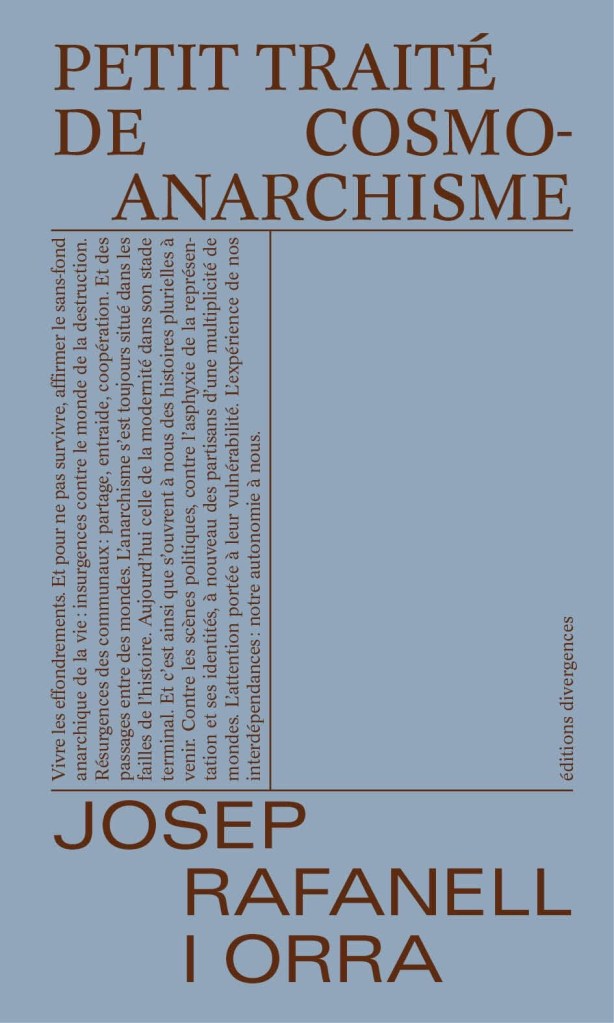

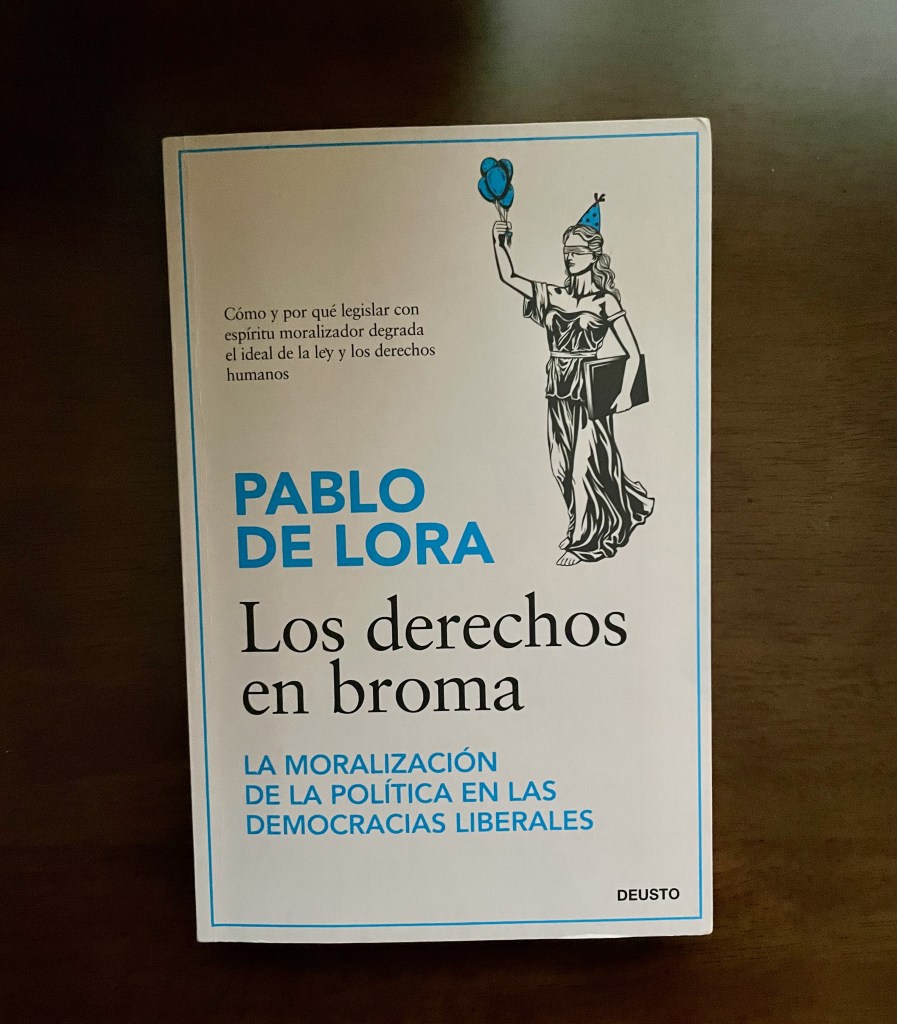

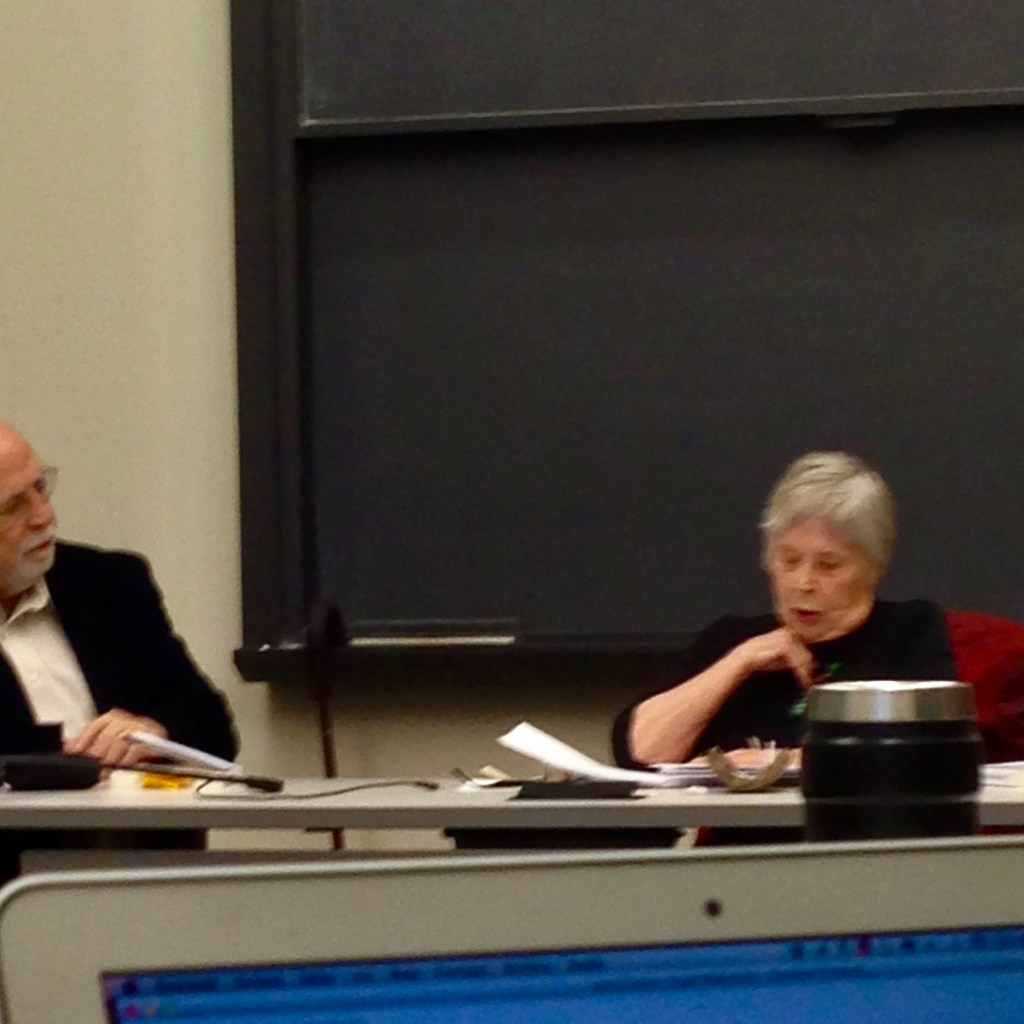

 Infrapolitical Reflections