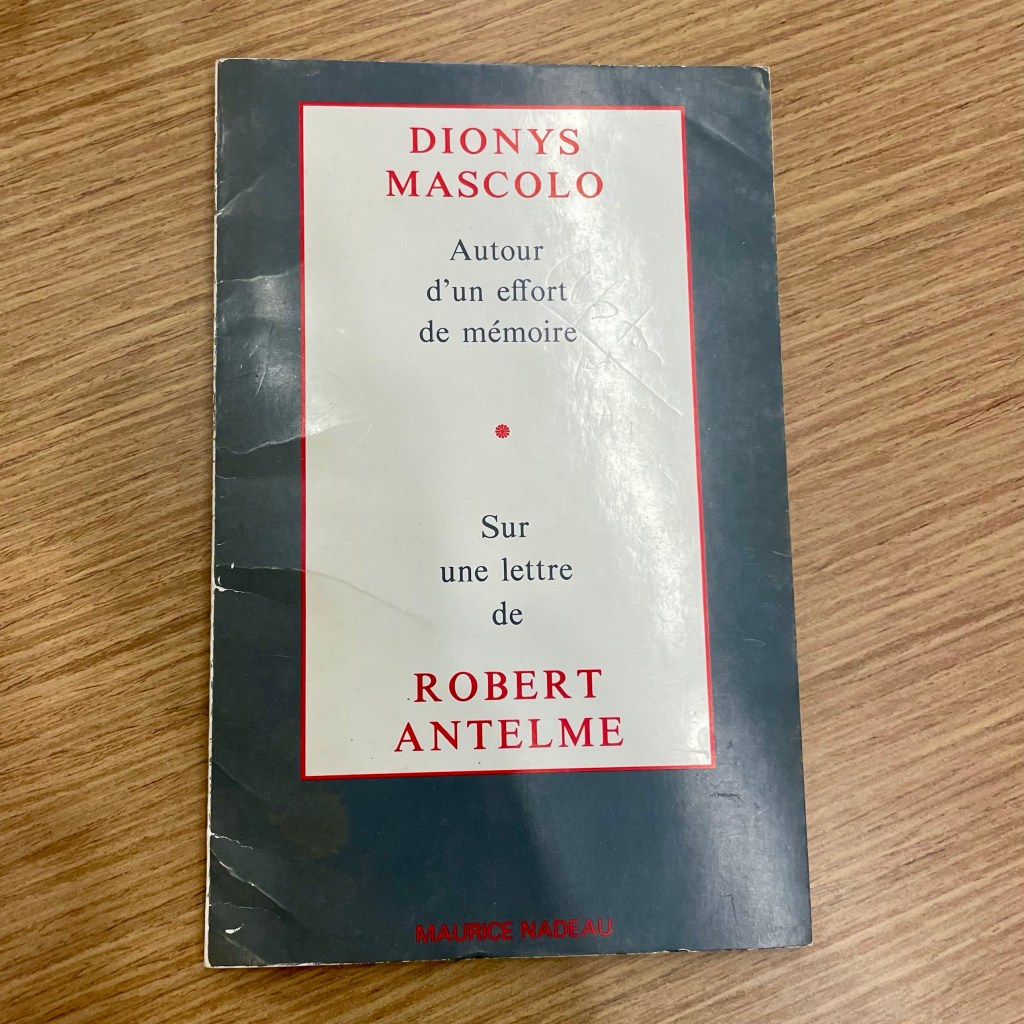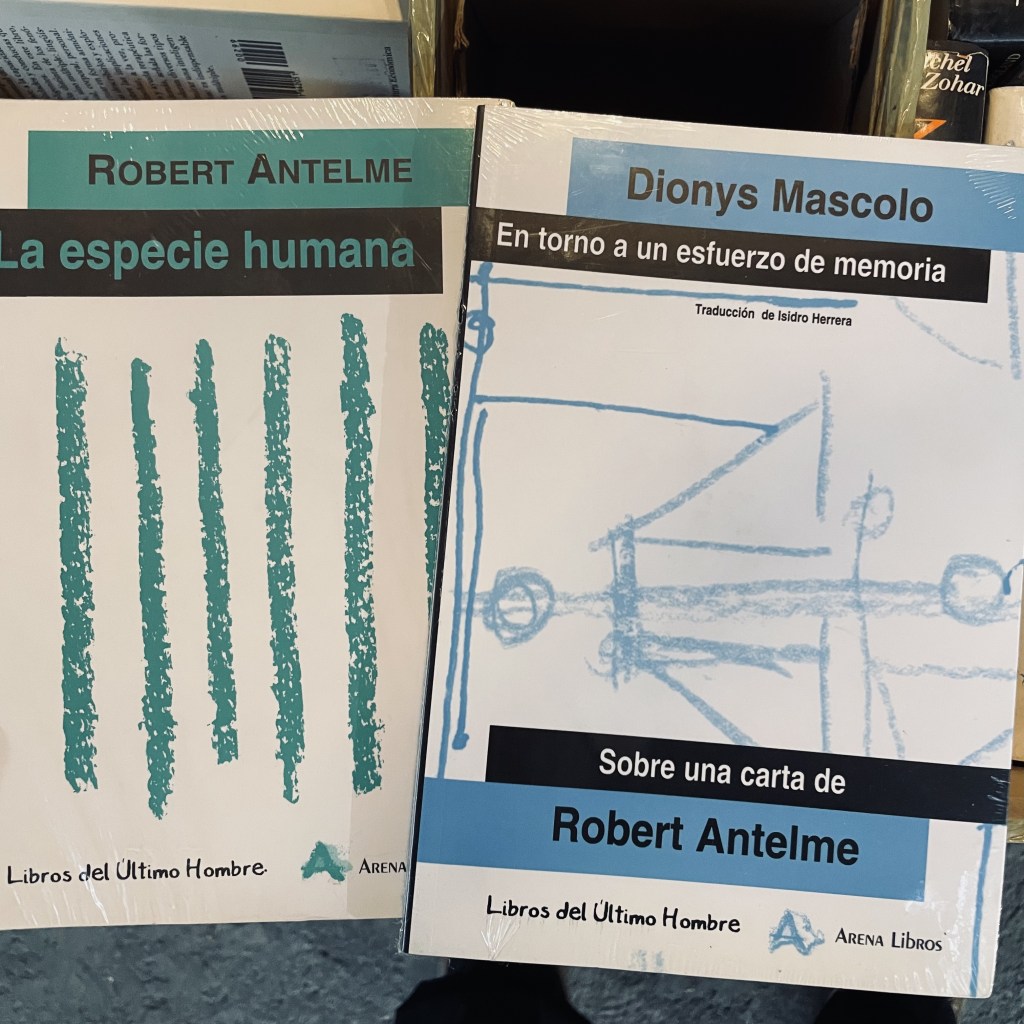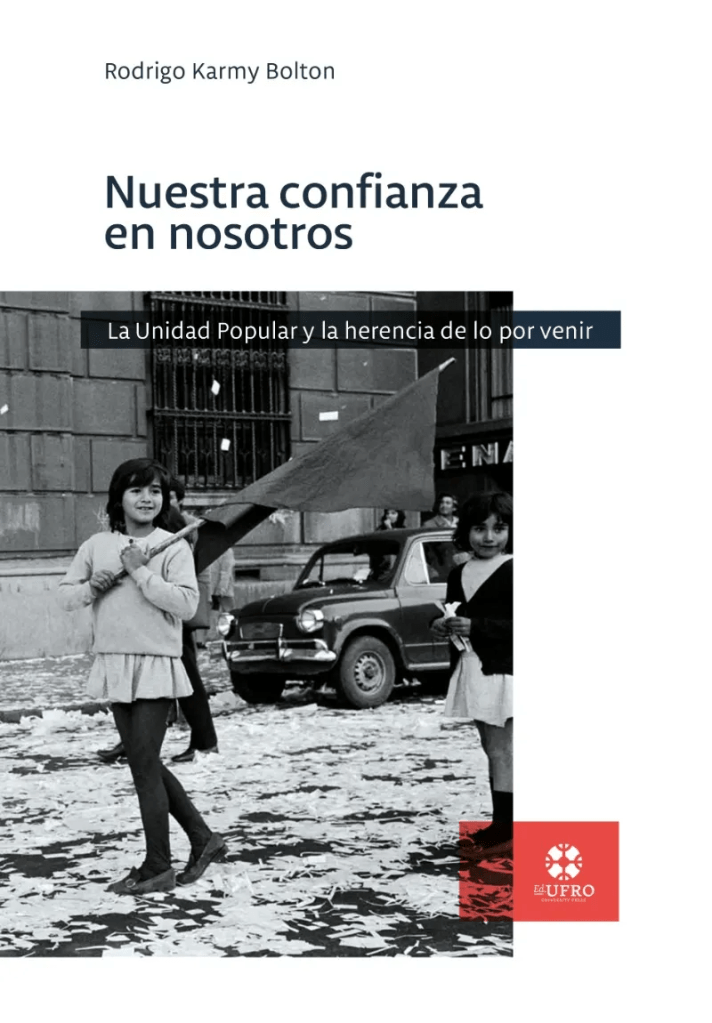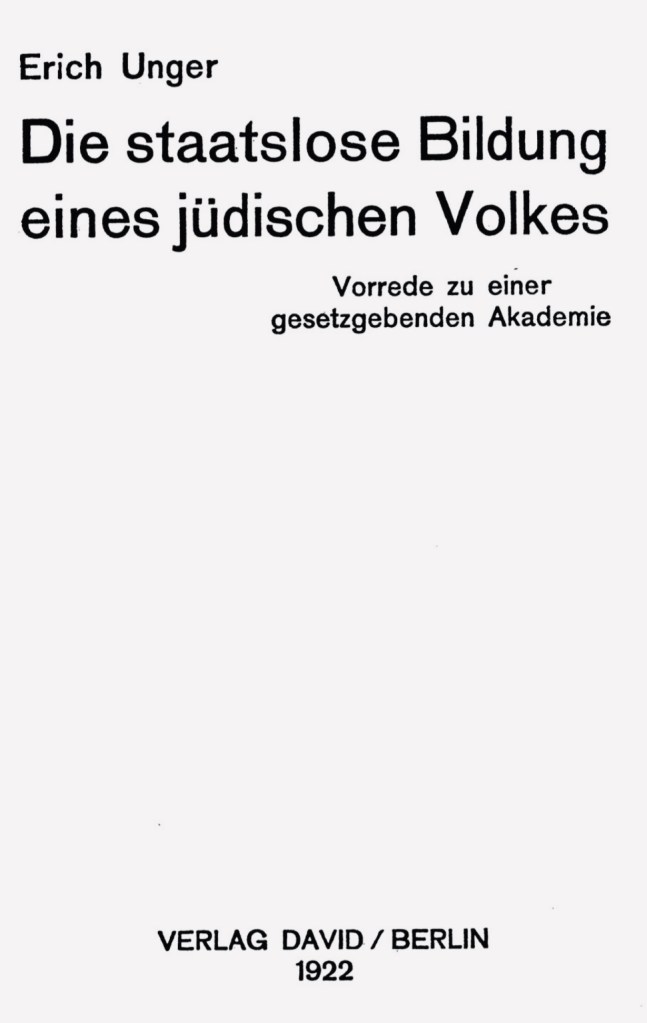
The friend Andrés Gordillo has generously sustained an ongoing conversation in light of the talk delivered in Mexico on institution and immanence (a first reaction could be read here). In a recent note he brings many elements to the table, and his versatile writing makes it difficult – alas, this is a wish come true for any reader – to locate an univocal point of entry. This is perhaps because there is none. Andrés wants to keep us at the edge, and so he enacts the set up: there is communication, and because communication is the event of language, there is still the possibility of mystery. Many things already pop up here, but this might be doing injustice to Andrés’ elaborate draft. So, for the sake of the exchange, let me open the route by running through a moment that impacted my first reading. It is this moment: “El desencuentro que aviva la amistad de ambos personajes [Narcissus and Goldmund] es el de haber decidido resguardarse en la exterioridad de sus elecciones, ahí donde son obra del amor”.
This is a condensation of what the Hesse’s novel means to him; or, rather, how it speaks to him in light of a discussion regarding the dominance of the civil principle, and the question of an experiential dimension that we defined provokingly as a minor transcendence. I am not sure I am in the position to unpack Andrés’ thesis, if it is a thesis at all. I do remember a couple of years ago an exchange with Alberto Moreiras on the logic of the encounter and the misencounter related, precisely, to the problem of the eclipse of experience. This is the problem that keeps soliciting thought; it is the problem of thought itself.
However, I am getting ahead of myself. Andrés stages a complex framing: there is friendship as absolute difference (or in virtue of a fundamental misencounter), and then there is an exteriority of their existential decisions; that is, in the manner that they are irreductible to their being in the world. I spoke of framing purposely, since I find myself these days with Pablo Picasso’s “The Blue Room” (1901) from the early period that I encountered in Washington DC. It is a rather small picture – and to the viewer, the semi-statue like nude, a female figure it seems, comes to the forefront sliding downwards. A mysterious resonance dilates between things – and indeed, the objects in the room (the sheets, the rug, the bouquet of flowers, the paintings, the half-open window) feel like things. This is an intimate surround at the threshold of catastrophe, where things could be lost at any moment. And we know that epochally they soon were.
We are in a strange setting – and if it is strange to us it is because there is a sense to which alienation and solitude here is the fundamental harmony of dwelling. This is not yet the assumption into plain and continuous historical time that will amass things into objects. The “Blue Room” (1901) inscribes esoterically the thematics of pain – it is a work in which Picasso responds to his friend Carles Casagemas’ suicide that very same year. No metaphorical or allegorical reading will do the job to put us in “The Blue Room”. In the wake of an elliptical death, pain stands in, like the nude the water basin, as the irreductible to history and the menacing social sphere. I will bounce this to another moment of Andrés’ text: “Por ahora me siento inclinado a conversar: avanzar hacia un umbral que se desploma”. This ‘crumbling threshold’ now appears to me as a sound and prudent description of what “The Blue Room” (1901) was able to achieve. An experiential awakening against the conflagration of modern historical time: soon enough – and boy was it soon – the interior space of “The Blue Room” will multiply into infinite cells of the planetary designs in which social man will be just a potential inmate. This is why Picasso in 1901 speaks still today a strange language for us – it discloses a surround, an exteriority that we have been deprived of. It is a surround that is fully folded within.
If pictorial practice is not mere representation, but also, more fundamentally, a form of thought, then we can claim that “The Blue Room” (1901) attests to the proximity of the misencounter of friendship that outlives in the experience of the surround. And here the painter had no privileged position – he is no figure of genius, no commander of historical destiny, no magician of forms. He is also a befallen figure because he is the cipher of life. But to overcome the rhetorical surplus of socialization requires techniques in the face of the irruption of pain. Nothing less solicited Carlo Michaelsteadter when criticizing the reduction of the “man of society” to the pieties in “exchange for the tiny learned task and his submission, the security of all that human ingenuity has accumulated in society, what he would not otherwise obtain except by individual superiority, the potency of persuasion”, he wrote in Persuasione e la rettorica, another masterpiece of the 1900s. Yet, persuasion requires to be vigilant at the moment where things enter the historical penumbra and its rhetorical artifice; the reign of endless confusion amidst the most transparent and disingenuous computations.
How one becomes persuaded within a tonality, and remaining to be so – this is also a surrounding mystery of “The Blue Room” at the outset of the century. We still dwell in its dissonance.
Today the political surface only seems to obfuscate the analyses of the real forces that move at different pace underneath the crust. When recently Emmanuel Macron referred to the popular unrest protest as “la foule…pas de légitimité face au peuple qui s’exprime souverain a traversé ses élus”, he was not only speaking as the sovereign, but as something more specific; that is, as an administrator. If the old sovereign stood metonymically for the totality of the whole constituent body, Macron’s political rhetoric cleverly distinguishes between the “groups” or “masses” (this is also the same term that Sigmund Freud deployed in his contestation to Le Bon’s theory of the multitudes in 1921), and the institutional mediation of the “People”. What is interesting, in any case, is the cleavage between the two figures becoming well delimited: one being on the side of political legitimacy, the other on its inverse pole of apolitical illegitimacy. The logistics of administration (or what I have called in recent research the administrative nexus) serves to conjoint this specific separation. By the same token, we should not let pass the occasion to recall that if Macron is a hyperbolic political commander of the West, it is precisely because he stands as the executive force at the helm of the administrative legitimacy (as a political elite, he was shaped at the École nationale d’administration).
What do we mean by administrator in this specific historical conjuncture? It goes without saying that modern French public law has a long and important history of droit administratif, which in France is structured around a dual jurisdictional system enshrined by an extensive legal case law and its juridical principles. The French system of droit administratif, however, is not to be understood as an amalgamation a posteriori of classical separation of powers, but rather a concrete institutional design within public powers. This was an institutionalist design that profoundly impacted Schmitt’s thought on the concrete order in the first decades of the twentieth century. The bureaucratic institutionalization was an integral organizational mechanism of legislative congressional practice. The rise of the administrative state differs from droit administratif insofar as it represents liquidation, as well as a thorough transformation of the modern system from within. In this sense, the rise of the administrative state is an excedent to bureaucratic legitimation – and Schmitt was right to characterize as the ‘motorization of law’, a force that he saw unleashing already in the overall tendency of European public law of the 1930s, although only taken to its fulfillment in the United States (something that Schmitt did not foresee) [1]. And if we were to sketch out a minimal phenomenological reduction of administrative law today we could state that it consists of the overflow of executive power through the exercise of the principle of delegation and the extension of intra-agency policy-police enforcement. What early on administrative law professors termed the revolution of an ‘administrative process’ has now come to full extension by subsuming the tripartite structure of the separation of powers to the administrative oversight of the space of social reproduction.
That Macron can only frame his political analysis in terms of “la foule” entails that he is already occupying (at least tendentially; and I can not speak myself for the concrete institutional transformation of the executive office in the French political system) and envisioning role of executive branch as a presidential administration. In an academic legal article that will exert an enduring influence in American public law, “Presidential Administration” (Harvard Law Review, 2001), Judge Elena Kagan stated that the era of executive administration had arrived; which rather than the supremacy of an institutional branch over others, it aspired to defend the orderly equilibrium to the total functioning administration of the whole system [2]. It is important to note that today’s ascent of the administrative state across the Western Anglo-Saxon public law is not rooted in maximization of bureaucratic rationalization nor in the authority of the charismatic office of a Reichspräsident as in the Weimar Republic (I have previously shown its difference), but rather in the production of delegation and deference of political authority that flows from executive power, while remaining bounded within a logistics of balancing and equity (in fact, the notion of equity has become the administrative unity of enforcing a positive production of exceptionality, but this is a discussion for another occasion). In other words – and as paradoxically as this may sound – the Macronite experiment with executive action based on Article 49 of the French Constitution, bypassing Congress, is a thoroughly habitual and normalized practice in the American legal system, which have led some jurists to claim a last farewell to the legislative body of the State – the same branch that Woodrow Wilson would describe as the ‘body of the nation’ in his seminal Congressional Government (1885).
All things considered, whenever Macron’s technocratic politics are described there is an amnesia to the concrete fact that Americanism is not just economic planning or the drive towards indexes of productivity and financial credit standards; it is also a specific governmental stylization. And this stylization is the administrative government, whose stronghold on public law should not be taken for granted. This means at face value that the empire of judges and congressmen (the “elected representatives” upheld by the Macron internal doctrine) is ultimately marginalized in the new center stage government occupied by an elite cadre of administrators and regulators in charge of grand policydesigns in virtues of expertise, rationality, adjudication, and compartmentalized decision-making process – that Kagan recommended should orient “a coherent policy with distance from politics and public opinion” [3].
Contrary to Macron’s republicanist rhetoric, the true and concrete ethos of the administrator is no longer at the level of classical modern political representation (elections, legislative body, judicial restraintment), but rather on the production of statute rulemaking balancing (equity) that unifies the aggregation of private preferences and calculations to the specific determinations of broad and discretionary public interests. At the level of the analytics of ideal types, this transformation sediments the passage from the political elite to the executive administrator of new normative indirect powers. The ‘americanization’ of Macron’s policymaking universe is centered on the exclusion of political governance or judgement in favor of abstract administrative principles (the so-called ecological transition tied to metropolitan or specific territorial energy hubs, to cite one example) and optimal regulatory determinations. What emerges at the threshold of modern republican politics is, then, the rise of a fragmented ‘la foule’ and the activation of police-powers (legality) through the procedures of statute enactment oriented at the unruly state of contemporary civil society.
.
.
Notes
1. Carl Schmitt. “The Plight of European Jurisprudence”, Telos, March, 1990, 35-70.
Over the weekend, the Catalan journalist Enric Juliana interviewed Ramón Tamames, former member of the Spanish Communist Party (PCE) who embodies the living memory of the 1978 transition to democracy. Nowadays he is the main protagonist of the motion of confidence against the government coalition raised by the nationalist right-wing party Vox. There is no surprise (at least for those of us that follow closely the idas y venidas of Spanish politics) that a former member of the Communist Party makes amends with with the neo-sovereignist right. Even the Medieval jurist Bártolo de Sassoferrato centuries ago diagnosed that an epoch void of political authority, leads to a ‘monstrous form’ of arbitrary governance. This is not the place to analyze the cartoonish Vox-Tamames’ alliance. Rather, what generated a chilling effect while reading Juliana’s exchange was the moment when he asked about what he would have said to the communist prisoners in the Burgos correctional facilities in the aftermath of the Spanish Civil War. And, to this Tamames responded: “Están todos muertos”. They are all dead. It is a monstrous phrase voiced by a hyperbolic figure of the Spanish political elite. The answer is bold and lacerant because the message is stated without formal investidures or pathos: the dead are dead, and we own them nothing, since they are nothing. They are less than nothing.
It is no minor feature that historical communist parties during the twentieth century, in spite of the public and rhetorical monumentalization of their ‘heroic pantheon’, had little patience with the dead. This is why a motto in some socialist countries was, indeed, “los hombres mueren pero el Partido es Inmortal” (men died, but the Party is Immortal). So, by organizing immortality and the relation to the dead around the Party, historical communism was able to solve two problems at some: it was able to justify sacrifice in the name of a transcendent cause; and, at the same time, it introduced the dead corpse in Party as a government that kept operating even well beyond people had ceased to believe in it. I mention this because as a historical communist, Ramón Tamames is still embedded in this metaphysical enframing, only that now it takes different garments through a full erase of the dead that a posteriori justifies a concrete political action.
I have underlined a few times already the fact that Tamames is a trained political elite, because his alignment with Vox is rooted in his alleged elite credentials. This is an important feature. I remember a few years ago that Mario Tronti told me, in a Weberian spirit, that a new epochal transformation of Western politics required the elaboration of an elite in possession of vocation and conviction. But this is, paradoxically, what Tamames has always stood for, regardless of his political commitments. The problem is that today the restitution of political elitism is not only insufficient, but it is also visibly catastrophic and opportunist. It is opportunist because it can only self-affirm itself as a supreme value in the world of the living, which necessarily entails killing, once again, the dead. Under this light one should reconsider what Carl Schmitt enigmatically writes in his Glossarium: “elite is that category which no one dares to write a sociology about” [1]. It seems, however, that the contrary is true: sociology is the predominant form of political elite, since its final aim is the reproduction of material social relations at the expense of the dead. As administrators of the public life of the city, the political elite must hide the cemeteries and the world of the dead away from the arcana of its public powers (this is very visible in Washington DC or Madrid). This void demands a relation with the dead as a fictitious memory based on public memory, monumentalization, infinite naming, and cultural commodification in exchange for foreclosing the relation with the dead. This also explains why the epoch of high-secularization is fascinated with the investment of public memory and practices of memorialization which maintain the equilibrium and endurance of the society of the living against the dead.
And isn’t Tamames’ depreciation of the dead just an expression of the attitude present during the high peak of the epidemic across Western metropolises? The corpses amassed in registrator hums outside hospitals in New York was a monstrous spectacle that bore witness to the disconnect between the living and the dead in the triumphant epoch of absolute immanence. What is important here, it seems to me, is that one cannot but expect this from a “political elite”; that is, a denegritation and blockage from a contact with the dead that is neither in the home nor in the city, but in the khora or the extra muros. Whenever this has been achieved, the political consequence has been, precisely, punitive acceleration, social death or expulsion.
In a beautiful text written during the height of the epidemic controls, Monica Ferrando reminded us that the socratic philosophical ethos was not rooted in the space of the city, but rather in relation to the underworld that grants “freedom every time” [2]. In times gone awry, nothing is more urgent than to do away with the gatekeepers that keep society a total space of inmates, while making the whirling presence of the dead a silent echochamber between cemeteries, as a friend likes to put it. In a certain way, we are already dead, and it is only the fiction of political elitism (or the permanence of those that appeal to the “political elite”) that taxes death – and our dead – to the sensible modes that we relate with the mysterious and the unfathomable.
.
.
Notes
1. Carl Schmitt. Glossarium: Anotaciones desde 1947 hasta 1958 (El Paseo Editorial, 2021), 351.
This is merely a footnote to an exchange in light of the short talk “Immanence and Institution” that I delivered yesterday in Mexico City under the generous auspices of Professors Benjamin Mayer Foulkes and Andrés Gordillo (the recording should be available soon in the audio archive). In the rich discussion that followed the hypothesis regarding the triumph of the dominance of the civil concept today, Andrés Gordillo noted that a practice of “discernment” was required to confront the ongoing condition of planetary catastrophe that has only intensified in the wake of AI automation processes that orient the optimizing and unifying the totality of world-events. Alluding to his historiographical research on early modern epoch, Gordilo alluded to the mysticism of the seventeenth century’s “science of experience” (following Michel De Certau’s The Mystic Fable but not only this work) as an existential practice to retreat from the dominium of confession, but also to refuse the Protestant unification driven by the ends of predestination and grace. And unlike the early Christian mystics of the void and releasement, the proponents of a science of experience favored a discernment with God that was vested in every creation of possibilities and modalities exterior to life.
The mystical defense of a science of experiences, then, refuses the concretion of the social subject: being a subject of sin through the postlapsarian condition, but also reflecting the Protestant subject of election that will give birth to the secularization of consciousness and will. The science of experience is the exposure of the soul to the possible transformation with the exteriority as prefigured in transcendental exteriority. A transfiguration of the foundational unity of theological revelation. I find it fascinating that these mystics of the seventeenth century (some of them marranos or facing the problem of conversion) were already aware that an epoch of total dominium and absolute collapse against life requires a transformative nexus with the temporality of experience.
When Erich Unger in 1921 contemplates the rise of a catastrophic politics in his Politics and Metaphysics, he retorts to a politics of exodus that, precisely, affirms the experiential dimension of existence and communication through what he would call the elevation of the imaginative capacities. In the face of a subsumption of politics into catastrophe, for Unger the immediate task was to elaborate the praxis of experience from the psychic imbalance of the corrosive effects of the subject. In other words, the science of experience names an interior exodus against every instance of rhetorical and mimetical fabrication that seeks to hold the plan discernment of life into a regime of administration and accumulation of plain historical time.
I agree with Gordillo that perhaps the diverse experiments of the “science of experience” could very well be understood as experiments in transitional thought against historiographical closures. The notion of experiment could be extrapolated from Saidiya Hartman’s usage, in a minimalist sense: ways of living on the other side of the rhetorical assignment of the fictitious life of the subject. But perhaps the very term “science of experience” today is a misnomer, in the same way that the proto-concept of “experiential politics” deployed by Michalis Lianos during the cycle of the Yellow Vests runs into an aporetic threshold to name the crisis of the soul’s attunement in the face of the conflagration of the world. Precisely the errancy of experience (and its non-sacrificial relation to pain) is what cannot be subsumed – and for this reason the invisible fleeting gradation – neither to a science nor to a politics.
At his rubric at Quodlibet, Giorgio Agamben has recently reflected on the famous Goethe-Napoleon exchange on the destiny of human beings as entirely political. This theme is central to any observer of contemporary geopolitics, which as Carl Schmitt noted towards the end of The Concept of the Political (1932) was realized through the indirect powers of economy and war. During the interwar years Schmitt wanted to preserve the autonomy of the political at all costs, although he will soon conclude in his postwar writings that it was no longer possible given the full extent of a global police management (as he notes in the Italian prologue “Premessa alla edizione” to the 1963 Mulino edition).
What does it mean that politics has become the only destiny of Western Man? One could only imagine Goethe’s surprise at Napoleon given that he was the poet that most passionately reflected on the demonic opening towards destiny. Now, the fact that politics is destiny is a way to emphasize the dislocation of character from destiny as the search for one’s own freedom.
It is no surprise that it was another poet, William Butler Yeats who, in the dark hour of 1939, confronted this issue in his poem “Politics” published in his very last book. The poem in question is a sort of farewell to the eclipse of life of the soul constituting the releasement of destiny. It is also interesting that Yeats does not cite the Napoleon-Goethe scene recorded by Eckermann, and rather uses an epigraph from Thomas Mann to reiterate this preposition. The poem should be considered in its totality:
“Politics” (1939)
‘In our time the destiny of man presents its meanings in political terms.’ – Thomas Mann
How can I, that girl standing there,
My attention fix
On Roman or on Russian
Or on Spanish politics,
Yet here’s a traveled man that knows
What he talks about,
And there’s a politician
That has both read and thought,
And maybe what they say is true
Of war and war’s alarms,
But O that I were young again
And held her in my arms.
No destinial politics, however, can totalize the experience of language and thought. This is the crux of Yeats’ poem, it seems to me. In the opening of an epoch of catastrophic politics (as Unger would register it), it was a poet that resisted the metaphysical valence of political destiny working through the imaginal remembrance through the appearance of a “girl standing there”. The last poetic apostrophe of a caducous time could only be redeemed erotically; forever disentangling the fictive conflation of life and politics.
The dispute concerning the legitimacy of modernity also implies the question of the reformation, which transferred the power away from the hands of priests into a new priesthood of everyman’s consciousness. This was the Lutheran self-affirmation of economic theology (it has been laid out by Monica Ferrando’s recent work). The new priesthood implied a consolidation of the power over interpretation, since the biblical sources were now opened to battle over meaning itself. The interests over the Hebrew sources were not new, as a contemporary scholar has shown, but it was of central interest to the hermeneutics of sola scriptura over the scrutiny of the canons [1]. If this is the case, how come Thomas Hobbes account of the religious sources point to a different dimension of revelation? As we know, Hobbes was not alien to the ancient Hebrew sources, but his treatment and conclusions were entirely misplaced. Here I want to briefly account for this divergence.
In reality, it was Carl Schmitt who best confronted this problem in a late essay form 1964, published in “Der Staat, “Die Vollendete Reformation” by asserting that Hobbes’ place in the constellation of the modern political theology of the reform was rooted in the invention of the autonomy of the political. Schmitt works his way through Hobbes’ second bibliography in a subtle way, reminding us that the theorem “Jesus is the Christ” meant the artificial creation of a political technique over the battle over “meaning and truth” that fueled the European wars of religion. Hobbes, contrary to the theologians, became the founder of a counter-power: the confrontation between Leviathan and Behemoth. Indeed, for Hobbes the “reformed theologian” stands as the Behemoth, but it has yet to come to terms with the question posed by Leviathan as who will decide. This is for Schmitt the kerygmatic theme of the New Testament, which will only be decided at the end of times, but meanwhile the decision through authority is the only way in which the problem of “civil war could be neutralized. As a commentator of his time, Schmitt was directing a direct arrow to Rudolf Sohm’s idea of reform, which ultimately coincided with an economic theology bypassing the fact that the era of concrete political theology had its ultimate principle in authority of the sovereign’s decision [2].
Although never registered directly, the lesson of Hobbes for Schmitt resided in circumventing the rationality of the scientist and the technocrat, going as far as to mention Simone Weil’s critique of the codependency of the total state with the essence of technology [3]. The question of decision was Hobbes’ metaphysical solution to an “intra-evangelical war”, which introduced the immanentization of indirect powers unto the flatten space of civil society. In other words, for Schmitt, the true father of the “spirit and letter” of the Reformation was neither Luther nor Calvinism, but Hobbes’ Leviathan insofar as it was able to offer a third option against the secularization of a universal priesthood of the autonomous economic theology. But this is only the beginning of the problems, since we know that Hobbes’ political philosophy was dependent on “civil society” preparing the conditions for the liquidation of anti-normative decisionism. Schmitt himself was aware of this towards the end of his monograph on Hobbes as a farewell to state form. Hence, the epoch of political theology was brought to an end not through reformation, but through the ever-expansion of the operative sphere of the concept of the civil. The triumphant economic theology that has only intensified well into our days adequates to the fullest extent to the infrastructure of Hobbes’s project.
If this is the case, the differentiation that Schmitt establishes in Political Theology II between ius reformandi and ius revolutionis collapses, given that the solicitation of the autonomy of the social requires an ever-expanding outsourcing of administrative apparatus that will turn legality into the bin of administrative application (Verwaltungsrechts einzufügen unwissenschaftlich) [4]. And in the face of administration political theology loses its grip, and economic theology silently takes hold. The subsequent internal triumph of the verwaltungsrechts einzufügen will bring to an end the epoch of political theology. The ideal of the Reform took this challenge and brought it to the very anthropological core of humanity.
.
.
Notes
1. Eric Nelson. The Hebrew Republic (Harvard University Press, 2010), 8.
2. Carl Schmitt. “Die vollendete Reformation: Bemerkungen und Hinweise zu neuen Leviathan-Interpretationen”, Der Staat, Vol.4, 1965, 51-69.
In the short epilogue “Historical Background to the year of grace A.D. 499” to his novel Porius (1951), John Cowper Powys lays out a remarkable prophetic evaluation of a world fallen into a permanent catastrophic condition. Powys’ return to the sixth century in his novel departed from the fascinating fact that during the mid-fifth century there appears to be “an absolute blank” page about the history and culture of its people. And the only historical record proves that the central element was the Arthur’s commanding political dominion over the English territories. In these blank pages of history there are no tormented voices or traces of everyday existence, but the most absolute compacted pressure of barbarism and grandiose “crafty personal diplomacy” oriented by political rule. For Powys, this is the movement of abstract historical force that raises up the mirror of civilization and barbarism in the West.
However , this mirror is completely alien to any notion of happiness, imagination, and sensibility between the surviving human species. A world war had just concluded and atomic menace was the strange tune of daily life. But, in contrast to the triumphalist and historical narrative of postwar diplomatic theaters, Cowper Powys directs his vision (like Hölderlin and Pound before him with Greece and the Latin Mediterranean poets) to a prehistoric strata where language and sensation still had a chance against the civilizational collapse of the West. Againstboth civilization and barbarism, Powys prepares himself to drift away from something major, perhaps more even more catastrophic, which he never names directly in the Porious prologue, although he can unravel its essence in the last paragraph:
“As we contemplate the historic background to the autumn of the last year of the fifth century, it is impossible not to think of the background of human life from which we watch the first half of the twentieth century dissolve into the second half. As the old gods were departing then, so the old gods are departing now. And as the future was dark with the terrifying possibilities of human disaster then, so, today, are we confronted by the possibility of catastrophic world events compared with which those that Arthur and his Counsellor and his Horsemen contented against seem, as the Hebrew poet said, a “very little thing” [1]”.
It is thanks to the genius of Cowper Powys that the coming of catastrophe is understood not as another phase in world-history, but rather, as the opening of endless catastrophic world-events. Even before Martin Heidegger would define the essence of cybernetics as the consummation of the calculation of world events, Powys had already suspected that a stealth rationality towards calculation of events was the catastrophe that crossed the very line of the polarity of barbarism and civilization. The catastrophe of world-event consummation was hinged upon the total convergence of machine and humanity that would liquidate the free relation of the living in the world. As Powys had written in The Meaning of Culture (1930) decades prior: “Money and machines between them dominate the civilized world. Between them, the power of money and the power of the machine have distracted the minds of our western nations from those eternal aspects of life and nature, the contemplation of which engenders all noble and subtle thoughts” [2].
The ascent of atomic existence and the absolute dependency on administrative infrastructure to contain the world, will validate Powys’ astute observation about the ongoing catastrophe at a moment when its development was barely beginning to gain traction. And against futile political fictions, Powys was aware that in a civilization of collapse, political chatter becomes the only legible foul discourse: “Among other aspects of our destiny in this modern regime, the rumor of politics makes itself only too audible” [3]. The seriousness of this rumor has only deepened almost a century after.
.
.
Notes
1. John Cowper Powys. “Historical Background to the year of grace A.D. 499”, Porius (1952), xi.
2. John Cowper Powys. The Meaning of Culture (Jonathan Cape, 1932), 150.
There is a painting from the early sixteenth century at the galleries of the University of Bologna that depicts the gruesome death of Saint Cassian of Imola at the hands of his own students. The story goes that Cassian was a fleeing Christian in the Roman Empire who found a teaching position in the town of Imola, until he was discovered and exposed. In the saints’ hagiographies, it is emphasized his passion concerning reading and writing for his students. This would confirm the high price of Cassian’s punishment: torture and death at the hands of young students (some allegedly even brought their sharpened styli). The Bologna painting is, in fact, a miniature of about five by seven inches, and it depicts eight young students striking at a naked and tied up Cassian. The anonymous painter has chosen carefully to have all of the figures turn away from the spectator, except for a student in the far right corner of the painting who seems to be holding a sort of bowl in the air. He seems disengaged from the frenzied mob. And yet, there are no wounds or bruises in Cassian’s body, which could be an allegorical statement by the painter about the martyrdom condition, or, more literally, the plain fact that the cruel feast has just begun. Cassian’s face is monotone, and one of disbelief, but not yet of someone consumed by the ecstasy of bodily suffering. He is definitely humiliated amidst such violent and naked act. This is highlighted by the stage-like setting of the assault, which does not seem to be taking place somewhere outside, but rather in a strange room whose only way out is a dark and ominous black counter to the left side of the painting.
This black square immediately recalls martyrdom. And yes, in modernity this means David’s Death of Marat (1793) floating figure who stands as the secularized martyr at the year zero of modern representation. In the early modern bolognese painting we are far from there, but the resources at the painter’s disposal (myth, depth, and figure) speak to a postreligiousity at the threshold of a new historical time. Strangely, the figure of Saint Cassian as represented here by the anonymous bolognese painter throws a shadow to our present, given that the teacher or professor has been sacrificed, not so much the literal violence of his students, but by the an even greater disposition towards a shameless nakedness driven by value and a complicit abandonment of its mission. In the United States at least, the long dispensation of the “closing of the American mind” – driven by competition, ranking, placement, mentorship, cultural wars, and identity politics – entails the uttermost collapse of the teacher into the administrator and facilitator of a rather unknown enterprise.
Even in 1983 Carl Schmitt could identify the martyrdom of Saint Cassian as an emblem of the professor betrayed by his former students: “I have also been stabbed by my students”, he will confess to Lanchester [1]. So, just four decades ago the teacher could still stand as an object of fidelity and betrayal. It would be hard to make the case for this hypothesis today, since the pain of the teacher is no longer of betrayal, but of indifference insofar as he can be disposed of. In this sense, only something that possesses a certain aura can be said to be betrayed; while something that can be discarded altogether is something that has seen better days and no longer has value. And if universities and schools today have become larger centers of monotony and alienation of the most basic activities (such as discussion, reading and writing), this is because both students and professors have been, for the most part, replaced by “mentors” and consumers” under the holy contract of hypocrisy, the true and last ethics of the enlightened metropolitan class.
Anyone that has ever had the good fortune to encounter a good teacher or professor will know that his example springs not from what he knows or professes to know, but rather from what he can transpire unto others: to search of a form of one’s own path. The ethos of a teacher has little do with specialization or success, and everything to the incarnation of a gestalt that is not accidental or transient, but perpetually springing from its myth, as Carchia suggested for the work of art [2]. And myth is the sensorial mediation that resists to be instrumentalized into the endless amassing of value by the powerful administrative subjects. This amounts to saying that the teacher finds self-legitimization in its capacity to inspire the shared sense of wonder of the inaccessible.
Or, at least, this has been the teacher at its most groundbreaking moments. The eradication of teaching – which like mostly every other area foreclosed by the crisis of the human experience was unveiled during the years of the pandemic – and its complete abdication to models of “leadership” and “training” (under the fictitious rubric of the syllabus as an economic contract) is the bleakest of the futures that Cassiano could have taken. A nihilist future that, it goes without saying, will be void of martyrs and myths.
.
.
Notes
1. Carl Schmitt. “Un jurista frente a sí mismo: entrevista de Fulco Lanchester a Carl Schmitt”, CSS, 1, 2017, 220.
2. Gianni Carchia. Il mito in pittura: la tradizione come critica (Celuc Libri, 1987), 155.
The origin of Eliseo Diego’s mythical poetic collection En la Calzada de Jesús del Monte (1949) is so well known and recorded that it has been completely forgotten even by its most copious commentators. In his short memoralist essay “Un día ceremonial”, written decades after the publication of the poem, José Lezama Lima wrote the following: “En uno de sus ceremoniales litúrgicos, en un día de nuestro santo, nos reunimos en la iglesia de Bauta. En esa ocasión Eliseo Diego leyó su “Primer discurso” de En la Calzada de Jesús del Monte. Era un precioso y sorprendente regalo, suficientemente para llenar la tarde con aquella palabra que nace para uno de los más opulentamente sobrios destinos poéticos que hemos tenido…Cuando se publicó En la calzada de Jesús del Monte, el júbilo que me produjo fue esencialmente poético. En unos versos de circunstancia amistosa he intentado decir la alegría que me produce ese libro que traía esclarecimientos para nuestro paisaje y su acercamiento” [1]. At the center in this confession is not only the centrality of a poetic liturgical practice that vested the friendship of the origenistas poets, but more fundamentally the efficacy of the poetic word that Lezama describes as a “júbilo poético” or poetic happiness. It is a strange remark (like almost everything written by Lezama), since En la calzada de Jesús del Monte has been largely read as the litany of a domestic space (a “gran casa de todos”) consumed by dread experienced at the turn of the mid-century failed and stagnated republic.
The intuition raised by Lezama, although not elaborated, still haunts us: in what sense is En la calzada de Jesus del Monte about poetic happiness and what could stand for? We can go astray if we claim that happiness is a particular substantive and representational content of the poetic word. Indeed, there is really no event of happiness in En la calzada de Jesus del Monte except for the taking place of the poetic word fully estranged and foreign from its own place of annunciation. This seems to confirm Diego’s poetic vortex who writes in the dedicación of the book: “A poem is nothing more than a few words told one afternoon to a group of friends” [2]. However, this only deepens the mystery, since whoever tries to find concrete friends in En la calzada de Jesús del Monte (1949) will find none. Solitude abounds and expands throughout spaces. Lezama attempted to elevate the secret of friendship from thought to the liturgical enactment in search for transcendent meaning. Indeed, the emphasis on the mystery of liturgy is emphatic and compressed in Lezama’s programmatic memory about the almost ecclesiastical origins of the poem. I would like to suggest another path for the mysterious and inapparent force of the poem, which is no longer situated at the liturgical aesthetic experience, but rather in the mystery of a felicitous life at the threshold of history. If anything is disclosed throughout the pages of En la calzada de Jesús del Monte this is, precisely, that things appear to dwell in their place, even if no one is around and no community could stand for its reverence. Indeed, the poetic event dwells in an existential solitude before a changing world now fallen into pure disenchantment.
The happiness that falls from the poem, then, is not merely about the execution of the word or the unity of form, but it consists of something previous, altogether different: a mysterious shadow of the enchanted myth. In En la calzada de Jesús del Monte (1949) we are exposed to a poetic language that gathers in a desecularized dimension that suspends what Gianni Carchia identified as the postmythical form of mystery that seems to anticipate the semblance of historical order [3]. But Diego’s En la calzada de Jesús del Monte transfigures mystery to the point of disclosing the limit where life and redemption from the material world take place; namely, in the Sunday of life. But, unlike for Carchia, this poetic transfiguration takes place within the grammar of Christian theology and not the Greek classical past. Here Diego’s poetic mysterium differs fundamentally from the liturgical mystery, which presupposes a “fundamental sacrifice” that allows the temporal sequence of the end of time as the motor for universal religious redemption [4]. By contrast, Diego’s idea of a poetic mystery (which is also the mystery of the poem, which he never ceased to reflect upon through his life) is spatially dispersed, redeeming eternal life from the visibility of worldly phenomena. As Diego writes in an essay defining his conception of the theological mystery: “Primero les haré una confesión…no veo por la sala ningún hábito de Santo Domingo. Uno no debe jugar con los Misterios Mayores, y ninguno es mayor que el Misterio de los Tres que son Uno. Pero, ¿acaso no hizo Él a las ballenas y a los colibríes? ¿Acaso él no sonríe con la infinitud de sus peces y sus insectos? No creo que me tome a mal esta broma que hago como un niño pequeño que pretende jugar con su padre” [5].
By separating the “mayor mystery” of the Trinity from the minor mysteries of imaginative creations of the world (fables, poetry, child’s play), Diego was able to displace the grandiose stage of the liturgical mystery emphasizing the role that humor plays in the affective realization of the kingdom. In other words, it is most definitely the case that the mystery and the poetic musicality compose the parabolic nature of a transfigured kingdom that accompanies the inner existence of each and every human being [6]. Furthermore, this is why the Calzada is a defined in “Primer Discurso” as a pantheistic kingdom: “mi reino, en esta isla pequeña rodeada de Dios por todas partes / en ti ciego mis descanso” [7]. The happiness of the poetic effect in En la calzada de Jesús del Monte is the consummation of an eternal life that, by withdrawing itself from the representation of historical time, can outlive both dread and death. However, in its call for “eternity”, it is language itself that becomes a mode within a series of uncountable events: “sigo pensando, aquí, mi amigo, sucediéndome. / Luego de la primera muerte, señores, las imágenes … .Porque soy reciente, de ayer mismo” [8]. The “sigo sucediéndome”, a modal attempt at transforming life through event diffuses life and death like “Abel y Cain reunidos en Adán, como la muerte” [9]. The transfiguration of liturgical mystery does not evoke a christological arcana, but the overcoming of the civilizational myth of fratricide only to find “unity” in the eternal paradise evoked through Adam. As Diego will also write in an essay about the work of British novelist Jean Rhys: “…el sentido de orar para convertirse en símbolo del misterio de vivir: nuestro jardín era grande y hermoso como aquel jardín de la Biblia – el árbol de la vida crecía allí, nos dice, en medio del terror de una violencia que no entiende” [10]. The reemergence of the myth of an enchanted Edenic garden through the poem?
The fact that Diego chose to write En la calzada de Jesús del Monte as a series of poems and not a novel speaks to his resistance to metaphorize the Garden of Eden outside of the world, overly compensated through a figural postmythical semblance that could have only been taken as a form of parody. On the contrary, En la calzada de Jesús del Monte evokes the original paradise as a recurring and parabolic Sunday of life. A life of nothingness: “si la nada / es también el dormir, pesadamente / la caída sin voz entre la sombra… el Paraíso / realizado en la tierra, como un nombre!” [11]. What cuts through between the forms of the world is the poetic parabola that put us in nearness to the limit of the mystery and the unspeakable. This is what poet Fina García Marruz beautifully captured in one of the most outstanding essays on En la calzada de Jesus del Monte where the weight of the question is meshed with the eros of the poem’s parabola: “Todo arte es, o debería ser, arte de amor, qué es arte de re respeto, la estrategia de una amorosa retirada. Donde el yo se manifiesta en exceso, invade los otros límites, incendia el mundo, pero el verdadero sol del centro, como en Heráclito, no rebasa sus medidas” [12].
García Marruz will even allude to a “magical distance” to elucidate Diego’s poetic measureless opening to proximity: “para el dulce tamaño de la vida que miden estas distancias” [13]. The distances modulate situated existence against the reduction of ordered historical time: “El sitio donde gustamos las costumbres / aquí no pasa nada, no es más que la vida” [14]. As an authentic habitante Diego’s parabola solves the problem of the eclipse of historical time (the ruins of the first morning of historical development) through a descension to spatial detachment where the rest of Sunday is achieved amidst the dust of the world (“como el polvo del mundo”). And from the vantage point of every concrete experience and every limit, life emerges from the dead before a ruinous world marked by the failed Republic. This was a Republic that could not be named (“Yo no sé decirlo: la República”) in a paradoxical display of expository nominalism. As Diego writes in “El sitio en el que tan bien se está”: “en la penumbra como deshabitado sueño” [15]. At the height of 1949, En la calzada de Jesús del Monte was the most rigorous attempt to retreat from this penumbra of historical political life and its daydreaming.
This is the open secret of the actual city street, La Calzada de Jesús del Monte (Havana), during the first decades of the twentieth century, which according to historian Emilio Roig de Lauschering was the only route of communication between the hinterland and the new urban community: “La Calzada de Jesús del Monte que después se llamó después Calzada de Jesús del Monte por haber construido una ermita en la pequeña eminencia donde se encuentra la iglesia parroquial de Jesús del Monte…[…] Pero la Calzada de Jesús del Monte fue desde remotos tiempos hasta no hace mucho la vía principal de entrada y salida entre la población y el campo” [16]. In the late 1940s, la Calzada de Jesús del Monte was already a ‘deshabitado sueño’ as symbolized by dust, debris, oblivion, and death announced by the abstract time of modernization. En la calzada de Jesús del Monte, however, does not cross the path nor seeks a communication between the limits, but rather it opts to dwells on it.
This might be, indeed, Diego’s most important and subtle difference with Lezama’s defense of a liturgical surplus (even ex ecclesia cult of friendship, Freundschaftsdichtung, as a surrogate for national salvation) as if he had found a refuge in the mysterious parish of the Calzada Jesus del Monte or Bauta [17]. Diego’s transfiguration of history placed him at Sabbath in possession of “poderosas versiones de su vida” (“strong modes of his own life”) [18]. But the Sabbath is not a mere memory of a defeated religious community, but as Hermann Cohen argued, a spatial and institutional habit of a people coinciding with the cycles of a bright moonlight [19]. This is why imagination in En la calzada de Jesus del Monte is not enough, and the poet laments: “de tanto imaginarla mi corazón iba callando”. The eternal life of Sundays finds a retreat in the sabbatical experience against the historical time of normality and its revolutionary cycles that demystifies the thingly destruction in which civilization had declined at the end of times. Diego’s La Calzada de Jesús del Monte enshrined the only access to the transfiguration of the mystery: a sabbatical rest disambiguated from the monotone idleness posed by postmythical romanticism [20]. It was in the threshold of parabolic dwelling where En la Calzada de Jesús del Monte remained faithful neither to religious idolatry nor to a free-standing mysterium, but only to the feast of a sabbatical life “como un asno, en perpetuo domingo” (like a donkey, in a perpetual sunday) [21]. The donkey is the transfiguration that must carry this weight. And withdrawing from Juan Vives’ known fable about the peasant who sacrificed a donkey when realizing that he was drinking the moon reflected on a bucket of water, En la calzada de Jesus del Monte stubbornly trumpets not the entry to a “poetic enlightenment”, but the dwelling into the eternal Sunday where poetry is not a resource of radiant sacrifice of beauty, but the prophecy for both silence and sound [22].
.
.
Notes
1. José Lezama Lima. “Un día ceremonial”, in Imagen y Posibilidad (Editorial Letras Cubanas, 1992), 48-50.
2. Eliseo Diego. En la Calzada de Jesús del Monte (Editorial Pre-Textos, 2020), 103.
3. Gianni Carchia. Dall’Apparenza al Mistero, in Immagine e verità: Studi sulla tradizione classica, Edizioni di Storia e Letteratura, Roma, 2003.
4. Odo Casel. Misterio del culto en el cristianismo (Cuadernos Phase, 2006), 82.
5. Eliseo Diego. “Viaje al centro de la tierra”, in Flechas en vuelo: ensayos selectos (Editorial Verbum, 2014), 162.
6. Giorgio Agamben. “Parabola e Regno”, in Il fuoco e il racconto (nottetempo, 2014), 25-37.
7. Eliseo Diego, En la Calzada de Jesús del Monte (Editorial Pre-Textos, 2020).
8. Ibid., 115.
9. Ibid., 117.
10. Eliseo Diego. “Una Iglesia no muy británica: Jean Rhys y su ancho mar”, in Flechas en vuelo: ensayos selectos (Editorial Verbum, 2014), 124.
11. E. Diego, 119.
12. Fina García Marruz. “Ese breve domingo de la forma”, in Hablar de la poesía (Editorial Letras Cubanas, 1986), 398.
13. E. Diego, 131.
14. Ibid., 177.
15. Ibid., 184.
16. Emilio Roig de Leuchsenring. La Habana: Apuntes Históricos (Editora del Consejo Nacional de Cultura, 1963), 111.
17. Wolfdietrich Rasch. Freundschaftskult und Freundschaftsdichtung im Deutschen Schrifttum des 18. Jahrhunderts (Halle-Saale, 1936).
18. Ibid., 157.
19. Hermann Cohen. “The Sabbath in its Cultural-Historical Significance”, The Reform Advocate, February 10, 1917, 5-6.
20. José Lezama Lima claims in “Pascal y la poesía”: “En la tradición de Pitágoras, que creía que sólo el símbolo daba el signo y que la escritura, tesis incomprehensible para el contemporáneo romanticismo antisignario, nace de un misterio, no de la horticultura de la pereza”, in Algunos tratados en La Habana (Anagrama, 1971), 166.
21. E. Diego, 147.
22. The fable is told by Hans Blumenberg: “The Spanish humanist Juan Luis Vives recorded the fable of a peasant who killed a donkey because it swallowed the moon while drinking from a bucket, and because the world could sooner do without a donkey than without heaven’s lamp”, in “Glosses on Three Fables” (1984), History, Metaphors, Fables: A Hans Blumenberg Reader (Cornell University Press, 2020), 604.
There is something insufficient and risible in the attempt to isolate notions like “revolution” or “emancipation” from the total collapse of the grammar of politics. This insufficiency speaks to a rhetorical inflation which already at the turn of the twentieth century Carlo Michaelsteader identified with the attempt at securing the social bond at all costs. The rhetoric of “saving” (the revolution, emancipation, liberation: saving the subject) at bottom, only shows the simulacra of a redemptive movement of value at the heart of social exchange. And we also know that modern political revolutions were experiments in general socialization. Whether it is Saint-Just appealing to the laws of nature against the positive social contract in the wake of the French Revolution; or Lenin and the Bolsheviks more than a century later in their efforts to stage a utopia of production and classless society, the revolutionary horizon was ultimately about the production of the social bond and little else.
The dialectization between subject and the totality of the modes of production was realized in its reverse: the passage to a new temporal domination unto all sensual activities of life. This was expected given the premise: at the center of the genesis of political organization of the West is not the state, but rather the rhetorical structures of civility. That the last theoretical project of politics hinges on the so-called “rhetorical foundations” of society now comes full circle: the development of civilization in the open.
Of course, revolutionary and emancipatory imagination, except in rare occasions, has always been oblivious to the problem of civilization. And this is why Fordism and high Stalinism were perceived as civilizational projects that mirrored and competed against each other. In this sense, the civilizational rise never escaped the duality between politics and nihilism that is proper to the anxiety over order in the genesis of modern European public powers. This is also why early in revolutionary moments of triumph the excess of barbarism was never left behind, but rather it emerged as its siamese twin of the humanist enterprise. As Merleau-Ponty hinted in his old book Humanism and Terror (1947): “Even though our political life creates a civilization we can never renounce, does it not also cointan a fundamental disease?” [1]. This was Ponty in 1947, where the debris of the war was still in full display in major European cities. To some extent one could imagine not wanting to renounce civilization of such barbarism in the face of atomic disaster. But is this our predicament today? Obviously not, since, precisely the collapse of politics (and its main institutional forms such as positive law and political parties) also amounts to an ongoing crisis that is civilizational in nature.
It is not surprising that what emerges in front of us is a different typology than the one that Merleau-Ponty witnessed in 1947: it is no longer the piling of rubbish, but the rise of metropolitan paradises that organize the infrastructural regime of a contactless world. A decade later, written in the 1950s, Amadeo Bordiga will redefine the stakes of civilization: “…the vigorous coarseness of the barbarian peoples was less dire than the decadence of the masses in the capitalist epoch, the epoch that our enemies name as civilization – a word used well here, and in its proper sense, because it means the urban way of life, the way of life proper to the great amalgamated monsters of the bourgeois metropolises” [2]. Bordiga’s lucidity was capable of grasping that Fordismas the triumph of the utopia of capital now meant that civilization (now reduced as the allocation of exchange and distribution) became the central figure of nihilism. Perhaps Bordiga was too imprudent to call for the shadow of the civilized – that is, the barbarian – but his problem, I take it, is still ours to reflect upon.
.
.
Notes
1. Maurice Merleau-Ponty. Humanism and Terror (Beacon Press, 1969), xxxviii.
2. Amadeo Bordiga, “Specie umana e crosta terrestre”, in Drammi gialli e sinistre della moderna decadenza sociale (Iskra, 1978), 95. My translation.