I still remember quite well how, a few years back at the Harvard University Bookstore, the Loeb Collection of Latin And Greek Classics, with their crimson and green covers respectively, were nowhere to be found on the shelves. And a slim store clerk when asked told me that those books on “dead languages” were no longer carried at the store. If this anecdote transmits anything is precisely the central question that still lingers from the pulsating notion of “dead languages”. What does it mean that a language is dead; if there is, in fact, such an ontological status for any language that has been traced from our past? This question returns to us today with some urgency as the most recent avatar of cybernetics, “Artificial Intelligence”, positions itself high above not just the alleged “dead languages” of the antiquity that many readers cannot longer master, but also the living spoken languages of human race as a whole.
Prophetically, this was the problem confronted by W.H.D Rouse in a short text titled “Machines or Minds?”, and published in The Classical Weekly in winter of 1913. And as we know, Rouse, a trained philologist who translated Homer and Plato, was also the creator of the Loeb Classical Collection published by Harvard University Press beginning in 1912. The task of reviving the “dead languages” in Rouse’s program was a way to contest what he saw as the collapse of civilization in the face of rise of machine and the colonization of “leisure time”, as it was becoming a world of pure “electric force” (a topoi of modern civilization that will also finds its place in the writings of Warburg, Schmitt, and Florenski as we have recently noted ).
In a description that resonantes in form and spirit with Carlo Michelstaedter’s forecast that the future of language will amount to an international language composed of technical terms, Rouse was more refined and precise in defining this instrumental transport by connecting the rise of science with that of English as a homogenous planetary language. Thus, inverting the assumption that “dead languages” are the defunct and no longer spoken idioms of past civilizations and archaic cultures; for Rouse it is “English”, and more specifically, scientific English that is ultimately a dead language, as it transmits nothing, as it is fundamentally detached from linguistic experience and imagination. As Rouse writes in one moment of his essay: “The very languages give what English does not give. Modern English is full of roundabouts, of metaphors without meaning, verbiage, shams; Greek and Latin are plain. The English language is largely dead: Greek and Latin are living languages. […] The scientific English sentences are all dead: they either wrap a single sense in meaningless words, or they seem to have a meaning when they have none [1]”. The rhetorical artifice to which language succumbs expresses itself not through the use of words, signs and icons, but in a proliferation of discourse that no longer communicates anything precisely because it has communicated everything out of the fallacy of absolute representation and absorption of a flat system of wordless objectivity. In Rouse’s indictment of human decline finds its correspondence in what language’s entry into what he called the “Dagon of Science”, opening a new scenario for human historical destiny: “never was there a world that cared less for truth in speech and thought” [2].
There is a huge risk in reading Rouse’s defense of the “classical languages” (Latin, Greek) as a humanist blueprint for a forthcoming antiquarian revival, a nihilist outlook that is being fulfilled in the United States as a parodic reiteration of Winckelmann’s neoclassical imitation ideal. Against the reification of dead languages as fictive “living entities” positioned as tools for knowledge and expertise, division of labor notwithstanding, what was fundamental for Rouse in the dead languages of the past – and in this sense, any language – is the ability of bringing about the experiential dimension of its use, thus connecting thinking and the experience without separations [3]. In other words, Rouse, very much like the last Émile Benveniste, found interest in classical languages not as a moral principle of civilization and identity foundation, but rather a site for the immediate experience between speakers embedded in a degree of the lived [4]. This is also why a poet like Eliseo Diego would state in Conversación con los difuntos (1991) reading other languages is a form of friendship beyond presence of the living. The conversation in languages is a way to keep open the passage from the living to the dead and back.
And whoever lives in language dwells in the memory and traces of all the dead languages, inscriptions, voices, and rhythms, because these contain the past as a reservoir of the figure of life. The consolidation of basic English as the hegemonic medium of communication with the return of extreme nationalism emerges, as Erich Auerbach wrote from his Istanbul exile, “to a ruse of providence designed to lead us along a bloody and tortuous path of an International of triviality and a language of Esperanto”. In this scenario, the slow annihilation of the human species takes place outside the world; that is, in the field of language, which has now become the central historical program of domination against the lived experience that connects the dead and the living. As languages become an autonomous frame of order and force, human beings’ existence is transformed into a mobile receptor of rhetoric, information, and opinion.
.
.
Notes
1. W.H.D Rouse. “Machines or Mind?”, The Classical Weekly, V.6, 1913, 85.
2. Ibid., 86.
3. W.H.D Rouse. “Latin as a Universal Language”, Nature, February, 1916, 706.
4. Émile Benveniste. Last Lectures: Collège de France 1968 and 1969 (Edinburgh University Press, 2019), 67.
Verónica Jaffé’s most recent Poesía, traduccion, libertad (2024), which gathers some of the translations already contained in Fredrich Hölderlin: Cantos Hespéricos (La Laguna de Campona, 2016), features an introductory essay where she reflects on translating Hölderlin’s poetry from the German into her own creative visual renderings of Spanish. Reflecting on the difficult task, if not utterly impossible, of translating “Andenken” (in Spanish she opts for “Recuerdo” and not “Memoria”), Jaffé departs from an important observation that we must take into account here: the fact that this late hymn has been catalogued as a proemial composition. What does it mean that “Andenken” is to be read as a proem? As we know from the Ancient sources, the proem is an oratory prelude to the topic deployed in a text; in other words, it is the persuasive caesura of language before any argumentative exposition. Hence, the composition of the proem is something like the pure mirroring of language. This could explain why Hölderlin’s “Andenken” while prima facie about memory and thinking does not have a guiding thread to restrain it; it unfolds the enactment of its own recollection through the sayable.
If “Andenken” is a long proem – the space where the poem and proem absolutely coincide – then this means any translation must keep the poetic possibilities of oration in preamble, in path of preparation. Jaffé offers two distinct trans-creations of the famous poem’s last lines. The first reads thus: “Un mar que guarda los recuerdos / que da amores, que los toma / para que solo queden después / como tesoros / en quienes recuerden y en quienes escriban” [1]. In the second version, even more elaborate and idiosyncratic, Jaffé writes: “de pensar con todos / mis amores, es decir / pensar fijando / papel y lápiz / sobre tela / en memoria de todos mis muertos” [2]. It is noteworthy that the famous literal last lines of the “Andenken”, suspended in an enjambment, appeals to a canvas that is splattered with the memory of the dead. It seems of all the dead of the human race. What does it mean that the act of remembrance is the recollection of all the dead? Poetic imagination, if a testamentary document, appeals to the archaic where the living and the dead inhabit the world through image [3]. For Jaffé – but this also an intuition that Hölderlin shared in his pindaric translations – the beginning is not a previous stage, but in media res of the event of language.
The recollection of language within proem attests to the exilic dimension of language; the site where no one truly ever belongs to: “…la lengua en mi país que no me pertenece”, writes Jaffé [4]. This means that the authentic remembrance of language is not a national language, but always ex patria lingua, or a language outside the telluric fabric of the national community. Because we are always walking strangers in our own language, the contact with the dead repeatedly reemerges in the memorial grain of the voice.
As C.M. Bowra has noted, Pindar’s allusion to Memory takes place in the context of the Muses: “[the poet] invokes Memory because she embodies the accumulated wisdom of the past, and the Muses because they pass on this wisdom to him. What he asks from them is the ability to deal properly with what they give….men are blind if they do not pursue wisdom with the help of the Muses” [5]. If the “Andenken” should be read as a proem, this is because recollection is always fixed in the irreducible experience of our voice that recalls language from its beyond.
What does it take to destroy a world? It would seem that the question itself is too metaphoric and impertinent; perhaps also hyperbolic and presumptuous against the flight of the infinite embodied in worldling. But this is the question that we should direct ourselves to according to Mauricio Amar’s short and highly accessible book El Paradigma Palestina: Sionismo, Colonización, Resistencias (DobleaEditores, 2024), which is written in the wake of the ongoing war of annihilation in Gaza in order lay bare the paradigmatic abyss of social death in which humanity finds itself at the peak of its civilizational dominance. Amar does not use the term “paradigm” lightly, and nor is he interested, as recasted recently by none other than Steven Bannon citing Thomas Kuhn’s work about scientific revolutions, in posting a central conflict towards transformation; rather, one must situate this strategic conceptual deployment in light of the Chilean philosopher’s own work on imagination and use, which provides an irreducible and sensible texture to every emergence of a paradigm [1]. This means that if Palestine is, indeed, the paradigm of our epoch is precisely because it has no-space in the world – it is what can be infinitely be destroyed, as Maurce Blanchot famously said commenting Antelme’s work – and what illuminates the core and extension of the “integrated” planetary humanity oriented towards the administrative governmentality of contemporary Western democracies, and its corollary geopolitics of the total artificial spaces, as Bruno Maçaes has recently called it. Reading Amar one senses that under the name “Palestine” he is registering a limit to the Humanist force, where an existential claim reveals the maelstrom of an epoch that has resorted to a grotesque parody of the ancient homeric standards of domination and submission. It is the outlook that Simone Weil described as the paradigm of transforming the world into nonliving things.
If understood as a paradigm, Palestine reminds us that the homeric energy towards the aristocracy of equality through force and death among the human race never truly ceased, but only changed forms and cloaks throughout the ages. The post-mythic West seemed to have constructed itself through the repeated revolutions that accommodate justifications for usurpation and containment, self-deification and legibility of the territory at the service of a fictive ethnos. The belated nationalism of modern Zionism has had the paradoxical quality of being both a project of territorial usurpation after its illegalization in International Law (The Kellogg-Briand Pact of 1928); while, at the same time, a politico-theological configuration that, as Monica Ferrando has shown in L’elezione e la sua ombra: Il cantico tradito (2022), clings upon the manipulation of the theological election of “a People” in order to deploy the coterminous binding between community and territory justified through divine narration. The interdependence of the spiritual goal of Zion is only possible through the construction of a settler state, at the same time that the occupying state’s only legitimacy based on ‘one God, one People’ relies on the restitution of an instrumentalized form of the theological election. This is why for Amar the Zionist state building project is a the paradigm of a specific type of colonial governance whose end is not just to capture errant people into social subjects, but more fundamentally a translatio imperii that folds the Earth into a territorial nomoi of distinct multilevel functions: checkpoints, walls, vigilante control of movements, constructions and erasure of surfaces, administration of critical infrastructures, development of extractive resources, and finally the hunting down of humans that necessarily blurs the line between civil population and battlefield combatants. When Amar reminds us of Israel’s predominance in planetary security and warfare technology, one can immediately recall Emile Benveniste’s suggestion that “measurement” (med*-) and the proportional addition to produce objectivity, entails an efficacy of permanent dominance and governability whose main enterprise is the management of populations through the regime of accumulation. As Andreas Malm reminds us of the current cartography of Palestine: “The genocide is unfolding at a time when the state of Israel is more deeply integrated in the primitive accumulation of fossil capital than ever…This is the political economy of normalization: a sacralization of busines as usual that destroys first Palestine and then the earth” [2]. The ongoing devastation of Gaza is a window into the project as a whole: the necessary destruction of the worlds and the total artificiality of the life-worlds, always at the service of maintaining the needs of anthropological symbolizations.
For Amar this points to an epochal scenario of a people without world; and, following the lead of Sari Hanafi, he will claim that the paradigmatic mirroring of Palestine is also an spatial-cide, in which the living are deprived of a sense of inhabiting and roaming that brings to bear that the nakba is not something that has taken place in history once and for all, it is a catastrophic event that has not ceased from repeat itself, and whose ultimate intention is to suture the world and existence, the soul and the spirituality of the open atmosphere that is needed to sustain life. Reading Amar between the lines – who towards the end of the book finds distant interlocutors in Darwish’s poetry, the philosophy of Gilles Deleuze, as well as in the glosses of Walter Benjamin on history and the prose of Edward Said – one learns that the true arcana of Palestinian resistance is also a secret promise for our apocalyptic times: to hold on to the world, so that we can all passionately land on the Earth and freely breath in its surroundings. The nexus of the Palestinian question and the intrusion of Gaia, although underdeveloped in Amar’s analysis, obliquely runs through a text that is also very much about the central question of ethics that never abandons thought: how to name what escapes without taking the world as such into an object to be possessed, destroyed, and remade anew as a hostile secular imago dei. The vindictive hyper-consciousness of the contemporary unmediated arcana imperii now reveals, as Amar says towards the end of he book, a mirror through which we can observe our own increasing domestication, in which the metropolis is just the luminescent and self-protected hub, but whole ultimate darkening shadow is the Gaza’s pile of rubbles resembling an open air necropolis (Amar 108-109). Through different arrangements of organized destruction, both the metropolis and the necropolis converge in their preeminent ‘struggle against space’ and its form of life for the sake of familiar pieties of enslaved survival of unworldly anomie (Amar 116).
Does this mean that we are all “Palestinians”? Mauricio Amar’s El Paradigma Palestina (2024) rejects the all too well expected craft of solidarity and subjective identifications that can only work on the payroll of the gravediggers of the current civilizational project. On the contrary, if Palestine is our paradigm, and it remains so, it is because it can only refuse measurement and recognition in order to dwell in the only possible exteriority as embodied to Darwish’s poetry that Amar quotes towards to the end book: “Do not trust the poem / absent child / it is the throbbing of the abyss” (Amar 140). From the abyss we nourish the soul as the return to land on Earth prepares itself in order to no longer conquer a territory, an ancient tradition, or a “People” (ethnos), but to dwell on the nearness of a place that is an excess to every location or community of belonging (this is the false exit of the kibbutzim). We do not have political grammar to articulate what this integral freedom could mean, except that it is an exotic relation in Victor Segalen’s sense: a creation of a world alien from the compatible and petty one that currently drains us into its ongoing desperate destruction and passive enslavement [3]. Finally, like all authentic paradigms, it is worth noting that Paradigma Palestina (2024) teaches and preaches nothing; it only invites us into the swirling sensation that crosses over the imagination and the singing voice, from the world of the last remaining lives to the isles of the dead martyrs, and back.
.
.
Notes
1. Mauricio Amar. Ética de la imaginación: averroísmo, uso y orden de las cosas (Malamadre, 2018).
2. Andreas Malm. The Destruction of Palestine is the destruction of the Earth (Verso, 2025), 53.
3. Victor Segalen. Essay on Exoticism (Duke University Press, 2002), 24.
“Symbolism and immortality”, was the title of a talk that a very young Boris Pasternak gave in 1913 to a group of students, although the paper was finalized around 1917. It has been known that the integral version was destroyed or misplaced, and only a synthesis was preserved in the author’s papers, which provides access to the thicket of the argument, which concerned ultimately the immortality of artistic creation and the transhistorical participation of the human species in the enduring process. Pasternak himself inscribes this lecture at the heights of his ars poetica: “My main purpose was to put forward the proposal that perhaps this maximally subjective and universally human corner or lot of the soul was art’s immemorial area of activity and its chief content. And, further, that although the artist is of course mortal like everybody else, the happiness of existence which he has felt is immortal and can be felt through his works by others centuries after him” [1]. Unlike the contentious positions about the creative genius and the orientation of the poet (dichter als Führer) that soon enough will inform the thick aura of European modernism in the age of dissonance, for Pasternak in the 1910s (the same decade as the early Lukacs and the youthful Michelstaedter), creation concerned a gathering of experience outside subjectivity; it was fundamentally the experience of the outside beyond the subject, which could only be cultivated by the poetic sensibility’s relation to that outside. It is not clear where there was a figural specificity to the notion of “poet” that Pasternak advances; but, what is essential, is that the poetic task was only possible through a spiritual formation and deployment of symbolization, that is, of the transfigurative use of language.
Pasternak does not distinguish between vulgar and crafted poetic language; rather he uses the term symbolism to account for the sensible immortal reservoir that is transmitted in the stratification of the genesis of the human race. It is not of minor importance that Pasternak is writing in the dawn of a concrete materialist revolution, in which possession is only registered, counted, and even “destroyed” as mere “stuff”, thus incapable of solving the crisis of the transmission of tradition and blind to the problem of sense. Indeed, perhaps the revolution can only deepen the epochal crisis of symbolization. Pastnark will write affirmatively: “Immortality takes possession of the contents of the soul…in pure form this is what symbolism teaches” [2]. In a conception that is strikingly similar to Warburg & Saxl’s conception of the symbol (and history now designed as a study of the coagulation of symbologies) as a surplus discharged of energy as the reservoir of human sensation and formulas of imagination (the pathos formulae); the attunement towards symbolization never amounts to an accumulation of meaning and narration, but rather it is what preserves the earliest and purest stages of human expression, as argued by Saxl [3].
This is why there is no immortality except in the beginning: the real process of the anthrogenesis is only accessible in those moments of passion and experience while “being observant and drawing from nature”, Pasternak will claim in his talk. The immortality to be retained, it seems now clear, is not that of a future and postponed soteriological communal “life”; it is rather a life that clings to the ordinary and intuitive symbolism that resists the monstrous numbing of fictitious life commanded by the blackmail of the reality principle required by orderability. In this light, perhaps Alfred Metraux is right in that going beyond the neolithic age marked a catastrophic wandering for human beings. (And is not the poetic instantiation a painful reminder of this?)
The stratification of symbolism was of a higher reality; a playful dance between the figure and the non-figural, between the visible and the invisible, between the countable and the non-countable. Pasternak situates this tendency under the sign of “theos“, a religious character in which the texture of the soul is able to find some breathing space as condition of possibility for the opening of symbolism. Modernity is many things at once, but for Pasternak what was being “withered away” at the altar of morality and politics, Church and State (his terms verbatim) was precisely the historical draught of the symbolic man: “The communion of mortals is immortal and that life is symbolic, because it is full of meaning” [4]. This means that there is no community of salvation that serves as the general economy transport between the two kingdoms; if there is a Kingdom it is only of the symbolization of the irreducibility of souls, that can only enjoy immortality in the renunciation of what the materialist and survivalist life is capable of offering in detriment of the experiential possibilities of creation and language when grasping the sense of deathlessness.
In the life of civil society you will live organized only unto death, without any experience of immortal death of any other, given that death has become mere transaction, a burdensome logistical ritual, a common spectacle. And this is why Pasternak, unlike the Cold War pawn that sometimes he was forced to embody, gradually became convinced that poetic existence could only take place outside the Social with no role or mission to subscribe to: “Do not reserve a poet’s position: it is a dangerous, if not empty” [5]. What was at stake was not a “new life” but a second birth (title of his own poetry collection, Vtoroe Roshdenie from 1934) to plunge into the depth of symbolization. The task is not to invent anything “new” (that modern fetishism), but to regain the life of the soul where the origin commences: “…and here art stops, And earth and fate breath in your face” [6]. It is a mysterious and impossible portrait of a face that reckons with the passing of the symbol and its absolute mystery. The very texture of expressivity that, against all odds, lingers on.
.
.
Notes
1. Boris Pasternak. An essay in Autobiography (Collins and Harvill Press, 1919), 69.
2. Boris Pasternak. “Symbolism and immortality”, in The Marsh of Gold: Pasternak’s Writing on Inspiration and Creation (2008), 40-41.
3. Fritz Saxl. “The expressive gestures of Fine Arts”, in Lectures V1-V2 (Warburg Institute, 1957).
4. Boris Pasternak. “Foreword”, in Selected Poems (Penguin Books, 1983), 14.
5. Boris Pasternak. “To a Friend”, in Selected Poems (Penguin Books, 1983), 100.
6. Boris Pasternak. “Second Birth”, in Selected Poems (Penguin Books, 1983), 109.
The European Union elections this spring restate what otherwise is already felt almost everywhere; mainly, that the destiny of politics has ceased to mean anything historically, and that political representation stands as a compensatory preamble and veneer to planetary conflagration, in which Europe has become a minoritarian and bystander actor. This also means that the histrionic reaction to this reality can only bring out its counters more sharply: both pro-nationalist sovereignty political platforms, and abstract administrative pro-union coalitions are junior partners of the current geopolitical planetary regime, and they merely differ in mild policy nuances, social spending allocations, and rhetorical probing that can also be as flexible as needed (such is the case of Italy’s Giorgia Miloni who one morning can be in a Vox Party Congress in Madrid, and later in the afternoon receive orders from Ursula von der Leyen and the White House).
The passage of destiny politics to the gigantism of geopolitics entails not just the erasure of the modern boundaries of enmity recognition, but also the introduction of an administrative plasticity that responds to ad hoc organizational and infrastructural planning, as symptomatic of the collapse of the subject of history into the dominance of the objective. The final stage of the “disenchantment of the world” that characterizes bureaucratic legibility finally appears as the reign of objectivity and the objective. And the concrescence of objecthood as the last avatar of the colonization of forms of life allows us to see how the compensatory constructions of ‘community’ – both the “European Union” and the multiple sovereign communities as reactions to it – repeatedly oscillate between communities of fictive identitarian belonging, and formal political communities devoid of constituent authority. Regardless of their contrasting designs and contrasts, both defenders of national sovereignty and the supra-national EU share the same allure of communitarian integralism: a community for the living, that is, for those integrated into the social apparatus of a well lighted and funded administered world. Respectively, we can see that the debate that took place in the late 1980s about negative community in Europe among philosophers (Jean Luc-Nancy, Maurice Blanchot, Giorgio Agamben) has not lost any of its poignant relevance, as the compensatory communitarian options multiply and spread without ever retreating from the summoned shadow of politica arcana. In a certain sense, the confabulation of communities of belonging and communities of faith are dispensable painkillers to the effective disintegration of the immanence of the social bond. This explains why “people” can only assent to them.
Both community form and political empire are united by a legislative political principle that today remains chattered in the final stage of intrahistorical collapse. There is no communitarian option today that does not end up living negatively on the hinterlands of the nexus of Empire; an exception to the nomic organization of the globe incapable of taking into account the inmates of community form. What is at stake is access to the world; an excess beyond communitarian identification and the administration of the waning politics of Empire.
One can, I think, read Josep Borrell’s words in a speech given at the European Diplomatic Academy in 2020 in this direction, where he calls Europe a well cultivated garden [1]. Obviously if we read it in a political key, Borrell’s address maintains the perennial framework of civilization and barbarism, and in his head the role of the ‘gardener’ is only a metaphoric deployment to exalt the morality of the squalid and humiliated European diplomats on the global stage. However, we know that there is much more to the earthly garden, which retreats already at the moment it is enunciated, since it is a mythic-poetic trope that colors the sensibility of concordia rather than elevating itself as a sociological category of political orientation.
As Italian historian Flavio Cuniberto notes in his beautiful book Viaggio in Italia (2020), for a poet like Dante the meridional Mediterranean region was the garden of empire (“che’l giardin de lo imperio sia diserto”) which attunes itself to the measureless relation between earth, landscape, and life. Is not this what is preparatory – that is, what must be posited in sensibility and in imagination through style – before any reduction of life into community and political mediation? Have not we felt this dissolving transport before a landscape in the outskirts of Tuscany or Orvieto? And is not this what political ecology (Green New Deals) are after in their effort to foreclose the world? The garden unworks empirical objecthood through its very refusal to be integral to devastation, usurpation and destruction of loci. This is why for Henry Miller the only “ideal community” would have the garden as its evanescent topoi, a “god filled place” even for those that have no gods:
“Even if it lasts for only a few moments, the privilege of looking at the world as a spectacle of unending life and not a repository of persons, creatures and objects to be impressed in our service, is something never to be forgotten. The ideal community, in a sense, would be loose fluid aggregation of an individual whole elected to be alone and detached to be at one with themselves and all that lives and breathes. It would be a God-filled community, even if none of its members believe in (a) God. It would be a paradise, even though the word had long disappeared from our vocabulary” [2].
Looking at the world as a spectacle – of course, this brings to mind Petrarch’s specular heights at Mount Ventoux, in which the possibility of seeing, for once, has the upper hand against the mastering the worldly phenomena at our “service” and proportionality. There is no utopia without this attempt to grasp the spectacle in its taking place, infinitely exceeding the rationality that vests reality into amorphous abstraction. Perhaps the garden is a figure of this necessity of irreducible outlook, which in Marvell’s language touches the ungraspable as it is inwardly felt: “Annihilating all that’s made / To a green thought in a green shade” [3]. The promise of a new life takes resource in the abode of that green shade.
In Chapter Ten of Paradiso, José Lezama Lima’s magnus opus, we encounter a curious dialogue between Cemí and Fronesis colored by a fortuitous reference to the Etruscan world, which speaks to the poet’s profane, and at times monstrous form of Catholicism. As it is known, even for an ecclesiastical authority like Tertulian, all Etruscan mythological and iconographical inventions had to be incorporated into the Roman civilizational state in order to wipe out the barbaric fraudsters and con artists soothsayers and liver readers out of date from the new revelation [1]. I have recently written on Lezama’s transfigurative Etruscan theology into his conception of the poetic image, therefore here I will only note how this particular transfiguration is enacted in the very existential outlook of the characters in novel. It seems to me that confirms that for Lezama the Etruscan sensibility was not to be understood solely as a resource of his complex poetics, but rather as an ethical form pertaining to the demonic in life. It is no surprise, then, that this happens in the reiteration of the encounter – the whole of Paradiso as the memorable final lines emphatically show is about recommencement of the unfolding of life – between the two friends:
“Bona lux, como saludaban los etruscos – le dijo Cemí… Ex templo, en seguida entre los romanos. Todo lo que no es en seguida es demoníaco, dice Kierkegaard. La vaciedad de la mañana se había trocado de pronto en la alegría del encuentro. – Vamos en seguida al cafecito de enfrente para hablar un poco – a Fronesis le pareció que la palabra cafecito, dicha por Cemí, bailaba en la mañana” [2].
I have not been able to find or corroborate that Etruscans, whose language is still a linguistic mystery, in fact greeted each other with something slightly similar to ‘bona lux’ as Lezama makes Cemí say. And it is still strange to think of Etruscans in relation to light and the morning phase of the day. What could it mean in this context where a minimal theory of the encounter is sketched (‘the encounter had brought happiness to the emptiness of the morning’) that Lezama explicitly identified the alleged mysterious Etruscans with a “good” light or illumination that is self-transformative? Lezama could have known the work of pioneer English archeologist George Denis, whose Cities and Cemeteries of Etruria (1848) reminds us how even in the tomb underworld of the Etruscans, there were always banquets decorated by lamp lights, erecting a threshold between the noche oscura of the infraworld of the dead, and the colorful landscape of the living image merging without reminder thanks to the bona lux of the encounter [3]. Is this it, then, a folded communion between the interiority of the dead and the exteriority world of the living? Obviously, nothing could more alien from Lezama’s intricate poetic world than a direct metaphoric restitution of the Etruscan world fixed in the autonomy of modern poetry, which will amount to a desperate attempt to deify language through a ‘spiritual drama’ as the conquering of self-absorptive verbal immediacy(it is in fact “en seguida” of the presentist time of response).
As Lezama had written in the gloss “Conocimiento de salvación” (1939): “Todos los grandes intentos poéticos contemporáneos, desde la poesía pura hasta el surrealismo, no son otra cosa que un esfuerzo desesperado por prolongar la percepción de temporalidad rapidísima, o trocar el estado sensible – ocupado según Schiller en mantener al hombre en los límites del tiempo – en ajustada percepción” [4]. But what is suspended here is the possibility that living poetically and sensibly – the dwelling of a serene life encountering in company of others, that is, in concordia – validates the attunement of life with its demon. And this was at the heart of Lezama’s perception of the Etruscan everlasting mystery: not simply what remains foreclosed in the arcanii of the infraworld, but the liberation of human potentiality through the grasping of its prophetic images: “Los etruscos ofrecían una palabra misteriosa, el potens, si es posible, a esto se añade el hoc age, házlo, es decir si es posible hazlo. El potens por la imagen hace posible la sobrenaturaleza” [5]. The potens stands in as the name for the incommensurable distance of living among things (theín). Hence, the only common good resides between things, and not in a substantive higher source.
In a thorough rejection of the supreme moral order proper to rationalist natural law, Lezama will take the enlightened pictorial sense of the Etruscans as the realm of possibilities that can organize life in the presence of what it has discovered: “un splendor formae…las imágenes como interposiciones de la distancia entre las cosas…ya no su enemistad, sino una llaneza de inmediato” [6]. The enlightened form produced by the encounter realizes a state of happiness that, thanks to the free use of language – the spoken word as the greeting voice in this case – it enacts a dance beyond sense becomes moving. This is why it is through the unknowable charitas of languagethat human beings become equals to the momentary gods of things in the world. Or at least puts them in proximity. One can believe that is the occasion for the gleaming abundance of bona lux – the mystery where something finally begins.
.
.
Notes
1. Lucy Shipley. The Etruscans (Reaktion Books, 2023), 163.
2. José Lezama Lima. Paradiso (Ediciones Cátedra, 1980), 478.
3. George Denis. The Cities and Cemeteries of Etruria (John Murray Street, 1848), 37.
4. José Lezama Lima. “Conocimiento de salvación”, in Analectra del reloj (Origenes, 1953), 251-252.
5. José Lezama Lima. “Apuntes para una conferencia sobre Paradiso”, en Paradiso (ALLCA XX, 1996), 712.
6. José Lezama Lima. “Las imágenes posibles”, in Analectra del reloj (Origenes, 1953), 179.
Pasolini never ceased reflecting upon the painterly nature of the image outside of both literalness and abstraction. In Pasolini we are accustomed to be exposed to a set of antinomies: image and depiction, tradition and the primordial, figuration and the tactile, the world and its fragments. The publication of his miscellaneous writings on painting (and painters of the Italy of the 1950s-1960s) Heretical Aesthetics: Pasolini on painting (Verso, 2023), edited by Ara Merjian and Alessandro Giammei, provides depth and substance to document Pasolini’s insistence to the pictorial activity as an index of unmediated expressivity against the domestication of the accelerated capitalist form that soon enough will generate devastating consequences for idiomaticity and the pregramatical expression of a living culture. It is not too far-fetched to claim that painting remained for him a necessary condition of the cinematic; a specific craft that fundamentally rejected the impulse to naturalness and its mimetic performance. Pasolini remains attached to painting as a form of embodiment, a corporeal resource, and an energetic surface of positioning of light.
After all, as the editors of the book remind us at the outset, Pasolini was after the “plasticity of the image” (37). And plasticity pushes the dexterity of human creativity, but it is something else as well: it is a line of expansion into the prehistoric when it comes to the frontier of appearance. And perhaps Pasolini would have agreed with Gianni Carchia’s indictment in Il mito in pittura (1987) that the attempt of realizing appearance – even at the cost of failing at it – is the fundamental metaphysical node in which the entire history of Western painting stands. A good painting elevates itself to supreme theology, as Luca Giordano said of Velázquez. The problem of appearance in Pasolini’s scene of writing on painting is registered through partial indications: the tone of detailism, the violent and free moving impressionism, the struggle for stylistic contamination, or in the “fragmentary chromatic and interrupted aesthetic” (114). Pasolini’s eye is always accessible to the transient and expressive in a picture.
But the Italian filmmaker struggles with description of paintings, as if possessed by a permanent impatience that harbors his recurrent shortcomings. And he was not unaware: “I am not fluent in the terminology of painting, so forgive me if I sound less specific” (134). It is a declaration that does not only appear once in this collection. One could speculate that this dilemma is resolved by Pasolini in three ways: first, he can choose the painters from a personal criteria that would justify his awareness of painting as a prehistoric cultural activity. Secondly, Pasolini repeatedly alludes to the teaching of the great Italian art historian Roberto Longhi – who was responsible for the first formal analysis of Piero de la Francesca’s pictorial oeuvre – as companion and a maestro that during the Fascist interwar period gifted his students (and Pasolini among them) a different reality through commentaries on the seminal works of Italian Renaissance painting (155). Longhi’s anti-iconographical approach to the pictorial tradition allowed Pasolini a sense touch – not less real than the physical hand that caresses another body or hard surface – and the inexorable mystery-like quality of plasticity. Thirdly, Pasolini avoids coming near a possible ontological description of what, in fact, painting as such stands for him. Does it have an autonomous specificity, or an internal grammar, or perhaps an intricate dependence on other artistic activities (poetry, cinema, social criticism, politics)? Pasolini wanted to understand painting as a force of absorption even if ultimately blinding to the spectator. Nonetheless, Pasolini’s commentaries is rigid at the abyss between what painting is (or should be) and the painters or pictures that he explores in these pages.
This abyssal between word and depiction vouches for Pasolini’s unresolved tension with the nature of painting; a picture is always already dependent or attached to a peripheral phenomena that moves beyond the modern vista’s fulfillment towards totality. In fact, there are a few moments where painting is qualified, as in the text on Carlo Levi: “We are in the presence of something mysterious, ineffable. To speak about that something I can only fumble in the dark, since O a, without a proper terminology…but this ‘something’ is a mystery to me” (176). Or, when in the fragment “Dialectal painting” he suggests that “ [the dialectal tone] is not for the objective content of its figure sand landscapes, but also for the tone he uses to represent it (a tonalism drawn, we could say, from a crepuscular post-impressionism)” (81). Both fragments – so distant from each other in time; one from the fifties and the one on Levi from the seventies – provide an approximate orientation of Pasoloni’s fixation of painting in its specific muteness. This is not because it lacks language, but rather because it only speaks in its own dialect. A painted picture is always about resolving a situated uncanny appearance.
And for Pasolini only the partial profile of a picture – its superficial depth and strength of figuration, but also its lack of sentimentality and abandonment of lyricism that he would come to associate with the bourgeoisie worldview – was capable of dialectical valance, thus upending its misstep into the vulgarity of the “equality predestined and predetermined…the representation of such a world excludes the very possibility of dialectics” (186). This was his indictment of Warhol’s homogenous silkscreen prints and the general phenomenon of Pop Art and the neovvanguardias as coordinated efforts to surpass all that was past and present collapsing into “the voice of the homo technologicus…replacing history with a surreptitious and sacral prediction of history” (147). Bernard Berenson would have agreed to this: the inception of ‘knowing’ over seeing will only secure further mimetic and mystified (through mechanized and applied models in advance) points of departure for a subject of consciousness directed towards history. This is why for Pasolini the avant-garde can only “make the definition of that moment zero [of absolute beginning] profoundly insincere” (149). Painting and tradition walk along the abyss of nihilism. Only negatively can we say that for Pasolini painting is, then, an earthly activity; it is about being in the world in spite of the state of the world; attached to seeing even if the blurred limits perturb the open horizon.
The allure of a lagging postmodern and mechanized painting – but isn’t’ the eclipse of painting for the epoch as such? – for Pasolini exchanges, rather too quickly, lyricism (dependent on the romantic subject that attains it) for nuanced poetic sayability. After all, one of the most straightforward assumptions entertained by Pasolini is that “a painter is a poet who is never forced by circumstances to write in prose…” (106). A remark that comes very close to Poussin’s assertion that painting is an endeavor about the mute nature of things. The muteness of painting has granted artists the possibility to evoke the picture from poetry, as if word and image by entering into proximity can finally participate, side by side, into the mystery of appearance withdrawing from the “adumbrations of our present image-world”, as T.J. Clark recognizes it. There is something to be said in this respect about Pasolini’s long poem “Picasso” (1953) where the medium of poetry touches Picasso’s canvas only to flee from its empty abstraction, disclosing the cunning negation of the world. Or to use a trope common to Clark’s art criticism: Picasso’s fall of Icarus lacks any possible awakening in the present.
Pasolini’s last verse of the poem expresses what for him painting should avoid: “Sunday air…and his error is here [Picasso’s], in this absence. / The exit to / eternity lines not in this desired and premature love. Salvation is to be sought by staying in hell, with a marmoreal will to understand it. A society fated to lose its way is always bound to lose it: a person, never” (75-76). For him painting and Paradise are not meant to cohabitation – which bears witness to Pasolini’s long lasting commitment to the fallen modern world ascertained by the promethean durable struggle. Painting is poetically affirmed by retaining to what does not come to pass: the convulsions of this world. But a question remains: should not the distance implicated in seeing be sufficient in a fading world? Traversing this distance is the inherent divine task of painting; or, as Pasolini simply called it: “exquisite, mysterious – a new religion of things”.
Written at a time when the sciences of biological life were becoming fully integrated to technological and procedural social experimentation, Elizabeth Sewell’s 1960 The Orphic voice (nyrb, 2022) dared to pose the question of poetic myth as the mirror of scientific transformation of the modern world. Given that myth reopens the question of poetry and the natural world, for Sewell the modern exposure entails a profound misunderstanding: it is not that myth has eclipsed from the developments of scientific regime, but rather that science is incapable of absorbing it through its formal explorations in a system of subdivisions, classifications, and applicabilities. But for Sewell, it is myth itself that conditions scientific activity, providing ground for the discovery of situations and play in the world of forms. In other words, it is the persistence of myth in biological imagination the real forgotten path in the crisis of the transmission of tradition in a world aligned by the movement of scientific objectivity. For Sewell’s understanding of myth, there is no positive dialectical movement between myth and calculative rationality; rather, myth is what stands for the irreducibility of life in the cosmos. It is the very mystery of the anthropogenesis of creation as pure metamorphosis of forms. Why Orpheus, then? For Sewell, the orphic figure becomes “myth as a living thought and the very type of thought in action, and for all those other self-reflecting forms; for the human organism as an indivisible whole trying to understand itself….for biology reflection on the whole span of life in which thinking man appears as the last enigmatic development” (41). Orphism is the natural prehistory of becoming. This implies nothing less than reminding modern science of its “mistaken mythology”; as it is poetry – not mathematics or a scientific theory of language – the proper site for the adventure of life.
The strange career of orphism in the modern age is one of struggle, according to Sewell. A “struggle” that accounts for change, process, organism, and life” in an epoch that thinks of itself as definite and irreversible; completing the demythologization of the old gods and the ultimate achievement of secularization. Unlike for Oskar Goldberg for whom the civilizational regime of fixation of humanity is a matter of thousands of years (at least since Cain); for Sewell it has only bern a couple of centuries that has led to an esoteric experimentation with natural history in the wake of his postmythical substitution. At bottom, her task is to bring together, once and for all, the voice of Orpheus and “natural history and poetry, had not parted company and it only remains to try to bring them, after their long and wintry estrangement, back to one another” (48). This is the central task of the modern poet, Sewell seems to tell us: to wrestle the potentiality of myth to craft the a “model of thought” that transfigures the logical framework of rational thought into a “flexible and plastic” (beweglichund bildsam) play between form and formlessness that becomes inalienable from the metamorphosis of nature. This does not mean that all modern poets are orphic; and, I am not sure that Sewell will go as far as to accept that all orphism comes in the form of poetry (this will be of scarce persuasion). What the Orphic voices are saying “is that the poet and his world is part of natural history…it is postlogic” (153). The postlogic stands a tenuous and loose term to avoid the supreme autonomy of reason of scientific modernity. Rather than a tool to understand the causation of natural processes, or a set of artificial strategies for representation, the postlogical poetics is the music of a world as being transformed through experience and immersion. It is no doubt strange that Sewell calls postlogical method to account for the permanent overflowing of the orphic voice; although it becomes clear that she wants to think of it as a utensil inseparable from the form that it makes. In other words, the “method” stands for the possibilities of use through the attunement with worldly phenomena. Postlogical method wants to give substance to how well we construct and tailor the potent infinity of form. As Sewell writes: “The method, the lute strung with the poet sings, consists in the use of the self, and mind, heart ,as well as intelligence, as an instrument of wider interpretation, with language assisting in the process” (168).
The free use of one’s own is surely the hardest task for the poet, as we already know from Hölderlin who grasped the crisis at the outset of Romantic modernity. The capacities of the orphic poet wants to wrestle the force of expression from the stage of history into the methodology of forms. This is what Sewell reads positively in Goethe’s Urworte and Urpflanze as the “methodology of transformations…the key to all the signs in nature” (274). It is noteworthy that Sewell does feel the need to revise Hölderlin’s poetological attempt at the insufficiency of the tragic poet embedded in the play of Empedocles mediation between the material craft of art and the aorgic excess of nature. And it is too bad that she does not (alas, Hölderlin remains the missing key for many of these problems). But it might be that for Sewell the orphic voice is not a transfigurative element, but rather the acoustic composition of the play between creation and decreation. In this sense, the bios orphikos is, not merely of this world, but also the immemorial journey to the infraworld sidestepping tragic overflowing. It is very late in her book that Sewell defines this pathways that transcends all form and contours of scientific vitality:
“The origins of all our bodily and mental powers are in an exact sense with the dead, in heredity and tradition; thus the dead are not wholly dead here within the living body. The heart and the center of the kingdom of the dead to which Orpheus goes in search of Eurydice is also the penetralia of the individual human life which pulsates and thinks…Anthropology suggest that the labyrinth of primitive man, the maze emblem and the real mazes of the caves, were capable also of being the body, and the site of a journey between the two worlds of living and dead. The orphic search here goes past Orpheus back into immemorial antiquity.” (326-327).
Immemorial antiquity – these are the wonderful markers of everything that Sewell’s book does not accomplish or flesh out in its voluminous 400 plus plages. But, it is only at this point that we are capable of understanding that what Sewell calls “biological thinking” has nothing to do with the basic mental capacities that dispenses the anthropological density of the modern reserve to self-assertion (in Blumenberg’s unsurpassed definition), and everything with a tradition of the immemorial that is creation’s most intense point of bifurcation between the living and the dead. The passage to this region becomes testament to the validity of one’s experience. This is also why the orphic voice cuts through the the subdivision of the polis and the modern autonomy of art; as it takes life through the fleeting instance of the freedom of forms in its non dependency with historical necessity and domestication, as Gianni Carchia lucidly reminded us [1].
The orphic immemorial will not appeal to a morality of nature based on its fictive aura of normative order, but rather, it will supply the potentiality of the taking place of language. Hence, it is no surprise that the taking place of the voice (its postlogical status) lifts the human outside of itself, at the same time that it retains its most absolute nearness to the symbolic strata of myth. Commenting on Wordsworth, Sewell writes: “…the first provisional conclusion on method in the poem: that each language is a treasure of the earth but that poetry is the more valuable (as if our word, postlogic, might here receive additional justification)” (358-359). The voice has never been an organ or a specific faculty that belongs properly to the human; it is the passage between humanity and its constitutive exteriority in the world. Like the harmony of the spheres, the voice registers tone in the wake of the impossibility of communicating in the murky waters of physis.
If at the turn of the century Aby Warburg had shown how modern technical civilization had ended up soaking the mythical force of the serpent from the stormy sky of the Pueblo Indians (and thus the luminous space of contemplation of man in the cosmos); Sewell’s extremely idiosyncratic essay shows, between lines and amidst rhetorical inflation, that the echoes of the mythic imagination are still an integral part of the sliding amore fati, whose “aim is the discovery of the world” (405) [2]. The lesson in our epoch becomes easily adapted: the ethical standard does not prove itself by appealing to norms and substitute fictive authorities, but rather in terms of how well one is able to attend to the incoming vibrations of forms. One can even go as far as contradict Sewell post factum and say that this is no longer a request to be made on science, which has fully ascended to the place of prima philosophia as prima politica. So, it is perhaps love (that figures so poorly in Sewell’s book in relation to the centrality of cerebral intelligence, barely making an appearance in the very last page) the symbol of the highest riches transfiguring myth into a voice that outlives the specter of humanity and the futility of the machine. If orphism means anything, it is that the voice implies withdrawing from the cacophony of a world that has imprisoned the living in the blistering entertainment of their own wrongdoing. “Flebile lingua murmurat exanimis”, signs Ovid — right, but who is still able to listen?
.
.
Notes
1. Gianni Carchia. Orfismo e tragedia: Il mito trasfigurato (Quodlibet, 2019),
2. Aby Warburg. “A lecture on Serpent Ritual”, Journal of the Warburg Institute, April 1939, 292.
Towards the end of his life, poet José Lezama Lima will mysteriously begin to sign the letters to his friends and family as “the Trocadero Etruscan”, a “member of the Etruscan religiosity”, and even the “man who lives in the Etruscan village” [1]. Why call himself an “Etruscan” in this particular moment of his life, and what could it possibly mean? The question about the meaning of the Etruscan authorial mask has been so thoroughly ignored by the literary critics that commentators at their best have noted that “being Etruscan” merely stands for his “cosmopolitanism” and “well-learned Europeanism”. Of course, this explains little to nothing. A sophisticated poet such as Lezama Lima, who ruminate over every single word he would write, could not have ignored that the Etruscans, unlike the civilized Romans and the Latin authorities, was a remnant to the very civilizational enterprise; a prehistoric people poor in written culture, achieved expressivity by the whole outlook of their form of life. And as in the case of Hölderlin’s adoption of different nom de plume (Scardanelli, Killalusimeno, Scaliger Rosa, etc), Lezama’s becoming Etruscan points to something so fundamental that if underscored we would fail to grasp the endgame of his vital poetic experience. The transfiguration of the name does not merely stand as a metaphor; rather it points to a distant figure that will finally dissolve him so that his immortal voice could continue to live on.
Indeed, the self-identification as an Etruscan for Lezama became a subterfuge to flee a political reality – his political reality, entirely structured by the revolutionary gigantic productivism and subjectivism – through a poetic refraction that would free an ethos from the overpowering of alienated autonomous space of the linguistic reproduction of social life. If at first glance it seems like a paradox that Lezama will adopt the Etruscan figure for his antisocial ethos – a civilization lacking written records or high literary achievements, a religious community known for its necropolis – this strangeness will ultimately prove that behind the Etruscan name there was no poetic exclusivity of the poet’s genius, but rather, as he claims in “A partir de la poesía”, the possibility for a divinization of reality to retreat from the historical epoch. In fact, Etruscan culture for Lezama was not a mere archeological ornament, but one of the “imaginary eras” of the West; that is, a stage of condensed and unnumbered imaginative possibilities resistant to griping subsumption and totalization of values. The Etruscan was the mythic remnant through the pantheistic divinization between language and the world. As Lezama writes glossing, in passing, Vico:
“Vico cree que las palabras sagradas, las sacerdotales, eran las que se transmitían entre los etruscos. Pero para nosotros el pueblo etrusco era esencialmente teocrático. Fue el más evidente caso de un pueblo surge en el misterio de las primeras inauguraciones del dios, el monarca, el sacerdote, y el pueblo unidos en forma indiferenciada … .les prestaba a cada una de sus experiencias o de sus gestos, la participación en un mundo sagrado. […] Pues en aquel pueblo, el nombre y la reminiscencia, animista de cada palabra, cobran un relieve de un solo perfil” [2].
The divinization of the Etruscans stubbornly insisted on the wonder of things. The human participation in divinity is no longer about founding a new theocracy or a “theocratic politics” in the hands of a ‘mystic accountant’ that would finally put the nation back in track (into the res publica), as Lezama would solicit out of desperation in the 1950s diaries [3]. On the contrary, for Etruscan people the fundamental tonality was the divine music of experience. Of course, we know that D.H. Lawrence captured this when claiming in his Etruscan Places (1932) that “the Etruscans are not a theory or a thesis. If they are anything, they are an experience. An experience that is always spoilt” [4]. And this experience (like every true experience) needs to be necessarily spoiled, which ultimately means that it cannot be mimetically rendered, arbitrarily modified, or subsumed into the order of idealization. But all of this is merely redundant, since the Etruscan inscription is what accounts for the limit to civilization, becoming the impossibility of the destruction of myth in the arrival of modern aesthetic autonomy. Thus, for Lezama the Etruscan way had something of a persistent cure against the ongoing civilizational disenchantment, even if it does not cease to appear in the modern attitude. In fact, Lezama writes that: “Rimbaud is the best reader of the Etruscan liver” (“hígrado etrusco”) to describe the dislocated position of the poet in the modern world of technology [5]. In the Etruscan cosmology, the liver was a symbolon of the vision of the cosmos registering the divisions of the spheres in the sky through the divine naming of the gods; it is the figure by which the poet guards the desecularizing remnant of the prehistoric inception of myth [6]. But this does not mean that Lezama will look at himself in the mirror of Rimbaud’s symbolist alchemy.
Rimbaud as an Etruscan is the poet who descends into hell because his lyricism can bear the pain in the disruption of language after the archaic peitho. Does the possibility mean a travel back in historical time? Not the least, as Lezama knew how to let go of storytelling and historical necessity. This is why Etruscans stand for an image or a sort of handwoven picture (the hand will make a comeback, as we will see) to gain vision. And this is one case on point: the Etruscan stands paradigmatically to the “sufficient enchantment” (“la cantidad hechizada”) , which discloses a higher knowledge of the soul (psychê) in the taking place of poetic errancy: “Sabemos que muchas veces el alma, al escaparse de su morada, tripulaba un caballo inquieto, afanoso de penetrar en las regiones solares” [7]. To wrestle against the historical reduction of autonomy of the modern age means to find this enchanted sufficiency necessarily for myth remnant to elevate itself against the aesthetic mediation that, in the words of Gianni Carchia, had become a consoling surrogate of the emptied historical time [8]. An entirely other conception of freedom is firmly implicated the Etruscan way: the gathering of the enchanted poetic dwelling to dissolve a reality that had become too thick in the business of brute force purporting to call ‘what’s out there’. The Etruscan reintroduces a divine nominalism of pure exteriority.
However, the Etruscan way does not commute with things of the world; rather, his soul unbinds the empirical limit of death to overcome death, and learn to live as if it were already dead. The trespassing of death through the poetic enchantment – which Lezama will also call an ‘potens etrusca’, or the Etruscan potentiality- will multiply the invisible possibilities against the rhetorical closure of reality legitimation. By accepting the thick of the dead as an illuminated presence, the Etruscans draw out the most important consequence: learning to live among the dead as the ultimate form of a dignified life. This is why D.H. Lawrence reminds us that the underworld of the Etruscans – their refusal of reality, the embrace of their dead, the augurium – was after all “a gay place…For the life on earth was so good, the life below could but be a continuation of it. This profound belief in life, acceptance of life, seems characteristic of the Etruscans. It is still vivid in the painted tombs. They are by no means downtrodden menials, let later Romans say what they will” [9].
If civilization is a construction that takes place at the crust of the Earth as some have claimed; the way of the Etruscan is a downward declination away from the architectural reduction of world sensing [10]. For Lezama the Etruscan dreams of a civilization submerged in the depths that only an acoustic totality that bear witness to its sensorial gradation: “Esas civilizaciones errantes por debajo del mar, sumergidas por el manteo de las arenas o por las extensivas exigencias…reaparecen, a veces, en los sueños de los campesinos” [11]. Hence, the fundamental dignity of poetry resides in the mythical homecoming that guards the possibility for what remains inexistent: “this is why the poet lives in the Etruscan world of the birth of fire” [12]. And although the Etruscan stands as one of the worlds in possession of an imaginary epoch (the other two for Lezama being the Catholic world and the feudal feudal Carolingian Empire), it is only in the Etruscan where the resurrection had taken the transubstantiation in the name itself; even if the price was its own liquidation as a historical people that refused to be incorporated into the doxa of postmythical order [13].
The fiery force of the mythic peitho outlives and predates the political epoch of the nomos of fixation organized as “One People, One State, One Language” [14]. As Lezama explains in “La dignidad de la poesía”: “…el odio en la polis contra el daimon socrático, hizo que la nueva doxa no logra sustituir a cabalidad el período mítico….Si por lo mitos, los dioses se irritable con la felicidad de los de los mortales, pero al menos, se interesaban por sus destinos; en la nueva doxa, la poesis se extinguía – el daimon individual reemplazando al destino individual liberado de la polis” [15]. The primacy of myth as orientation to happiness should make clear that for Lezama the poetics of naming follows the overflow of its permanent modalization [16]. The Etruscan way marks the path for the irrevocable retreat from the space of the polis where civilization will be erected on the grounds of deliating ethos and daimon, polis and poesis, and ultimately life and death as a rubric of a new science of separation. The fact that the civilization of social reproduction has been erected on the basis of the destruction of the chthonic underworld speaks to the systematic erasure from the dead as a vital extension of life [17]. The poetic natality of the Etruscans will only be cultivated, as Aby Warburg suggests, from the assumption of deep superstition in the face of the placement of political autonomy, which allows for the persistence of the image as inseparable from the needs and uses of the living [18]. And only persistence could prepare the final triumph over death.
[19]
Towards the later phase of his work, the poet seems to never want to abandon the Etruscan inframundo. Lezama returns to the Etruscan scene towards the end and unfinished novel, Oppiano Licario (1977), in which the central character Fronesis describes at length the mutation of reality following the footsteps at a distance of Ynaca Licario slowly merging into the Tarquinia necropolis painted wall, which is accompanied by a visual reproduction of the Etruscan tomb:
“El sacerdote, en el lateral izquierdo, hace gestos de ensalmo en torno a una espiga de triga. Un pájaro que se acerca queda detenido sin poder posarse en el ámbito hechizado de la hoja. En el lateral derecho, el sacerdote repite idéntico rito, pero ahora de la raíz colorida hace saltar la liebre que cavaba en las profundidades. El aire cubría como unas redes de secreta protección en torno de la mutabilidad de las hojas y de la inmovil jactancia de los troncos. Una indetenible pero resguardada evaporación alcanza aquella llanura con los muertos …La conversación subterránea era el símbolo del vencimiento de la muerte. [20]
The ongoing conversation (the shared word koina ta philōn) in a mysterious divine language had triumphed over death because it had overcome death and the sight of death. It is no longer the transposition of a historical sublime that must protect experience from the fixity of the human corpse, since the soul can escape the limit of form. In passing through and embracing death, the Etruscan validated their passions for mirrors and the palm, which according to Lezama is the true keep of the appearance of the uttermost revealing of the face in its own irreducible ethos. The possibility (potens etrusca) of defeating death while in life finds in the Etruscan appearance Lezama’s most intimate poetic arcana: the persistence of the anima renounces symbolic legibility as too innocuous and ornamental; where the flags of victories now resembled an accumulation of well settled defeats nurtured in the name of the muteness over “life”.
The Etruscan distance mysterium validated myth as the affirmation of the cosmos as based on the potentiality of contemplative imagination [21]. Lezama will call this distance the “eros de la lejanía” (Eros of distance) in the experience of the inframundo that will break through by affirming the possibilities of divine naming as a correlative causation in the world [22]. As Lezama tells his sister in a letter from 1966, he had already assumed to have crossed the bridge between the dead and the living: “Para mi ya ha sucedido todo lo que podía tocarme….Pues creo ya haber alcanzado en mi vida esa unidad entre los vivientes y los que esperan la voz de la resurrección que es la supresa contemplación” [23]. Or yet again: “El que está muerto en la muerte, vive, pero el que está muerto en la vida, es la única forma para mi conocida de la vida en su turbión, en su escala musical, en su fuego cortado” [24]. To scale up life to the higher music is the final trope of happiness as already dead. The Etruscan dirita vía of descension – “a weight going down” of stepping into the Earth, as Ruskin would have it – achieves the arrest of the divine contact between the voice and the dead [25]. It is for us to raise this mirror before our impoverished and fictive unswerving reality.
.
.
Notes
1. José Lezama Lima. Cartas a Eloísa y otra correspondencia (1939-1976) (Verbum, 1998), 230.
2. José Lezama Lima. “A partir de la poesía”, in Obras Completas, Tomo II (Aguilar, 1977), 831.
3. José Lezama Lima. Diario (Verbum, 2014), 87.
4. D. H. Lawrence. Etruscan Places (The Viking Press, 1957), 90.
5. José Lezama Lima. “La pintura y la poesía en Cuba”, in Obras Completas, Tomo II (Aguilar, 1977), 968
6. Gustav Herbig. “Etruscan Religion”, in Encyclopedia of Religion and Ethics, Volume V (Dravidians-Fichte, 1912), 533.
7. José Lezama Lima. “Introducción a los vasos órficos”, Obras Completas, Tomo II (Aguilar, 1977), 861.
8. Gianni Carchia. Orfismo e tragedia (Quodlibet, 2019), 81.
9. D.H. Lawrence. Etruscan Places (The Viking Press, 1957), 31.
10. Amadeo Bordiga. “Specie umana e crosta terrestre”, in Drammi gialli e sinistre della moderna decadenza sociale (Iskra, 1978).
11. José Lezama Lima. “Estatuas y sueños”, in Obras Completas, Tomo II (Aguilar, 1977), 449.
12. José Lezama Lima. “La dignidad de la poesía”, in Obras Completas, Tomo II (Aguilar, 1977), 774.
13. Ibid., 776.
14. Erich Unger. Die staatslose Bildung eines jüdischen Volkes (Verlag David, 1922).
15. José Lezama Lima. “La dignidad de la poesía”, in Obras Completas, Tomo II (Aguilar, 1977), 777.
18. Aby Warburg. The Renewal of Pagan Antiquity (Getty, 1999), 189.
19. Image included in Chapter VII of Oppiano Licario (Cátedra, 1989), 375.
20. José Lezama Lima. Oppiano Licario (Cátadra, 1989), 374.
21. Aby Warburg’s treatment of the symbolic mediation between myth and distance appears at the center of his essay on Pueblo Indians. See, Aby Warburg, El ritual de la serpiente (Sexto Piso, 2022), 66. And also, Franz Boll, Vita Contemplativa (Heidelberg, 1920), who connects contemplari to the augur’s spatiality of the templum.
22. José Lezama Lima. Cartas a Eloísa y otra correspondencia (1939-1976) (Verbum, 1998), 411.
23. Ibid., 109.
24. Ibid., 266.
25. John Ruskin. The Letters of John Ruskin (George Allen, 1909), 133.
There is no question that Hölderlin occupies a central place in Giorgio Agamben’s work, although he always appears within a specific strategic deployment. Of course, it might be the case that Hölderlin is always present in instances where he is not directly cited or thematized, but in the following note I want to record four instances where Hölderlin appears in different phases of Agamben’s thinking. These notes are preliminary for a larger work in progress that looks at the status of the comic as a potential force for a transfigured politics, which is informed, although not limited by Hölderlin’s work. Hölderlin occupies, after all, the entry point to L’uso dei corpi (2014) in relation to the well-known maxim “the use of the proper”; the territory where the (modal) ontology will be measured. However, esoterically Agamben’s incorporation of the German poet suggest a ‘way out’ from the tragic politicity of modernity. It might useful here to recall Schmitt’s annotation in Glossarium about what Hölderlin symbolized in the larger picture of modern German thought: “Youth without Goethe (Max Kommerell), that was for us since 1910 in concrete youth with Hölderlin, i.e. the transition from optimistic-ironic-neutralizing genius (genialismus) to pessimistic-active-tragic genialism (genialismus). But it remained within the genialistic framework, yes, deepened it into infinite depths. Norbert von Hellingrath is more important than Stefan George and Rilke.” (18.5. 1948) [1]. To overturn Hölderlin as the figure of the tragic caesura and witness to the crisis of “distance” in modernity is most definitely at stake here in order to avoid (subjective) conditions for something like an Enlightenment renewal. More broadly, it could be productive to think of Hölderlin as the poetic site that grants Agamben a possibility of thinking the event beyond the dependency of messianism and history, now displaced by the relation between language and world.
a) As early as in Stanzas (1977) Agamben writes about Hölderlin: “The name of Hölderlin – of a poet, that is, for whom poetry was above all problematic and whom often hoped that it could be raised to the level of the mēchane (mechanical instrumental) of the ancients so that its procedures could be calculate and taught – and the dialogue that with its utterance engages a thinker who no longer designs his own mediation with the name of “philosophy”, are invoked here to witness the urgency, for our culture, of rediscovering the unity of our own fragmented word” (xvii) [2]. Hölderlin occupies here the site of antiphilosophy, in which the event of language does not longer coincide with a structure of the subject, but of the potentiality of “saying”; a sayability in which fragmentation removes any commanding closure of language. The event of appearing and bring to conclusion (in the book on Paul, Agamben will associate it with the rhetorical figure of the enjambment in the poem) gains primacy over formalization.
b) In another early book, L’uomo senza contenuto (1994) Agamben takes up the question of fragmentation of language in Hölderlin but this time provides a specific category: rhythm. On the chapter about the original structure of the work of art he writes: “Everything is rhythm, the entire destiny of man is one heavenly rhythm, must as every work of art is one rhythm, and everything swings from the poetizing lips of the god”. This statement was passed down to us by Hölderlin’s own hand. […]. What Hölderlin’s sentence says appears at first blush too obscure and general to tempt us to take into consideration in a philosophy query on the work of art. However, if we want to submit to its proper meaning, that is, if we want, in order to corrupt to it, to make it first of all into a problem for us, then the question that immediately arises is: what is rhythm, which Hölderlin attributes to the work of art as it original characteristic?” (94) [3]. So, the category of rhythm “holds men” epochally as a form of incommensurable distance with the world, which Agamben relates to an-archic original structure of dwelling. For Agamben this step-back to the “original site” vis-à-vis rhythm releases “art” as poesis from a productivist “destiny”. So, it would be obvious to say that rhythm, insofar it abolishes the production, it also thematizes the ethical life as the form of life (which is why Agamben also attaches Hölderlin as a counter-figure of the notion of “vocation”) [4]. There is no form of life without rhythm in nearness to the common ground.
c) In Autoritratto nello studio (2017), Agamben glosses (a) and (b), that is, he recognizes the importance of Von Hellingrath reconstruction of the late Hölderlin of the Pindaric translations and the fragmentary syntax, but now situates him at the center of modernity. Agamben writes: “Walser noted, as Hölderlin before him, that the world had become simply unhabitable. And there was not even the possibility of amending it…I am convinced that Hölderlin in his last thirty years of this life was not unhappy, as some professors of literature tend to describe him. On the contrary, Hölderlin was able to dream at his house without worrying about duties. The Tubingen tower and the clinic of Herisau: these are two places that we should never cease to reflect upon. What took place behind these walls – the rejection of reason by these two poets [Walser and Hölderlin] – is the most powerful rejection against our civilization” (140-141) [5]. So here Hölderlin, like Walser, is an epochal gestalt capable of generating the separation between thinking and doing, world and experience, which became totalized in the legitimacy of the modern. What could be interpreted as ‘domestic interiority’ for the poet becomes a symptom of a radical form of dwelling at the end of reason subsumed by nihilism.
d) Finally, in a recent essay published this year entitled “Hölderlins antitragische Wendung”, Agamben goes a step further to qualify Hölderlin’s breakthrough, taking radical distance from his relation to the tragic and identifying him as a poet that must be read in a comic register. This is all the more surprising given that, as Agamben himself notes, there is almost no mention of comedy in Hölderlin’s prose, except in the review of Siegfried Schmid’s play The Heroine. And although it is true one could argue that Hölderlin undertook a destruction of the tragic poet in The death of Empedocles, as far as I am aware there has been no interpretation of Hölderlin as opening to the “comedy of life”, except for a brief mention, almost in passing, about his laughter by the Italian poet Andrea Zanzotto [6]. Agamben concludes his essay suggesting that: “With this concept of “ordinary life” I should like to conclude my reflections, at least for the time being. Isn’t it precisely this ordinary life, what in the thirty-six years in the tower, Hölderlin’s life and poetry – or his “poetry” – have persistently sought to carry it out in an exemplary and funny way? And isn’t “ordinary” life the same as the “living” life (to live according to habitus and habits), which is distant and perfect in the last tower poems: When people go into the distance, living life …?” In any case, if Hegel defines the idyll as “the half descriptive, half lyrical poems […] and mainly nature, the seasons, etc., the subject matter”; then the tower poems – this extreme, incomparable poetic legacy of the West – are an idyll of the genre” (40) [7]. And here Hölderlin appears not just as another figure in “the age of the poets” (and the genialismus‘ commanding force), but rather as the moment in which the problem of life opens to its inoperosità. The unity of humanity now navigates the fragmented reality not through the subject, but rather through the singular form of life. Comedy, then, in the idyll genre in which life is freed from both desire and liberty.
.
.
Notes
1. Carl Schmitt. Glossarium: Aufzeichnungen aus den Jahren 1947 bis 1958 (Duncker & Humblot, 2015). 114.
2. Giorgio Agamben. Stanzas: Word and Phantasm in Western Culture (University of Minnesota Press, 1993).
3. Giorgio Agamben. The Man without Content (Stanford U Press, 1999).
4. Giorgio Agamben. “Vocazione e voce”, in La potenza del pensiero (Neri Pozza, 2005). 77-89.
5. Giorgio Agamben. Autoritratto nello studio (nottetempo, 2017).
6. Andrea Zanzotto. “Con Hölderlin, una leggenda”, in Friedrich Hölderlin: Tutte le liriche (Mondadori, 2001). i-xxiv.
7. Giorgio Agamben. “Hölderlins antitragische Wendung”, Studi Germanici, 17, 2020. 27-40.

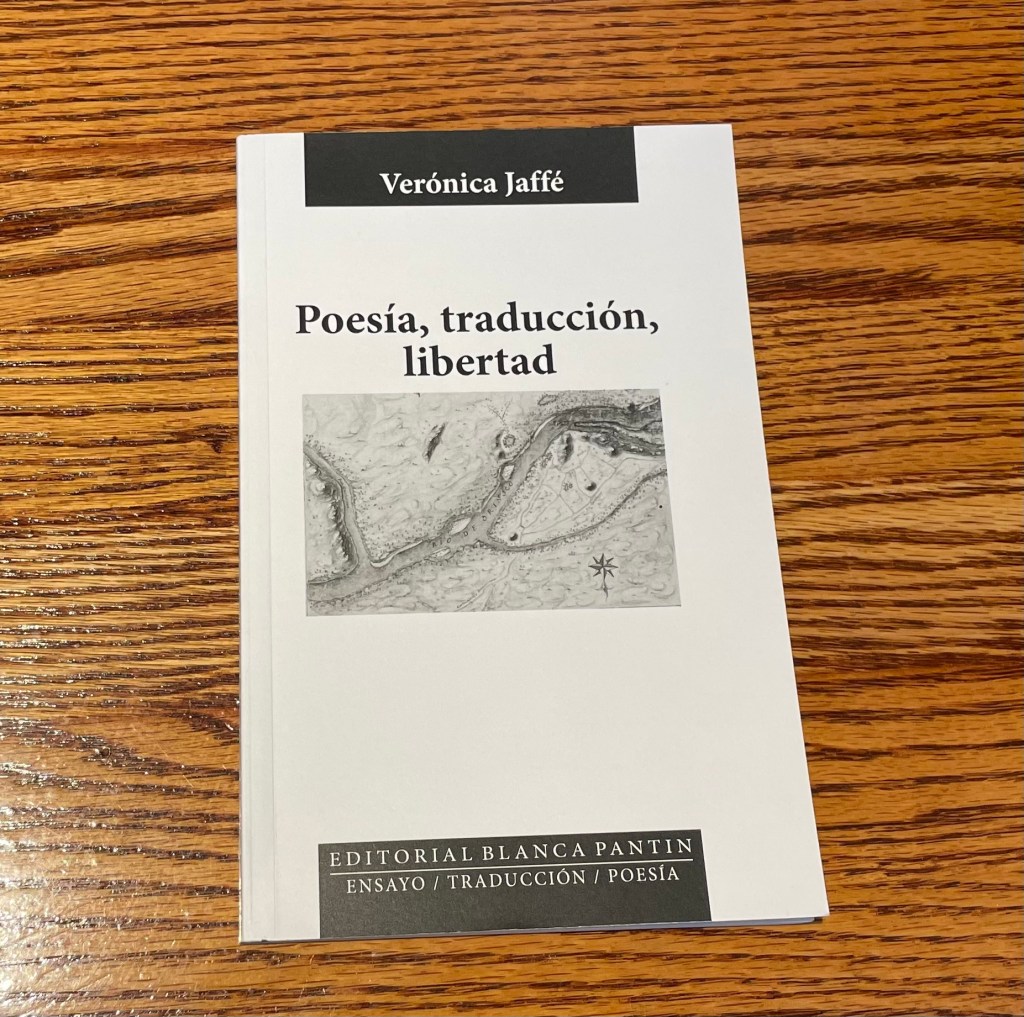
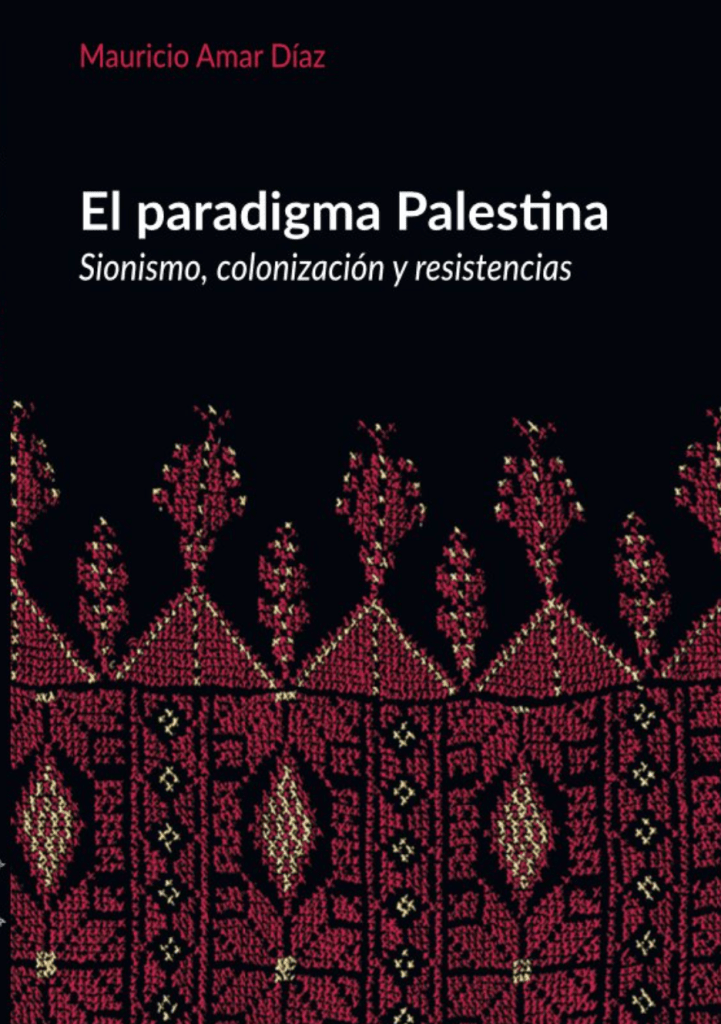


 Infrapolitical Reflections