In an entry of Dopo Nietzsche (1974), Giorgio Colli states that after the overcoming of all values and taboos, the contending moral strife finds its highest value in hypocrisy. Colli goes on to say that “hypocrisy is the last bastion where moral forces have found their refuge” [1]. One can clearly see that for Colli hypocrisy as the highest value is quite distinct from morality, since it is the “refuge” where the contending moralities invest themselves in rhetorical encroachment. That hypocrisy has become – as Colli saw with clarity in the 1970s – the last alcove of humanity, means, for one thing, that the human species have ceased to have any faith in the language that they use, and that for this very reason there is only an estimation of rhetoric, procedure and technical terms abstracted from the sensible world. If understood as such, it would come to no surprise that the majority of public institutions in advanced societies are embracing, and for the most part promoting, the incorporation of Artificial Languages and Intelligence to organize the interactions of their lives. Ultimately, the order here is clear: it is not that new technological advances will lead to a rise in untruthfulness; rather, these instrumental mutations are a consequence of the deep hypocrisy that runs through the social bond.
In fact, one can only assume that Colli was pointing at something more profound and obscure in his gloss when he referred to hypocrisy as the last refuge, and in this sense he was pointing beyond Nietzsche. After all, Nietzsche understood hypocrisy as mimesis and appearance that if incorporated over a long period of time ceases to be hypocrisy to become real [2]. A series of good acts and deeds in the spirit of friendship makes a person benevolent. In the same way that Miguel de Unamuno’s San Manuel Bueno Martir through his public faith and habits, was a symbol of Catholic faith for all the believers of his tightly knit community in spite of his interior doubts (this is the Knight of Faith). Now, Colli is pointing to a second degree hypocrisy that is no longer explicated by mimicry, but by its dependence to an ethereal value that governs and justifies any set of given actions. The actions are no longer in relation to faith or non-faith, but are properly acts of “bad faith”, since they make belief captive to the justification of the highest moral value. This will be consistent with Nicola Chiaromonte’s description that the end of secularization is not an epoch lacking faith, but one that dwells in “bad faith”.
And what is ultimately “bad faith”? It is the realm of hypocrisy that, due to its impossibility of communication, understands its mission waged on the petty negation of one value over another. It is a mutation of Goethe’s nemo contra deum nisi deus ipse into the sphere of prevailing forces. The civilizational stage of enlightened hypocrisy prepares the human being to renounce the use of language and unmediated appearance. This means that the triumph of the technoadministration of the world would not be possible without the alluring refuge of hypocrisy that conquers reality through the very means that renders inaccessible the real presence of the world. It is not that politics and politicians have become hypocritical; it is that politics can only subsist thanks to its refuge in hypocrisy. The hypocrite is the last figure that steers in unworldliness.
..
Notes
1. Giorgio Colli. Dopo Nietzsche (Adelphi Edizioni, 1974), 50.
2. Friedrich Nietzsche. Human, All Too Human (Cambridge U Press, 1996), 39-40.
The legend of modern political theology is well known, and it has received extensive research and documentation. Less so is the legend of the theology of the visible as it relates to the problem of liturgy. For some time now some of us have pondered on a curious historical coincidence: the fact that in 1922 Pavel Florenski and Carl Schmitt, two epigonal figures that confronted head on Western modernity with its theological substratum, wrote parallel texts with strong positions regarding the same problem. I am of course referring to “The liturgy as a synthesis of the arts” (1922), and Roman Catholicism and Political Form (1922). From the strictly philological point of view, even the genesis of these two programmatic texts have a parallel development that go back to 1918, as can be seen in Schmitt’s only theological text entitled “The visibility of the Church” and Florenski’s “The reverse perspective”.
Why would two distinct thinkers confront the theological-pictorial in this specific historical dispensation of Western secularization? And, why does liturgy in the early twentieth century become a central problem for thought well beyond the walls of the Church and its ministries? What are the relations and divergences between theologia and visibility in the wake of the rise of European nihilism? If we press on the year 1922, it begs to ask why the problem of the “synthesis of arts” – theology as nothing more than the visible and a mode of seeing, to put it in Florenski’s own words – becomes so medular in European thought; and, under what conditions this emerges, given that already since the time of Johannes Vermeer, as Gregor Weber and Daniel Arasse have studied, the theological was already a fundamental topological injunction of specular understanding. These are questions that we hope to elucidate by closely examining both texts side by side with the working hypothesis that the theos – not theology as a science of Church dogmatics, which has little interest in the wake of the death of the unitary God, heis theos – but rather as a topological or choratic expression of facticity, as well as mediation with the disclosure of the world.
Almost parallel to the developmental height of the autonomy of art, it seems that both Schmitt and Florenski sought to come to terms in their own ways with the lagging energy of a specific topos of the theological trace: liturgy. It is then our task while reading these texts to ask why did liturgy become the site of inscription necessary to render legible the mediation, and possible transfiguration, of the theological as a first order question for the West. If theologian Laurence Hemming in Worship as a Revelation: The Past Present and Future of Catholic Liturgy (2008) is correct in saying that our age sees everything in terms of manufacture and efficacy mimicking the notion of “sacred worship” in liturgy, it becomes necessary for us today to understand the theological assumptions, as well of the possibilities, of the theos and the mystery at the very granular level of desecularization.
We thus propose a minor pictorial-theological legend of 1922 between Florenski and Schmitt – that is also that of the proximity and separation between East and West, theology and the pictorial, the visible and the invisible, revelation and authority – that could shed light on some of these concerns that continue to nourish discussions that have yet to find its proper treatment and productive assessment.
*
*This short text is meant as a working hypothesis for a forthcoming reading / study on Florenski/Schmitt and the question of the pictorial and liturgy set to begin in November 2025.
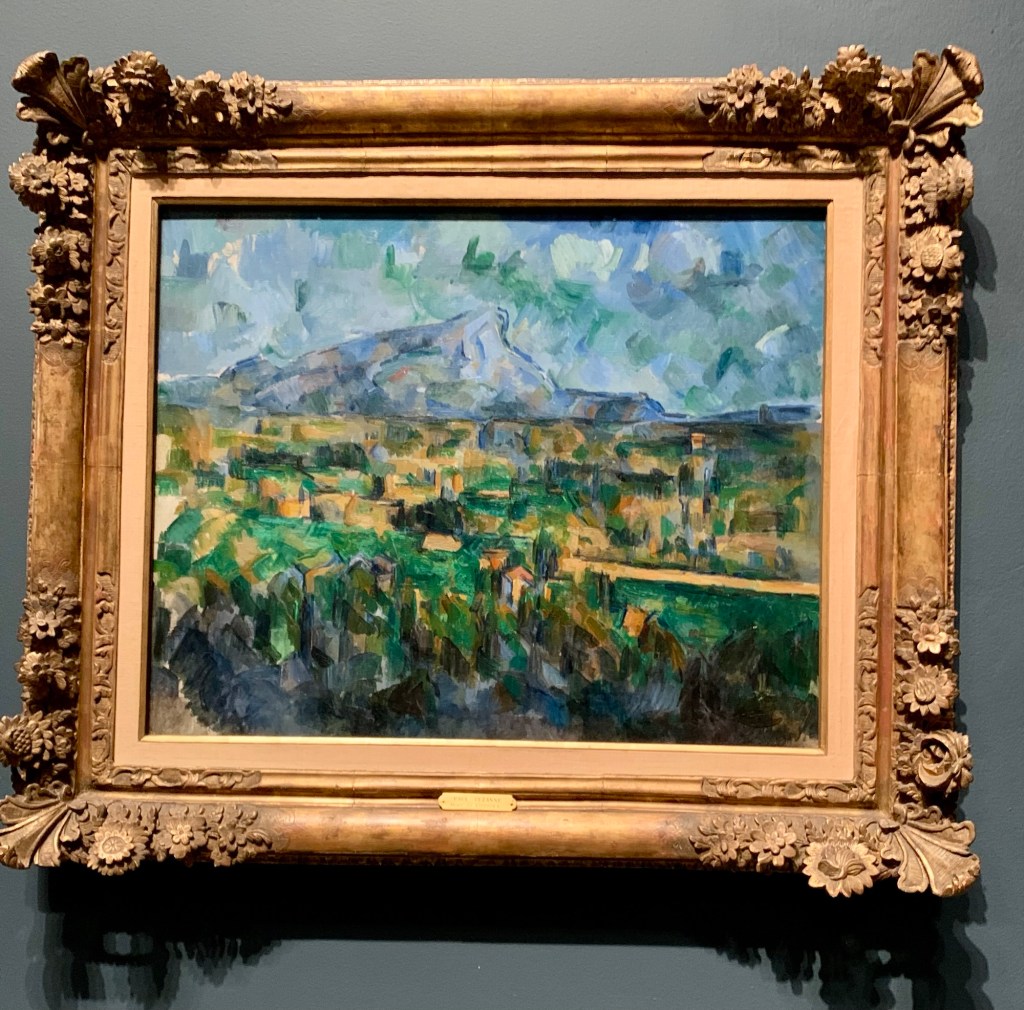
In his old book The Art of Cézanne (1965), the German art historian Kurt Badt makes a remarkable affirmation in dialogue with Hans Sedlmayr’s indictment about the crisis of modern art: “In him [Cézanne], in fact, painting ‘emerges as the last metaphysical activity within European nihilism – Nietzsche’s view of the great art of his time in general” [1]. Badt’s affirmation must be first understood contextually as a response to Sedlmayr’s thesis laid out in Verlust der Mitte (1951) that argues that the post-impressionist painter was the last attempt at visual order within the convoluted modern crisis of art, still committed to “represent what pure vision can discover in the visible world…without adulteration” [2]. The subtlety of Badt’s disagreement with Sedlmayr is notable, since for him Cézanne does not stand for a painter of chaos and subjectivity; on the contrary, the painter unequivocally enters in relation to nihilism. At that instance painting and nihilism are positioned polemically face to face. So, what could painting as the last metaphysical activity mean after all? Why is it that painting obstructs or stuns the total exposure of nihilism? Instead of retracting painting to an ‘origin’, what if we understand its ontological contour as an excess within and beyond nihilism?
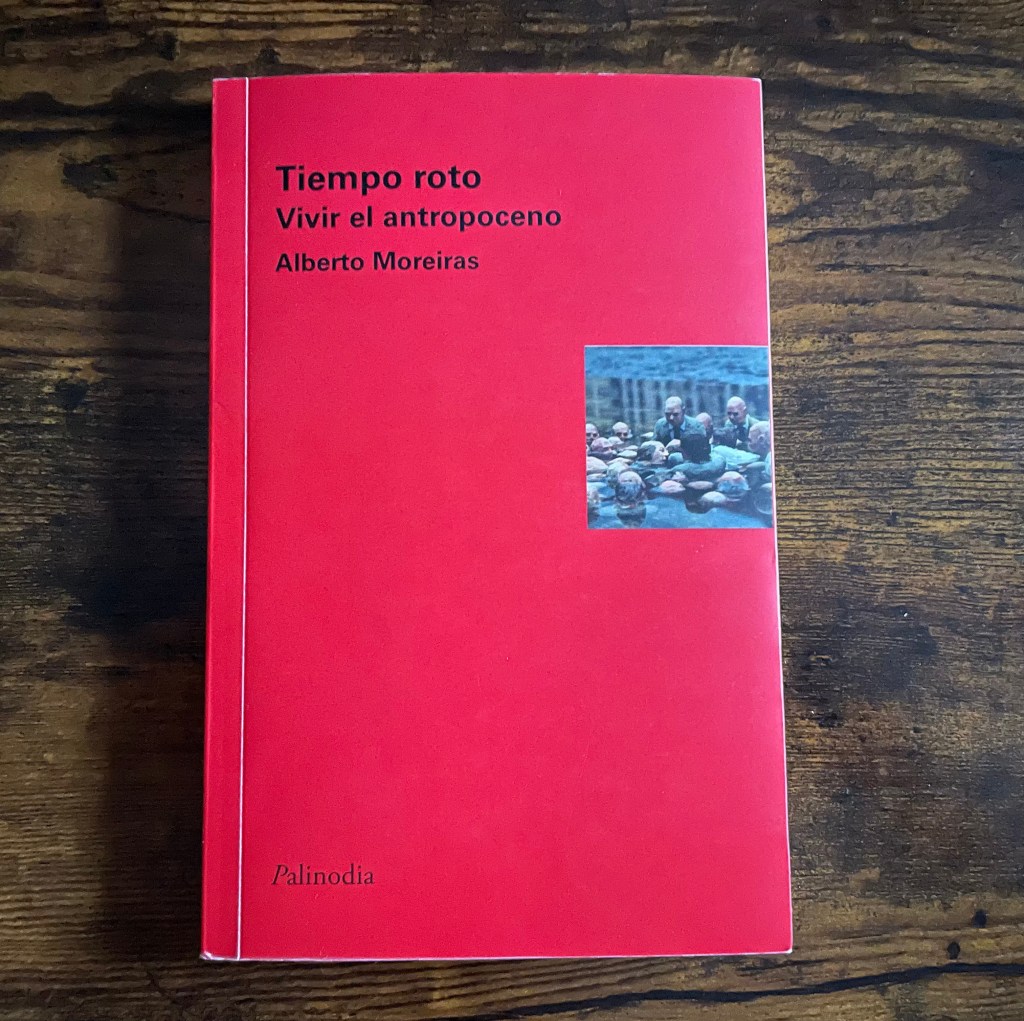
In his recent book Tiempo roto (2024), Alberto Moreiras returns to Martin Heidegger’s Le Thor Seminar of 1969 to emphasize how in the epoch subsumed by the Gestell, and thus nihilism, the fundamental opening that exceeds the frame is an übermass, or overabundance of presence [3]. This might be a productive way to think about ‘painting as the last metaphysical activity’ in the era of Gestell, because it inscribes a relation to the visible always in relation to the appropriation of its excess. In the Zähringen seminar (1973) Heidegger will call this relation a phenomenology of the inapparent, which one could very well extend to the praxis of painting as the relation between unconcealment and concealment in the way that Daniel Aresse discusses it in the pictorial world of Vermeer (a polarity that in Cézanne no longer pertains to play of optic illusions but of the disclosure of the world). This cojoining of the inapparent is more beautiful than any possible world visible ordering, because it exceeds the frame of the visible [4]. In this way, Cézanne is not just a painter that exchanges roles with the thinker (as in the relationship between dichter and gedanke) it is rather that he remains the most faithful exponent of painting as the ontic region of the phenomenology of the inapparent or übermass.
In a session of the Zollikon Seminars (May 1965), Heidegger introduces Cézanne’s landscape as a counterpoint of the hermeneutical circle of perception and calculative intuition. Heidegger writes quite succinctly: “For instance, a painting by Cézanne of Mont St. Victoire cannot be comprehended [erfassen] by calculation. Certainly, one could also conduct chemical research on such a picture. But if one would like to comprehend it as a work of art, one does not calculate, but sees it intuitively. Is the painting, therefore, something psychological, since we have just heard that the psychological is what can be comprehended intuitively? No, the painting is not something psychological. Obviously, the above-mentioned “simple principle” for distinguishing psyche and soma is not simple at all” [5]. This is so because for Heidegger the figure of the mountain (a figure among others) in Cézanne’s work is not the cause of the decision of painting; it is rather the ground (Grund) that orients a certain disposition towards the opening of any given form. One could say that the motif of the mountain is the ground that dispenses the relation to the excess or the inapparent while being entirely visible.
As such, the activity of painting is not just a capacity or disposition that allows representation; on the contrary, the pictorial praxis qua praxis remains attached to the notion of truth as unconcealment and concealment in the hegemonic structure of Gestell and the objective sciences for which there is none. This allows to throw light into the rather underworked suggestion advanced by Badt that painting remains the last metaphysical activity of the arts, which does not presuppose understanding the “painterly” as a quality or autonomous sphere of human action, but rather an original gesture of presencing the non-presence, and in this way to remain in what I am willing to call the imperturbable.
It has been registered that at one point during the sessions at Le Thor, Heidegger also made the curious assertion that only Cézanne had taken a path towards thinking (in painting) similar to his own turning away from Western ontotheological dispensation into another beginning [6]. This might be because painting is neither the archaic residue of the human hand, nor the pictorial index of image; its fulfillment lies in the excessive proximity to truth that eternally reveals the permanence of the invisible.
.
.
Notes
1. Kurt Badt. The Art of Cezanne (University of California Press, 1965), 181.
2. Hans Sedlmayr. Art in Crisis: The Lost Center (Transaction Publishers, 2007), 131.
3. Alberto Moreiras. Tiempo roto: vivir el antropoceno (Palinodia, 2024), 113.
4. Martin Heidegger. Four Seminars (Indiana University Press, 2003), 8.
5. Martin Heidegger. Zollikon Seminars (Northwestern University Press, 1987), 79.
6. Giorgio Agamben. Il tempo del pensiero (Giometti & Antonello, 2022), 57-60.
*Image: Mont Sainte-Victoire, by Paul Cézanne. Philadelphia Museum of Art. Photograph from personal archive.
The sudden and uninvited intrusion of Gaia in our world is something rather strange, and yet consistent with the closure of the metaphysical tradition. The call of the outside takes place at the threshold of our reflexive capacities, habits, and mental propositions in our relation with the world, which demands everything to be thought from scratch. The historical imbalance in groundlessness now requires a new task for thinking – the imperative that runs through Alberto Moreiras’ most recent book Tiempo roto: vivir el antropoceno (Palinodia, 2024). The theoretical constellation deployed over the course of a decade now comes to the forefront with extreme urgency – I am referring to marranismo, posthegemony, aprincipial anarchy, and of course, infrapolitics. Tiempo roto (2024) is not a systematic culmination of Moreiras’ philosophical (or antiphilosophical) project of thought, but it is definitely a mature elaboration insofar as the field of problematization enters a hitherto unexplored thematics of late heideggerianism. All things considered, the emerge of the anthropocene as an explicit planetary endgame and the new beginning necessarily move pass the conditions of both political and scientific praxis, which today can only effectively adequate itself into positionality (the so-called Gestell) and objectivity of a world that slowly seems coming to its end.
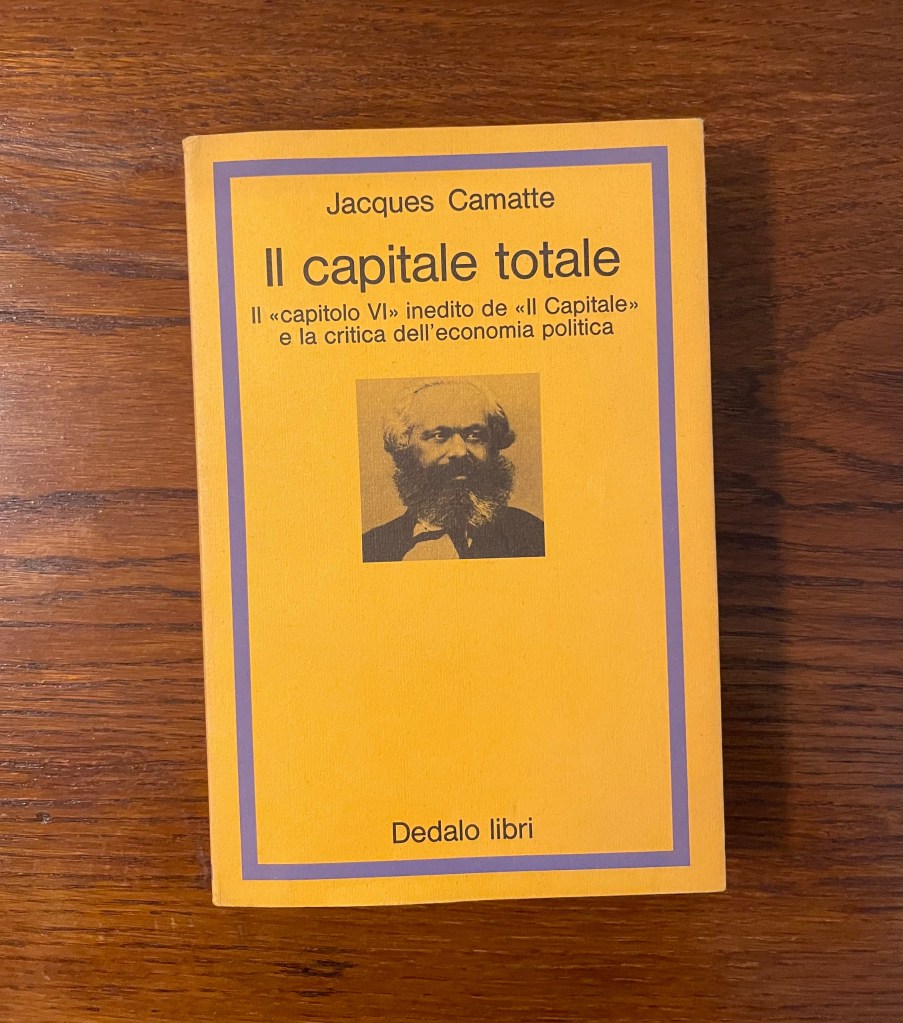
It might be worth remembering that the notion of “other beginning” (“otro comienzo”) in the wake of civilizational decline was already proposed in the book Sosiego siniestro (2020), but it was far from being thoroughly explained [1]. Following Heidegger’s philosophical scene, representational thought in the tradition of adequatio of the Thomist gnoseology coincides with technological administration of every living entity (Moreiras 14). But Heidegger’s suggestion in the Parmenides that calculative representation fails as grasping the essence of the polis might also have its own limitations, insofar Gaia appeals to an excess beyond or below the politics. As Jacques Camatte also understood it, the civilizational invariant of revolutionary breakthrough departing from the historical subject of the working class can seldomly do the work except as an article of faith in the myth of the autonomy of the proletariat within real subsumption. This means that we are in the terrain of infrapolitics or the chora, which point to ontic regions of thought towards a new beginning at the end of principial metaphysics. But the other beginning can only emerge within conditions of transforming existence against the closure of political technicity.
I do not desire to reconstruct here all the refined analytical movements that lay out the transformation of existence in Tiempo roto (2025), but there is a maxim from Pindar’s Third Pythian Ode that stands out as an emblem for the appropriation of the non-humanity of the world. Moreiras cites Pindar’s “me, phila psycha, bion athanato speude, tan d’emprakton, antlie makanan”, which can roughly be translated as “do not seek, dear soul, immortal life, but do try to carry out the fullest the use of the possible” (Moreiras 61). Moreiras correctly notes that the ultimate difficulty lies in the “emprakton makanan”, or the use of the possible, which metaphysical Humanism and effective general equivalent can only exacerbate towards the planetary production and extractive valorization. The corruption of the use of the possible is the realization of hybris, and in this sense all representational humanism is always already a form of self-deification and induced hallucination, even when it tries to claim to engage in the opposite in relation to nature (Moreiras 65). Moreiras suggests that the pindaric maxim discloses a second relation of the “use of possibles” that does constitute a lacuna in the metaphysical tradition, and that is understanding a praxis tied to sophrosyne or phronesis that abides to the prudent inclination of the non-human (“es una actividad sometida a la vergüenza de lo in-humano”) (Moreiras 65). Giorgio Agamben’s defense an ontology of possibility against the hegemony of metaphysical realization and representation also comes to mind, although Moreiras might not feel at ease at explicitly calling for a positive ontology nourished in the waters of a transfigured metaphysics of the tradition of scholastic Averroism [2]. Although both Moreiras and Agamben come at their closest proximity in terms of the notion of the chora – and more directly the space of the chora against the primacy of the polis – which serves the ontic condition for the non-spatial surfacing of the abode or region that is necessarily infrapolitical, because it’s never determined by distributionist political isonomia or meson (Moreiras 73).
There are important nuances here to say the least: whereas for Agamben the notion of chora appeals to the gods of place (theos aisthetos), and thus a dejointed form of divinization decoupled from the legitimacy of every politico-theological archein; for Moreiras, the chora is a praxis of thought towards desecularization that lacks theology, and thus capable of exceeding the onto-theological reduction (Moreiras 74). But Moreiras says about the tendency towards nihilism of “possibility” in the historical dispensation of positionality (Gestell) could also be said about ‘de-secularization’, as the ultimate consequence of the decay of political legitimation in Ernst Bockenforde’s famous formulation. This might not be the space nor the moment to reach a verdict between Moreiras and Agamben’s position regarding the very complicated problem of the Platonic site of the sensible, since what is presented to the reader as a ‘phenomenology of excess’ or the inapparent (something merely alluded in the Zahringer seminar), might be the condition of an atopic mediation that prepares – or that has always prepared since the times of Orphic myths – the tonality of a coming philosophy under the sign of transformative thought (Moreiras 110) [3].
The dispensation of the Gestell open up and also step back (a folded movement that does not have a declension into a synthesis) into the genesis of the beginning (Moreiras 115). And the anthropocentric epochal dispensation, says Moreiras, is no longer the site of the polis, but “the planet as a the historical site of humanity, although we are still unaware of it (“aunque sigamos desconociéndolo”) (Moreiras 116). This uncanny phenomenology of the primary, traversed by the discharge of the entstehung, is the infrapolitical site par excellence, because it is in the atopic region where destiny is both affirmed and displaced. This is why, as Moreiras recalls Heidegger saying, the dialogue with Parmenides never exhausts itself, and yet it prepares a destiny (Moreiras 134). I take this to mean that there is an experience of the transfiguration of language for the emergence of an “ethics” (ethos), but this might be beyond Moreiras preliminary conditions for an existential breakthrough; that is, something possible further along the path.
Tiempo roto (2024) closes with a couple of undeveloped pages that take Massimo Cacciari’s old essay “Confrontation with Heidegger” (1977), in which the Italian philosopher makes a plea for a direct confrontation with Heidegger and Nietzsche’s teachings on nihilism and the closure of metaphysics if there would still be any hope for the composition of the working class during the stage of anthropomorphized dimension of capital defined by Jacques Camatte also during those years. But much has changed since the hot Italian summer of 1977 and the formulaic conjunction of “left Heideggerianism” might not do the work anymore, as if the totality of materialist political economy could be amended by a radicalization of the historical question and the ontological difference. Political economy plus metaphysical critique is still relying on a conception of the political as a technique, which today has transformed into what some have called the “new regime of ecological accumulation” as mere stabilization of green ecological spheres of life [4].
But there is a second register to Cacciari’s programmatic thesis that remains open. And these might be Moreiras’ most important words in the concluding part of the book: “Espero haber mostrado que Hiedegger señala la posibilidad de dejar atrás la explotación y el consumo en la era del Antropoceno a través de una comprensión alotrópica de nuestra relación con el mundo. Por lo tanto, vivir en el Antropoceno debe basarse en el abandono o desplazamiento de la metafísica como modo dominante de aprehensión del mundo en la actualidad” (Moreiras 151-152). Marx’s materialist dialectic through the critique of political economy – even as a destitution of political economy through its own vectorization – might be insufficient to face the unprogrammed presence posed by planetary anthropocene.
Perhaps we can still repeat Dionys Mascolo’s words that the coming communism will owe more to Hölderlin than than Marx, not because of an idealist dispute over concepts, but rather because of what Cacciari called in his essay, also citing the German poet, the historical “affinity of conditions” [5]. And in the age of the Anthropocene and positionality, those conditions are kept in the pattern of economic decline or stagnation in which the law of rate of profit encounters its own limit, folded unto the ongoing destruction of the life forms in the world. The allotropic praxis endorsed by Moreiras finds traction in Hölderlin’s poetic dwelling in language at the heart of decline so that something other might emerge within and beyond life, from Gaia to Ctonia. This is the most difficult task to depart from, but it is also the path that saves from the current inhabitable passage of the Earth.
.
.
Notes
1. Alberto Moreiras, Sosiego siniestro (Guillermo Escolar, 2020), 24.
2. Giorgio Agamben. L’irrealizzabile: Per una politica dell’ontologia (Einaudi, 2022), 112-146. Kindle Edition.
3. For more on orphism and the limits of the site of the Greek polis, see Gianni Carchia’s Orfismo e tragedia (Quodlibet, 2019), epilogue by Julien Coupat.
Almost at the end of the Cold War, arguably the most important natural law jurist of the West, John Finnis, published a very acrimonious and provocative essay in dialogue with the Christian theological morality and dogmatic tradition entitled “Nuclear Deterrence and the End of Christendom” (1988). In many respects, this essay speaks volumes to our present, but it also solicits new questions around limits that have been severely traspassed in the current atomic age headed towards extinction. It is worth noting that from the outset, Finnis reminds us how a fellow Catholic liberal theologian, Jacques Maritain in a lecture of 1955, claimed with surprising conviction that “America is today the area in the world in which…the notion of Christian-inspired civilization is more part of the national heritage than any other spot-on earth. If there is any hope for the sprouting of a new Christendom in the modern world, it is in America…” [1]. If this sounds completely analogous to the current program of “national conservatism” that today animates American political elites, defined by the ruthless attempt at the convergence of instrumental Christian vocation and political imperium, it is because these prophetic words have been thoroughly realized.
Finnis does not hesitate to put his thumb on the theological monstrosity maintained by Maritain at mid century – although he does not say it explicitly, it is a concrete restitution of imperial Eusebianism decades before denounced by Erik Peterson in his famous essay on political monotheism – that by accepting nuclear deterrence as a form of uncontested ‘minor evil’ in face of the Soviet menace Christians were endorsing heretic positions at odds with the teachings of the Second Vatican Council. As Finnis argues, the logical structure itself of nuclear deterrence, precisely due to its affirmative promise to exclude “target populations”, fails to differentiate between combatants and non-combatants in an endgame that promises the potential massacre of innocent human beings [2]. This means, first and foremost, that nuclear deterrence (as well as its new preventive forms that have become normalized among global hegemonic powers) terrorize human communities as a direct public act of forthcoming devastation [3].
Even though Finnis does not stop to reflect about the notion of “public act”, it is very clear that this action, insofar as it is a linguistic act, aims at the effective cancellation of the possibilities of language and communication. Nuclear deterrence and proliferation are instruments that speak publicly, and that by doing so, it contributes to the atrophy of human language. As a rebuttal to Maritain’s celebratory artificial gnosis, Finnis sees in the language of nuclear deterrence coincides with the language of ‘utopia’ as a new absolutization of morality. This means that Maritain’s philosophical error – which Finnis calls the “theologian’s position”, since it also implicates an official sector of the Church – is to abandon practical reason of allocated goods (including human life) in the name of a comprehensive aim of building a civilizational “Christendom” coupled in a national community [3]. But whoever fully identifies the spiritual-providential realm with the political-legislative order is already at the mercy of an utopian project embedded in the sacrificial structure promoted by nuclear deterrence.
Towards the end of his essay, Finnis laments (implicitly repeating Karl Barth’s well-known 1930s essay but in an opposite direction) that the relationship between Church and State from the point of view of the atomic age and nuclear deterrence has now been completely altered. From now on, the atomic age demands a Christian vocation based on conscience. Specifically, Finnis calls for a position of refusal and minoritarian observance against the general options of radical evil: “The choice to reverence human life by refusing to participate in public choices to destroy it, is thus a choice is material of the Kingdom and has real and truly lasting effects…even when worldly wisdoms understand it only as a choice of greater evil’ [4]. And citing Cardinal Ratzinger, Finnis endorses the position of Christians as “belonging to a minority” finding courage in nonconformity within the normative order of social space [5]. The Finnis-Ratzinger’s position was still oriented by a Catholic commitment to dogmatics and public reason and virtue, which depends on the luminosity of the subject of religion.
But the objection of conscience is a subjective reduction of modern secularization. In this sense, it might be pertinent to compare Finnis’ position to Ivan Illich’s own stance in the wake of nuclear testing in Germany in the 1980s, which he witnessed in “horrified silence…in order to make the horror visible” [6]. For Illich, who had come to see the triumph of civilizational mysterium iniquitatis in the institutional deformity of the conspiratio of the human species towards controlled subjectivity (conjutario) amounting to “intolerable realities”. The language of Christian prophecy is not the same as the language of silence, because only in the second we can become witnesses through the voice of pain and experience, because pain can uplift a contact with the world without redemption. As Illich made clear in his text “The Eloquence of Silence”, it is through the condition of silence that the word can become flesh and prepare a new life. It is very telling that in a later footnote to the essay in the 2011 edition, Finnis appears doubtful about the religious ground stating that: “Over twenty years later, the unsatisfactory state of Catholic teaching on the matter remains just as it was in 1988” [7]. What changed? At the end of the eighteenth century Novalis had noted that for any orientation of public reason in the West to materialize there needs to be a substrate of the divine mystery, but this is precisely the substrate that desecularization has effectively untied and obliterated from the public. A public where general annihilation percolates without restraints.
.
.
Notes
1. John Finnis. “Nuclear Deterrence and the End of Christendom” (1988), in Religion and Public Reasons, Collected Essays: Volume V (Oxford University Press, 2011),
2. Ibid., 280.
3. Ibid., 286-287.
4. Ibid., 288.
5. Ibid., 289.
6. David Cayley. Ivan Illich: An Intellectual Journal (The Penn State University Press, 2021), 80.
7. John Finnis. “Nuclear Deterrence and the End of Christendom” (1988), 290.
The passing of Jacques Camatte (1935-2025) a week ago from the writing of this text recalls a life that ostentatiously lingered in thought, and a thought that was entirely enmeshed and intertwined in the irreducibility of life. For some of us that had the good fortune to interact – however briefly and momentary, although every contact is always destinial and inescapable – Camatte transpired generosity and authenticity, and his voice evoked an almost Adanic happiness that has become rare among human beings. A common friend these days has recalled that somewhere in Camatte’s writing there is an endorsement of a capacious phrase from Chernyshevsky that could very well serve to remember his enduring ethical pursuit: ‘we have finally understood that the Earth is a place of life rather than judgement’. The opening the Earth as a dwelling place for life forms means that it is insufficient to conceive of domination as an organization of modes of production, since capital is first and foremost a spatial-temporal arrangement towards the future of the human species, and thus of a certain conquest of the world sensuous life.
This was the outstanding triumph of real sumption: the modulated and ongoing alienation of the human community (Gemeinwesen) into a community of capital that has arrested time of life to the point of adjusting it to homogenized agony of historical time. Against the dynamic of revolution and counter-revolution that theologically exported the polarity of the eschaton and the ho katechon, already in the inception of 1970s Invariance Camatte called for an exteriority of any philosophy of history in order to rework of “a new relationship between human beings and nature”, and “breaking the lock that inhabits the creation of a new form of life”. The two citations in dialogue with each other come from “Against domestication” (1973) and the introduction to Urtext: frammento del testo originario di Critica dell’economia politica” (the 1977 Italian edition curated by Gianni Carchia), although these are variations from the depth of the emergence of the invariance of truth as a vantage point of the world. At the center is a form of life that renews the world that transitions beyond all forms of metaphysical logistics of appropriation, mere standing reserve, and the general arrangement for the mobilization of production. Any point of departure against domestication measures itself against the totality of this fluctuating dominion.
As it has been said of other great thinkers, Camatte’s ultimate passion was rooted in thinking one idea to the end and not of endorsing a system of concepts. For him it was the schism, that is, how to undo the historical process of domestication of a fictive community against the absorption of the increasing autonomization of fictive capital. The schism against the capitalist general equivalent also demands advancing a secondary schism against all humanism and its originary separation from nature. In schism, there is something of Gaunilo of Marmoutiers’ “thought of the word alone” that is receptive to the movement of the soul tries to account for the perceived voice. This precisely what Camatte carried as the lesson from Bordiga’s idiosyncratic original communist program: a movement against the historical benchmark of the development and political economy of growth, which will entail the exhaustion of the revolutionary horizon driven by an ideological political technification that tends to deepen the power towards the positionality of epochal nihilism expressed in the revitalization of strife and the ‘errancy of humanity’ (contrary to Martin Heidegger’s notion of errancy as a play between unconcealment and truth, for Camatte errancy is another name for the civilizational narrative that exemplifies the withering of the human community into organized and protracted social reproduction and historical abstraction). Hence, as for Bordiga, Camatte conceived the ontology of communism as a world view (not as a political program oriented by concrete historical subject or distributive economic reproduction; not a soteriological dogma nor a transhistorical material idea); that is, broadly speaking, thinking the relationship between the human beings and the earth. A question more pressing than ever given the current planetary conflagration, which exposes the civilizational course that has lead to an inhospitable world where the survival of the human being has become the byproduct of an effective hostis of the community of capital integrated to the global surplus value accumulation.
In Camatte’s unrealized thought – but perhaps all forms of thinking are so – the bordigist gesture persists in locating the schism at the threshold of the force of real subsumption of the anthropomorphization of capital, where the notion of revolution itself is transfigured since, unlike Delacroix’s paradigmatic romantic painting, ‘liberty’ no longer guides the spirit of the “living”. Its redeeming voice also carries downwards unto the depth of the souls of the dead. Amadeo Bordiga himself in “Dialogato coi morti “(1956) writes that “The Revolution…it is always, in the course of an immense historical arc that will close as it opened and where it promised, where it has an appointment with many of the living, but certainly with the unborn, as with the dead: they knew that it never fails, never deceives”. True life can also take place with the nearness of that which seems remote (as Gustav Landauer once claimed: “For me, the dead also live”).
If both the collapse of the future and the increasing adaptation of social life has entered a gnostic dialectic of endless self-legitimation, it is paramount to capture not just the insurrectionary, but the resurrection flight in Camatte’s gesture that opens possibilities lodged in the dead as an emblem for the return to the world “full of joy and exuberant life”, as he wrote in an apostrophe in “Scatologie et résurrection” (1975): “I will draw from mother earth the vital and infinite power and I will resurface full of wisdom, joy and an exuberant life which will allow me to reach this human community…I will have left your world and been resurrected!” Does holding on to the unity of the Gemeinwesen require a theological undercurrent? Is not the passion for schism, and by the same token the stazion, the energy within the very dispensation withheld between mystery and revelation that has prompted the congenital forms of formal mediations and institutions for the political community? These are the questions that we are exposed to in the enduring task if we are to take seriously a continuous ‘dialogue with Camatte’, which carries the voices of the dead. Ultimately, any authentic conversation that dwells in thought does not have to invent anything new; we are depositories of an endless communication that is handed over, interrupted, and transmitted to anyone willing to hear and capable of being traversed by the shared word.
In his last year of thinking, Camatte insisted on the notion of “inversion” in the wake of the civilizational phase of extinction, which would require deposing all forms of hostilities and bringing to an end the partisan positions invested in orienting technology and morality (nature) in their seditious defense of the real dominium over the passing of the world. For the current depressing (and depressed) times, writes Camattes in “Instauration du risque d’extinction” (2020), what could very well be a prelude to a return to the repressed allowing a return to the past to initiate an inversion that would allow liquidation of lall exhibition abandoning enmity. This is why, as he told me in an exchange that we undertook five years ago, “inversion cannot be a strategy, as it is totally outside of politics, which is the dynamic of organizing people, of controlling them”. A breakthrough, then, only as a mystical downwards leap into the past? Absolutely – but only insofar as the mystic is the ethical witness to his own openness to the word, and whose exodus from the social machination prepares a return to the world beyond the flattening and dominant language molded by rhetorical dishonesty or passive narcissism of the subjectivity.
This is why according to Carlo Michelstaedter to have courage in the world means to decide between two irreducible figures: the dishonest trickster, or the mystic in the desert. There are no third terms in between. And whereas the dishonest subject knows how to play the hand to his best outcome in each given moment; the mystic knows that his decisive moment is always commencing because the genesis of the human species has yet to take place. This beginning is always at the brink of an untimely auratic experience. And aura names the incommensurable distance from the rational containment of the world — unlike Teilhard de Chardin’s internal introspection in the noosphere that will bring the fullfilment of a spiritualized humanity upon Earth (realized in part by the unification of the sciences by cybernetics); in other words, an exodus from the temporal nominalism that inhabits another life attuned to its genesis: “devenu-devenant ce monde et sur cette vie autre au moment où s’effectue sa création”, he writes in “La séparation nécessaire et l’immense refus” (1979).
The visitation of Jacques Camatte in the world bears witness to that invisible freedom of the human species ready to jump and traverse the catastrophic trumpeting into the living and the dead, making possible the refractions of thinking as original texture of existence. From now on, the exodus from the immanence of this world will embrace a disempowered but perpetual dialogue with Camatte’s demure schism of the living. Indeed, we are always on the path to an earthly beginning.
There is something to be said about the facticity of epochal decline, and the reiterated attempts to call for its overcoming. But both decline and renewal are so interconnected in the Western dispensation of community and institutional organization that any attempt to surpass only deepens and pushes onwards the pendular movement between rise and fall towards generic equilibrium and social stabilization. Oswald Spengler understood well that decline situates civilization at the center of Western internal historical development just as birth presupposes death; thus, civilization is merely the coagulation of vital energies to overcome the emergence of decline. The genesis of civilization into final decline should at least elicit a question to break this ongoing circularity: what does it mean to hold to decline without converting its minimal energy into the orientation of a new horizontal epoch? The end of growth (economic stagnation) realized in real subsumption and the autonomization of value also allows us to formulate the question in the following terms: what does it mean to seize the fall of the rate of profit affirming demobilization and the inoperative nature of life beyond its conversion into the movement of energetic production that characterized the epoch of production through the historical figure of the worker?
Ultimately, this is a question about how to represent (or how to avoid representation) an ethical orientation of life. At the turn of the twentieth century, it was noted that the ethical bourgeois form of life was conditioned by the sense of “community upon all men” around utility of life’s functions subsumed by work, and work as the sole purpose and meaning of life. The definite character of modern social life can be said to compensate for decline for giving up the incommensurability of life forms; that is, what Lukács also called the temporality of the “genius, in the sense that [the genius] can never be measured against anything, whether interior or exterior” [1]. Confronting this very question at the threshold of the crisis of the transmission of forms in Antiquity, Bernard Berenson in The Arch of Constantine: the Decline of Form (1954) offers a distinct position: the moment for seizing decline should be a deliberate prospect of gazing backwards; a facilis descensus that will disclose something entirely different deprived of the race towards “newness” promised by temporal futurity and its social spheres rhetorically organized. In a remarkable moment of his book, Berenson writes that: “Except in unique moments like the fifth century in Hellas or some three thousand years earlier in Egypt and Sumeria, conscious, deliberate, purposeful art is constantly looking backwards – renaissancing – if I may be allowed this uncouth but necessary verb-striving to recapture some phase of its choice in the art of the past, or at least to model itself or draw inspiration from it” [2].
In other words, there is only “renaissancing” if one is able to traverse the decline of the past in the fullest sense of its inheritance of its formal stratification. The perpetual infantilism of the modern ethical outlook is that it tries to claim its definite character in irreversibility in order to exit the downwards path of decline through abundance and vulgarity (and we know from Ruskin that vulgarity is one of the forms that death takes unto the living).
For Berenson there seems to be authentic renaissancing at the level of life forms – of that incommensurable generality of human concrete and practical creation – by holding on to epochal decline, and not through state cultural policies that have sedimented the disappearance of forms of art legitimized by a “critic that will discover a deep meaning, a strange beauty, a revelaning newness in what you have done” [3]. The vicious modern liquidation of the free interplaying creation of forms of life and their external model of appearances is paid with the ascension of the rhetorical utility that will alleviate, at least momentarily, the sentiment of the decline proper to the transmission of dissolution. Whatever redemption creation can offer in the muddled waters of decline, the modern autonomy of reified forms, pushing upwards towards “newness”, will separate the sensorial transformation of life to the homogenous representation of communitarian representative order that puts an end to mood and solitude.
What Berenson calls “renaissancing” of factical experience nourishes the unrealized instances of the tradition not towards the breakthrough of a historical epoch (something like a virtuous mythic age of “Renaissance”) that can be posited by way of general background principles nor through the enforcement of a common social morality; rather the incorporated memory of the past is transformed to its very end because in its liquidation “true life” beyond measure reemerges. Berenson will state quite enigmatically that “style cannot be manufactured by taking thought” independently [4]. This is what Hölderlin had in mind when in a moment of “The Fatherland in Decline” from his theory of the tragic and its passage of dissolution: “The new life, which was to dissolve and did in fact dissolve, is not actually the ideally old, the dissolution of which was necessary, exhibiting its peculiar character between being and nonbeing…thus dissolution, as necessary, when seen from the point of view of ideal remembrance” [5]. It is this remembrance of dissolution that reveals decline as a felicitous fall without judgment that brings the appearance of life outside the irreversibility of the modern historical progress that has accumulated the oblivion of possible worlds.
This is why Hölderlin will also claim in his “The Perspective from which we look at Antiquity” (1799) that the ‘general decline of all peoples’ is due to the inheritance of forms of “an almost boundless prior world, which we internalize either through learning or experience and exerts pressure on us” [6]. To take up decline in a serious way means that we proceed from the formlessness of life, and not from the mimetic drive that expresses, in the name of ‘originality and autonomy’, the civilizational alienation towards the most distant (Antiquity) and the most near (ethos). We can then say that in decline the most distant and the irreducible becoming allows the ascension of ethical life. In this way, we can authoritatively say that there is only hope and redemption in decline because new life flourishes in a time of prudens futuri temporis exitum (“Prudently the god covers the outcome of the future in dark night”) that will transcend itself by becoming into what ceases and ultimately is.
.
.
Notes
1. Georg Lukács. “The Bourgeois Way of Life and Art for Art’s Sake”, in Soul and Form (Columbia University Press, 2010), 76.
2. Bernard Berenson. The Arch of Constantine: the Decline of Form (1954), 36.
3. Ibid., 64.
4. Ibid., 22.
5. Friedrich Hölderlin. “The Fatherland in Decline”, in The Death of Empedocles (Suny Press, 2008), 154.
6. Friedrich Hölderlin. “The Perspective from which We Have to Look at Antiquity”, in Essays and Letters on Theory (Suny Press, 1988), 39-40.
In a recent text published at Verso Blog, entitled “The Coming Post-Hegemonic World”, Michael Hardt and Sandro Mezzadra make a case for a “turn to a post-hegemonic model” that will challenge the consensus of global in the coming era. In many ways, this era is already here with its diverse and multifaceted (in terms of intensities, forces, and leverages) of protracted and bizarre nationalisms, which as Jamie Merchant has teased out brilliantly, amount to desperate attempts to offer a belated response to the decline of growth as one more stage for containing rampant processes of accumulation via state capacities. For Hardt & Mezzadra, this “posthegemonic world to come” is characterized by a global spatial reconfiguration of capital – accommodating the logistics of regional spaces of influences and exchange across the planet – and on the other, an increasingly “domestic sphere of authoritarian rule” promoted by new accelerated initiatives at generating social homogeneity in the wake of rushing fragmentation hand in hand with a war regime that has utterly scrapped ideals about “strategic autonomy” in order to trumpet an arm race (nuclear weapons included), as it is currently unfolding in Europe.
One can claim that this posthegemonic world is one that firmly assumes the consequences of two interdependent vectors that imploded within the project of political modernity: the end of economic growth (thus validating the law of the fall of profit outlined in Capital V.III), and the liquidation of the principle of legitimacy that for two centuries accommodated the legislative sources of the state authority in democratic constituent power. For Hardt & Mezzadra posthegemony means global fragmentation, authoritarianism, and spatial remaking; however, one should also say that it means,the opening towards stagnation, the collapse of political unity of the state, and most recently the total discredit of the foolish leftist hypothesis that promoted a “rainbow social equivalent coalitions” to push for compensatory, and in every instance insufficient and moribound, populist resurgences elevated through the combustion of ethereal but effective rhetoric (in fact, my argument in a new short book, La fisura posthegemónica, is that the push for political hegemony of the last decades only cosigned forms of consensual totalization at the expense of the production of subalternization and social death).
Even taken as a descriptive and normative condition of the current state of Western politics, the posthegemonic situation lays bare the reciprocal impasse of the claim of its opposition: in other words, one should also put to rest social mobilization that characterized the politics of High Modernity, since ultimately movements (and total mobilization as an apparatus of social energy transfer) presupposes that “every social structure, that it can receive what form required the needs of the political adventure…total mobilization signifies nothing other that the effort to reduce the social substance to a kind of plastic”, as Gérard Granel once defined it. Hence when Hardt & Mezzadra claim that the “effective rebellion must be rooted in social movements envisioning a life beyond the rule of capital”, they are inadvertently refusing to come to terms with the factical posthegemonic reality that they are describing, which is no longer driven by expansive economic growth, but rather by stagnation, and inoperativity at planetary scale that is maintained through the a global veneer of production into regimes of competitive accumulation (of territory, contractual debt, fiscal regulation, executive taxation or tariffs, and increasing arbitrary monetary regulations in the global system) for marginal profitability, as Paul Mattick argues in his recent The Return of Inflation (2023).
This means that there is no outlook towards ‘social mobilization’ that does not serve the subjective productivity of real subsumption, since its ultimate goal is to anaxate social energy into the force of (un)productive labor. This form of dilatant mobilization can only serve the master of illusionary hegemony, and thus promote functional and unwarranted servitude everywhere. Indeed, only a reprobate can be immune to the moralist or the realist conditions of hegemony. If push comes to shove, the posthegemonic factical world of stagnation and political fragmentation already here proves that the ongoing irruption of non-movements are irreducible to the modern movement’s energy; and that life never fully coincides with political claim to rule and legitimacy, even less so in the becoming-world of Production.
Ultimately, this posthegemonic fissure outlives the crumbling hegemonic world of principial High Modernism and no ‘international movement’ can piece it back together again. We are all posthegemonic now, but only if one takes up this predicament seriously and candidly.
In a fragment from 1919 entitled “World and Time”, written around the time of the elaboration of the essay on the question of violence, Walter Benjamin offers his most succinct definition of politics: “My definition of politics: the fulfillment of unelevated [ungesteigerten] humanness” [1]. The ontological reduction is compact, and the three terms in it are carefully chosen: fulfillment, unelevation, and humanness, which indicates a ‘preparation for a profane politics’ at the threshold of secularization and its negation in a new “spiritual ornamentation”, as he would claim in the notes of “Capitalism and Religion”. The stress on the refusal of “elevation” (gesteigerten), however, does bring to bear that Benjamin’s refusal of a political ontology constrained in subjective and objective representation, which is why in the same fragment he connects the abutting of politics to a “living-corporality” [Leiblichkeit] of the human species. To retract from the cycle of civilizational violence, politics had to be reformed from the groundlessness of the energy of the living.
Hence, for Benjamin there is a metapolitical condition or archipolitics that plays out in refusing “elevated humanity”, which for him was at the source of the romantic response to the impasse of the critical enlightenment, placing the subject of knowledge and its self-reflective faculty at the center of the developing self-rationalization of the spiritual transcendence of the world in this new critical religion: “…the ideal of humanity by rising up to…that very law which, joined to earlier laws, assures an approximation to the eternal ideal of humanity” [2]. Hence, neither trascendental representation nor spiritualized immanence of order could, but unelevation of the “human possibilities” (Menschhaftigkeit). But such possibilities could only be disclosed beyond the pretensions of spiritual elevations of a unified consciousness, as Erich Unger had proposed in his Politics and Metaphysics (1921) around the same time to enact a “politics of exodus” for a common psychosocial regeneration.
Benjamin’s proximity and distance from Unger’s position could perhaps inform why instead of writing a promised book that was going to be entitled True Politics (Die Wahre Politik) – allegedly containing two chapters “The destitution of power” and “Teleology without ultimate goal” – evolved into the landmark essay “Towards the critique of violence”, in which the frame of domination and the ontology of politics was recasted as a mediation about the folding of secularized annihilating violence, substance intrinsic to the philosophy of history and indestructible life of the soul (“annihilating only in a relative sense…never absolute with regard to the soul of the living”) [3]. Thus, one could say that accounting for the groundwork of “politics” meant accepting the constitutive verticality cosigned to modern philosophy of history, and its bipolar schematism between moral principles and sacrificial production. If Peter Fenves’ assumption is correct, Benjamin was not only inscribing a distance from Unger, but, more importantly, from Kant’s Toward Eternal Peace who defined his “true politics” as dependent on moral determination: “The true politics can therefore not take a step without having already paid homage to morality, and although politics by itself is a difficult art, its union with morality is no art all, for as soon as the two struggle against each other, morality into two cuts the knot that politics cannot dissolve – The right of human beings must be held sacred [heilig], however great a sacrifice this may yet the dominant power” [4].
The Kantian liquidation of politics to morality is hyperbolic to the modern epoch and its crisis – the crisis and enmity against the concept of the political, Carl Schmitt would claim in Political Theology (1922) – rendering modern politics and legitimacy hollow; something that Benjamin had understood well he saw to retract from the question of “politics” to that of a critico-metaphysical exploration waged on morality “as nothing other than the refraction of action in knowability, something from the region of knowledge…Morality is not ethos” [5]. Elevation could only have meant the production of a subject of knowledge and the specific (technical) arrangement of knowledges for subjection. On the contrary, the ethos was the necessary condition no longer for any “coming politics”, but rather for the disclosure of “the coming world” [die kommende Welt] itself. This means that working through the redemption of the world solicits a reversal from morality to ethics only to later transform the conditions of politics.
Let us return to the definition of politics as “unelevated [ungesteigerten] humanness”. What defines “unelevation”? From the ethical point of view it conjoins with the notion of “inclination” [Neigung] that Benjamin favors because of its unconditional valance that disarms the cycle of violence of the human community and its willful hostilities. The inclination rejects the paradigm of force because it an erotic mediation, that is, an affection of donation and love beyond exchange [6]. But inclination is only possible through language, as Benjamin had expressed in his “concept of politics” in a letter to Martin Buber from 1916: “I understand the concept of politics in its broadest sense…in this sense, therefore, language is only one means of more or less suggestively laying the groundwork for the motives that determine the person’s actions in his heart of hearts. Only the intensive aiming of words into the core of intrinsic silence is truly effective action” [7].
Thus, the suspended elevation of the subject and higher order meant that its persuasive purity allows the inception of the “divine” as a «teleology without a goal» validated by the suspension of judgement of appearance. The intensification of the unelevation opens life to an ethical demand of a “living corporality” that roams the world’s crust beyond depredation where the force of autonomy of social practices does not risks the world of life forms and the soul. Indeed, at this point Benjamin does join Unger’s cardinal thesis: “Overcoming capitalism through wandering”. Or as he wrote even earlier about Hölderlin’s poetics: “[In the world of Hölderlin], the living are always stretching of space, the plane spread out within which destiny extends itself…it already comprehends the fulfillment of destiny” [8]. A politics oriented pending dowards to “unelevation”, inhabits the ground level of co-existence and cultivation dismissing the ontological derivatives or principles (archein) of ‘politics’ in order to conquer every possible destiny in the lawless fulfillment of the world.
.
.
Notes
1. Walter Benjamin. “World and Time”, in Walter Benjamin: Toward the Critique of Violence: A Critical Edition (Stanford University Press, 2021), 74.
2. Walter Benjamin. “The Concept of Criticism in German Romanticism”, in Selected Writings, Volume 1, 1913-1926 (Harvard University Press, 1996), 138.
3. Walter Benjamin. “Toward the Critique of Violence”, in Walter Benjamin: Toward the Critique of Violence: A Critical Edition (Stanford University Press, 2021), 58.
4. Peter Fenves. “Introduction”, in Walter Benjamin: Toward the Critique of Violence: A Critical Edition (Stanford University Press, 2021), 18-19.
5. Walter Benjamin. “Ethics, Applied to History”, in Walter Benjamin: Toward the Critique of Violence: A Critical Edition (Stanford University Press, 2021), 74.
6. Walter Benjamin. “On Kantian Ethics”, in Walter Benjamin: Toward the Critique of Violence: A Critical Edition (Stanford University Press, 2021), 71.
7. Walter Benjamin. “Letter to Martin Buber” (1916), in The Correspondence of Walter Benjamin (University of Chicago Press, 1994), 79-80.
8. Walter Benjamin. “Two Poems by Fredrich Hölderlin”, in Selected Writings, Volume 1, 1913-1926 (Harvard University Press, 1996), 26.
It has taken Pope Francis’s public letter addressed to the Bishops of the United States to put in perspective how late American imperial politics in matters of immigration and probably other spheres of social life is not only at odds with the Christian vocation, but even waging war against the very dogma of Christian revelation. The reminder does not come completely out of context, since as we know, the marching band of intellectuals that for a long time have defended a “Christian postliberal” transformation – some of which not long ago offered theological justifications for the Church as the universal ark for migrants – given the current hegemonic configuration find themselves as mere scribes of whatever is enacted by unilateral executive command. The impossibility of enacting a transitional political theology evidences the emptying of politics into a technical mobilization of apocalyptical overtones, as clearly defended by Peter Thiel. The attempts to pilotage a planetary gnosis to his own image in the last stage of imperial stagnation, definitely supports Francis’ assertion politics today is built “on the basis of force, and not on the truth about equal dignity….begins badly and will end badly”. But in a way, this “end” has already taken place through the revocation of the ethicaltenor of the Christian mystery.
It comes to no surprise, then, that if the erosion of an ethics is at stake, that Pope Francis would allude to the parable of the Good Samaritan and fraternity, something that he has explored previously in the encyclical “Fratelli Tutti” [1]. It is also important to note that Francis is not opposing the Good Samaritan to the ordo amoris; rather the operation is more subtle: for any community to be organized around ordo amoris, there needs to be a space for the infinite discovery that the Good Samaritan parable solicits of every Christian’s responsability. According to Francis: “The true ordo amoris that must be promoted is that which we discover by meditating constantly on the parable of the “Good Samaritan” (cf. Lk10:25-37), that is, by meditating on the love that builds a fraternity open to all, without exception”. In other words, and implicitly taking distance from the Calvinist dependency on community of salvation, the Pontifex is disclosing the memory of an ethical vocation that cannot end in social norms or national unity without exteriority. The communitarian ordo at times could also amount to oppressive familiarity, as it appears in Corrado Alvaro’s Revolt in Aspromonte: “Village life seemed to him a strange invention, a protective agreement between people who were afraid”. Thus, what the Samaritan teaches human beings is that there are no ethical standards for which we can respond, since every encounter opens up a ‘decision of existence’ before an absolute other beyond the sacramental duty of “I ought”.
Who is this “other human being” that now becomes your brother? As we know, in Ivan Illich’s late work the ethical inflection of the Good Samaritan illuminates the true character of our poetic relationality and creative act: “You can recognize the other man who is out of bounds….and create the supreme form of relatedness which his not given by creation but created by you. Any attempt to explain this “ought” as corresponding to a norm takes away the mysterious greatness from this act” [2]. Indeed, Illich goes further in telling us that the suppression of the ethical decision of encountering the Samaritan can only leave us with a “liberal fantasy…where bombing our neighbor for his own good” [3]. Just like today the moral justifications of “ordo amoris” or the administrative allocation of a substantive “common good” can produce justifications for mass deportation of immigrants and dividing the social space between citizens and noncitizens (removing the foundation of ius soli) can become the strange patent of a monstrous theological manipulation.
The ethical mystery exemplified by the parable of the Good Samaritan introduced into history a new conception of “brotherhood” that was not conditioned by national, political, or family affiliations, but by a common vocation expressed upon acting through mercy and charity. Belonging to the “human fraternity” allows me to decide who is my brother through the osculum pacis – a conspiratorial mouth-to-mouth kiss that creates proportionality and peace through the encounter that yields mutual creation. Before the Samaritan we give everything without waiting for anything in return, as required by any true ethical disposition. As the scholar of Ancient Christianity, Christine Mohrman once noted, the osculum pacis was a universal relationship of the human species through their voices coming together to assert external political peace as well as interior health of the soul [4]. If the predatory programs of mass deportations and intensification of hostilities between nations have come to forefront in our days, this is due to the fact that the overall end is not to piecemeal ordo amoris coordinated by state social policies, but rather a permanent assault against the association of the free souls constitutive of the osculum pacis.
In light of the theological drama of Christianity, nationalism can only be taken as a symptom of brute force and inequity (radical evil). As Erik Peterson reminded in his essay “Das Problem des Nationalismus im alten Christentum” (1951), the cult and strife between nations and imagined communities, at least for the Chirstian vocation, do not have any traction, since the warring angels of nationalities have been overcome by the event of resurrection [4]. The ‘strange career’ of American political Catholicism is precisely that through a technocratic administration of social pain and spectacular delirium, it can only offer an noncorporeal ideal of ordo amoris “in the service of a single nation which seeks to establish its supremacy, by identify its own interest with that of humankind”, as Peterson observed in the wake of European nationalism, but that it applies today to the letter with little variations [6].
In vain should we attempt to pin down the osculum pacis as professionalization of care or the hospitalization of pain that have become practices of a “corrupted core of a very clear and powerful ideal of democracy”. In the disjointed time that characterizes the end of political theology and its warring nomoi, the osculum pacis will be not be found in those that attempt to conjure a “Christian civilization”, but only in those that dwell in the state of adelphos, faithful to the scandal of peace and the endless conspiracy of speech.
2. Ivan Illich. The Rivers North of the Future (Anansi, 2005), 207.
3. Ibid., 208.
4. Christine Mohrmann. “Quelques traits caractéristiques du latin des chrétiens”, in Études sur le latin des chrétien (Edizione Di Storia E Letteratura, 1961) , 29-30.
5. Erik Peterson. “Das Problem des Nationalismus im alten Christentum”, Theologische Zeitschrift, 7, 1951, 81-91.
6. Erik Peterson. “Die Frage nach dem Menschen”, in Offenbarung des Johannes und Politisch-theologische Texte (Echter Verlag, 2004), 250.


 Infrapolitical Reflections