One of the merits of Sandor Agócs’ The troubled origins of the Italian Catholic Labor Movement (1988) is located on the question of Thomism during the rise of a national industrialization and the new centrality of the worker. This is a question that informs the very genesis of modern political thought, so I want to zoom in to the specifics: in Agócs’ narrative, the reinvention of Thomism goes hand in hand with the ‘social question’; that is, not just as the substrate for state legitimacy, but also as a supplement in the very mediation between the state and social incorporation. After reading Agócs a question lingers: what to make of the success story of social Thomism in the long history of modernity, that includes episodes from the both the left and the right; from the Italian Catholic Social Movement to Corporate Francoism, from the Pinochet Constitution drafted by Jaime Guzman to the most recent articulations of an interpretative common good in the contemporary American postliberal constitutional and interpretative balancing? One easy way out of the explanation is to delegate the answer to the historical uses (and misuses, depending who is defending what) of Aquinas’ thought, but that hardly answers the question. A while ago, John Finnis made a claim that could point to an important destination:
“This grand metaphysical overview of reality, and of our knowledge (‘theoretical’ in the first two kinds of order, ‘practical’ in the second two) of it, has been as fundamental to the new classical natural law theory from its beginnings as it was to Aquinas. It enables us to identify as illegitimately reductionist almost all the streams of social-theoretical thought, including political and legal, that have emerged since early modernity. It helps in identifying the errors of those would-be followers of Aquinas who reject the new-classical natural law theory on the ground that it neglects or subordinates nature and metaphysics; the misunderstanding of Aquinas, and of the relation between practical and theoretical thought” [1].
For Finnis, although writing for legal theorists, Aquinas’ thought properly understood possesses a ‘metaphysical view of reality’, a sort of plasticity interlocking practical reason for action and morality that serves socio-theoretical ends. In other words, the thomistic plasticity for social legitimation can be connected to what Martin Heidegger held as ‘adequatio’ as a fixed point in the problem of Medieval representation of beings. And this means that thomism is always already a theory of legitimate ground for governing that reality. As Finnis suggests in different moments of his work, the lesson of Thomism is construed in its emphasis on the rule of law as the source for justice and fairness, and in this sense it was never alien to modern social contract. Karl Barth’s rhetorical question -“Why did Hegel not become for the Protestant world something similar to what Thomas Aquinas was for Roman Catholicism? – can now be understood in its most consequential light.
Now it makes sense that Agócs refers to early twentieth century Italian Catholic Neo-Thomism as a “counterrevolution”, although he does not denote that this would be a second instance of counterrevolution with social prospects that the post-French Revolution figures (De Maistre, Bonald, and Donoso) could not meet in their antimodern stance. And here the divide is sharpened: whereas the counterrevolution post-1789 had very limited and unstable sources in social facts, Neo-Thomism offered a theory of law that was consistent with modern class dynamics supported towards social cohesion and stabilization proper to the ideal of the community centered in urban centers. If one defining feature of political modernity is reversibility, it would then make sense that thomistic natural law could rise to the demands of any given historical time to offer a nexus informed by the onto-theological structure of adequatio and analogia entis, whose proper end is the stabilization of social pressure. The second order ideological uses of Thomism (left, right, revolutionary, moral conservative, traditionalist, pre-post Vatican councils) are contingent to its malleable adequation generated by its own claim to natural morality. Heidegger once pointed in this direction when he claimed that Aquinas’ philosophical horizon was fundamentally the inception of metaphysics over theology as faith (that is actio and efficiency unto subjection) [2]. If modernity is the realization of onto-theology, then it can only make sense that Thomism takes as many garments as necessary to prevent gazing towards the abyss, becoming a manifold phosphorescent theory of social morality.
.
.
Notes
1. John Finnis. “Aquinas and Natural Law Jurisprudence”, in Duke & George, Natural Law and Jurisprudence (Cambridge University Press, 2017), 32.
2. Jean Beaufret. Dialogue with Heidegger (Indiana University Press, 2006), 106.
A good place to start on Tetsuro Watsuji’s Climate (1935) is by considering how the very notion of the Japanese fudo as it appears defined in the first pages of the text, as a “structural element of human existence”. Augustin Berque has proposed a slightly different translation: the “structural moment” that speaks semantically to the prefix *-med, that also recalls mediality, metaxy, and also the French ‘milieu’. In any case, “fudo” discloses an expressive instance of existence, but it is not overtly determined cultural or historical teleologies; rather fudo like Heidegger’s fourfold (das Geviert), brings into gathering wind and earth in which existence can only appear to exist in between as exteriority. Watsuji writes: “The structure of “ex-sistence” is, thus, something rather than to exist in the reality of the cold; it is rather to exist within other persons. To designate this reality we prefer the technical relation of intentional reality, used by phenomenologists, the Japanese expression term aidagara (interpersonal)” (†27).
Unless we know the language, we can only take Watsuji at his word when it comes to the Japanese, but all things considered it is at least obvious to say that fudo is not strictly a descriptive objective reality, but a relation of Being. Watsuji calls it a few pages later a “movement of negativity”: “…this is a ‘movement of negativity’. This is how the spatial-temporal structure of human existence comes to being like that of the climate and that of historicity” (33). The notion of existential transcendence that Watsuji wants to hold on to dwells between reality and existence, generating kimochi, or tonality / stimmung (38). The first question here is what to make of Watsuji’s typology of regional climate setting if these are not to be taken geographically or culturally as expressing locational structures for specific kimochi?
There are three types of climate regions for Watsuji: monsoon, desert, and meadow. One could imagine that these three ideal types as environmental arrangements in the disclosure of kimochi. Each region has its surroundings. For instance, the monsoon is defined by its humidity (47). For Watsuji each of the climatic regions will fundamentally generate different forms of social organization, and it is from this perspective that he interprets the civilizational rise of the West beginning in Ancient Greece. The emergence of the polis is understood as a direct relation with harvesting and later to a social bond determined by production and struggle (war). In the most clear elaboration of his interpretation of the polis, Watsuji writes: “With a slave system as through-point as this, the small number of people who comprised the polis were freed from the labours of the herdsman-farmer. […]. With the building of the polis one may begin to use the word ‘Greece’. If this be correct, Greece began with the conversion of the farmer-herdsman gained freedom from the restraints of nature” (82, 113). This restraint of nature is not just productive in the practical sense (attachment to agricultural life), but it is also of the order of the sensible: this is why Watsuji claims that the Greek classical culture possessed a commitment to a visuality of clearing that is ingrained in their architecture and temples in the open (115). And being in the cleared visual spaces demands the question of technique: “The life of the polis has at its center the artificial-technique in order to dominate the Mediterranean. The emergence of this form of life was the powerful instance that determined the destiny of the “West” (116). In this line, modern science is nothing but a consequential reduction of technique for the Greeks (117).
There is definitely some ambiguity here, since later on and following Komei, Watsuji claims that the emergence of machines in the West was only possible as a retreat from cold weather in the North, and thus a product of interiority (130). Could this mean that the all-clearing established in classical Greece – with its vantage point and all too visible sculptures without oblique point of view – contributed to the later historical production of reserved interiority? Watsuji seems to contrast the clearing in classical Greece with the opaque and gloomy clime of the Germanic lands. In fact, Watsuji says later that only in the shrouds of Germany could pure music be created, where light is not so keenly embodied (141, 111). Returning to the question of existential tonality, or the kimochi, I wonder if Watsuji’s subtle yet recurrent positioning of Western destiny has to do with an originary ethical deficit that is maintained from the depths of fudo as within and outside the clearing of nature. There might be a clue about this in “America’s National Character” (1943): “The true hidden reserves are in ethical strength and not in the power of quantity” [‡]. Is living proportionally in the fudo the ability to master this ethical orientation?
Session 2 (continued)
Having laid out his climate interpretation of the West, I think it is fairly easy to grasp the orientation in Watsuji’s monsoon specificity as a sharp contrast to the condition of its “structural moments”. In particular, the political contrast is implicitly established – and I say implicit because Watsuji never confronts it as the guiding principle of differentiation, although it bends that way. It caught my attention that, following the scholar Kateke Fumio, Watsuji will note at the outset that Chinese (Asian) subjectivity refuses any positing of the legitimacy of the state, and especially the fiscal state (we know from Schumpeter that the modern European state is the fiscal state), and they can only flee from such submission, although they are submissive in other ways, to force (shoguns, for instance) (157). The monsoon structure, hence, has primacy over the political sphere projecting a sort of permanent stagnation for historical development. The notion of akirame or “no bearing, nothing we can do”, a sense of overwhelming resignation, becomes the social tonality of the monsoon surrounding, which ultimately (Watsuji does not say it like this, but perhaps we can push the text in this direct) entails enduring stagnation. This perhaps highlights, quite convincingly, of a certain caducity in Watsuji’s monsoon type in our present epoch.
In the order of the political register, one could read Watsuji’s emphasis on the Japanese home in this direction; that is, the monsoon resignation leads to permanent homecoming. The monsoon region is the region where the oikos triumphed over the polis (180-181). If in the Greek world, legibility and the transparency of the grasping logos made the domestic space an exception to the social life, for Watsuji the Japanese dwelling space is not just a space of familiar gathering, it is also a cosmology and an ecology: “The Japanese consciousness took shape in the totality of the home” (184). (As a side note, I cannot but read this in light of Xi Jinping’s notion of the ‘ecological civilization’ as the master key for the planetary relevance of the CCP). Elevated to the rank of cosmology, the monsoon retreat into the home, does not become an all too easy path towards natural domestication?
In the Japanese home there is no separation – there are no locks and keys – says Watsuji, which introduces as a paradigm for a different form of sociality that differs from Western individuality around appropriation, assignation, and separability (201). This is true to some extent if we think about a spatial figure of Western civilization and enclosure, such as the castle. This is fundamentally different from the tokonama. For Watsuji, the structural moments of ambiance and surrounding generates specific mentis types, and thus concrete organizations of said space. I derive from Watsuji’s second part of the book that Western civilization revolved around the movement of total legibility and clearing (Greeks) that unfolded to separation and thus control over nature, resulting in a machine utopia as Adolf Caspary rightly called it. What about the monsoon specificity? There is retreat and resignation over the surrounding, which allows another mediation or in-betweenness with the natural world and exteriority, although this will entail stagnation in world historical terms.
The contrast between the West and China was already well established during the Enlightenment in the writings of Montesquieu, Voltaire, and other luminaires according to Federico Chabod. In fact, Chabod claims that the civilizational divide between the West and China is crucial to understanding both [‡ ‡ ‡ ]. Asking why an ancient civilization like the Chinese had made such little progress in two centuries (XVII-XVIII), Montesquieu for instance claims that an explanation is to be found in the sacred respect of this civilizational mentis for the transmission of its tradition. It is easily inferred from Watsuji that the monsoon ambient allows for a civilization of “Wisdom” in the deep sense that it “thanks” all the elements of the tradition that it receives. This is also a form of “resignation” proper to mezuru, a form of wonder and surprise that adds nothing new. When Kojeve referred to the end of history in the form of American animality and Japanese snobbism, I think he was crediting this inner Wisdom in the wake of stagnation and released resignation. Of course, we also wonder what Watsuji will say about the “ecological civilization” driven by China’s modernizing planetary project that, if we are to believe Adam Tooze, possesses the master key for world transformation in the notion of “development”. If true, this can only entail the triumph of Western machination through the labor of its others.
.
.
Notes
† All pages are referring to the Spanish edition, Tetsuro Watsuji, Antropología del paisaje: climas, culturas, y religiones (Ediciones Sígueme, 2016). All English translations rendered are mine.
In his old book The Art of Cézanne (1965), the German art historian Kurt Badt makes a remarkable affirmation in dialogue with Hans Sedlmayr’s indictment about the crisis of modern art: “In him [Cézanne], in fact, painting ‘emerges as the last metaphysical activity within European nihilism – Nietzsche’s view of the great art of his time in general” [1]. Badt’s affirmation must be first understood contextually as a response to Sedlmayr’s thesis laid out in Verlust der Mitte (1951) that argues that the post-impressionist painter was the last attempt at visual order within the convoluted modern crisis of art, still committed to “represent what pure vision can discover in the visible world…without adulteration” [2]. The subtlety of Badt’s disagreement with Sedlmayr is notable, since for him Cézanne does not stand for a painter of chaos and subjectivity; on the contrary, the painter unequivocally enters in relation to nihilism. At that instance painting and nihilism are positioned polemically face to face. So, what could painting as the last metaphysical activity mean after all? Why is it that painting obstructs or stuns the total exposure of nihilism? Instead of retracting painting to an ‘origin’, what if we understand its ontological contour as an excess within and beyond nihilism?
In his recent book Tiempo roto (2024), Alberto Moreiras returns to Martin Heidegger’s Le Thor Seminar of 1969 to emphasize how in the epoch subsumed by the Gestell, and thus nihilism, the fundamental opening that exceeds the frame is an übermass, or overabundance of presence [3]. This might be a productive way to think about ‘painting as the last metaphysical activity’ in the era of Gestell, because it inscribes a relation to the visible always in relation to the appropriation of its excess. In the Zähringen seminar (1973) Heidegger will call this relation a phenomenology of the inapparent, which one could very well extend to the praxis of painting as the relation between unconcealment and concealment in the way that Daniel Aresse discusses it in the pictorial world of Vermeer (a polarity that in Cézanne no longer pertains to play of optic illusions but of the disclosure of the world). This cojoining of the inapparent is more beautiful than any possible world visible ordering, because it exceeds the frame of the visible [4]. In this way, Cézanne is not just a painter that exchanges roles with the thinker (as in the relationship between dichter and gedanke) it is rather that he remains the most faithful exponent of painting as the ontic region of the phenomenology of the inapparent or übermass.
In a session of the Zollikon Seminars (May 1965), Heidegger introduces Cézanne’s landscape as a counterpoint of the hermeneutical circle of perception and calculative intuition. Heidegger writes quite succinctly: “For instance, a painting by Cézanne of Mont St. Victoire cannot be comprehended [erfassen] by calculation. Certainly, one could also conduct chemical research on such a picture. But if one would like to comprehend it as a work of art, one does not calculate, but sees it intuitively. Is the painting, therefore, something psychological, since we have just heard that the psychological is what can be comprehended intuitively? No, the painting is not something psychological. Obviously, the above-mentioned “simple principle” for distinguishing psyche and soma is not simple at all” [5]. This is so because for Heidegger the figure of the mountain (a figure among others) in Cézanne’s work is not the cause of the decision of painting; it is rather the ground (Grund) that orients a certain disposition towards the opening of any given form. One could say that the motif of the mountain is the ground that dispenses the relation to the excess or the inapparent while being entirely visible.
As such, the activity of painting is not just a capacity or disposition that allows representation; on the contrary, the pictorial praxis qua praxis remains attached to the notion of truth as unconcealment and concealment in the hegemonic structure of Gestell and the objective sciences for which there is none. This allows to throw light into the rather underworked suggestion advanced by Badt that painting remains the last metaphysical activity of the arts, which does not presuppose understanding the “painterly” as a quality or autonomous sphere of human action, but rather an original gesture of presencing the non-presence, and in this way to remain in what I am willing to call the imperturbable.
It has been registered that at one point during the sessions at Le Thor, Heidegger also made the curious assertion that only Cézanne had taken a path towards thinking (in painting) similar to his own turning away from Western ontotheological dispensation into another beginning [6]. This might be because painting is neither the archaic residue of the human hand, nor the pictorial index of image; its fulfillment lies in the excessive proximity to truth that eternally reveals the permanence of the invisible.
.
.
Notes
1. Kurt Badt. The Art of Cezanne (University of California Press, 1965), 181.
2. Hans Sedlmayr. Art in Crisis: The Lost Center (Transaction Publishers, 2007), 131.
3. Alberto Moreiras. Tiempo roto: vivir el antropoceno (Palinodia, 2024), 113.
4. Martin Heidegger. Four Seminars (Indiana University Press, 2003), 8.
5. Martin Heidegger. Zollikon Seminars (Northwestern University Press, 1987), 79.
6. Giorgio Agamben. Il tempo del pensiero (Giometti & Antonello, 2022), 57-60.
*Image: Mont Sainte-Victoire, by Paul Cézanne. Philadelphia Museum of Art. Photograph from personal archive.
The sudden and uninvited intrusion of Gaia in our world is something rather strange, and yet consistent with the closure of the metaphysical tradition. The call of the outside takes place at the threshold of our reflexive capacities, habits, and mental propositions in our relation with the world, which demands everything to be thought from scratch. The historical imbalance in groundlessness now requires a new task for thinking – the imperative that runs through Alberto Moreiras’ most recent book Tiempo roto: vivir el antropoceno (Palinodia, 2024). The theoretical constellation deployed over the course of a decade now comes to the forefront with extreme urgency – I am referring to marranismo, posthegemony, aprincipial anarchy, and of course, infrapolitics. Tiempo roto (2024) is not a systematic culmination of Moreiras’ philosophical (or antiphilosophical) project of thought, but it is definitely a mature elaboration insofar as the field of problematization enters a hitherto unexplored thematics of late heideggerianism. All things considered, the emerge of the anthropocene as an explicit planetary endgame and the new beginning necessarily move pass the conditions of both political and scientific praxis, which today can only effectively adequate itself into positionality (the so-called Gestell) and objectivity of a world that slowly seems coming to its end.
It might be worth remembering that the notion of “other beginning” (“otro comienzo”) in the wake of civilizational decline was already proposed in the book Sosiego siniestro (2020), but it was far from being thoroughly explained [1]. Following Heidegger’s philosophical scene, representational thought in the tradition of adequatio of the Thomist gnoseology coincides with technological administration of every living entity (Moreiras 14). But Heidegger’s suggestion in the Parmenides that calculative representation fails as grasping the essence of the polis might also have its own limitations, insofar Gaia appeals to an excess beyond or below the politics. As Jacques Camatte also understood it, the civilizational invariant of revolutionary breakthrough departing from the historical subject of the working class can seldomly do the work except as an article of faith in the myth of the autonomy of the proletariat within real subsumption. This means that we are in the terrain of infrapolitics or the chora, which point to ontic regions of thought towards a new beginning at the end of principial metaphysics. But the other beginning can only emerge within conditions of transforming existence against the closure of political technicity.
I do not desire to reconstruct here all the refined analytical movements that lay out the transformation of existence in Tiempo roto (2025), but there is a maxim from Pindar’s Third Pythian Ode that stands out as an emblem for the appropriation of the non-humanity of the world. Moreiras cites Pindar’s “me, phila psycha, bion athanato speude, tan d’emprakton, antlie makanan”, which can roughly be translated as “do not seek, dear soul, immortal life, but do try to carry out the fullest the use of the possible” (Moreiras 61). Moreiras correctly notes that the ultimate difficulty lies in the “emprakton makanan”, or the use of the possible, which metaphysical Humanism and effective general equivalent can only exacerbate towards the planetary production and extractive valorization. The corruption of the use of the possible is the realization of hybris, and in this sense all representational humanism is always already a form of self-deification and induced hallucination, even when it tries to claim to engage in the opposite in relation to nature (Moreiras 65). Moreiras suggests that the pindaric maxim discloses a second relation of the “use of possibles” that does constitute a lacuna in the metaphysical tradition, and that is understanding a praxis tied to sophrosyne or phronesis that abides to the prudent inclination of the non-human (“es una actividad sometida a la vergüenza de lo in-humano”) (Moreiras 65). Giorgio Agamben’s defense an ontology of possibility against the hegemony of metaphysical realization and representation also comes to mind, although Moreiras might not feel at ease at explicitly calling for a positive ontology nourished in the waters of a transfigured metaphysics of the tradition of scholastic Averroism [2]. Although both Moreiras and Agamben come at their closest proximity in terms of the notion of the chora – and more directly the space of the chora against the primacy of the polis – which serves the ontic condition for the non-spatial surfacing of the abode or region that is necessarily infrapolitical, because it’s never determined by distributionist political isonomia or meson (Moreiras 73).
There are important nuances here to say the least: whereas for Agamben the notion of chora appeals to the gods of place (theos aisthetos), and thus a dejointed form of divinization decoupled from the legitimacy of every politico-theological archein; for Moreiras, the chora is a praxis of thought towards desecularization that lacks theology, and thus capable of exceeding the onto-theological reduction (Moreiras 74). But Moreiras says about the tendency towards nihilism of “possibility” in the historical dispensation of positionality (Gestell) could also be said about ‘de-secularization’, as the ultimate consequence of the decay of political legitimation in Ernst Bockenforde’s famous formulation. This might not be the space nor the moment to reach a verdict between Moreiras and Agamben’s position regarding the very complicated problem of the Platonic site of the sensible, since what is presented to the reader as a ‘phenomenology of excess’ or the inapparent (something merely alluded in the Zahringer seminar), might be the condition of an atopic mediation that prepares – or that has always prepared since the times of Orphic myths – the tonality of a coming philosophy under the sign of transformative thought (Moreiras 110) [3].
The dispensation of the Gestell open up and also step back (a folded movement that does not have a declension into a synthesis) into the genesis of the beginning (Moreiras 115). And the anthropocentric epochal dispensation, says Moreiras, is no longer the site of the polis, but “the planet as a the historical site of humanity, although we are still unaware of it (“aunque sigamos desconociéndolo”) (Moreiras 116). This uncanny phenomenology of the primary, traversed by the discharge of the entstehung, is the infrapolitical site par excellence, because it is in the atopic region where destiny is both affirmed and displaced. This is why, as Moreiras recalls Heidegger saying, the dialogue with Parmenides never exhausts itself, and yet it prepares a destiny (Moreiras 134). I take this to mean that there is an experience of the transfiguration of language for the emergence of an “ethics” (ethos), but this might be beyond Moreiras preliminary conditions for an existential breakthrough; that is, something possible further along the path.
Tiempo roto (2024) closes with a couple of undeveloped pages that take Massimo Cacciari’s old essay “Confrontation with Heidegger” (1977), in which the Italian philosopher makes a plea for a direct confrontation with Heidegger and Nietzsche’s teachings on nihilism and the closure of metaphysics if there would still be any hope for the composition of the working class during the stage of anthropomorphized dimension of capital defined by Jacques Camatte also during those years. But much has changed since the hot Italian summer of 1977 and the formulaic conjunction of “left Heideggerianism” might not do the work anymore, as if the totality of materialist political economy could be amended by a radicalization of the historical question and the ontological difference. Political economy plus metaphysical critique is still relying on a conception of the political as a technique, which today has transformed into what some have called the “new regime of ecological accumulation” as mere stabilization of green ecological spheres of life [4].
But there is a second register to Cacciari’s programmatic thesis that remains open. And these might be Moreiras’ most important words in the concluding part of the book: “Espero haber mostrado que Hiedegger señala la posibilidad de dejar atrás la explotación y el consumo en la era del Antropoceno a través de una comprensión alotrópica de nuestra relación con el mundo. Por lo tanto, vivir en el Antropoceno debe basarse en el abandono o desplazamiento de la metafísica como modo dominante de aprehensión del mundo en la actualidad” (Moreiras 151-152). Marx’s materialist dialectic through the critique of political economy – even as a destitution of political economy through its own vectorization – might be insufficient to face the unprogrammed presence posed by planetary anthropocene.
Perhaps we can still repeat Dionys Mascolo’s words that the coming communism will owe more to Hölderlin than than Marx, not because of an idealist dispute over concepts, but rather because of what Cacciari called in his essay, also citing the German poet, the historical “affinity of conditions” [5]. And in the age of the Anthropocene and positionality, those conditions are kept in the pattern of economic decline or stagnation in which the law of rate of profit encounters its own limit, folded unto the ongoing destruction of the life forms in the world. The allotropic praxis endorsed by Moreiras finds traction in Hölderlin’s poetic dwelling in language at the heart of decline so that something other might emerge within and beyond life, from Gaia to Ctonia. This is the most difficult task to depart from, but it is also the path that saves from the current inhabitable passage of the Earth.
.
.
Notes
1. Alberto Moreiras, Sosiego siniestro (Guillermo Escolar, 2020), 24.
2. Giorgio Agamben. L’irrealizzabile: Per una politica dell’ontologia (Einaudi, 2022), 112-146. Kindle Edition.
3. For more on orphism and the limits of the site of the Greek polis, see Gianni Carchia’s Orfismo e tragedia (Quodlibet, 2019), epilogue by Julien Coupat.
It is well known that Aristophanes’ late comic work on wealth, Plutus (388), provides us with what is perhaps the most dramatic and conceptual elaboration of the mythic personification of poverty (Penia) of late antiquity. What is remarkable is that in her self-presentation to the character Chremylus, Penia draws on a political parallelism that colors the ongoing crisis of governance of the ancient polis. If the Greek comedy is dependent on the function of the pólos (which is the vortex of movement that makes possible grasping the specificity of the being that is said), always prior to the arrangement of the polis, then it would follow that Aristophanes’ commentary on the centrality of Penia is neither mockery nor irony within the structure of the play, but rather an element fundamental to the historical presentation of the consciousness of historical public life. The emergence of Penia in Plutus is recorded in the lines 550-554 (a paraphrase might be adequate here): “Thrasybulus and Dionysius are one and the same according to you. No, my life is not like that and will never be. The beggar, whom you have depicted to us, never possesses anything. The poor man lives threfitly and attentively to his work; he has not got too much, but does not lack what he really needs” [1]. Poverty is an intimate relationship with needs; perhaps an unsaid relation, but one that must be accounted for nonetheless.
At her entrance into the play, we are told that Penia’s complexion is both mad (makaron) and tragic (tragōdikon); she could very well be an Erinyes companion from the underworld of the dead. Penia as a mythic figure is a fullfilled form of life. More importantly, what is crucial in the Plutus is that Penia defines herself in sharp contrast to the life of beggars or ptochos. This means that while the penetes is tied to a constitutive need as condition for a form of life; the ptochoi is a being that merely lives in a state of survival, and endures his absence of proper needs. Because Penia is contrasted to the destitute life embodied by ptochos, she can state in one moment primacy over wealth: “all your blessing….you have all that you need in abundance, thanks to me” [2]. Hence, as it has been noted, the irrevocable presence of Penia in the polis is the condition of possibility for Ploutus, god of wealth and abundance, shown in ancient representations as holding the flourishing cornucopia from the fertile harvest season.
What is important to note is that the close and fluid relationship between Ploutus and Penia; that is, between abundance and need, far from being opposition is relational and nourished by its pólos. In this way, the being of need, the penetes, is only able to flourish if he is capable of attaining a free relation with its desire of its vital making, and not from an external power that can determine the functions directed to abstract modeling of population survival. If Aristophanes’ Penia is defined against the ptochos is not because there is a difference of degrees in terms of dispossession, negative or quantitative, but rather it is because it is a disjointed relationship between poverty as a transfigured life, and a life that become destitute because it has ceased to be attentive to its own needs. In the incommensurable ground of the polis, it could be said that the ptochoi were unformed lives that merely persisted in time on the margin of the system of relation of the human community, and for this reason they dwelled in a permanent state of apolis, since their only viable horizon was the result of economic abstraction for secondary needs. In other words, the beggars of the apolis are ultimately effects of economic forces that they do not control, precisely because they no longer have any existential relation with the realm of necessity, that is, with poverty as understood under the shadow of Penia.
In this sense, the condition of beggar is an ultimate economic subjection that is already beyond the sufficient limitation of needs, and thus it has lost all contact with the world. It is has become deprived of the world without being truly dead. Here, one should not forget that as Plato registers the genetic relationship between Penia and Eros in an important moment of The Symposium: “Eros is the son of Poros and Penia, and partakes of the nature of both parents, the fertile vigor of the one, the wastrel neediness of the other. As he is a mean between mortal and immortal” [3]. But the erotic soul in the last resort is nothing but the desire for immortality; and, as a daimon, it mediates between passions and the beautiful, between the divine and the mortal, between need and wealth towards the depth of a harmous life [4]. As Sandrine Coin-Longeray has shown in her exemplary study, Penia (πενία) exceeds the effective qualification of the “good life” based on labour; rather it is a route of life that outlives itself in the erotic transfiguration of world towards the preservation of irreducible homeostasis of common life [5].
This is why Plato’s conception of the ‘happy city’ or the kallipolis was imagined as a deposition of the process of abstraction between “rich” and “poor” that ultimately has come to regulate the modern organization of social rationality proper to accumulation, production, and distribution to supply to rhe demand of ever expanding secondary needs in the general field of consumption. As Plato writes in Book III of The Laws in a section precisely dedicated to showing how to bring civil war to an end: “Because of all this, they were not intolerably poor, not driven by poverty to quarrel with each other; but presumably they did not grow rich either, in view of the prevailing lack of gold and silver. Now the community in which neither wealth nor poverty exists will generally produce the finest characters, because tendencies to violence and crime, and feelings of jealousy and envy, simply do not arise” [6]. The civilizational path undertaken by West since the rise of institutionalized isonomy could not be but exactly the opposite of the platonic deposition of the autonomy of alienated classes. Today it is all too apparent that every sphere of social reproduction stimulates a ferocious race to the bottom between a kleptocracy and a vast administered population of ptochoi that, precisely because they have no relation to Penia, is left pursuing compensatory reactions within the social mechanism of organized begging that they are forced to endure. Under the oblique light of Penia, it becomes clear that both redistributionist policies through state institutions, as well as the autonomous market initiatives of financial models tend to be two sides of the same defense of abstract abundance on the back of the human community of penetes.
The negative subsumption of material needs, and thus of poverty into quantifiable assets that characterize abundance and growth at a civilizational scale – with the collaboration of all modern political ideologies without exception always oriented towards production – has contributed to thwart the path of Penia that is necessary to live freely between passions and needs. This is why in his 1945 lecture “Die Armut” (“Poverty”), Martin Heidegger, departing from a well-known intuition from Hölderlin, claimed that ‘being-poor’ does not mean the absence of some property or substance, but a relation to needs; because only in poverty do we preserve a free relation unto what we need (not-wedigkeit) as necessary. And only this can be taken as the true and ultimate wealth: ‘we have become poor in order to be rich’, means that only through the preserving necessity of Penia will there be a liberating dislocation for human life beyond the indigence of mere exchange and the endless struggle over material goods and the private property. As the world becomes a more vast wasteland of beggars and disposable bodies at the service of technology, Heidegger, in Eckhartian tenor, was not wrong to claim that poverty and Penia will ultimately be the ethical destiny of the people of the West only if they become attune to the divine overtone of poverty as their destiny. Thus, the only possible abundance in a declining world can be realized through the enduring necessity and disquiet return of the essence of poverty – to come near the nothing, because there we find the dearth of the earth. Indeed, as Penia says in Plutus before leaving the stage: “One day you will speedily send for me back” [7].
3. Plato. The Symposium (Penguin Books, 1987), 203b, 82.
4. F. M. Cornford. “The Doctrine of Eros in Plato’s Symposium” (1937), in The Unwritten Philosophy and Other Essays (Cambridge University Press, 1950), 74.
5. Sandrine Coin-Longeray. Poésie de la richesse et de la pauvreté: Étude du vocabulaire de la richesse et de la pauvreté dans la poésie grecque antique, d’Homère à Aristophane: ἄφενος, ὄλβος, πλοῦτος, πενία, πτωχός (Publications de l’Université de Saint-Etienne, 2014), 153-56.
I am sure that others will draw their point of inflection, but for me the stakes of a recent Berlin meeting (already commented here) was laid out during the very first session when one of the “non-participants” – let’s call it like this to embrace the spirit of the meeting – spoke audaciously about the current predicament: there has been a thorough loss, nothing but defeat that is both irreversible and consummated at the level of subjectivity. Some of us remembered that T.J. Clark more than a decade ago in the pages of New Left Reviewtook a similar position and was grilled for it. This tends to happen to any gesture that dares to push thought forward. In any case, the non-participant went further and called for a “new beginning”, a start from scratch, alluding to the underrated Revolution and counterrevolutionary in Germany (1851) by F. Engels, in which in fact this language is very much present. Engels wrote in the first article (the book is a collection of pieces published anonymously in the wake of the 1848 revolutions): “If, then, we have been beaten, we have nothing else to do but to begin again from the beginning. And, fortunately, the probably very short interval of rest which is allowed us between the close of the first and the beginning of the second act of the movement, gives us time for a very necessary piece of work: the study of the causes that necessitated both the late outbreak and its defeat; causes that are not to be sought for in the accidental efforts, talents, faults, errors, or treacheries of some of the leaders, but in the general social state and conditions of existence of each of the convulsed nations” [1].
Of course, “social or national conditions” are not “trapped in amber”, and I think that today one cannot take the national, local, or even regional contexts as sufficient to explain failure. The failure is civilizational, and raising the question of the “beginning” (or new beginnings) has a heideggerian overtone that is not facetious, but it is consistent with any exploration in the quadrant of critical-metaphysical commitments for thought (infrapolitical reflection has thematized it) [2]. This elaboration could be very well idiosyncratic, but I think it provides “grip” to the problem by not making concessions to well known junior partners of abstract politicization and ideological backlogging that like the Tortoise in the parable still fantasize with a breakthrough via yet another “textualist interpretation”; one more sophisticated mapping of political ecology or a collective hegemonic political theory department; or even a policy redistribution of a new Green Deal towards a new accumulation regime [3]. Perhaps they themselves do not believe any of the lies – for my part I think that they do not – and they endorse it for the sake of “bad faith”. But just in case, I think that raising the threshold at the highest point (ontotheology, civilization, the constitution of the polis) is a litmus test of separation against the new secular priests. These negative conditions already open a door to go through.
But there are also positive conditions for this “new beginning”: reopening the ethical intensity in retreat of political subjection; rejection of public chatter and freeing fugitive marranos; elaborating strong descriptions of the metamorphoses of domination; and avoiding the “revolt” as a compensatory category for of ius revolutionis in the epoch of real subsumption [4]. At the end of the day, it should not be forgotten that an-archy also means the turbulence of phenomena, in which every fragment moves in the direction of experience poking through the objectification of the world. This is “inapparent”, but it is for this very reason what is fundamental and invariant.
The ‘new beginning’ in the wake of collapse can only conquer life to traverse the hunger of meaning that propels the fictional machine of ongoing nihilism, as Giorgio Cesarano warned. There is no historical or moral beginning; there is only the beginning in which existence is able to expand the originary accumulation of a sensible ethos. And it is at the very end, or almost at the end of everything, that true beginning commences. Whoever does not start from the beginning is either understudying the epoch, or mastering the evermore painful social roles. It is only in the direction towards beginning that can avoid the crushing weight of the post-neolithic condition (Métraux) that calls for a divestment of what reality can contrive for us.
.
.
Notes
1. Fredrich Engels. Revolution and counter-revolution in Germany (FLP, 1977), 3.
For anyone familiar with the delicate thought of Monica Ferrando, the short book just published, Arcadia Sacra (Il Molino, 2024), makes it impossible not to read it in light of her the two previous works, the ambitious Il regno errante (Neri Pozza, 2018) that reconstructs the political paradigm of the nomos of Arcadia, and L’elezione e la sua ombra: Il cantico tradito (2022), which brought to light the corrupted meaning of a theopoetic understanding of “election” and its appropriation by an effective economic theology apparatus that governs over the destiny of the modern edifice. Arcadia Sacra continues Ferrando’s highly original reconstruction of the unforgettable myth of Arcadia within the obscure setting of secular modernization in which painting itself has come into crisis to the point of utter obsolescence. We might be the first epoch in the history of humanity (or even prehistoric, since painting goes back to the non-original origin of the caves, as Ferrando has argued) in which painting itself is lacking and almost non-existent [1]. And although Ferrando does not allude to the present directly, it goes without saying that by choosing as her focal point Titian’s early picture “The Flight into Egypt” (1508), the vision deployed in the essay can only speak to us as urgently, where the thematics confronted by the Renaissance of Venetian painting returns to our present in a fractured flash: imperial conflagration, unlimited deployment of force, usurpation of territory and multiplication of legal checkpoints, and the accelerated disconnection between architecture and nature, color the ongoing devastation of the vantage point of the landscape now eclipsed by the radiant artificial confinements of the contemporary metropolitan designs.
Already during his postwar years in the United States, Theodor Adorno observed how the unbounded sadness of the American landscape has nothing to do with an inhuman romantic sublime; it was rather that the landscape feels as if it bears no traces of the human hand [2]. If Americanism configures the long lasting night of planetary nihilism; this is so, not only due to capitalist subsumption and production of human life, but fundamentally because of the inherent obliviousness of the landscape that forecloses dwelling in the world. But the myth of Arcadia, as Ferrando will insists, is no utopia nor crafted rhetoric (the bucolic genre as an aesthetic compensation to the normative grid of the social bond); it is also the question about the earthly ground of existence, and the necessary attunement with the things that have been domesticated into order of the metaphysics of idolatry and objectivity (Ferrando 28). In this sense, Arcadia does not name another world to come; it is a world that has been registered many times, reappearing whenever the hand reaches out in proximity as if caressing the landscape’s skin.
The mytho-poetical deployment of Arcadia returns amidst a world in conflagration, and for Ferrando this has fundamental political implications insofar as it shows a way out from the grammar at the service of force and political dominion of commanders and soldiers – which is always already exercised as legitimate to coerce and to become a tool for the regulation of abstract mediations – into the voice of poets, painters, and shepherds (Ferrando 51). Arcadia reveals that the human species is a ductile animal that can sense by the ability to touch and use. This is why Arcadia stands as a third space outside the political dichotomy of empire and republicanism, between the struggle of usurpation and conquest, and the techno-political administration of common goods of social distribution and institutional delegation. The abstract humanism of the Renaissance, as Heidegger once claimed alluding to Machiavelli’s political thought, is also the commencement of a specific political technology rooted in certainty and justification that can only conceive representation as the ground for the production of an “effective truth” [3]. The virtuous homini militari of the Italian city states anticipate the neutralization of force as legitimate rule that will prepare the stage of modern political realism based on fear and normative rule of law. The final efficacy of force is to transform the sense of the world into a mere object, as Weil clearly understood it in her essay on Homer’s Iliad. One of the key insights of Ferrando’s Arcadia Sacra (2024) is that it shows that, parallel to the revolution in political technologies taking place in Renaissance Humanism, the image of Arcadia was being rediscovered in treatises and paintings in order to remain faithful to a different attunement of the nomoi, in which the philosophy of history of sacrifice, endless civil wars, and destruction of the Earth do not constitute true destiny (Ferrando 14). In an exoteric way – and it is so, because the craft of the painter is, precisely, depiction and figuration of the nakedness of what appears before our vision- painters like Titian, Veronese, and Bellini, became witnesses to the acquiescence of the nomos mousikos, which far from soliciting the conceptual density of a theory of Justice; it registered the preeminent condition of poetizing nature of living in the vanishing world. Indeed, it was in the musical nomos where the soul could establish the communication between exteriority and interiority within the gleaming order of things.
If Heidegger in The Origin of the Work of Art suggests that the erection of work occupies the open space of this clearing; Ferrando will thematize how Boccaccio’s understanding of the Earth as radiantly divine was drawing upon the tradition of Arcadia will emerge as the pictorial space of the artists to disclose the vibrant sense of a necessary freedom (Ferrando 43). This means that living among the gods is not reducible to panentheism, if understood as oppositional to monotheism; rather, it was the opening to the event that gathered forms of life, creations, affections, and territories. In other words, there will always be gods whenever the world is not enclosed into the homogenous surface of a unified planetarity. And is not painting the quasi-originary activity of human anthropogenesis (the event of being in the world as such) the sensible evidence that negates any conceptual and political translation directed towards action and justification? After all, painting is, among other things, the business of depicting mute things, as Nicolas Poussin famously claimed.
But muteness must be qualified and expanded, since Arcadia is no asylum or final refuge of man. Titian’s “The Flight into Egypt” depicts a rite of passage, but also opens to a set of rhythmic connected activities that lead to the landscape. Thus, as Monica Ferrando reminds us, building from her previous Il regno errante, Arcadia is also the material experimentation of acoustic energy; music, or the the nomos mousikos, no longer guided by the command of political service, directed by attunement of the lyre and the syrinx, will speak the unwritten language of the human soul. Painting and music convergence at the nonsite of permanent formlessness. And it is rhythmic music allowing improvisation and experimentation that reimagines a different conception of the polis; a transfiguration of political life, in which the principle of civility in all of its complexity (citizenship, objective transference and negation, civilizational fortitude) will no longer articulate the principal axis of the human commonwealth. Neither a source of higher natural law nor a mere expansion of positive norms, the nomos of Arcadia for Ferrando entails: “inalterabile a unire intimamente musica e legge, entrambe ágrapha, non scritte, se non nel cuore. L’interdipendenza tra modi della musica e nomoi della città, che sarebbe vano interpretare secondo un rapporto causale, trova nella stessa parola nomos un compendio inesauribile, ribadito nella Politeia: «Non si introducono mai cambiamenti nei modi della musica senza che se ne introducano nei più importanti nomoi della polis” (Ferrando 54). The separation of law from music – as Ferrando will say for poetry and philosophy in later pages – will ultimately lead to the moral struggle towards the rise of the fictitious (and whoever can impose it through their effective hegemony) against the emergence of the “love of thought” (l’amore del pensiero) (Ferrando 57). In this sense, the moralization of justice and its conversion into a specific historical grammar (lex scripta in the juridical apparatus) will ground the order of the polis in which the human will be absolutely sacred so that the sacred nearness between existence and the world – the atopia where the promise of happiness can take place – will vanish forever. As Carlo Levi saw clearly during the postwar years, the rise of the political administration of fear will coincide with the decline of painting as the source of being in liberty within the senses [4]. And, in our days, the historical termination of secularization can only be felt like an unending glacial interregnum (it is no surprise that Disney’s epochal blockbuster is precisely a defense of alienation of a cold being in a Frozen castle) in which the prehistoric reminiscence of the garden can only appear as an afterthought or mere representation, always out of reach, and viciously grazed by wild beasts before our own eyes.
But seeing is already an exercise in prefiguration of a world that returns where painting stands as the medium for a mediation between the formlessness and the soul. This is why, above all, pictorial space is a privileged surface from which to flee our condition of unworldly inmates of our times. In a certain way, painting does not just bring to bear truth against the regime of calamitous fictions; it is also bears witness, as Ferrando states towards a high moment of Arcadia Sacra (2024), to the rediscovery of a new mental space that revives the attunement to a state of the world no longer reduced to the depredatory practices of civilizational extraction and consented servitude (Ferrando 77). The tradition of painting is not just a collection of forms and artistic conventions, but the ongoing concert that facilitates our movement (and being moved) towards happiness.
This is the promise of the itinerant Mary’s passive and inclined face in Titian’s early masterpiece. It does not come to surprise that for Ferrando, the mother dwells among the gods of peace, in contrast to the figures of the commander or the inquisitorial or priestly judge that monitor an endless narrative of intra-species civil war (Ferrando 63). It should not go without saying that at the same time that some contemporary scholars in the face of a historical crisis of legitimation attempt to revive the aura of the homini militari, the precepts of the ragion di stato and the technical virtues of the charismatic Prince; it has been the work of Monica Ferrando, in fully in display in Arcadia Sacra (2024), that invites us to turn to the counters of eros of painting that, almost stubbornly, transmit to us the infinite possibilities of life among the green blades of grass in Pan’s spiritual land (Ferrando 82) [5]. The sacredness of Arcadia resides in this unbounded exteriority that thanks to the mystery of the mother, is always commencing; and, having achieved happiness, it wants to know nothing about bring the world to conclusion. Beneath the arcana imperii (Rome) and the bylaws of the polis (Athens), the landscape of Arcadia remains a harmonious passage of our cohabitation.
5. I am thinking here of the works of several American historians of political thought and legal scholars in recent years that have mobilized efforts to restore a “neoclassical”, Renaissance centered political tradition, as a response to the crisis of modern liberalism. The most prominent list includes, although it is not limited to James Hankins’ Virtue Politics: Soulcraft and Statecraft in Renaissance Italy (Harvard U Press, 2020), Harvey Mansfield’s Machiavelli’s Effectual Truth (Cambridge U Press, 2023), and Adrian Vermuele’s endorsement of Renaissance imperial categories such as Ragion di stato, Lex Regia and the tradition of the Mirror of Princes, see his “Sacramental Liberalism and Region di Stato” (2019) and “The Many and the Few: On the American Lex Regia” (2023). The pastiche of this neoclassical investment made possible by rhetorical and hermeneutical deployments of instrumentalized myth, it is something that I have taken note of in “¿Revival de la tradición legal clásica?” (2022). Drawing a parallel to this classical absorption in American political thought, one could say that this is a reiteration of what Monica Ferrando herself has analyzed in her chapter on German Romantic Neoclassicism and the Winckelmann aesthetic project in her L’elezione e la sua ombra. Il cantico tradito (Neri Pozza, 2022), except now that it lacks aesthetic meditations (there is no Dichter als Führer), thus culminating in the direct exercise of applied executive force.
En Pinocchio: Le avventure di un burattino (Einaudi, 2021), Giorgio Agamben vuelve a tratar el arcano que para él atraviesa la textura incompleta de la vida: una larga iniciación que no cesa de acontecer mientras vivimos. La temática de la aventura ciertamente aparecía en el opúsculo L’avventura (2015) en el que Agamben relacionaba de manera decisiva el Ereignis manifiesto en el propio develamiento de la lengua, aunque también se encontraba in nuce en una glosa sobre la voz como región de perpetuo no-saber [1]. Ahora Agamben se sirve del Pinocho de Collodi – un pariente cercano de Pulcinella y Kafka, de Walser y Hölderlin – para tematizar un personaje que transfigura literatura y mito, cuento de hadas y contingencia de una forma de vida. Una vida arrojada a la vivencia no es aquella situada en la normatividad y las ordenes, sino aquella que encuentra en los acontecimientos propios su fundamento ético. Siguiendo las tesis de Kerenyi y Carchia sobre el misterio como forma transfigurada en la novela, para Agamben Pinocho es un relato infantil sobre la iniciación de la existencia. Este misterio es aparente y de ahí su transfiguración fáctica. Y no es menor que Agamben remita esta existencia errante a la figura del “pícaro” que solo sabe “vivir desviviéndose” (la frase es de Américo Castro) en cada uno de sus sucesos errantes. De alguna manera esto es lo que ya Agamben había explorado con la teoría de las hipostasis en L’uso dei corpi, solo que ahora nos recuerda que la vida fuera de la vida coincide con la autopoesis de las formas bajo la condición de un arrojamiento que siempre renueva otros mundos posibles.
El acontecimiento mistérico de la fábula de Collodi es el hecho de que Pinocho no es un pedazo de madera arrojado a las artesanías de la carpintería. Es mucho más que eso pues concierna a la propia transformación de la materia. Es notable que Agamben recuerde que Calcidio en su comentario al Timeo de Platón haya traducido forma (hyle) como silva; esto es, como madera de bosque, que remite no tanto a la naturaleza, como a un proceso de individuación propio de la creación de un mundo. Pinocho es, de algún modo, el remanente originario de toda separación del mundo – el exceso del nomos que desiste en organizar la tierra – y por lo tanto la anomia que alberga cada existencia. Dicho de otro modo, Pinocho encarna el “inmemorial” de que existe otra posible separación del habitar, puesto que la única separación es la de una creación entre formas que jamás coinciden totalmente con aquello que ha sido asimilado en la vida. De ahí que Pinocho sea, ante todo, una marioneta cuya “gracia en suspenso” transfigura la mandato de toda ontoteología de la persona, escapando tanto la captura temporal inmanente (vitalismo) como la trascedente (monoteísmo de la creación). El mundo ahora es irreductible a los acontecimientos, y el tiempo es contable mediante las especies.
Agamben vincula Pinocho a Kleist y a Pulcinella, aunque también al estatuto de marioneta en las Leyes de Platón, y más importante aún al mundo subterráneo de los duendes, faunos, y hadas del Secret Commonwealth del escocés Robert Kirk. Este “reino secreto” de especies fantásticas de Kirk le permite a Agamben relacionar Pinocho a una dimensión imaginal y órfica entre el mundo de los vivos y el de los muertos como continuum de la imaginación que no ha dejado de poblar las gramáticas “objetivas” del mundo. Así, la creación de Pinocho no radica en haberle dado forma a un pedazo de madera en el taller de Gepetto, sino más importante aún, la posibilidad de encontrar, mediante el acontecimiento, una entrada y salida entre los mundos de la vida. La creación de algo es, esencialmente, la posibilidad de exhibir la desobra mediante el juego de las formas. Por eso Agamben corrige las lecturas convencionales que ven en Pinocho un paradigma de buena conducta moral, y recuerda que las transformaciones corporales del niño de madera (el crecimiento de la nariz, las orejas de burro, incluso la muerte) no son efectos sobre una serie de acciones, sino la evidencia de una dimensión indefinida y en tanto tal ya siempre pícara. En efecto, la existencia pícara es aquella que rechaza una y otra vez las órdenes, el trabajo, la identificación, o la pedagogía bienpensante de algún Grillo moral. Solo el pícaro sabe establecer una relación de solidaridad entre las especies y los muertos, porque solo ahí hay es que podemos dar con una vía de escape. Desde luego, el carácter pícaro de Pinocho no se limita a las actividades ilícitas de la lógica cambiaria de la ciudad, sino a poder entrar el salir de la misma.
Por eso Agamben le dedica varias páginas a la aventura marítima de Pinocho, pues en el estomago del monstruoso pez, Pinocho navega más allá de la vida para seguir desviviéndose en la oscuridad. Esta es la existencia desvivida de la ética pícara: siempre más allá de la muerte y de la realidad, siempre valiente al buscar una salida. Escribe Agamben en un momento programático de su ensayo: “La marioneta es, en este sentido, una figura de la infancia, en la medida en que la infancia no sea un preámbulo para el adulto en potencia ni para la edad, sino como una vía de escape (una via di fuga). ¿Pero escape de qué? De todas las antinomias que definen nuestra cultura, entre el burro y el hombre, desde luego, pero también entre la locura y la razón” [2]. El misterio que nos devuelve la marioneta, entonces, no es otro que aquel que nos recuerda que podemos transformarnos contingentemente sin los sigilos de los pedagogos, los científicos, los policías, o los psicoanalistas, todas figuras que para Agamben mantienen en pie la ficción de un mundo que ha secuestrado a la imaginación sensible. Para Agamben la valentía pícara de Pinocho radica en la manera en que arruina el dispositivo antropológico que ha querido “dominar y domesticar al animal, y educar a la marioneta” [3]. Y solo podemos afirmar “el misterio de la existencia” (sic) si somos capaces de liberar esa zona infantil del reino secreto en la que se dan cita nuestras potencias como modos de renacimiento sin fin. El reino siempre ha sido una proximidad entre técnicas propias que facilitan la metamorfosis de las formas para liquidar la objetividad absoluta del mundo.
Así , tal vez la existencia del pícaro Pinocho no tiene otro fin que la de rechazar una y otra vez la mistificación que el dispositivo adulto construye como “mundo real”. Según Agamben, el sello magistral de Collodi lo encontramos hacia el final cuando no sabemos si Pinocho ha estado despierto todo este tiempo o si simplemente se ha tratado de un largo ensueño. En cualquier caso, en el encuentro entre Pinocho niño y la marioneta se da cita la contemplación absoluta del virtual de la potencia: la infancia es también imagen de pensamiento. Y ahí donde concluye la aventura todo vuelve a comenzar, puesto que en los cuentos de hadas no hay una separación entre el mundo real y el sueño. Siguiendo de cerca los estudios del antropólogo Geza Roheim, Agamben recuerda que el sueño es la realidad de nuestro propio “nacimiento”.
Pero el sueño ahora aparece como una declinación, una catabasis, hacia un mundo que no coincide con un principio de realidad, sino que lo depone una y otra vez mediante la apertura de una aventura que acompaña a cada existencia en descensus Averno [4]. Este sueño, tan real como la vigilia, incesantemente se desvive vaciando el sentido de lo vital al misterio de la existencia y existencia del misterio. En las aventuras mistéricas de Pinocchio, Agamben acierta al mostrar cómo la salida de la máquina teológica-política de Occidente no tiene una divisa exclusica en la temporalidad mesiánica, sino que es siempre la proximidad ingobernable de una infancia. Allí habita una aventura sin épica – un reino ordinario y profano – que nunca dejamos de emprender sobre la tierra.
.
.
Notas
1. Giorgio Agamben. L’avventura (nottetempo, 2015), y “La fine del pensiero””(1982).
2. Giorigo Agamben. Pinocchio: Le avventure di un burattino doppiamente commentate e tre volte illustrate (Einaudi, 2021), 153.
La temática de la stasis o guerra civil se puede entender tanto como herramienta para una nueva analítica del poder, así como una figura que prepara y pone en disposición una la transfiguración de la política. Si bien lo que anuncia la transfiguración de la política es hoy innominado – y que habría que asociar fuertemente con el aviso de Heidegger sobre la democracia para una época absolutamente dominada por la técnica – lo cierto es que la stasis le da un golpe de gracia a la ruina categorial de la política moderna; y, en particular, a los fundamentos del republicanismo cuya condición mínima de posibilidad es la autoridad. En efecto, si estamos en guerra civil es porque ya no hay objetivos ni principios de orientación definidos. Y así diríamos: donde no hay fines entonces toman partido los medios, aunque seamos incapaces de nombrar la simbolización política más allá de los viejos principios de la acción y la realización. Esta ciencia de la stasiología – como la ha situado Rodrigo Karmy en un horizonte de rendimiento teórico productivo – es salida al bios theoretikos a la espera de una nueva secuencia de politicidad, irreductible a la fisonomía democrática y en disyunción con la forma de lo civil (Martínez Marzoa).
En el campo de la comprensión del poder, la guerra civil aparece como un nuevo realismo sobre la organización de fuerzas. Esto lo ha tematizado con nitidez Julien Coupat en un reciente ensayo que vale la pena citar: “La única cosa que los distingue [a la policía] de las otras bandas es que están organizados en un aparato de complicidad más vasto, y que de esta manera se arrogaron la impunidad. Dicho de otra manera: no hay más que fuerzas en este mundo, que se consideran criminales de manera proporcional a su desorganización” [1]. En otras palabras, la guerra civil es otro nombre para la anarquía de los fenómenos por fuera de la intensificación amigo-enemigo del conflicto central. Y no es porque la definición del enemigo-amigo haya desaparecido; sino que, como sugiere Coupat, el nuevo diagrama de la composición de lucha se condensa en la manera en que podemos organizar la pasión de una parte contra la ficción de la separación entre sujetos. Dicho en otras palabras, la guerra civil es una nueva física de la separación de lo político en virtud de ser una separación de todas las energías subjetivas que paralizan el campo afectivo de las formas que nos damos.
Paradójicamente cuando Amadeo Bordiga decía que solo se llegaría a la revolución una vez que seamos lo suficientemente “desorganizados” en realidad quería decir lo mismo: la desorganización de la especie agrupará a los entes en una nueva comunidad de estilos y afecciones más fuerte que los dispositivos de la reducción interna del sujeto. Y, en última instancia, esto también implica que el mundo no solo puede ser transformado desde una técnica-política (esto siempre fue la salida del leninismo) sino desde una praxis experiencial. Esta praxis de la experiencia reconoce la irreductibilidad entre formas y acontecimiento: dotarnos de fuerza en las formas en separación es otra manera de autoorganizar la contingencia de nuestros modos. Esta autonomía no denota una capacidad subjetiva del actuar, sino una composición libre de las maneras de ser.
De ahí que sea importante recordar que el momento en el que Giorgio Agamben alude a la stasis de Tiqqun en L’uso dei corpi (Neri Pozza, 2014) lo hace en relación con el gusto propio de las inclinaciones. Y el “secreto del gusto”, nos dice Agamben, es definitorio de los gestos y los medios que realizan y llevan a su término el brillo de todo carácter [2]. De esta manera, la stasis o guerra civil, no supone la confrontación total entre los miembros de una comunidad política; sino que, al contrario, es apertura a la declinación de los gustos para poder nutrir un carácter. Desde luego, esto supone una inmensa dificultad para la concepción clásica del republicano. De ahí que cuando Rodrigo Karmy dice que “la guerra civil pone en crisis la herencia del republicanismo” le debemos tomar la sugerencia al pie de la letra, pues en la stasis la unidad de la existencia ya no es el ciudadano del derecho, ni tampoco la acción ni las oscilaciones metafísicas entre cosas (-res) y sujetos. Ahora es el ethos la noción operativa para la experimentación en separación de la política, o lo que algunos de nosotros hemos venido llamando desde hace algunos años infrapolítica.
Por eso, dejando a un lado a la producción y a la acción del eón político (desde el meson de la polis misma), aparece el cultivo de la existencia que Karmy invita a pensar como: “borde del mundo, jardín es la figura que remite al cultivo del estilo” [3]. Este cultivo del estilo es el brillo de la guerra civil como separación abismal entre fragmentos que Josep Rafanell i Orra tematiza como cultivo de la parcialidad. En esta ecuación la politicidad es un proceso secundario, a la espera de ser dotado de una forma que ya no pueden ser mimética ni de la isonomia ni de la configuración republicana para un presente post-autoritario. Este paso atrás a la textura sensible es tal vez lo que siempre denegó el fundamento de la política moderna para legitimarse; y es solo ahora que reaparece con bajo la discontinuidad vital de la guerra civil. Si la pregunta del enemigo es siempre la pregunta por nuestra forma (gestalt); la guerra civil es la pregunta por el carácter, esto es, de cómo vamos a ser lo que somos.
2. Giorgio Agamben. L’uso dei corpi (Neri Pozza, 2014). 294.
3. Rodrigo Karmy. “Stasiologia: prolegomenos para una anti-ciencia de las formas de vida”. Stasis: Política, Guerra, Contemporaneidad, Revista Disenso, N.III, ed. Rodrigo Karmy, julio de 2021. 102-120.
*Esta nota se escribió para acompañar la presentación del número “Stasis: Política, Guerra, Contemporaneidad, editado por Rodrigo Karmy de la Revista Disenso: https://youtu.be/mV-XNkxrUQ0. Encuentro organizado por el editor de la revista Iván Torres Apablaza.
Marcello Tarì’s book There is no unhappy revolution: the communism of destitution (Common Notions, 2021), finally translated into English, is an important contribution in the ongoing discussions about politics and existence. It is also an exercise that pushes against the limits of contemporary political thought in the wake of the ruin of the grammars and vocabularies of the modern politics and the rise of the techno-biopolitics of governmentality. More importantly, the operation of Tarì’s book escapes the frame of “critique”, abandoning any false exits to regain the legacy of the Enlightenment and of “judgement” in hopes to reinstate the principles of thought and action in the genesis of the legitimation of the modern social contract. But the radicality of the horizon of destitution – which we have come to understand vis-à-vis the work of Giorgio Agamben, and the Invisible Committee – is first and foremost a thematization of the proximity between thinking and politics against the historical stagnation of a historical subsumed by the total technification of value (the principle of general equivalence). Since Tarì’s book is composed of a series of very heterogenous folds and intersections (literally a toolbox in the best sense of the term), in what follows I would like to sketch out a minor cartography to push the conditions forward that the book so elegantly proposes in three registers: the question of “revolutionary becoming” (the kernel of Tarì’s destituent gesture), the hermeneutics of contemporary domination, and the limits of political militancy.
Revolutionary becoming. Marcello Tarì correctly identifies the problem the epoch as fundamentally being about the problem of revolution. However, the notion of revolution must be understood outside the continuation of the modern horizon of the Leninist technique of the revolutionary vanguard nor party, the “revolution within the revolution”, and any appropriation of the “General Intellectual”. At the end of the day, these were all forms of scaling the desire as cathexis for the matrix of production. On the contrary, the problem of revolution is now understood in the true Copernican sense; mainly, how to inscribe an excentric apositionality within any field of totalization. When this is done, we no longer participate in History, but rather we are “freeing a line that will ultimately go down in History, but never coming from it”. Tarì argues that the field of confrontation today is no longer between different principles of organizing revolutionary strategies and even less about ideological critique; nor is communism an “Idea” (as it was thought just a decade ago in discussion that were philological rather than about thinking communism and life); the new epochal exigency is how to put “an end to the poverty of existence” (3). The potentiality of this transformation at the level of factical life, is what Tarì situates under the invariant of “communism”: “…not as an idea of the world, but the unraveling of a praxis within the world” (35). This communism requires a breakthrough in both temporal and spatial determinations, which prepares a dwelling in absolute relation with the outside (49). This revolutionary tonality is one closer to messianic interruption of historical time capable of destituting “actual state of things” governed the metaphysical apparatus of production and objetivation of the world, which depends on the production of the political subject. In an important moment of the book, Tarì writes: “…. only the revolutionary proletarian dimension can grasp the political as such, the true break from the current state of things. The real alternative to modern politics is thus not to be ground in what we usual can an “anti-politics”, which is merely a variation of the same there, but instead in a revolutionary becoming” (50).
The revolutionary becoming is a transformative intensity of singularization, which ceases to become a subject in virtue of becoming a “non-subject” of the political (67), which about a decade ago Alberto Moreiras announced to escape the dead end of the hegemony-subalternity controversy (one should note here that the fact that the Left today has fully subscribed the horizon of hegemony is something that I think it explains many of the deficits of the different experiments in a realization of a progressive political strategy). And this becoming revolutionary, in virtue of ceasing to be a subject (person, vanguard, multitude, worker) entails a new shift from action to use, and from technico-rationality to an opening of the sensible and singular means (metaxy). Again, Tarì’s continues as follows: “Becoming revolutionary…. means utilizing fantasy, freeing the imagination, and living all of this with the enthusiasm of a child” (75). The notion of “happiness” at stake in the book it is played out against the determination of the subject and the processes of incarnations (Karmy) that have haunted the modern revolutionary paradigm as always-already integrated into the metaphysics of the philosophy of history.
Metropolitan domination. Secondly, Tarì’s book locates the metastasis of domination at the level of a new spatial organization of the world in the apparatus of the metropolis. As we know the metropolis is not just an urban transformation of the Western form of the urbs and the polis, but rather the force of appropriation of the world into interconnectivity and surface in order to optimize, administer, and reproduce flows of the total fictionalization of life. The gesture towards the outside that crosses over Tarì’s book entails an exodus from the metropolitan structure that makes uninhabitable experience. This takes place by a process of domesticating its possibilities into the order of sameness (crisis of appearance) and translating our proximity with things into the regime of objects. What is stake in the metropolis – if we think of the most recent revolts in Santiago de Chile, Paris with the to the hinterlands of United States and Italy – if not precisely a response against the metropolitan machination “aiming at the destruction of every possibility of having any experience of the world and existence itself” (84). This why the intensity of any contemporary revolt today is proportional to the experiential texture of its composition and modes of evasion. Of course, Tarì correctly identifies the metropolis as an expanded field of cybernetic inter-connectivity, which, as I would argue is not merely the production of “bad substance” (to use Tiqqun’s Bloomian lexicon), but also a recursive dominion over the medium (metaxy) in which experience and the singular autopoiesis labors for the optimization and hylomorphic regimes that administer civil war. In this sense, destitution names an exodus from the metropolitan technical order and the sensible reproduction of the medium. It is in the outside the metropolis that the ongoing process of communization can free an infinite process of communization and forms of life.
Residual militancy and infrapolitics. But does not the exodus or the destitution of the metropolis – opening to singular experience, love, friendship, and the use of one’s disposable means and inclination – presuppose also a step back from a political determination, in other words, a fundamental separation from coterminous between existence and politics? At the end of the book, Tarì claims that “whenever anything reaches a certain level of intensity it becomes political” (117). But is the intensification of thinking or love or friendship always necessarily political? Tarì writes a few pages later that: “love is continually traversed by a line of extreme intensify, which makes it an exquisitely political affect” (126). But does not the politization of love depends on a certain commitment (a “faith”) to a residual militancy, even if it is a militancy posited as the principle of anarchy? But perhaps this is the difficulty at stake: since anarchy is only entails the “anarchy of phenomena” in reality, postulating a political principle as counter-exposition, however tenuous, might not be enough. For this reason, the crisis of appearance today needs a step back from the heliopoliticity of exposition. In an essay written a couple of years ago, Alberto Moreiras thematized this difficulty vis-à-vis Scürmann’s principle of anarchy, which I think is worth quoting: “The Schürmannian principle of anarchy could then be thought to be still the subjective reaction to the epochal dismantling of ontology (as metaphysics). But, if so, the principle of anarchy emerges, plainly, as principle, and principle of consciousness. Anarchy runs the risk of becoming yet another form of mastery, or rather: anarchy, as principle, is the last form of mastery. At the transitional time, posited as such by the hypothesis of metaphysical closure, metaphysics still runs the show as consolation and consolidation” [1].
If politics remains the central condition of existence, then it follows that it depends on a second-degree militancy that can govern over the dispersion of the events and this ultimately transfers the force of steering (kubernates) to mitigate the crisis of thought and action in the sea of “absolute immanence”. But immense is also a contemporary fundamental fantasy [2]. Against all “faith” in absolute immanence we need to cut through in its letting be (poein kata phusin) of the abyssal relation between existence and politics. This originary separation is an infrapolitical step back that solicits a distance an irreducible distance between life, events, and community form. The commune would be a secondary condition of political organization, but the existential breakthrough never coincides with community, except as a “common solitude”. Secondly, the infrapolitical irreducibility between politics and existence wants to reject any compensatory temporal politico-theological substitution, which also includes the messianic as a paradigm still constitutive of the age of Christian community of salvation and the efficacy of deificatio. The existential time of attunement of appropriation with the improper escapes the doble-pole paradigm of political theology, which has been at the arcana of both philosophy of history as well as the messianic inversion. A communism of thought needs to produce a leap outside the politico-theological machine which has fueled History as narrativization and waged against happiness [3]. Attuning oneself to the encounter or the event against the closure of the principle of reality might be a way out from the “hegemonic phantasm” of the political, which sacrifices our infinite possibilities to the logistics of a central conflict. If civil war is the side of the repressed in Western politics, then in the epoch of the ruin of authority it opens an opportunity to undue the measurement (meson) proper to the “Social”, which is now broken at the fault lines as Idris Robinson has put it [4]. It is only in this way that we can move outside and beyond the originary positionality of the polis whose “essence never coincides with politics” [5]. The saving of this irreducible and invisible distance prepares a new absolute proximity between use and the world.
2. Lundi Matin. “Éléments de decivilisation” (3): “It is also about the creed of the dominant religion: absolute immanence. Doing itself, designed to obey the modes of proceeding from production, is in advance conforming and consecrated. On this sense, no matter what you do, you bend the spine in front of the cult dominant. If all things count, none has a price, and everything is sacrificeable.”. https://lundi.am/Elements-de-decivilisation-Partie-3
3. This is why Hegel claims in his lectures on the Philosophy of History that: “History is not the soil in which happiness grows. The periods of happiness in it are the blank pages of history”. The revolutionary overflow of happiness is only possible as an exodus from the theological political structure of historical production. Here the question of style is emerges as our defining element.

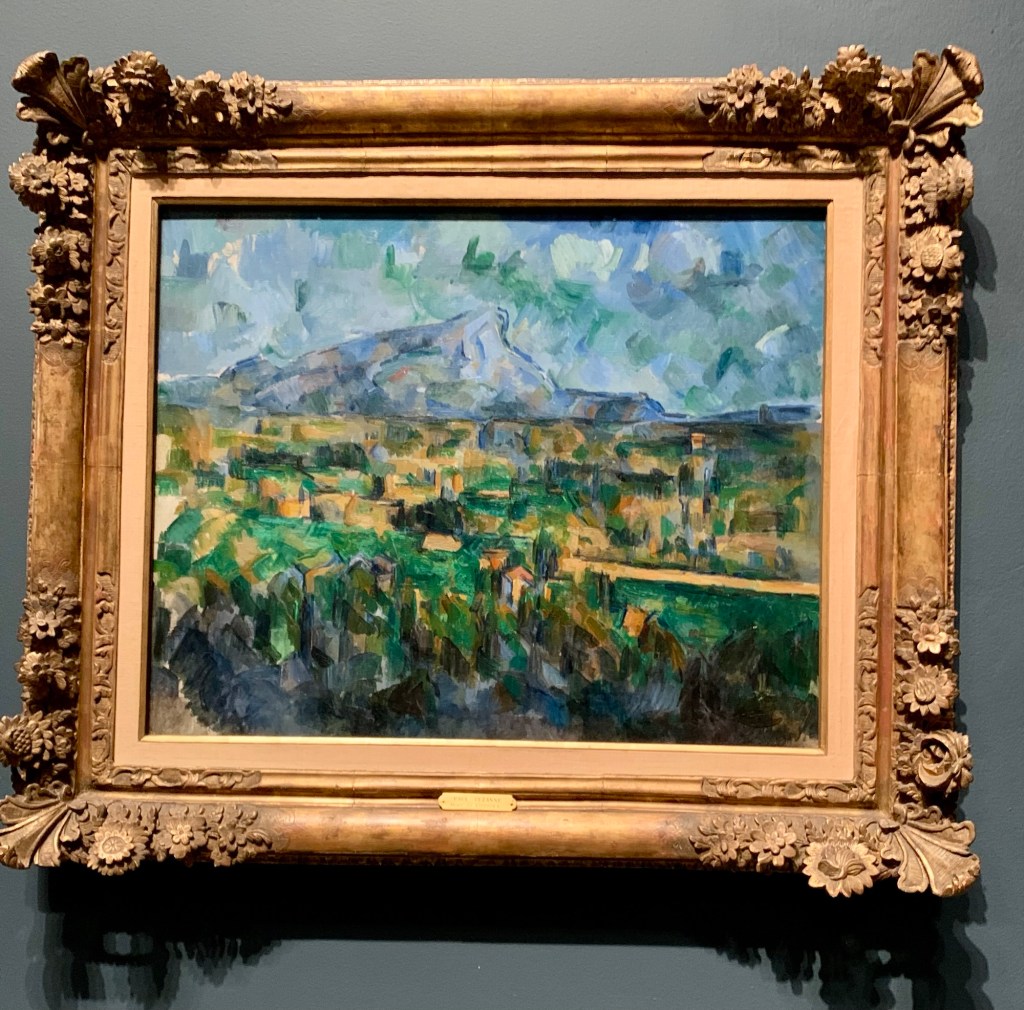
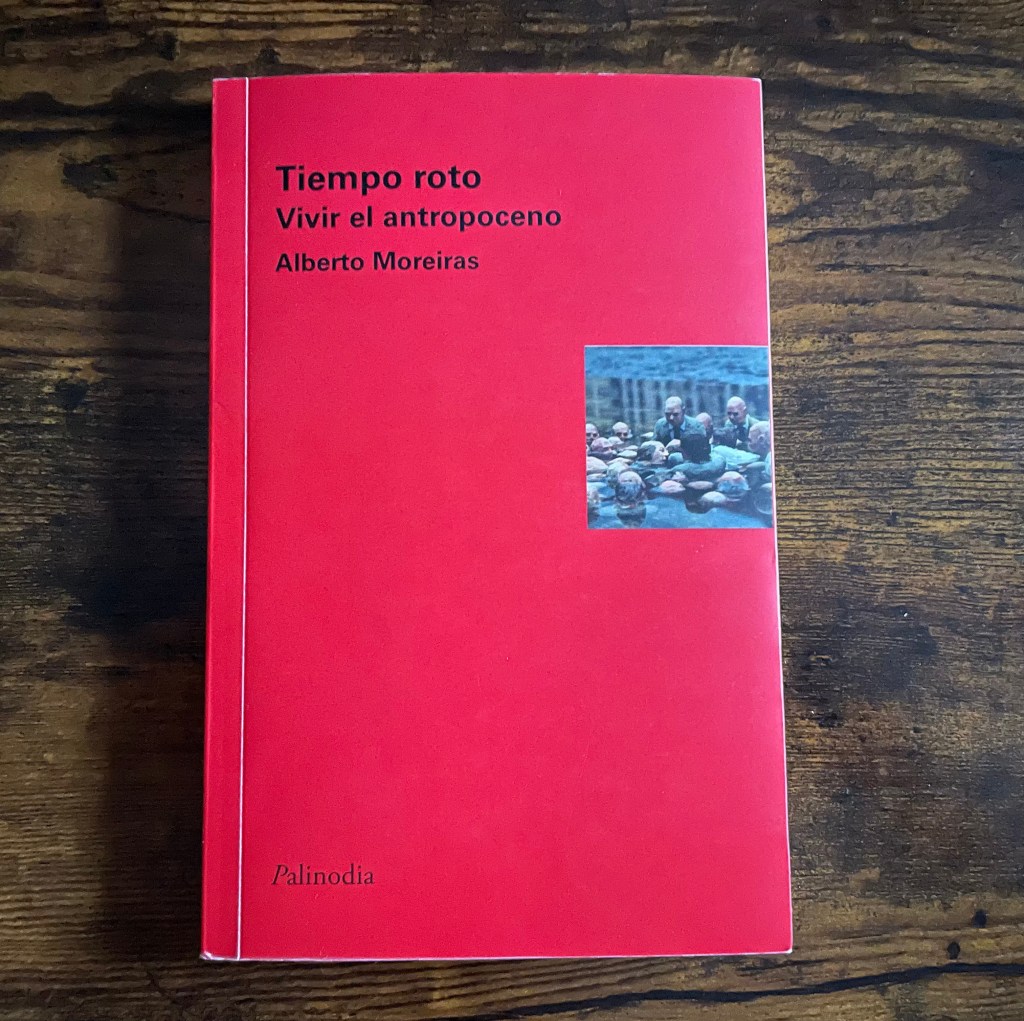

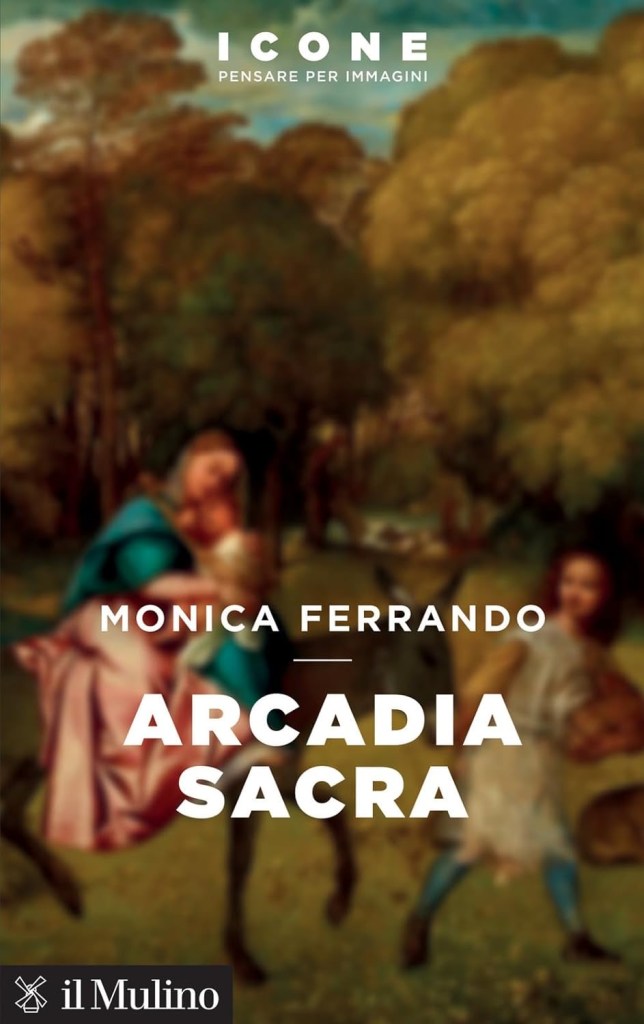
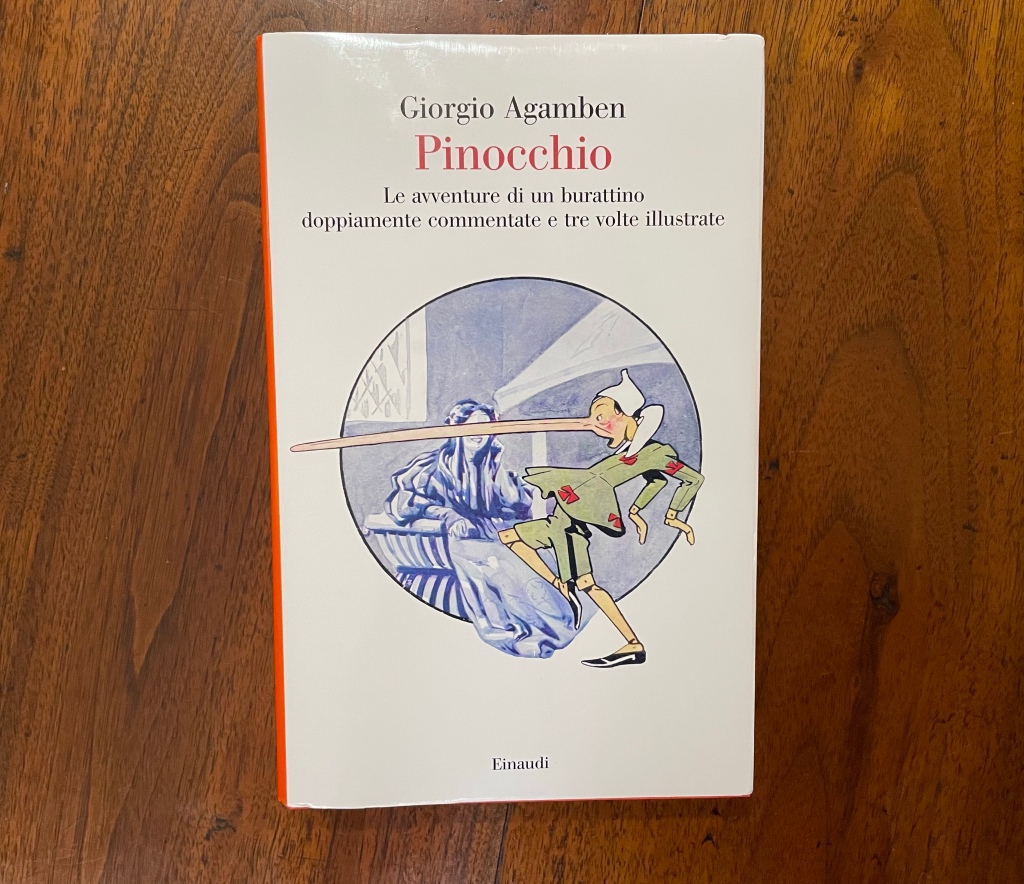

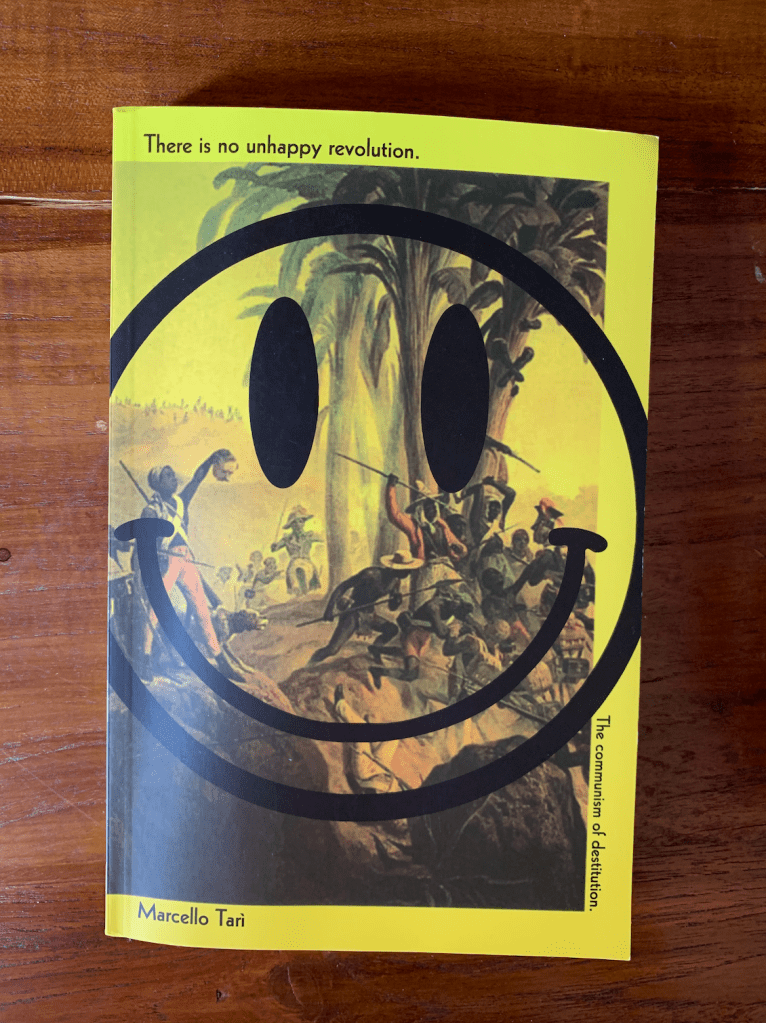
 Infrapolitical Reflections